
Safety
General information, not medical advice
Your prescriber and the leaflet in your pack know your situation. This page does not.
- Follow your prescriber and the leaflet
- Don't start, stop, or change a dose on your own
- Doses and warnings differ by country and product
Strattera Capsule: Uses, Dosage, Side Effects, Precautions and Alternates
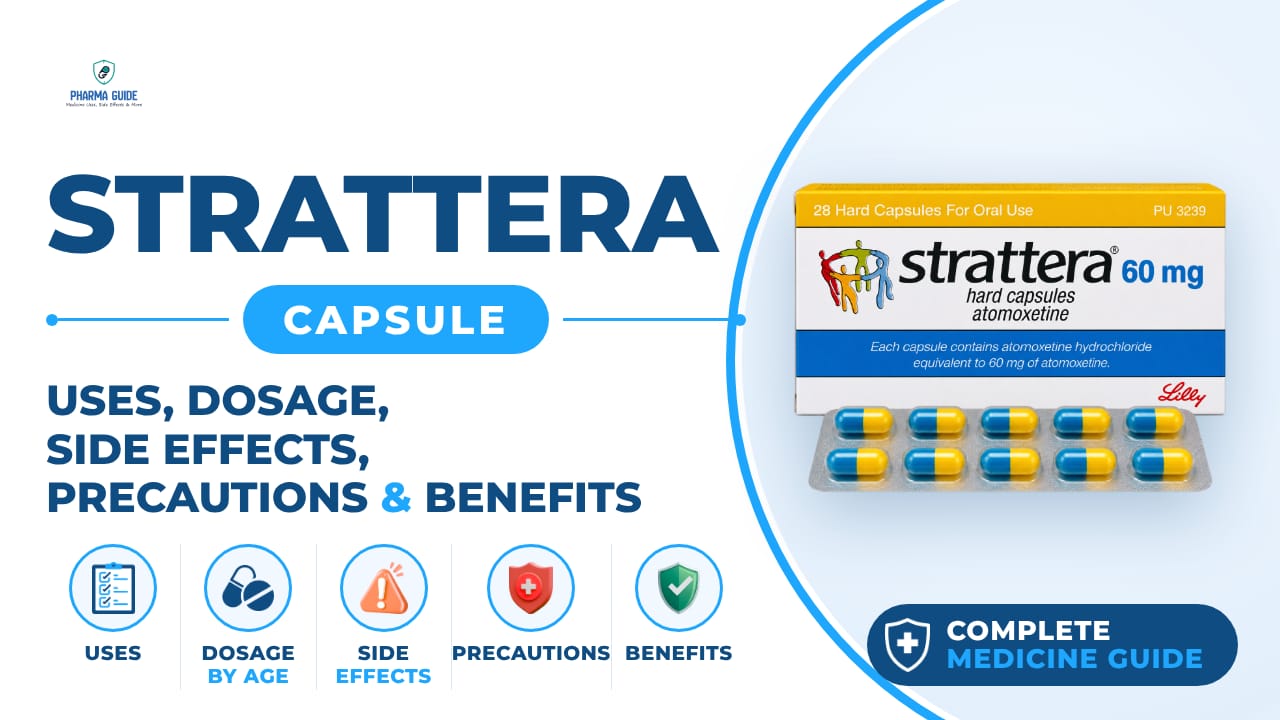
| Generic name | atomoxetine |
|---|---|
| Drug class | Adrenergic uptake inhibitors for ADHD (selective norepinephrine reuptake inhibitor) |
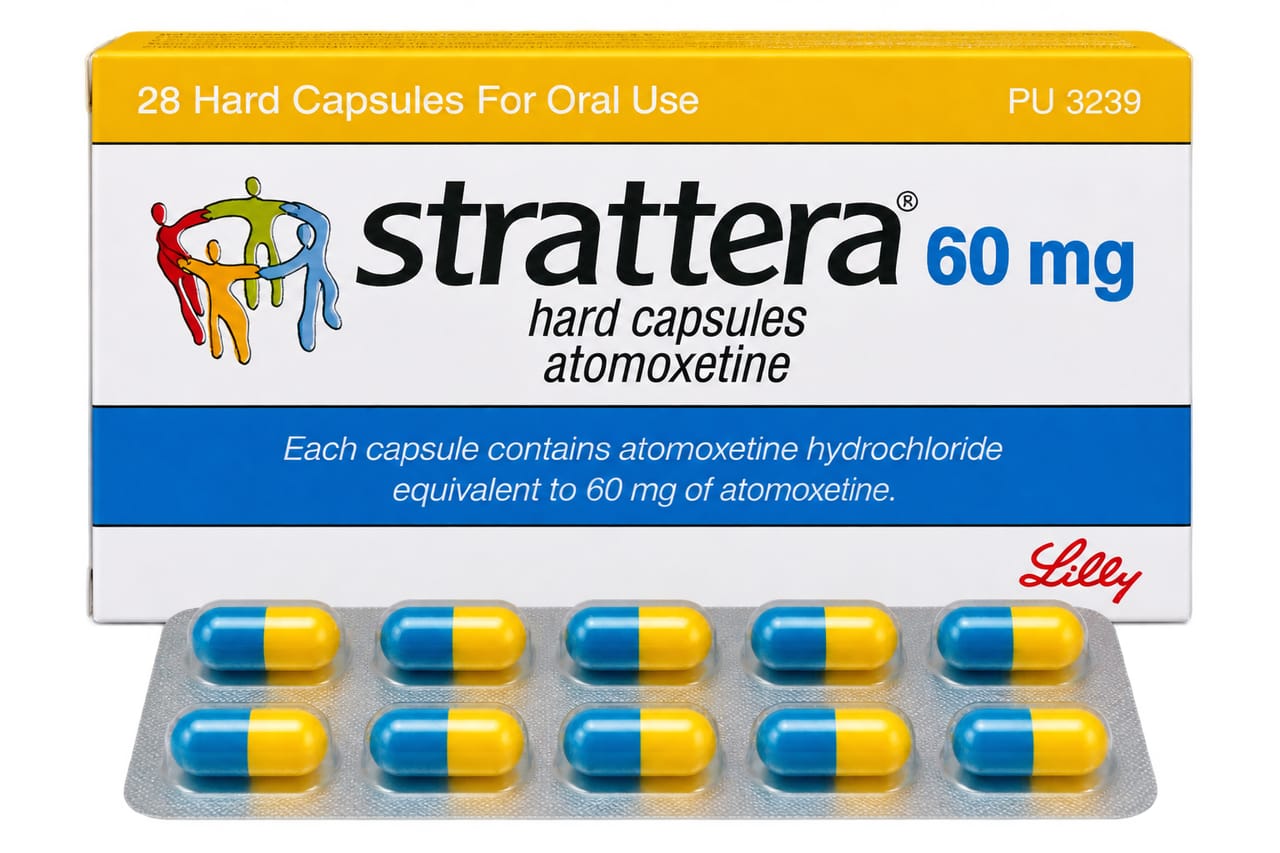
| Forms | Capsule (10 mg, 18 mg, 25 mg, 40 mg, 60 mg, 80 mg, 100 mg) |
Quick overview
Strattera Capsule (atomoxetine) is a prescription medicine used to treat attention deficit hyperactivity disorder (ADHD) in adults and children age 6 and older. It is not a stimulant or a controlled substance and works by affecting norepinephrine levels in the brain. It is meant to be used as part of a full treatment plan that may also include counseling, education, or social support.
What is Strattera Capsule
Strattera is a prescription medicine used to treat attention deficit hyperactivity disorder (ADHD) in adults and children age 6 and older. It contains the active ingredient atomoxetine and is not a stimulant or a controlled substance. It is meant to be used as part of a full treatment plan that may also include counseling, education, or social support.
Strattera Capsule uses
- Treatment of attention deficit hyperactivity disorder (ADHD) in adults and children 6 years of age and older
Benefits of Strattera Capsule
- May help increase attention span
- May help decrease impulsiveness
- May help reduce hyperactivity
- ADHD Symptom Control: Helps improve attention and reduce impulsive behavior
- Focus Improvement: Supports better concentration and task completion
- Non-Stimulant Option: Provides ADHD treatment without stimulant medication
How Strattera Capsule works
Strattera works by raising levels of norepinephrine, a brain chemical involved in attention and impulse control. It is thought to work by blocking a protein that normally removes norepinephrine from brain signaling sites, though the exact way it helps ADHD is not fully known.
Strattera Capsule dosage
Take this medicine exactly as your doctor prescribes and follow all directions on your prescription label. Take the medicine at the same time each day, with a full glass of water. This medicine is usually taken once daily in the morning, or split into two doses taken in the morning and in the late afternoon or early evening. You may take this medicine with or without food.
Swallow the capsule whole. Do not crush, chew, break, or open it. Tell your doctor if you have trouble swallowing the capsules. Do not use a capsule that has been opened or broken; the medicine inside can be dangerous if it gets in your eyes. If your eyes come into contact with the powder, rinse them with water right away and contact your doctor.
Use this medicine regularly to get the most benefit, and refill your prescription before you run out. If you miss a dose, take it as soon as you remember, but skip it if it is almost time for your next dose; do not take extra medicine to make up for a missed dose. Your doctor will check your progress at regular visits, including heart rate, blood pressure, height, and weight.
| Age group | Dose |
|---|---|
| Under 6 Years | Use only if prescribed by a specialist |
| 6–17 Years | Initial dose: 0.5 mg/kg/day; adjusted based on response (maximum depends on weight) |
| Adults (18–64 Years) | Initial dose: 40 mg/day; may increase to 80 mg/day based on response |
| Older Adults (65+ Years) | Use with caution; dose individualized by doctor |
Available forms and strengths
- Capsule: 10 mg, 18 mg, 25 mg, 40 mg, 60 mg, 80 mg, 100 mg
Side effects of Strattera Capsule
Common
- Nausea
- Vomiting
- Upset stomach
- Constipation
- Dry mouth
- Loss of appetite
- Mood changes
- Feeling tired
- Dizziness
- Urination problems
- Impotence (trouble having an erection)
Serious
- Signs of an allergic reaction such as hives, difficulty breathing, or swelling of the face, lips, tongue, or throat
- Anxiety, panic attacks, trouble sleeping, feeling impulsive, irritable, agitated, hostile, aggressive, restless, hyperactive, depressed, or having thoughts of suicide or self-harm
- Slowed growth in children
- Signs of heart problems such as chest pain, trouble breathing, or feeling like you might pass out
- Signs of psychosis such as hallucinations, new behavior problems, aggression, hostility, or paranoia
- Liver problems such as upper right stomach pain, itching, flu-like symptoms, dark urine, or yellowing of the skin or eyes
- Painful or difficult urination
- An erection that is painful or lasts longer than 4 hours
Warnings and precautions
- This medicine has a boxed warning, the strongest safety warning from the FDA, for an increased risk of suicidal thoughts and behavior in children and teens 6 years and older, especially early in treatment or when the dose changes.
- Do not use this medicine if you have narrow-angle glaucoma, an adrenal gland tumor, heart disease, coronary artery disease, or moderate to severe high blood pressure.
- Do not take this medicine if you have taken a certain type of antidepressant called an MAO inhibitor in the past 14 days, as a dangerous drug interaction could occur.
- This medicine may cause new or worsening psychosis or trigger manic symptoms, especially in people with a history of depression, mental illness, or bipolar disorder.
- This medicine has caused stroke, heart attack, and sudden death in people with high blood pressure, heart disease, or a heart defect.
- Do not open, chew, or crush the capsule. The powder inside can be dangerous if it gets in your eyes.
- It is not known whether this medicine will harm an unborn baby. Tell your doctor if you are pregnant or plan to become pregnant before taking this medicine.
- There is a pregnancy registry that tracks outcomes in women exposed to ADHD medicines during pregnancy.
- It may not be safe to breastfeed while using this medicine. Ask your doctor about any risks.
- Dosing adjustment may be required in patients with certain conditions affecting drug processing, so tell your doctor about any kidney concerns.
- Tell your doctor if you have liver disease. This medicine can cause severe liver injury, and your dose may need to be lower if you have liver problems.
- Drinking alcohol with this medicine did not appear to change alcohol's intoxicating effects in studies, but ask your doctor about alcohol use during treatment.
- Avoid driving or hazardous activity until you know how this medicine affects you, since it can cause sleepiness and may impair your reactions.
Storage
- Store in a safe place at room temperature, 59 to 86°F (15 to 30°C)
- Keep this medicine and all medicines out of the reach of children
When to see a doctor
- Get emergency medical help right away if you have signs of a serious allergic reaction, such as hives, trouble breathing, or swelling of the face, lips, tongue, or throat.
- Call your doctor right away if you notice signs of heart problems, such as chest pain, trouble breathing, or feeling like you might pass out.
- Call your doctor right away if you notice signs of psychosis, such as hallucinations, new behavior problems, aggression, hostility, or paranoia.
- Call your doctor right away if you have signs of liver problems, such as upper right stomach pain, itching, flu-like symptoms, dark urine, or yellowing of the skin or eyes.
- Get prompt medical attention if you or your child has a painful erection that lasts longer than 4 hours.
- Report any new or worsening symptoms to your doctor right away, such as anxiety, panic attacks, trouble sleeping, or feeling impulsive, irritable, agitated, hostile, aggressive, restless, hyperactive, depressed, or having thoughts about suicide or hurting yourself.
- If you think you or your child has taken too much of this medicine, seek emergency medical attention or contact a poison control center right away.
Alternatives
- Methylphenidate
- Guanfacine
- Clonidine
Watch the video
FAQs
What is Strattera Capsule used for?
Strattera is a prescription medicine used to treat attention deficit hyperactivity disorder (ADHD) in adults and children age 6 and older.
Is Strattera a stimulant?
No, Strattera is not a stimulant or a controlled substance. It contains atomoxetine and works by affecting norepinephrine levels in the brain.
How should Strattera Capsule be taken?
It is usually taken once daily in the morning, or split into two doses in the morning and late afternoon or early evening, with or without food. The capsule should be swallowed whole and not crushed, chewed, broken, or opened.
What are the serious side effects of Strattera?
Serious side effects include signs of allergic reaction, suicidal thoughts or behavior, slowed growth in children, heart problems, signs of psychosis, liver problems, and a painful erection lasting longer than 4 hours.
What are the warnings for Strattera Capsule?
Strattera has a boxed warning for increased risk of suicidal thoughts and behavior in children and teens. It should not be used with narrow-angle glaucoma, adrenal gland tumor, heart disease, or moderate to severe high blood pressure, and should not be combined with MAO inhibitors taken in the past 14 days.
General information, not medical advice
Your prescriber and the leaflet in your pack know your situation. This page does not.
- Follow your prescriber and the leaflet
- Don't start, stop, or change a dose on your own
- Doses and warnings differ by country and product
Sources
Video
Related medicines

Injectafer Injection: Uses, Dosage, Side Effects, Precautions and Alternates
Iron products
Injectafer (ferric carboxymaltose) treats iron deficiency anemia and heart failure-related iron deficiency via IV. Learn uses, dosage, side effects, and

Gliclazide Tablet: Uses, Dosage, Side Effects, Precautions and Alternates
Sulfonylurea (hypoglycemic/antidiabetic agent)
Gliclazide Tablet is a sulfonylurea for type 2 diabetes that boosts insulin release. Learn about dosage, side effects, warnings, and precautions.