
Safety
General information, not medical advice
Your prescriber and the leaflet in your pack know your situation. This page does not.
- Follow your prescriber and the leaflet
- Don't start, stop, or change a dose on your own
- Doses and warnings differ by country and product
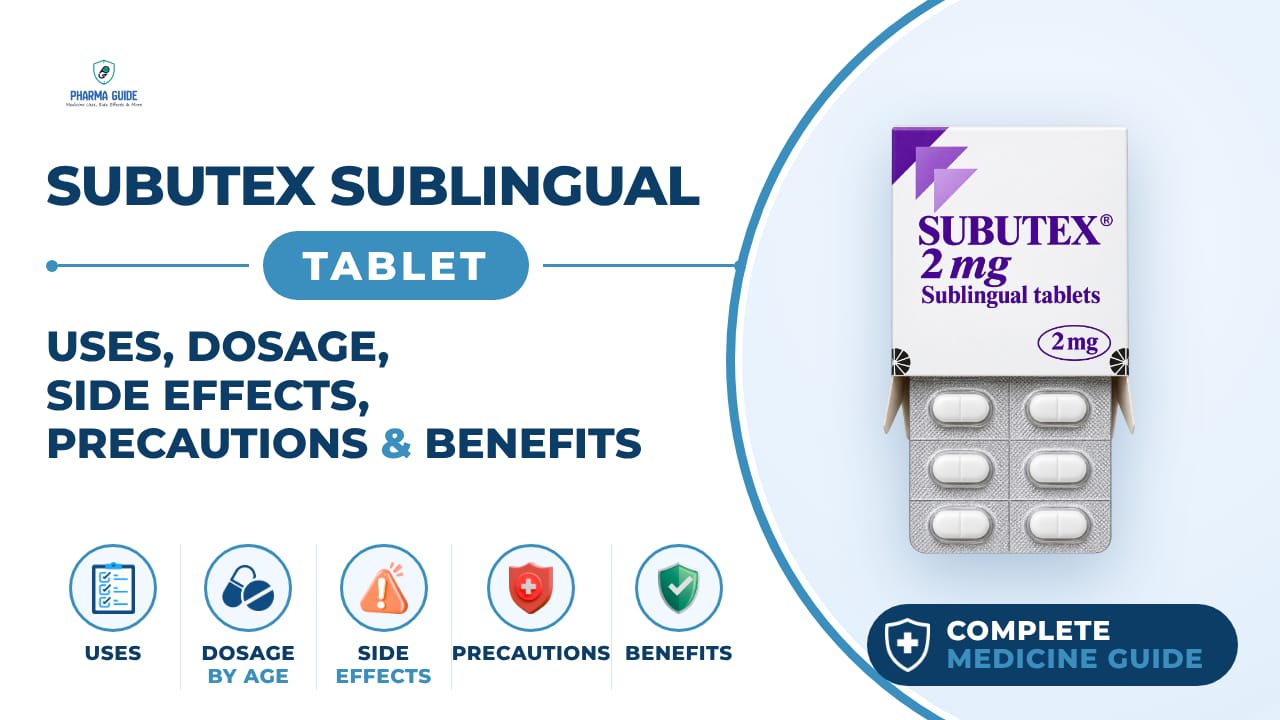
Subutex Sublingual Tablet: Uses, Dosage, Side Effects, Precautions and Alternates
| Generic name | buprenorphine (buprenorphine hydrochloride) |
|---|---|
| Drug class | opioid medicine (used to treat opioid dependence) |
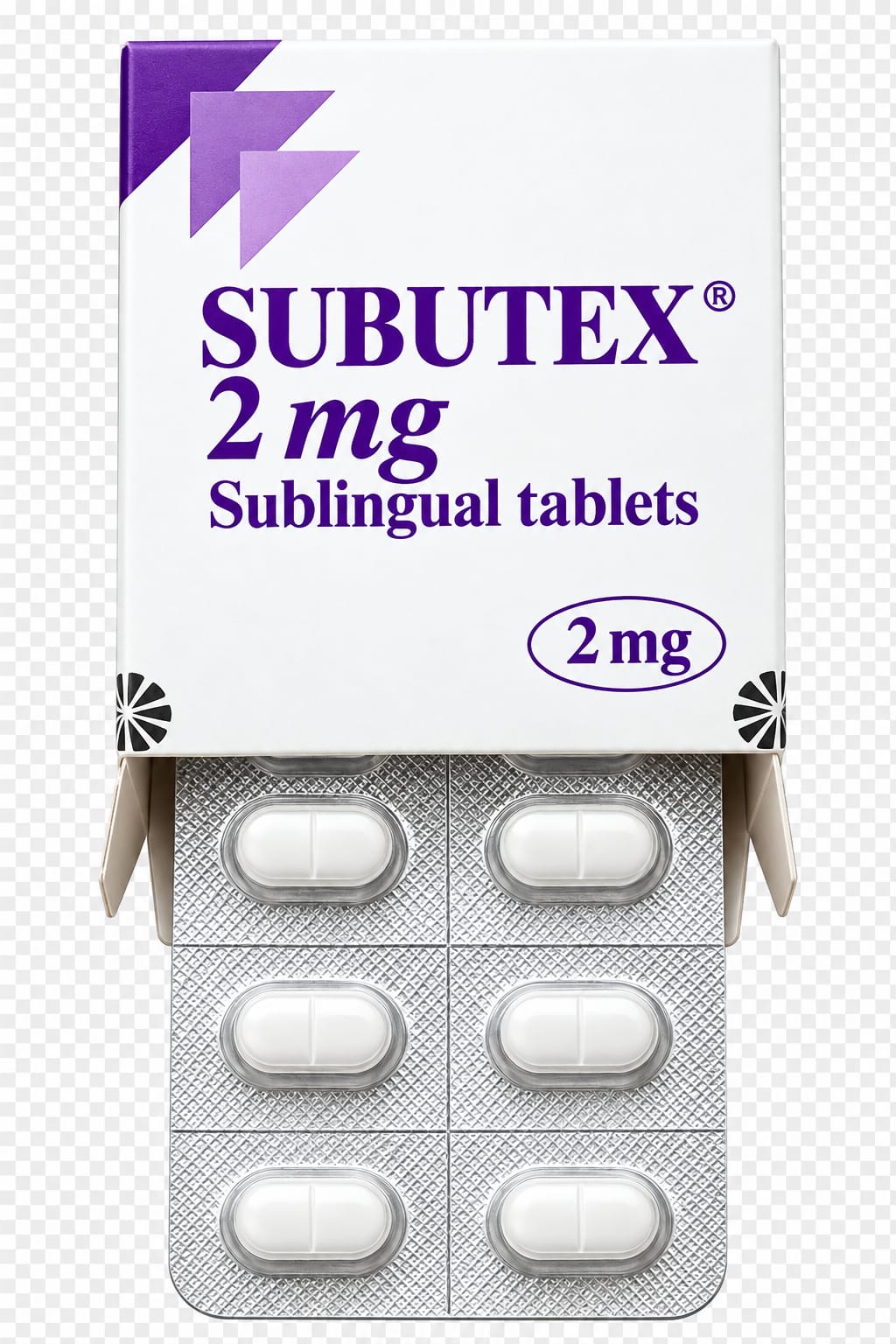
| Forms | Sublingual tablet (0.4 mg, 2 mg, and 8 mg strengths) |
Quick overview
Subutex Sublingual Tablet contains buprenorphine (buprenorphine hydrochloride), an opioid medicine used to treat opioid dependence as part of a complete treatment program that includes counseling and psychosocial support. It helps reduce withdrawal symptoms and cravings while supporting recovery from dependence on opioids such as heroin, morphine, oxycodone, or codeine. It is taken as a sublingual tablet that must dissolve completely under the tongue, and it carries serious risks including addiction, overdose, and life-threatening breathing problems if misused.
What is Subutex Sublingual Tablet
Subutex is an opioid medicine that contains buprenorphine. It is used as part of a medical, social, and psychological treatment program for people who are dependent on opioids such as heroin, morphine, oxycodone, or codeine.
Subutex Sublingual Tablet uses
- Treatment of opioid dependence (opioid use disorder) as part of a complete treatment plan including counseling and psychosocial support
Benefits of Subutex Sublingual Tablet
- Used in the treatment of opioid dependence
- Reduces opioid withdrawal symptoms
- Helps reduce cravings for opioids
- Supports control of opioid use during recovery
- Helpful in maintenance treatment to prevent withdrawal symptoms
How Subutex Sublingual Tablet works
Buprenorphine acts as a substitute for opioids like heroin, morphine, oxycodone, or codeine, and helps the body withdraw from opioids gradually over time.
Subutex Sublingual Tablet dosage
Place the tablet under your tongue and let it dissolve completely; this is the only way the tablet should be taken. Do not chew the tablet or swallow it whole, and do not split or break it, because this makes it less effective. Do not eat or drink anything until the tablet has completely dissolved in your mouth.
If more than one tablet is prescribed per dose, place all tablets under the tongue at the same time and let them dissolve completely. Rinse your mouth with water after the tablet dissolves, and wait about an hour before brushing your teeth to help protect your teeth and gums.
Never crush, break, or dissolve the tablet to inject or inhale it — this can be fatal. Do not stop taking this medicine suddenly; ask your doctor how to safely stop.
Tell any doctor, dentist, nurse, or pharmacist you see that you are taking this medicine, including before any surgery. Get regular dental checkups and blood tests to check liver function while using this medicine.
This medicine is not approved for anyone younger than 18 (one source) or under 16 years (another source) — check with your doctor about age requirements.
| Age group | Dose |
|---|---|
| Under 18 years | Not recommended |
| 18–60 years | 2 mg, once/day |
| 60+ years | 2 mg, once/day |
Available forms and strengths
- Sublingual tablet (0.4 mg, 2 mg, and 8 mg strengths)
Side effects of Subutex Sublingual Tablet
Common
- Constipation, nausea, vomiting
- Headache, migraine
- Increased sweating
- Sleep problems (insomnia), anxiety, nervousness, fatigue
- Pain anywhere in the body, including abdomen, back, joint and muscle pain, leg cramps
- Dry mouth, tooth disorders
- Dizziness, fainting, vertigo, weakness
- Flu-like symptoms such as chills, fever, sore throat, runny nose, watering eyes
- Stomach upset, diarrhea, poor appetite, indigestion, flatulence
Serious
- Signs of an allergic reaction: hives, difficulty breathing, swelling of the face, lips, tongue, mouth, or throat
- Severe breathing problems: slow breathing with long pauses, blue-colored lips, or being hard to wake up
- Problems with teeth or gums
- Noisy breathing, sighing, shallow breathing, or breathing that stops during sleep
- Confusion, blurred vision, slurred speech, feeling light-headed like you might pass out
- Chest pain, trouble breathing, slow heartbeat, or weak pulse
- Opioid withdrawal symptoms: shivering, goosebumps, increased sweating, feeling hot or cold, runny nose, watery eyes, diarrhea, muscle pain
- Low cortisol/adrenal problems: vomiting, dizziness, worsening tiredness or weakness
- Liver problems: nausea, upper stomach pain, itching, loss of appetite, dark urine, clay-colored stools, yellowing of skin or eyes (jaundice)
- Signs of serotonin syndrome: agitation, hallucinations, fever, sweating, shivering, fast heart rate, muscle stiffness, twitching, loss of coordination, nausea, vomiting, diarrhea
- Severe upper abdominal pain spreading to the back, with nausea, vomiting, or fever (possible pancreas or biliary tract inflammation)
- Difficulty swallowing, regurgitation, or chest pain not related to the heart, especially with long-term use
Warnings and precautions
Misusing this opioid medicine can cause addiction, overdose, or death. Keep it somewhere others cannot get to it. This medicine can cause serious, life-threatening slowed or stopped breathing (respiratory depression).
Using this medicine together with anti-anxiety medicines, sedatives, antihistamines, some antidepressants, antipsychotics, cannabis, or alcohol can cause profound sedation, slowed breathing, coma, and death. Even though this medicine is used to treat opioid dependence, it still carries risks of harmful or hazardous use that can lead to overdose and death. Your doctor will monitor your ongoing risk during treatment.
Never inject this medicine — people have died from injecting it, especially when combined with benzodiazepines. Never crush, break the tablet to inhale the powder, or dissolve it to inject — doing so could result in death.
Do not stop taking this medicine suddenly, as it may cause withdrawal symptoms, which can sometimes be delayed. Accidental ingestion by a child can cause fatal breathing failure. Just one dose can be fatal to someone using the medicine accidentally or without a prescription, including children.
Using this medicine during pregnancy can cause the baby to become dependent on it, leading to life-threatening withdrawal symptoms after birth, known as Neonatal Abstinence Syndrome. Babies may need medical treatment and monitoring for breathing and withdrawal symptoms for several weeks. Talk to your doctor if you are or may become pregnant.
Buprenorphine can pass into breast milk and may cause drowsiness and breathing problems in a nursing baby. Talk to your doctor if you are breastfeeding or plan to.
Tell your doctor if you have kidney disease before using this medicine. Do not use this medicine if you have serious liver problems, or if your doctor finds a serious liver problem developing during treatment. Tell your doctor about any history of liver disease, including hepatitis B or C, since you may need frequent blood tests to check liver function.
Do not drink alcohol or take medicines containing alcohol while using this medicine, as this can cause dangerous sedation, slowed breathing, or death.
This medicine may affect your alertness and ability to drive or operate machinery. Be careful until you know how it affects you, since dizziness or drowsiness can cause falls or accidents.
Storage
Store at room temperature away from moisture and heat. Keep the tablets in a dry place where the temperature stays below 30°C in the original package. Store this medicine securely, where other people cannot access it.
Store it in a cool dry place away from moisture, heat or sunlight; for example, do not store it in the bathroom or near a sink, or in the car or on window sills.
Do not keep leftover opioid medication. Ask your pharmacist where to locate a drug take-back disposal program. If there is no take-back program, flush the unused medicine down the toilet. If you no longer need to use this medicine or it is out of date, take it to any pharmacy for safe disposal.
When to see a doctor
Get emergency medical help right away if you have signs of a severe allergic reaction, such as hives, difficulty breathing, or swelling of the face, lips, tongue, mouth, or throat.
Someone caring for you should seek emergency help if you have slow breathing with long pauses, blue-colored lips, or if you are hard to wake up.
Seek medical attention right away if you have symptoms of serotonin syndrome, such as agitation, hallucinations, fever, sweating, shivering, fast heart rate, muscle stiffness, twitching, loss of coordination, nausea, vomiting, or diarrhea.
If you think you have taken too much, get urgent medical attention right away — call poison control, contact your doctor, or go to the nearest hospital emergency department, even if you feel fine.
Call your doctor right away if you notice severe liver problems such as intense fatigue, no appetite, yellowing of the skin or eyes, light-colored stools, or dark urine.
Call your doctor right away if you have severe upper abdominal pain that may spread to the back, along with nausea, vomiting, or fever, as this may be a sign of pancreas or biliary tract inflammation.
Alternatives
- Bunavail
- Zubsolv
- Subutex
Watch the video
FAQs
What is Subutex Sublingual Tablet used for?
It is used to treat opioid dependence as part of a complete treatment program that includes counseling and psychosocial support, helping people dependent on opioids like heroin, morphine, oxycodone, or codeine.
How should Subutex Sublingual Tablet be taken?
Place the tablet under your tongue and let it dissolve completely. Do not chew, swallow whole, split, or break it, and avoid eating or drinking until it has fully dissolved. Rinse your mouth with water afterward and wait about an hour before brushing your teeth.
How does Subutex Sublingual Tablet work?
Buprenorphine acts as a substitute for opioids like heroin, morphine, oxycodone, or codeine, helping the body withdraw from opioids gradually over time.
What are the serious risks of Subutex Sublingual Tablet?
Serious risks include addiction, overdose, life-threatening breathing problems, allergic reactions, liver problems, serotonin syndrome, and opioid withdrawal symptoms. Combining it with alcohol, sedatives, or certain other medicines can cause profound sedation, coma, or death.
Can Subutex Sublingual Tablet be used during pregnancy?
Using it during pregnancy can cause the baby to become dependent, leading to life-threatening withdrawal symptoms after birth called Neonatal Abstinence Syndrome, so babies may need medical treatment and monitoring. Talk to your doctor if you are or may become pregnant.
General information, not medical advice
Your prescriber and the leaflet in your pack know your situation. This page does not.
- Follow your prescriber and the leaflet
- Don't start, stop, or change a dose on your own
- Doses and warnings differ by country and product
Sources
Video
Related medicines

Injectafer Injection: Uses, Dosage, Side Effects, Precautions and Alternates
Iron products
Injectafer (ferric carboxymaltose) treats iron deficiency anemia and heart failure-related iron deficiency via IV. Learn uses, dosage, side effects, and

Gliclazide Tablet: Uses, Dosage, Side Effects, Precautions and Alternates
Sulfonylurea (hypoglycemic/antidiabetic agent)
Gliclazide Tablet is a sulfonylurea for type 2 diabetes that boosts insulin release. Learn about dosage, side effects, warnings, and precautions.