
Safety
General information, not medical advice
Your prescriber and the leaflet in your pack know your situation. This page does not.
- Follow your prescriber and the leaflet
- Don't start, stop, or change a dose on your own
- Doses and warnings differ by country and product
Sucraid Liquid: Uses, Dosage, Side Effects, Precautions and Alternates
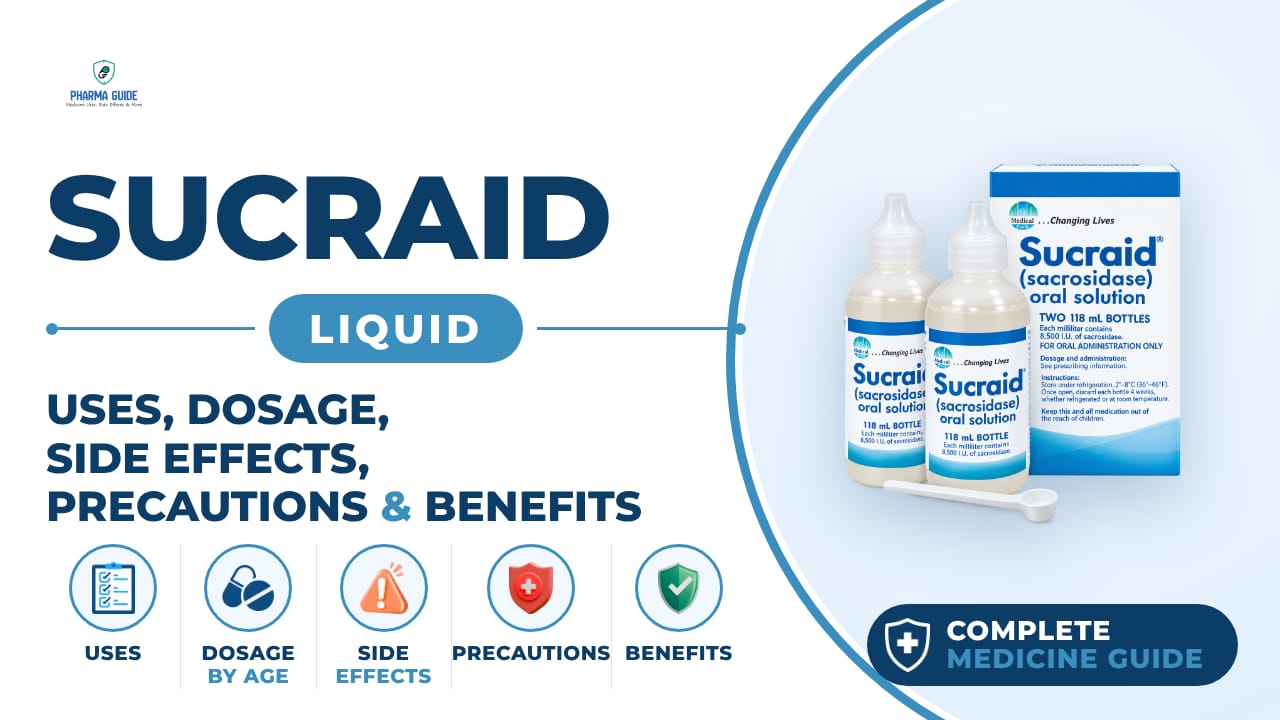
| Generic name | sacrosidase |
|---|---|
| Drug class | Enzymes, Metabolic |
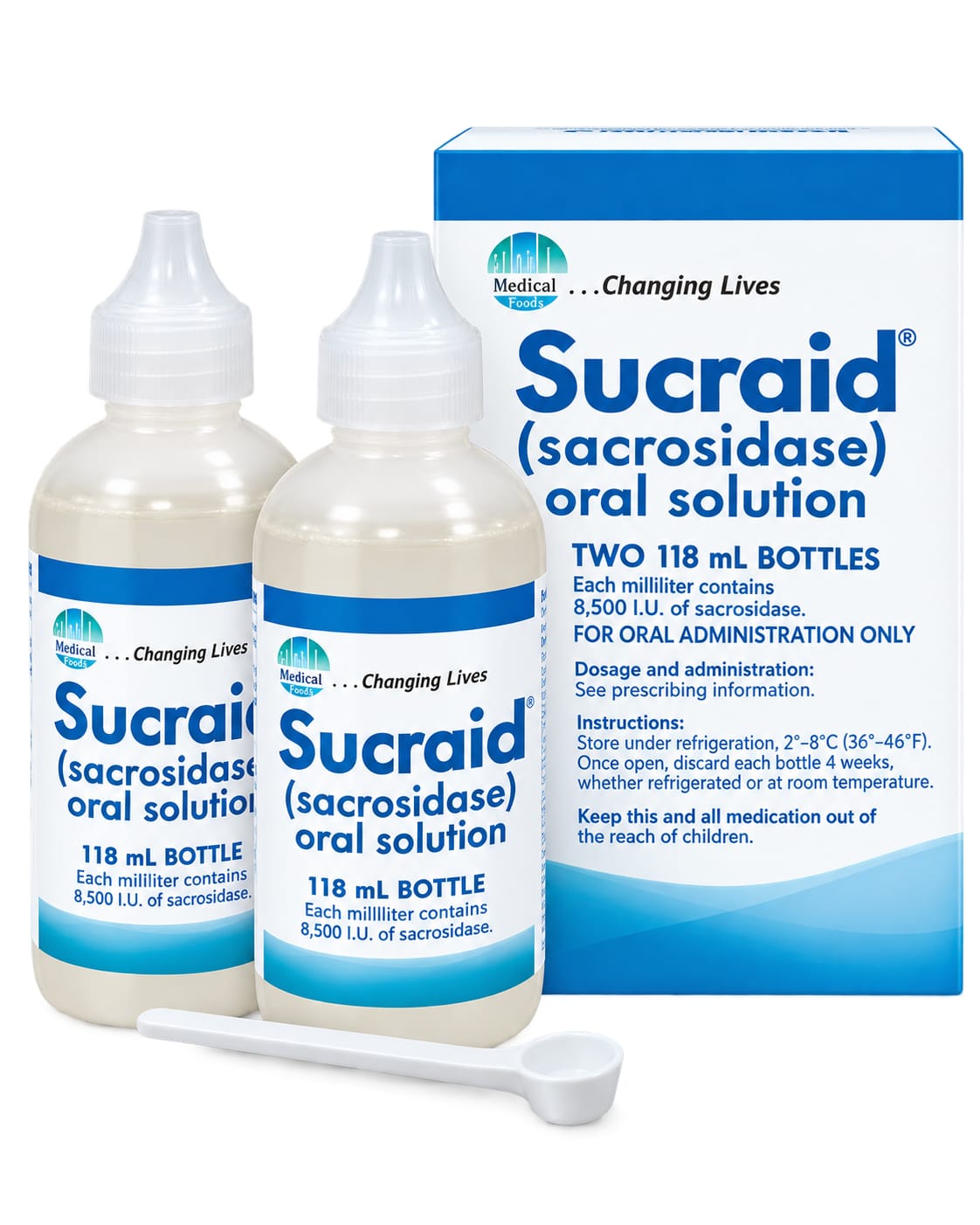
| Forms | Oral solution (multiple-dose bottle), Oral solution (2-mL single-use container) |
Quick overview
Sucraid Liquid (sacrosidase) is a yeast-based enzyme medicine belonging to the enzymes, metabolic drug class. It replaces sucrase, an enzyme the body normally makes to digest certain sugars, and is used to treat sucrase deficiency associated with congenital sucrase-isomaltase deficiency (CSID) in patients 5 months of age and older. It is taken with each meal or snack, mixed in a cold or room-temperature liquid, and helps the digestive system break down sucrose (table sugar).
What is Sucraid Liquid
Sucraid is a yeast-based enzyme medicine that replaces an enzyme called sucrase, which the body normally makes to help digest certain sugars. It is used to treat sucrase deficiency, part of a genetic condition called congenital sucrase-isomaltase deficiency (CSID).
Sucraid Liquid uses
- Treatment of genetically determined sucrase deficiency, which is part of congenital sucrase-isomaltase deficiency (CSID), in patients 5 months of age and older
- Treats sucrase deficiency associated with congenital sucrase-isomaltase deficiency (CSID)
- Helps the digestive system break down sucrose
Benefits of Sucraid Liquid
- Helps improve the breakdown and absorption of sucrose (table sugar) from the intestine
- Can help relieve the gastrointestinal symptoms of CSID such as diarrhea, bloating, and gas
- Provides replacement sucrase enzyme activity
- Helps improve digestion of dietary sucrose
How Sucraid Liquid works
Sucraid replaces the sucrase enzyme that the body lacks. Sucrase normally breaks down sucrose (table sugar) into simpler sugars, glucose and fructose, so they can be absorbed by the intestine. Without enough sucrase, unabsorbed sucrose stays in the gut, causing water retention and gas as bacteria ferment it, which leads to loose stools, bloating, and cramping.
Sucraid Liquid dosage
Take or give Sucraid with each meal or snack, not on its own. Mix the dose in cold or room temperature water, milk, or infant formula before taking it — never in fruit juice. Never heat Sucraid or add it to warm or hot drinks or formula, since heat makes it less effective.
Take about half of the mixed dose at the start of the meal or snack, then take the rest of the mixed dose during the meal or snack. Measure doses only with the measuring scoop provided; a kitchen teaspoon will not give an accurate amount. Rinse the measuring scoop with water after each use.
Write down the date you first open a bottle, and throw away the bottle four weeks after opening because it has no preservatives. For the first one or two doses, make sure you are near medical help in case of an allergic reaction.
| Age group | Dose |
|---|---|
| Under 12 years | For patients 5 months and older, dosage is based on weight: 1 mL (8,500 IU) with each meal or snack if body weight is 15 kg or less; 2 mL (17,000 IU) with each meal or snack if body weight is over 15 kg. Safety and effectiveness are not established below 5 months. |
| 12–17 years | Usually 2 mL (17,000 IU) with each meal or snack if body weight is over 15 kg. |
| 18–74 years | 2 mL (17,000 IU) with each meal or snack. |
Available forms and strengths
- Oral solution (multiple-dose bottle)
- Oral solution (2-mL single-use container)
Side effects of Sucraid Liquid
Common
- Stomach (abdominal) pain
- Nausea
- Vomiting
- Diarrhea
- Constipation
- Problems sleeping (insomnia)
- Headache
- Nervousness
- Dehydration/increased thirst
- Dry, hot skin
Serious
- Hives
- Difficulty breathing or wheezing
- Swelling of the face, lips, tongue, mouth, or throat
- Worsening stomach pain, nausea, vomiting, or diarrhea
- Feeling very thirsty or hot, being unable to urinate, heavy sweating, or hot and dry skin
Warnings and precautions
- Sucraid can cause a serious allergic reaction. If you notice swelling or have trouble breathing, get emergency help immediately. Because of this risk, you should be near medical help for your first couple of doses.
- Do not take this medicine if you are allergic to yeast, yeast products, papain, or glycerin, since Sucraid contains these ingredients and could trigger a reaction.
- A child with asthma had a severe allergic reaction with wheezing that required hospital treatment after a dose of this medicine.
- This medicine does not treat the related enzyme problem with starch digestion, so you may still need to limit starchy foods even while taking it.
- If you have diabetes, this medicine can change how sugar is absorbed from your diet and may affect your blood sugar levels, so your doctor may need to adjust your diet or diabetes medicines.
- It is not known if Sucraid will harm an unborn baby. Sucraid should only be used during pregnancy if clearly needed, and you should tell your doctor if you are or may become pregnant.
- The enzyme in Sucraid is broken down in the stomach and intestines and absorbed as nutrients. Talk with your doctor about breastfeeding while using this medicine.
- No specific renal dose adjustment is established because sacrosidase acts primarily within the gastrointestinal tract. No routine liver-specific dose adjustment is established.
- A specific direct alcohol interaction is not established, but Sucraid should only be mixed as directed rather than added to alcoholic beverages.
- Sucraid is not known to impair alertness or driving ability.
Storage
- Store in a refrigerator at 36°F to 46°F (2°C to 8°C).
- Protect from heat and light.
- Discard four weeks after first opening the multiple-dose bottle due to potential for bacterial growth.
- The 2-mL single-use container may be stored at 59°F to 77°F (15°C to 25°C) for up to 3 days (72 hours) after removal from the refrigerator.
- Keep in a safe place where children cannot reach it.
- Throw away expired bottles or containers in household trash.
- Do not freeze. Keep the bottle tightly closed when not in use.
When to see a doctor
- Stop taking this medicine and get emergency help right away if you have difficulty breathing, wheezing, or swelling of your face.
- Get emergency medical help if you notice hives, difficulty breathing, or swelling of your face, lips, tongue, or throat — these are signs of an allergic reaction.
- Call your doctor right away if you have worsening stomach pain, nausea, vomiting, or diarrhea, or if you feel very thirsty or hot, cannot urinate, sweat heavily, or have hot, dry skin.
Alternatives
- Dietary sucrose restriction
- Dietitian-supervised low-sucrose diet
- Dietary starch restriction when needed
Watch the video
FAQs
What is Sucraid Liquid used for?
Sucraid treats genetically determined sucrase deficiency, part of congenital sucrase-isomaltase deficiency (CSID), in patients 5 months of age and older, helping the digestive system break down sucrose.
How should Sucraid Liquid be taken?
Take Sucraid with each meal or snack, mixed in cold or room-temperature water, milk, or infant formula (never fruit juice or warm liquids). Take about half the dose at the start of the meal and the rest during it, using only the provided measuring scoop.
What is the dosage of Sucraid Liquid for children?
For patients 5 months and older, dosing is based on weight: 1 mL (8,500 IU) with each meal or snack if body weight is 15 kg or less, or 2 mL (17,000 IU) if body weight is over 15 kg.
What are the serious side effects of Sucraid Liquid?
Serious effects include hives, difficulty breathing or wheezing, swelling of the face, lips, tongue, mouth, or throat, worsening stomach pain, nausea, vomiting, or diarrhea, and signs of dehydration such as heavy sweating or hot, dry skin.
How should Sucraid Liquid be stored?
Store it in a refrigerator at 36°F to 46°F (2°C to 8°C), protected from heat and light, and discard the multiple-dose bottle four weeks after opening due to potential bacterial growth.
General information, not medical advice
Your prescriber and the leaflet in your pack know your situation. This page does not.
- Follow your prescriber and the leaflet
- Don't start, stop, or change a dose on your own
- Doses and warnings differ by country and product
Sources
Video
Related medicines

Injectafer Injection: Uses, Dosage, Side Effects, Precautions and Alternates
Iron products
Injectafer (ferric carboxymaltose) treats iron deficiency anemia and heart failure-related iron deficiency via IV. Learn uses, dosage, side effects, and

Gliclazide Tablet: Uses, Dosage, Side Effects, Precautions and Alternates
Sulfonylurea (hypoglycemic/antidiabetic agent)
Gliclazide Tablet is a sulfonylurea for type 2 diabetes that boosts insulin release. Learn about dosage, side effects, warnings, and precautions.