
Safety
General information, not medical advice
Your prescriber and the leaflet in your pack know your situation. This page does not.
- Follow your prescriber and the leaflet
- Don't start, stop, or change a dose on your own
- Doses and warnings differ by country and product
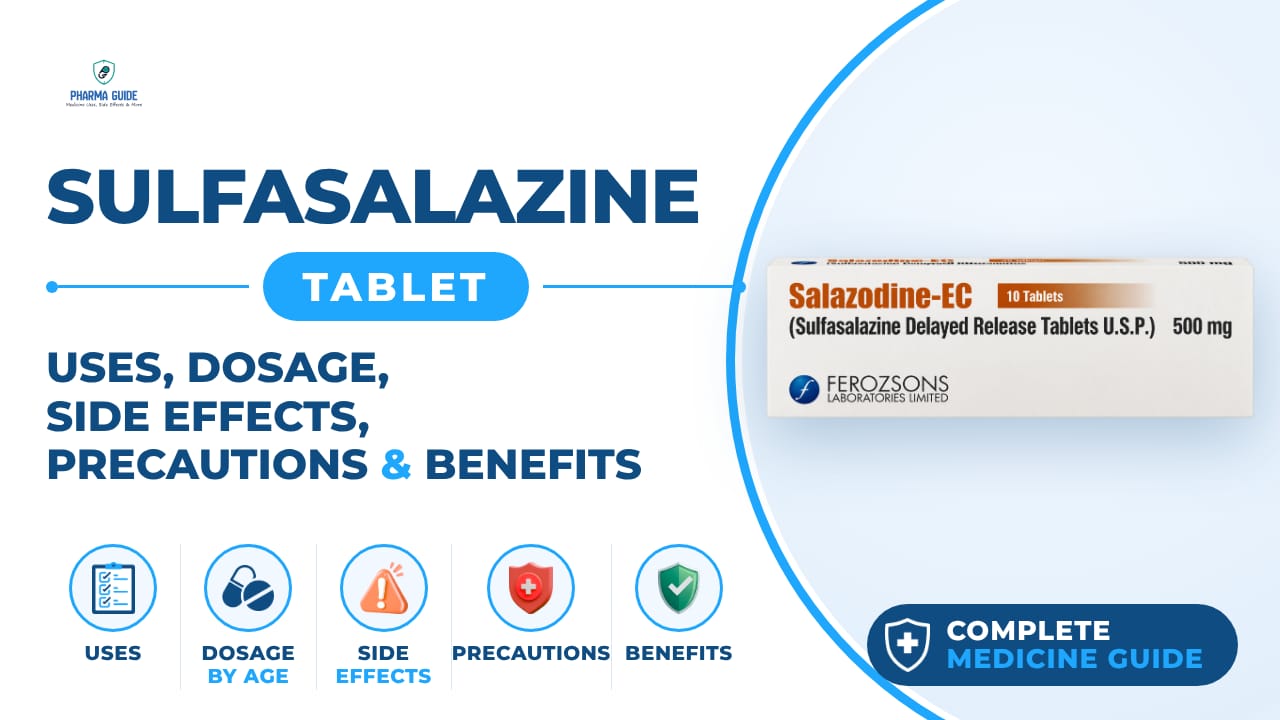
Sulfasalazine Tablet: Uses, Dosage, Side Effects, Precautions and Alternates
| Generic name | sulfasalazine |
|---|---|
| Drug class | 5-aminosalicylates / Antirheumatic (disease-modifying anti-rheumatic drug, DMARD); Anti-inflammatory |
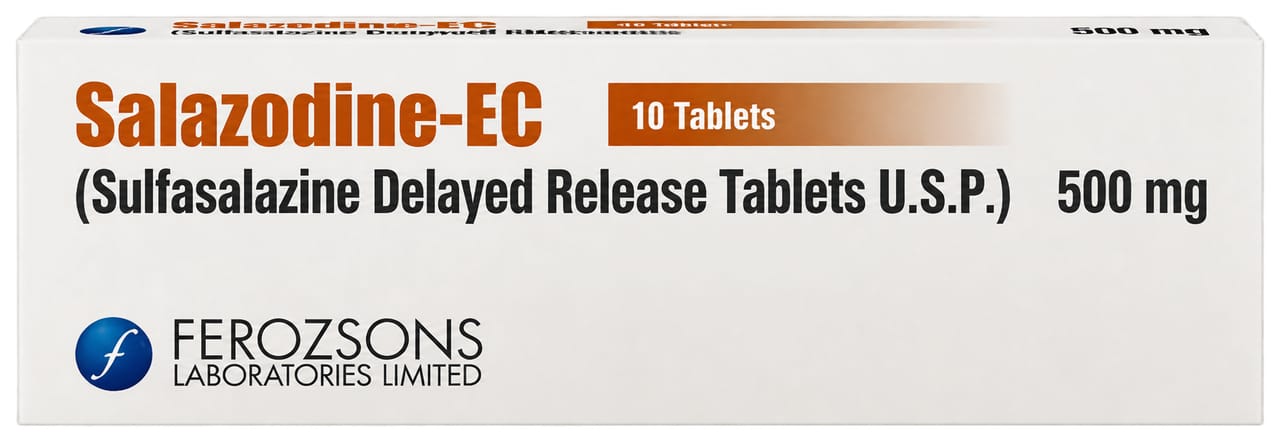
| Forms | Oral tablet, Oral delayed-release (enteric-coated) tablet |
Quick overview
Sulfasalazine Tablet is a prescription anti-inflammatory medicine that has been used since the 1950s. It is a slow-acting disease-modifying anti-rheumatic drug (DMARD) available as a generic and under brand names, in standard tablet and enteric-coated, delayed-release tablet forms. It is used to treat ulcerative colitis and rheumatoid arthritis, and it takes time to build up and start working in the body.
What is Sulfasalazine Tablet
Sulfasalazine is a prescription anti-inflammatory medicine belonging to the 5-aminosalicylate and antirheumatic (DMARD) drug classes. It has been used since the 1950s and is available as a generic and under brand names. It comes as a standard tablet and as an enteric-coated, delayed-release tablet. As a slow-acting DMARD, it takes time to build up in the body before it starts working.
Sulfasalazine Tablet uses
- Treats mild to moderate ulcerative colitis
- Used as an add-on therapy in severe ulcerative colitis
- Helps prolong periods of remission between acute attacks of ulcerative colitis
- Treats rheumatoid arthritis in patients who have not responded well enough to salicylates or other NSAIDs
- Treats children with polyarticular-course juvenile rheumatoid arthritis who have not responded well enough to salicylates or other NSAIDs
- Used as adjunctive therapy for Crohn's disease and proctitis/distal ulcerative colitis (per product monograph)
Benefits of Sulfasalazine Tablet
- Lowers inflammation in the body, reducing pain and swelling
- Limits the damage that rheumatoid arthritis causes to joints, helping to prevent disease progression
How Sulfasalazine Tablet works
Sulfasalazine's exact mechanism is not fully understood. It is made of two parts joined together: an anti-inflammatory part and an antibiotic part. The medicine is too large to be absorbed in the small intestine, so it travels to the colon where gut bacteria break it apart, releasing the anti-inflammatory part to work locally. It is thought to work by reducing inflammation, calming an overactive immune system, and having some antibacterial action.
Sulfasalazine Tablet dosage
Take sulfasalazine exactly as your doctor tells you to, at regular and evenly spaced times over the day. Tablets are usually taken multiple times a day, preferably after meals or with food, with a full glass of water, to lessen stomach upset. Drink several additional glasses of water each day unless your doctor tells you otherwise, to help prevent side effects.
Swallow delayed-release, enteric-coated tablets whole; do not break, crush, or chew them. Contact your doctor if you notice any whole, undissolved tablets in your stool.
Keep taking this medicine for the full course of treatment, even if you start to feel better after a few days; do not miss doses. If you miss a dose, take it as soon as you remember; if it is almost time for your next dose, skip the missed dose and go back to your regular schedule—do not double up.
Your doctor will order regular blood and other lab tests while you are taking this medicine. This medicine is not recommended for infants under 2 years old.
| Age group | Dose |
|---|---|
| Under 2 years | Not recommended unless prescribed by a specialist |
| 2–5 years | Doctor/specialist-directed dosing |
| 6–11 years | Dose determined by doctor based on condition and formulation |
| 12 years & older | 1–2 g/day initially; may be increased as prescribed |
| Adults | 3–4 g/day in divided doses during active disease; lower doses may be used for maintenance |
Available forms and strengths
- Oral tablet
- Oral delayed-release (enteric-coated) tablet
Side effects of Sulfasalazine Tablet
Common
- Weight loss
- Headache
- Nausea
- Vomiting
- Gastric upset/upset stomach
- Temporary low sperm count
- Diarrhea
- Dizziness
- Loss of appetite
- Itching
- Skin rash
Serious
- Liver, kidney, or blood toxicity (allergic reactions, changes in blood cell counts, kidney and liver damage, nervous system changes)
- Low sperm counts and infertility in men (usually reversible after stopping)
- Serious infections, including sepsis and pneumonia
- Severe hypersensitivity and skin reactions such as DRESS, exfoliative dermatitis, Stevens-Johnson syndrome, toxic epidermal necrolysis, and acute generalized exanthematous pustulosis
- Blue discoloration of hands and feet (cyanosis) from low oxygen levels
- Orange-yellow discoloration of urine or skin (usually harmless)
- Kidney problems such as blood in urine, lower back pain, pain or burning when urinating, swelling in the neck
- Liver problems including liver failure
- Interstitial lung disease with shortness of breath and difficulty breathing
- Increased sensitivity of skin to sunlight
Warnings and precautions
- Do not take this medicine if you are allergic to sulfasalazine, its breakdown products, sulfonamides, or salicylates, or if you have an intestinal or urinary blockage, or porphyria.
- This medicine may cause serious allergic reactions, changes in blood cell counts, kidney and liver damage, and nervous system changes, some of which may be life-threatening.
- Tell your doctor if you get a sore throat, fever, pale skin, unusual bruising/bleeding spots, or yellowing of skin or eyes.
- This medicine may increase your risk of serious infections, including life-threatening blood infections and pneumonia.
- This medicine may cause severe allergic and skin reactions, most of which happen in the first month of treatment. Early warning signs include fever or swollen lymph nodes, with or without a rash.
- Extra fluid intake is important while taking this medicine to help prevent kidney stones and crystals forming in the urine.
- People with a certain enzyme deficiency (G6PD deficiency) should be watched closely for signs of a type of anemia caused by red blood cell breakdown.
- It is not known for certain if sulfasalazine harms an unborn baby, but neural tube defects have been reported in some babies born to mothers who took sulfasalazine during pregnancy. This may be linked to the drug reducing absorption of folic acid. Talk to your doctor before taking this medicine if you are pregnant or planning to become pregnant.
- Sulfasalazine and its breakdown products pass into breast milk and can potentially cause a type of brain damage called kernicterus in newborns, as well as bloody stools or diarrhea in infants. Talk to your doctor about the best way to feed your baby while taking this medicine.
- This medicine should not be used by people with severe kidney impairment. In people with mild to moderate kidney problems, it should be used with caution, and only if the benefits outweigh the risks.
- Urine tests should be done before and regularly during treatment.
- This medicine should not be used by people with severe liver impairment.
- In people with mild to moderate liver problems, it should be used with caution, and only if the benefits outweigh the risks.
- Liver function tests should be done before and regularly during treatment.
Storage
- Store between 15-30°C. Avoid freezing.
- Keep out of the reach and sight of children.
- Do not store in the bathroom medicine cabinet because heat or moisture may cause the medicine to break down.
- Do not keep outdated medicine or medicine no longer needed.
When to see a doctor
- Get medical help right away if you develop signs of infection such as fever, rash, sore throat, cough, or pain when urinating.
- Stop taking this medicine immediately and tell your doctor if you develop a skin rash, fever, swollen lymph nodes, or sores inside your mouth or nose.
- Stop taking this medicine and get help right away if you have a sore throat, fever, pale skin, swollen lymph nodes, purple skin discoloration that does not fade with pressure, or yellowing of your skin or the whites of your eyes.
- Seek urgent medical attention if you notice early signs of a severe allergic reaction, such as fever or swollen lymph nodes, with or without a rash.
- If you think you have taken too much of this medicine, contact your healthcare professional, hospital emergency department, or your regional poison control center right away, even if you feel fine.
- Call your doctor right away if you have puffy eyes, swelling in your arms, ankles or feet, or very little or no urination, as these can be signs of kidney problems causing fluid buildup.
Alternatives
- Azulfidine
- Azulfidine EN-tabs
- Sulfazine
Watch the video
FAQs
What is Sulfasalazine Tablet used for?
It treats mild to moderate ulcerative colitis, helps prolong remission between attacks, and treats rheumatoid arthritis (including juvenile rheumatoid arthritis) in patients who haven't responded well enough to salicylates or other NSAIDs. It's also used as adjunctive therapy for Crohn's disease and proctitis/distal ulcerative colitis.
How does Sulfasalazine Tablet work?
It is made of an anti-inflammatory part and an antibiotic part joined together. Since it's too large to absorb in the small intestine, it travels to the colon where gut bacteria break it apart, releasing the anti-inflammatory part to reduce inflammation, calm an overactive immune system, and act somewhat as an antibacterial.
What is the dosage for Sulfasalazine Tablet in adults?
Adults typically take 3-4 g per day in divided doses during active disease, with lower doses used for maintenance. It should be taken at regular, evenly spaced times, preferably after meals or with food and a full glass of water.
Can delayed-release Sulfasalazine tablets be crushed?
No, delayed-release, enteric-coated tablets should be swallowed whole and not broken, crushed, or chewed. Contact your doctor if you notice whole, undissolved tablets in your stool.
What are the serious side effects of Sulfasalazine Tablet?
Serious side effects include liver, kidney, or blood toxicity, serious infections like sepsis and pneumonia, severe skin reactions such as Stevens-Johnson syndrome, interstitial lung disease, cyanosis, and low sperm counts in men that are usually reversible after stopping.
General information, not medical advice
Your prescriber and the leaflet in your pack know your situation. This page does not.
- Follow your prescriber and the leaflet
- Don't start, stop, or change a dose on your own
- Doses and warnings differ by country and product
Sources
- Drugs.com Sulfasalazine (https://www.drugs.com/sulfasalazine.html)
- NCBI StatPearls: Sulfasalazine (https://www.ncbi.nlm.nih.gov/books/NBK557809/)
- Pharmascience Product Monograph: pms-SULFASALAZINE and pms-SULFASALAZINE-E.C. (https://pdf.hres.ca/dpd_pm/00056638.PDF)
Video
Related medicines

Injectafer Injection: Uses, Dosage, Side Effects, Precautions and Alternates
Iron products
Injectafer (ferric carboxymaltose) treats iron deficiency anemia and heart failure-related iron deficiency via IV. Learn uses, dosage, side effects, and

Gliclazide Tablet: Uses, Dosage, Side Effects, Precautions and Alternates
Sulfonylurea (hypoglycemic/antidiabetic agent)
Gliclazide Tablet is a sulfonylurea for type 2 diabetes that boosts insulin release. Learn about dosage, side effects, warnings, and precautions.