
Safety
General information, not medical advice
Your prescriber and the leaflet in your pack know your situation. This page does not.
- Follow your prescriber and the leaflet
- Don't start, stop, or change a dose on your own
- Doses and warnings differ by country and product
Suminat Tablet: Uses, Dosage, Side Effects, Precautions and Alternates
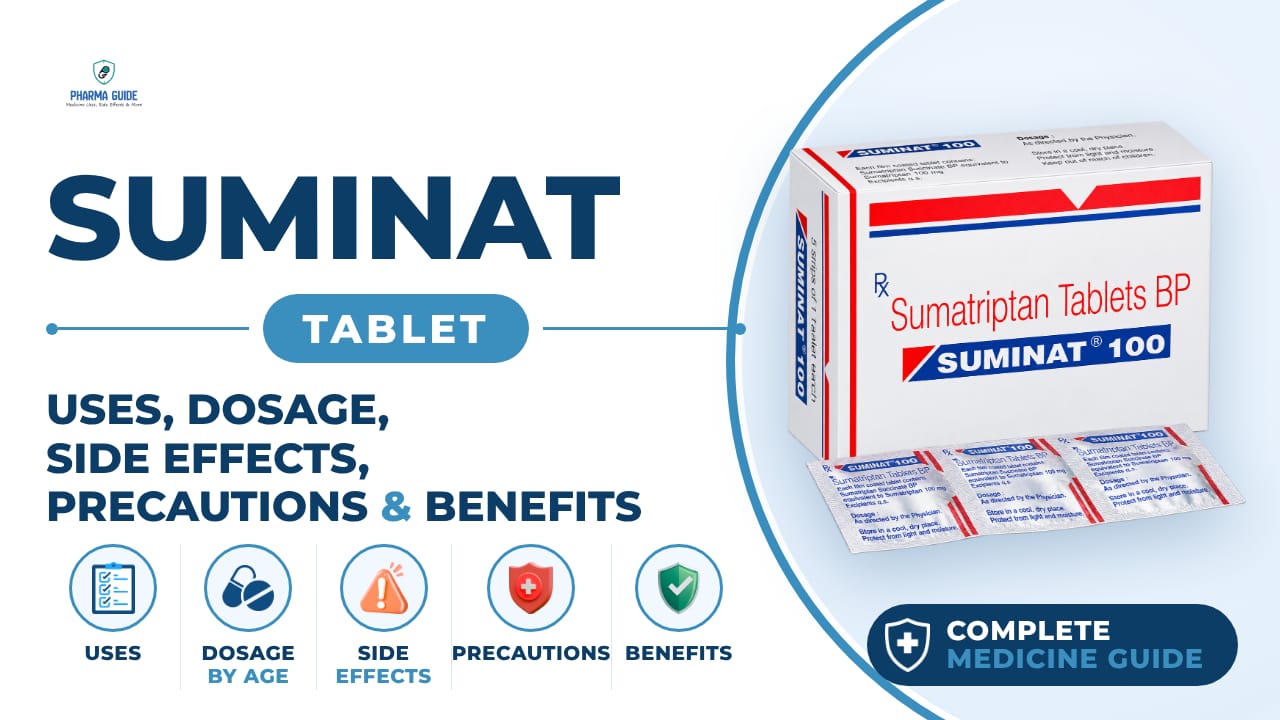
| Generic name | Sumatriptan |
|---|---|
| Drug class | Selective serotonin receptor agonist (triptan) |
| Forms | Tablet, Nasal Spray, Injection |
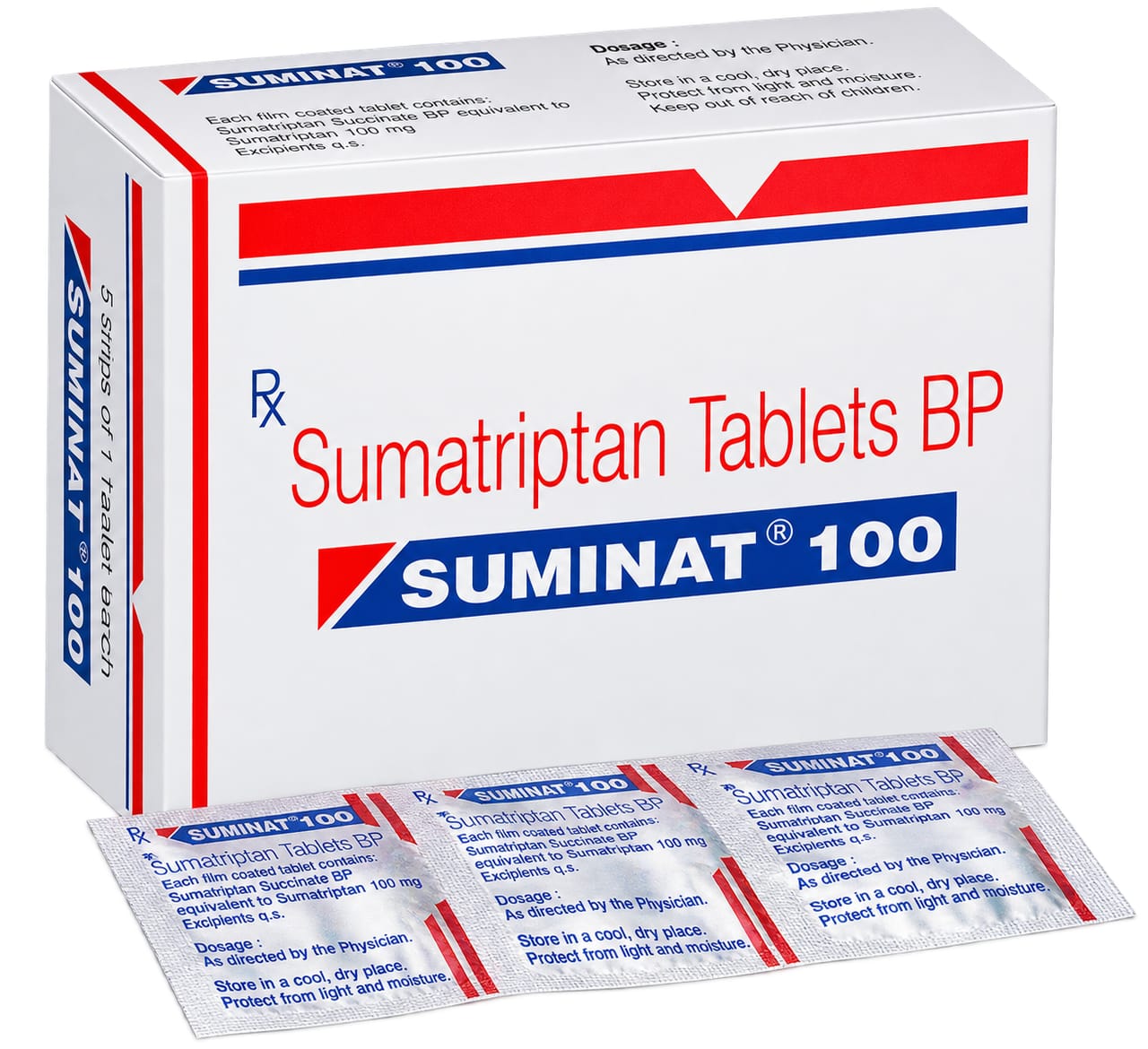
Quick overview
Suminat Tablet contains sumatriptan, a selective serotonin receptor agonist (triptan) used for the acute treatment of migraine attacks with or without aura in adults. It treats a headache that has already started and does not prevent future migraine attacks. It works by narrowing swollen blood vessels in the brain and blocking the release of chemicals that cause pain, inflammation, and sensitivity to light and sound.
What is Suminat Tablet
Suminat is an anti-migraine medicine used to treat acute migraine attacks with or without aura in adults. It only treats a headache that has already started and does not prevent future headaches.
Suminat Tablet uses
- Acute treatment of migraine headaches in adults
- Relieves severe, throbbing migraine headache pain
- Helps with nausea and vomiting that come with migraines
- Reduces sensitivity to light and sound during a migraine attack
Benefits of Suminat Tablet
- Migraine Relief: Helps relieve migraine attacks.
- Headache Reduction: Reduces moderate to severe migraine headache.
- Associated Symptom Relief: May reduce nausea and sensitivity to light or sound associated with migraine.
- Rapid Action: Works on serotonin receptors involved in migraine attacks.
- Migraine-Specific Treatment: Designed specifically for acute migraine treatment.
How Suminat Tablet works
Suminat works by narrowing swollen blood vessels in the brain and blocking the release of certain chemicals that cause pain, inflammation, and sensitivity to light and sound. This helps relieve migraine symptoms, though it does not prevent future attacks.
Suminat Tablet dosage
Swallow the tablet whole with water; do not crush, chew, or split it. Take it as soon as possible after your migraine begins, as it only treats a headache that has already started. It can be taken with or without food. If your headache does not go away or comes back, you may be able to take a second tablet after waiting a set amount of time between doses — check with your doctor or pharmacist. Do not use for longer or in larger amounts than your doctor recommends. This medicine is not recommended for children under 18 or adults over 65 without medical supervision. Contact your doctor if you have frequent headaches in a month, as overusing migraine medicine can make headaches worse.
| Age group | Dose |
|---|---|
| Under 18 Years | Use only if prescribed by a healthcare professional |
| 18–64 Years | 25–100 mg at the onset of migraine; may be repeated after at least 2 hours if prescribed |
| Older Adults (65+ Years) | Use only after medical evaluation; dosing should be individualized |
Available forms and strengths
- Tablet
- Nasal Spray
- Injection
Side effects of Suminat Tablet
Common
- Nausea, vomiting, diarrhea
- Dizziness, sleepiness, tiredness
- Tingling sensation
- Neck stiffness and a feeling of heaviness or pressure in the body
- Muscle pain
- Warmth or redness under the skin
- Flushing (sense of warmth in the face, ears, neck, and trunk)
- Weakness
- Dry mouth
- Itching
- Sneezing, runny nose, congestion, cough
Serious
- Chest pain or heavy feeling, pain spreading to the arm or shoulder, nausea, sweating, general ill feeling
- Sudden numbness or weakness, especially on one side of the body
- Sudden headache, confusion, problems with vision, speech, or balance
- Fast heart rate, agitation, muscle stiffness, hallucinations, lack of coordination, with nausea, vomiting, or diarrhea
- Sudden and severe stomach pain and bloody diarrhea
- Seizure (convulsions)
- Numbness or tingling and a pale or blue-colored appearance in fingers or toes
- Shortness of breath
- Irregular heartbeat
- Severe allergic reactions: hives, difficulty breathing, swelling of face, lips, tongue, or throat
Warnings and precautions
- Do not use this medicine if you have a history of heart disease, chest pain (angina), blood circulation problems, ischemic bowel disease, severe or uncontrolled high blood pressure, or a past heart attack or stroke, because it can cause serious heart-related side effects.
- Do not take this medicine within 24 hours of using certain other migraine medicines (like other triptans or ergot-type medicines), as this combination can be dangerous.
- Do not use this medicine if you have taken a certain type of antidepressant called an MAOI in the past two weeks, as this can cause a dangerous interaction.
- Taking this medicine with certain antidepressants (SSRIs or SNRIs) may increase the risk of a serious condition called serotonin syndrome. Tell your doctor about any antidepressants you take.
- Using migraine medicine too often can actually make headaches worse. Contact your doctor if you have more than four headaches in a month.
- This medicine is not recommended for anyone under 18 or over 65 years old.
- This medicine is not usually recommended during pregnancy unless your doctor decides it is necessary. It is not known for certain whether it can harm an unborn baby, so talk to your doctor if you are pregnant or planning to become pregnant.
- This medicine can pass into breast milk and may harm a nursing baby, so it should not be used while breastfeeding unless your doctor says it's necessary.
- If you have kidney problems, talk to your doctor before taking this medicine, as caution is needed.
- People with mild to moderate liver problems should use this medicine with caution, and it is not recommended for those with severe liver disease. Tell your doctor about any liver problems before starting treatment.
- It's best to avoid alcohol while taking this medicine, as it may increase the risk of side effects.
- This medicine may cause dizziness or sleepiness, which can affect your ability to drive safely or operate machinery. Be careful until you know how it affects you.
Storage
- Store Suminat pills at room temperature away from moisture, heat, and light.
- Keep your medicine away from the reach of children.
- Store Suminat 25 Tablet in a dry place.
- Keep it shielded from light.
- Ensure the medicine is inaccessible to children.
- Always use the tablet before its expiry date.
- Store Below 30° C
When to see a doctor
- Get emergency medical help right away if you have signs of a serious allergic reaction, such as hives, trouble breathing, or swelling of your face, lips, tongue, or throat.
- Stop taking this medicine and call your doctor right away if you have chest pain or heaviness, pain spreading to your arm or shoulder, sudden numbness or weakness especially on one side of your body, sudden confusion or vision/speech/balance problems, a fast heart rate with agitation or hallucinations, severe stomach pain with bloody diarrhea, or a seizure.
- Seek emergency help if you think you have taken too much of this medicine or if someone else has accidentally swallowed it, especially if you notice shaking, skin redness, breathing problems, blue-colored lips or fingernails, vision problems, weakness, lack of coordination, or seizures.
Alternatives
- Rizatriptan
- Zolmitriptan
- Eletriptan
Watch the video
FAQs
What is Suminat Tablet used for?
Suminat Tablet is used for the acute treatment of migraine headaches with or without aura in adults. It treats a headache that has already started and does not prevent future migraine attacks.
How does Suminat Tablet work?
It works by narrowing swollen blood vessels in the brain and blocking the release of certain chemicals that cause pain, inflammation, and sensitivity to light and sound.
What is the dosage of Suminat Tablet?
For adults aged 18-64, the dose is 25-100 mg at the onset of migraine, which may be repeated after at least 2 hours if prescribed. It should be swallowed whole with water and not crushed, chewed, or split.
Can Suminat Tablet be taken during pregnancy or breastfeeding?
It is not usually recommended during pregnancy unless a doctor decides it is necessary, as it is not known for certain whether it can harm an unborn baby. It can also pass into breast milk and may harm a nursing baby, so it should not be used while breastfeeding unless advised by a doctor.
What are the common side effects of Suminat Tablet?
Common side effects include nausea, vomiting, diarrhea, dizziness, sleepiness, tiredness, tingling sensation, neck stiffness, muscle pain, flushing, weakness, dry mouth, itching, and sneezing or runny nose.
General information, not medical advice
Your prescriber and the leaflet in your pack know your situation. This page does not.
- Follow your prescriber and the leaflet
- Don't start, stop, or change a dose on your own
- Doses and warnings differ by country and product
Sources
- GlaxoSmithKline. (2021). Highlights of prescribing information.
- MIMS/myDr. (2011). Sumatriptan RBX 50 and 100 mg. In Consumer Medicine Information.
- Sumatriptan: Uses, interactions, mechanism of action | DrugBank Online. DrugBank.
- Medicines for Children. Sumatriptan for migraine headaches [Leaflet].
- Medicines.org.uk. 2021.
- Drugs, H., 2021. Sumatriptan: MedlinePlus Drug Information.
- Dailymed.nlm.nih.gov. 2021. DailyMed - IMITREX- sumatriptan succinate tablet, film coated.
- Pubchem.ncbi.nlm.nih.gov. 2021. Sumatriptan.
- Medicines.org.uk. 2021. Boots Migraine Relief 50 mg Tablets - Patient Information Leaflet (PIL).
Video
Related medicines

Injectafer Injection: Uses, Dosage, Side Effects, Precautions and Alternates
Iron products
Injectafer (ferric carboxymaltose) treats iron deficiency anemia and heart failure-related iron deficiency via IV. Learn uses, dosage, side effects, and

Gliclazide Tablet: Uses, Dosage, Side Effects, Precautions and Alternates
Sulfonylurea (hypoglycemic/antidiabetic agent)
Gliclazide Tablet is a sulfonylurea for type 2 diabetes that boosts insulin release. Learn about dosage, side effects, warnings, and precautions.