
Safety
General information, not medical advice
Your prescriber and the leaflet in your pack know your situation. This page does not.
- Follow your prescriber and the leaflet
- Don't start, stop, or change a dose on your own
- Doses and warnings differ by country and product
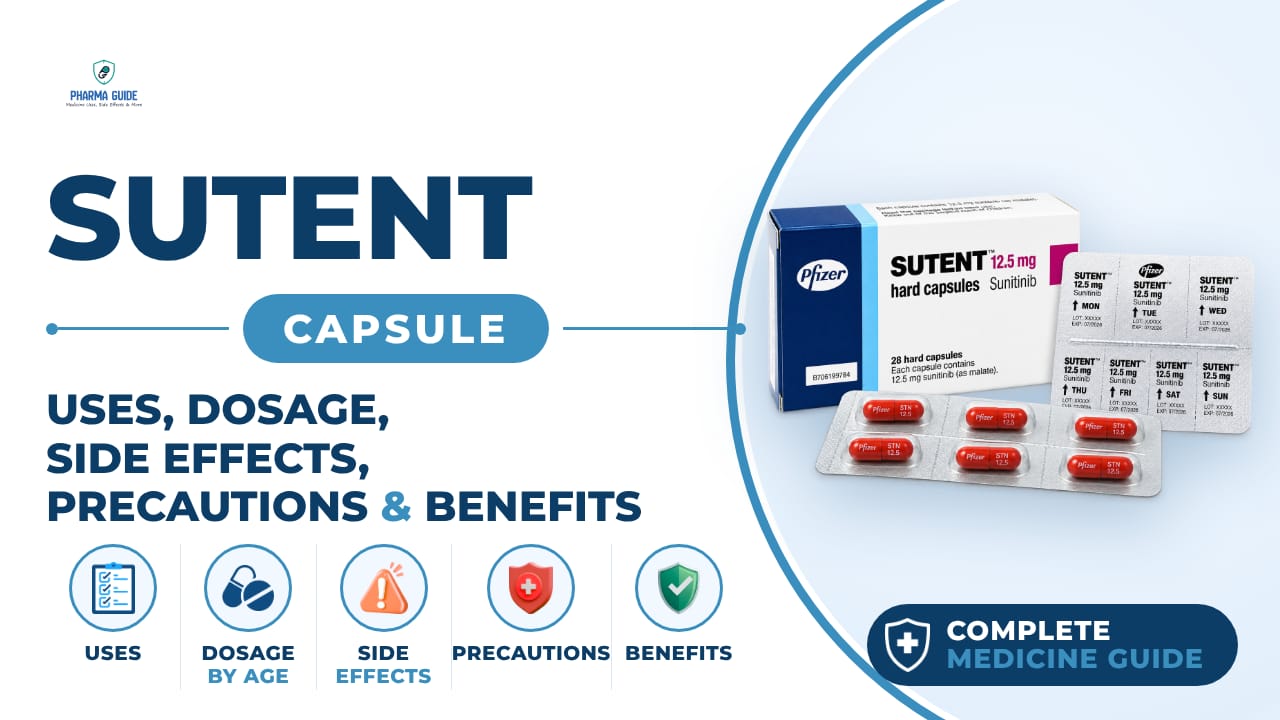
Sutent Capsule: Uses, Dosage, Side Effects, Precautions and Alternates
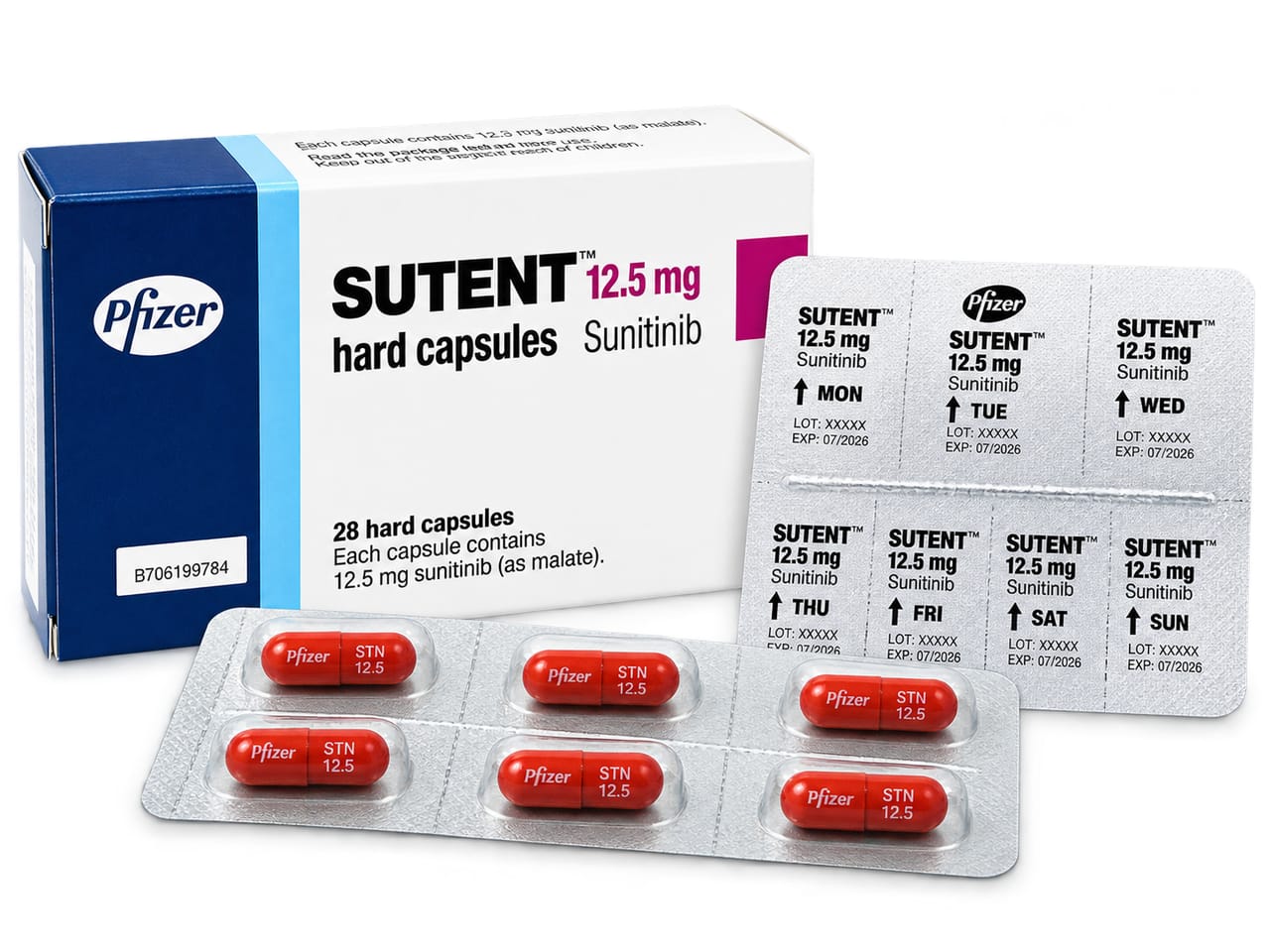
| Generic name | sunitinib (as sunitinib malate) |
|---|---|
| Drug class | Protein kinase inhibitor (multikinase inhibitor) |
| Forms | Capsules (12.5 mg, 25 mg, 37.5 mg, 50 mg) |
Quick overview
Sutent Capsule contains sunitinib (as sunitinib malate), a protein kinase inhibitor. It is used to treat certain cancers, including renal cell carcinoma, gastrointestinal stromal tumour (GIST), and pancreatic neuroendocrine tumours. Sutent works by blocking proteins that cancer cells need to grow and spread. It is taken by mouth and should be used exactly as prescribed, with regular monitoring for side effects.
What is Sutent Capsule
Sutent is a cancer medicine that comes as a capsule you swallow. It contains sunitinib, a drug that blocks certain proteins cancer cells need to grow and spread.
Sutent Capsule uses
- Renal cell carcinoma (a type of kidney cancer)
- Gastrointestinal stromal tumour (GIST), a cancer of the stomach and bowel
- Pancreatic neuroendocrine tumours (pNET), a rare cancer in hormone-releasing cells of the pancreas
Benefits of Sutent Capsule
- Can slow down or stop the growth and spread of certain cancers by blocking proteins involved in tumor growth
- Treats certain advanced renal cell carcinomas
- Treats certain gastrointestinal stromal tumors (GIST)
- Treats certain pancreatic neuroendocrine tumors
- Blocks multiple tyrosine kinases involved in tumor growth and blood-vessel formation
- Provides an oral targeted-therapy option
How Sutent Capsule works
Sutent blocks several proteins called receptor tyrosine kinases that cancer cells use to grow, form new blood vessels, and spread to other parts of the body.
Sutent Capsule dosage
Take the capsules at about the same time each day to help you remember your dose. Swallow the capsules whole with a glass of water; do not open, crush, or chew them. They can be taken with or without food. For kidney cancer and GIST, treatment usually follows a cycle of taking the medicine for a period of time followed by a rest period without medicine. For pancreatic neuroendocrine tumours, the medicine is usually taken every day without a rest period. If you miss a dose at the usual time, skip it and take your next dose as scheduled; do not take two doses together to make up for a missed one. Avoid grapefruit juice and grapefruit during treatment.
| Age group | Dose |
|---|---|
| Under 18 years | Safety and effectiveness have not been established |
| 18–64 years – GIST or advanced RCC | 50 mg once daily for 4 weeks, followed by 2 weeks off |
| 18–64 years – pancreatic neuroendocrine tumors (pNET) | 37.5 mg once daily continuously |
Available forms and strengths
- Capsules: 12.5 mg, 25 mg, 37.5 mg, 50 mg
Side effects of Sutent Capsule
Common
- Tiredness, weakness
- Diarrhoea or constipation
- Nausea or vomiting
- Change or loss of taste
- Loss of appetite, weight loss or weight gain
- Change in skin or hair colour, hair loss
- Tingling or rash on palms of hands or soles of feet
- Dry, red, scaly, or itchy skin, rash, blisters
- Skin infections, pus formation, skin ulcers
- Dizziness, headache
- Sore tongue or mouth, dry mouth, difficulty swallowing, cold sores
- Cough, shortness of breath
- Stomach pain, wind, heartburn, indigestion
- Pain in fingers, arms or legs; muscle pain, joint pain, back pain
- Nose bleed, watery eyes
- Tingling or numbness of hands or feet
- Difficulty sleeping, depression
- Fever or chills, flu-like symptoms, urinary tract infections
- Swelling, enlarged thyroid gland
- Feeling overheated, increased sweating
- Fast or irregular heartbeat
Serious
- Allergic reaction (swollen face, lips, tongue, throat; trouble breathing; chest pain)
- Fits or seizures
- Serious bleeding (vomiting blood, black sticky stools, bloody urine, coughing blood)
- Low blood sugar (hunger, shakiness, anxiety)
- Serious infections
- Liver toxicity or liver failure (yellow skin or eyes, dark urine, itching, right upper stomach pain)
- Heart problems, including heart failure and abnormal heart rhythm
- Damage to the gastrointestinal tract, including perforation
- Muscle or bone toxicity, including jaw bone problems
- Brain toxicity (confusion, sleepiness, decline in mental abilities, changes in consciousness)
- Blood clots in small blood vessels (thrombotic microangiopathy)
- High blood pressure, sometimes severe
Warnings and precautions
- Sutent can cause severe liver problems, including liver failure, which can lead to death. Watch for itching, yellow skin or eyes, dark urine, or pain in the upper right stomach area, and tell your doctor right away.
- This medicine can cause high blood pressure. Your blood pressure will be checked and treated if needed during treatment.
- Serious bleeding, including bleeding from tumors, can occur and may be life-threatening.
- Sutent can affect the heart, including causing heart failure or a decline in the heart's pumping ability, which can be fatal.
- Before starting treatment, have a dental check-up, since this medicine can affect healing and increase risk of jaw bone problems.
- Avoid grapefruit juice and grapefruit, as they may increase the amount of this medicine in your body and increase side effects.
- If you are going to have surgery or dental treatment, tell your doctor or dentist, as treatment may need to be paused temporarily.
- Sutent should not be used during pregnancy because it may harm the unborn baby. Women who could become pregnant should use effective birth control during treatment and for some time after finishing it.
- Do not breastfeed while taking Sutent, since the medicine may pass into breast milk and harm a nursing baby.
- Tell your doctor if you have kidney problems. No starting dose change is usually needed, but your doctor will monitor your kidney function.
- Tell your doctor if you have or have had liver problems. Your liver function will be checked with blood tests before and during treatment because Sutent can cause serious liver problems.
- Tell your doctor if you drink alcohol while taking this medicine.
- Be careful before driving or using machines until you know how this medicine affects you, since it can cause dizziness or tiredness.
Storage
- Keep capsules in their blister pack until it is time to take them
- Keep in a cool, dry place where the temperature stays below 25°C
- Do not store in the bathroom, near a sink, in the car, or on window sills
- Keep out of reach and sight of children; a locked cupboard at least one-and-a-half metres above the ground is a good place to store medicines
- Do not use after the expiry date
- Take unwanted or expired medicine to a pharmacy for safe disposal
When to see a doctor
- Get emergency help right away if you have signs of a severe allergic reaction, such as swelling of your face, lips, tongue or throat, or difficulty breathing.
- Call your doctor straight away or go to the emergency department if you have signs of a stroke, such as numbness or weakness on one side of the body, trouble speaking, seeing, or swallowing, confusion, or sudden severe headache.
- Seek urgent medical attention if you notice signs of bleeding, such as vomiting blood, black or tarry stools, blood in urine, or coughing up blood.
- Call your doctor immediately if you develop yellowing of the skin or eyes, which may be a sign of a serious liver problem.
- Tell your doctor right away if you have fits or seizures during treatment.
- Seek medical help if you think you have taken too much Sutent, even if you feel fine, because you may still need urgent care.
- Call your doctor straight away if you have severe or worsening stomach pain, as this can be a sign of a serious bowel problem.
Alternatives
- Cabozantinib
- Pazopanib
- Axitinib
Watch the video
FAQs
What is Sutent Capsule used for?
Sutent is used to treat renal cell carcinoma (kidney cancer), gastrointestinal stromal tumour (GIST), and pancreatic neuroendocrine tumours by blocking proteins cancer cells need to grow and spread.
How should I take Sutent Capsule?
Swallow the capsules whole with water at about the same time each day, with or without food. Do not open, crush, or chew them. For kidney cancer and GIST, it is usually taken in cycles of 4 weeks on and 2 weeks off, while for pancreatic neuroendocrine tumours it is taken daily without a rest period.
What should I avoid while taking Sutent Capsule?
Avoid grapefruit juice and grapefruit during treatment, as they may increase the amount of medicine in your body and increase side effects.
What are the serious side effects of Sutent Capsule?
Serious side effects include liver toxicity or failure, heart problems, serious bleeding, high blood pressure, seizures, gastrointestinal perforation, jaw bone problems, and brain toxicity.
Can Sutent Capsule be used during pregnancy?
No, Sutent should not be used during pregnancy as it may harm the unborn baby. Women who could become pregnant should use effective birth control during treatment and for some time after finishing it.
General information, not medical advice
Your prescriber and the leaflet in your pack know your situation. This page does not.
- Follow your prescriber and the leaflet
- Don't start, stop, or change a dose on your own
- Doses and warnings differ by country and product
Sources
Video
Related medicines

Injectafer Injection: Uses, Dosage, Side Effects, Precautions and Alternates
Iron products
Injectafer (ferric carboxymaltose) treats iron deficiency anemia and heart failure-related iron deficiency via IV. Learn uses, dosage, side effects, and

Gliclazide Tablet: Uses, Dosage, Side Effects, Precautions and Alternates
Sulfonylurea (hypoglycemic/antidiabetic agent)
Gliclazide Tablet is a sulfonylurea for type 2 diabetes that boosts insulin release. Learn about dosage, side effects, warnings, and precautions.