
Safety
General information, not medical advice
Your prescriber and the leaflet in your pack know your situation. This page does not.
- Follow your prescriber and the leaflet
- Don't start, stop, or change a dose on your own
- Doses and warnings differ by country and product
Symbicort Inhaler: Uses, Dosage, Side Effects, Precautions and Alternates
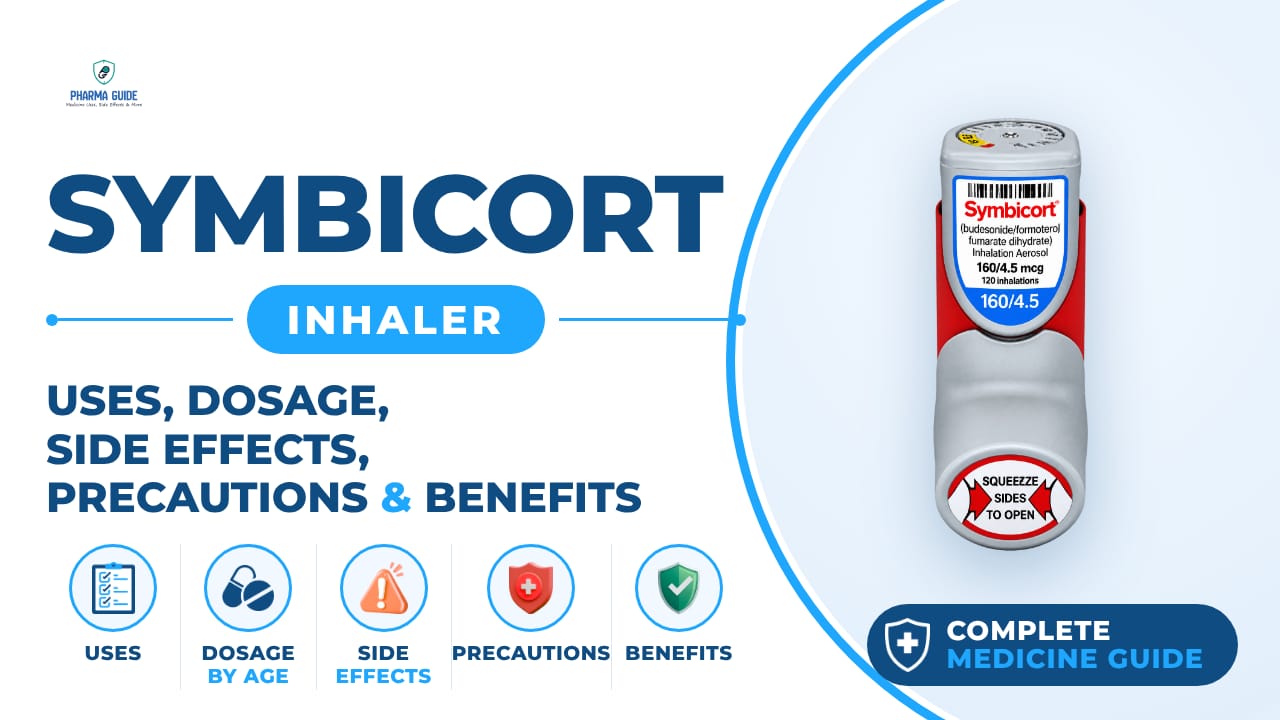
| Generic name | budesonide / formoterol fumarate dihydrate |
|---|---|
| Drug class | Inhaled corticosteroid / LABA |
| Forms | Inhalation aerosol (metered-dose inhaler), Turbuhaler (dry powder inhaler) |
Quick overview
Symbicort Inhaler contains budesonide and formoterol fumarate dihydrate, a combination of an inhaled corticosteroid and a long-acting beta2-adrenergic agonist (LABA). It is used for the treatment of asthma in patients 6 years of age and older and for the long-term treatment of chronic obstructive pulmonary disease (COPD), including chronic bronchitis and emphysema. Symbicort is a controller medicine taken regularly and is not intended to relieve sudden breathing problems.
What is Symbicort Inhaler
Symbicort is a combination inhaler that contains two medicines, budesonide and formoterol, used to treat asthma and chronic obstructive pulmonary disease (COPD). It is a controller medicine, not a rescue inhaler for sudden symptoms.
Symbicort Inhaler uses
- Treatment of asthma in patients 6 years of age and older whose asthma is not well controlled with a long-term asthma control medicine or whose asthma warrants treatment with both an inhaled corticosteroid and a long-acting beta2-adrenergic agonist
- Long-term treatment of chronic obstructive pulmonary disease (COPD), including chronic bronchitis and emphysema, to improve breathing and reduce flare-ups
Benefits of Symbicort Inhaler
- Can significantly improve lung function starting within 15 minutes
- Helps control asthma symptoms and may reduce how often you need rescue medication
- Combines two medicines into one inhaler for convenience
- Helps improve lung function and reduce COPD exacerbations
How Symbicort Inhaler works
Symbicort combines two medicines that work together: budesonide, a corticosteroid that reduces swelling and inflammation in the lungs to make breathing easier, and formoterol, a long-acting beta-agonist that relaxes the muscles in the airways to help open the lungs.
Symbicort Inhaler dosage
Take exactly as prescribed by your doctor, twice a day, morning and evening, about 12 hours apart. Do not use more often than prescribed. Shake the inhaler well before use. Prime the inhaler before first use, if it has not been used for more than 7 days, or if it has been dropped.
After using the inhaler, rinse your mouth with water and spit it out without swallowing to help prevent thrush. Symbicort is not a rescue inhaler and will not relieve sudden breathing problems; always carry a rescue inhaler for sudden symptoms.
If you miss a dose, take your next dose at your usual time; do not take extra puffs to make up for a missed dose. Clean the white mouthpiece with a dry cloth once a week; never rinse the inhaler with water or take it apart.
| Age group | Dose |
|---|---|
| Under 6 Years | Use only if prescribed by a doctor |
| 6–11 Years | 1 inhalation of 80/4.5 mcg twice daily (as prescribed) |
| 12 Years and Above | 1–2 inhalations of 80/4.5 mcg or 160/4.5 mcg twice daily (based on severity) |
| Adults (18–64 Years) | 1–2 inhalations of 80/4.5 mcg or 160/4.5 mcg twice daily (as prescribed) |
| Older Adults (65+ years) | Individualized dose based on medical condition and response |
Available forms and strengths
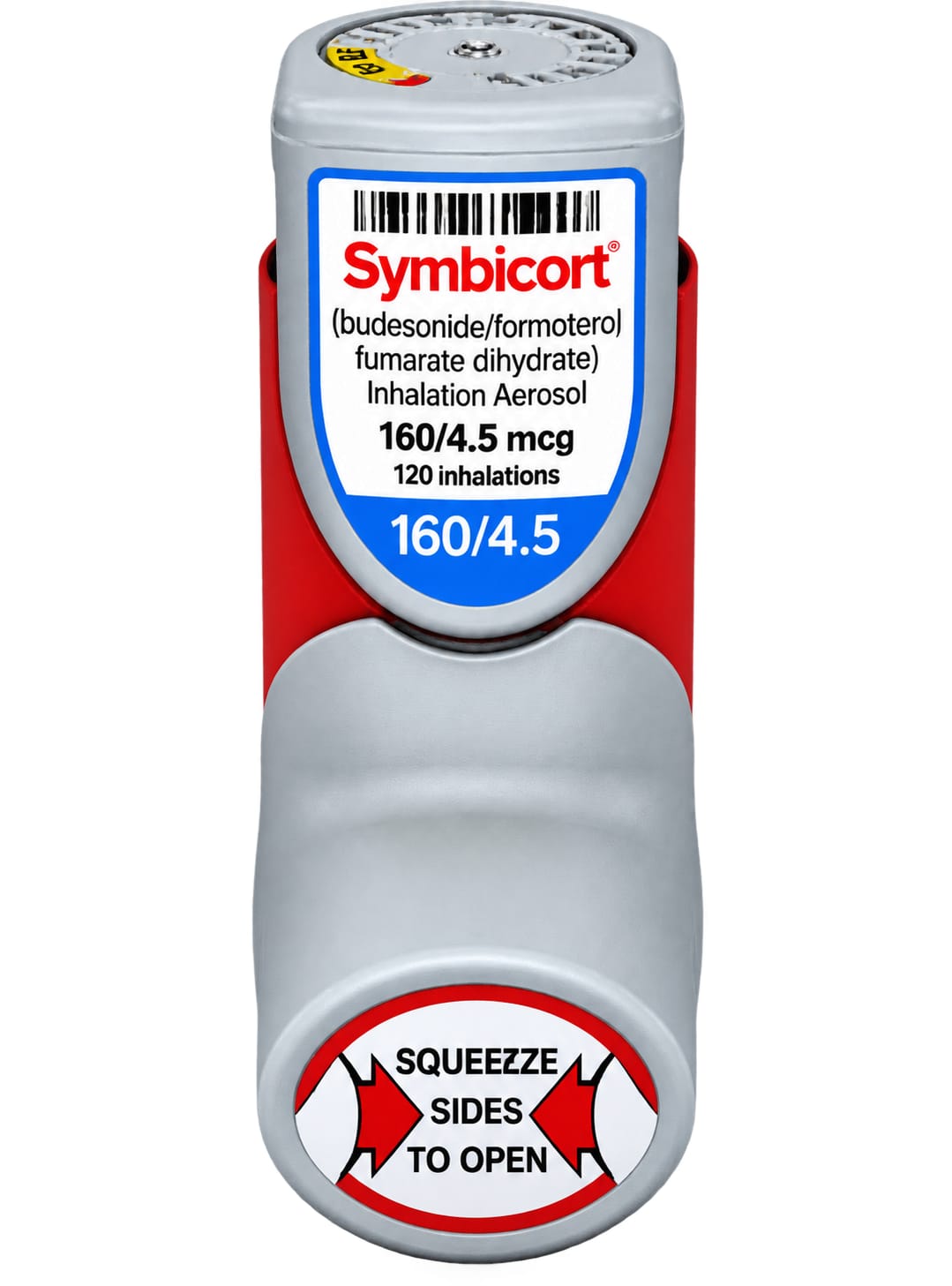
- Inhalation aerosol (metered-dose inhaler) — 80/4.5 mcg, 160/4.5 mcg
- Turbuhaler (dry powder inhaler) — 80/4.5 mcg, 160/4.5 mcg
Side effects of Symbicort Inhaler
Common
- Throat irritation
- Upper respiratory tract infection
- Sinusitis
- Back pain
- Stomach discomfort
- Oral thrush
- Headache
- Throat pain
- Flu symptoms
- Nasal congestion
- Vomiting
- Common cold symptoms
- Bronchitis
- Coughing
- Hoarseness
- Tremor
- Palpitations
Serious
- Serious allergic reactions including rash, hives, swelling of the face, mouth, and tongue, and breathing problems
- Paradoxical bronchospasm (sudden worsening of breathing after using the inhaler)
- Pneumonia and other lower respiratory tract infections, especially in people with COPD
- Increased blood pressure, heart rate, or changes in heart rhythm
- Reduced bone mineral density (osteoporosis)
- Slowed growth in children
- Eye problems including glaucoma and cataracts
- Adrenal insufficiency, especially when stopping oral corticosteroids
- Decreases in blood potassium levels (hypokalemia)
- Increases in blood sugar levels (hyperglycemia)
- Higher risk of infections, including chickenpox, measles, and tuberculosis
- Swelling of blood vessels with symptoms like pins and needles or numbness of arms or legs
Warnings and precautions
- Symbicort will not replace a rescue inhaler for sudden symptoms and should not be used to treat an asthma attack or sudden breathing problems. While taking Symbicort, never use another medicine that contains a long-acting beta-agonist (LABA) for any reason. LABA medicines, when used alone, can increase the risk of hospitalization and death from asthma problems, though this risk is not significantly increased when an inhaled corticosteroid and LABA are used together.
- Do not use more than the prescribed dose of 2 puffs twice a day. Symbicort may not be safe for people with certain conditions such as thyrotoxicosis, acute severe asthma, or those switching from oral corticosteroids without medical guidance.
- It is not known whether Symbicort is safe to use during pregnancy. Untreated asthma itself can cause problems during pregnancy, so talk with your doctor about the risks and benefits. It is also not known whether Symbicort is safe to use while breastfeeding; talk with your doctor about the potential benefits and risks.
- Use only as prescribed; follow the recommended dose and schedule. Do not use as a replacement for emergency treatment unless specifically directed by your doctor. Rinse your mouth with water after each use to reduce the risk of oral thrush.
- Tell your doctor if you have liver disease before starting Symbicort.
- There are no known direct interactions between Symbicort and alcohol, but drinking alcohol may increase your risk of side effects if you take other asthma or COPD medicines or have certain health conditions like high blood pressure. Ask your doctor what amount, if any, is safe.
- Tell your doctor about all medicines you are taking, especially other steroids or bronchodilators. Use the correct inhaler technique to ensure proper medicine delivery. Do not stop using Symbicort suddenly without medical advice.
Storage
- Store at room temperature in an upright position, with the mouthpiece down
- Keep away from open flame or high heat because the canister can explode if it gets too hot
- Throw away the inhaler when the counter reads zero (0), or 3 months after it is taken out of its foil pouch, whichever comes first
- The inhaler may not feel empty and may continue to operate, but you will not get the right amount of medicine if you keep using it
- Never immerse the canister in water to try to determine the amount of medicine remaining (float test)
When to see a doctor
Get medical help right away if your breathing problems worsen or if your rescue inhaler is needed more often or works less well than usual. Get emergency help if you notice signs of a serious allergic reaction such as rash, hives, swelling of the face, mouth, or tongue, or trouble breathing. Contact your doctor if you notice more mucus, fever, more coughing, mucus that changes color, chills, or increased trouble breathing, as these could be signs of pneumonia. Seek medical help immediately if you become very breathless, wheezy, or tight-chested, or if using more inhalations does not help within 5 minutes.
Alternatives
- Advair
- Breo Ellipta
- Flutiform
Watch the video
FAQs
What is Symbicort Inhaler used for?
Symbicort is used to treat asthma in patients 6 years and older and for the long-term treatment of COPD, including chronic bronchitis and emphysema, to improve breathing and reduce flare-ups.
Is Symbicort a rescue inhaler?
No, Symbicort is a controller medicine taken regularly and is not intended to relieve sudden breathing problems. A rescue inhaler should always be carried for sudden symptoms.
How is Symbicort Inhaler used?
Symbicort is taken exactly as prescribed, twice a day, morning and evening, about 12 hours apart. The inhaler should be shaken well before use and primed before first use, if not used for more than 7 days, or if dropped.
What are the common side effects of Symbicort Inhaler?
Common side effects include throat irritation, upper respiratory tract infection, sinusitis, back pain, stomach discomfort, oral thrush, headache, flu symptoms, nasal congestion, coughing, hoarseness, tremor, and palpitations.
Why should I rinse my mouth after using Symbicort?
Rinsing your mouth with water and spitting it out without swallowing after using Symbicort helps prevent oral thrush.
General information, not medical advice
Your prescriber and the leaflet in your pack know your situation. This page does not.
- Follow your prescriber and the leaflet
- Don't start, stop, or change a dose on your own
- Doses and warnings differ by country and product
Sources
Video
Related medicines

Injectafer Injection: Uses, Dosage, Side Effects, Precautions and Alternates
Iron products
Injectafer (ferric carboxymaltose) treats iron deficiency anemia and heart failure-related iron deficiency via IV. Learn uses, dosage, side effects, and

Gliclazide Tablet: Uses, Dosage, Side Effects, Precautions and Alternates
Sulfonylurea (hypoglycemic/antidiabetic agent)
Gliclazide Tablet is a sulfonylurea for type 2 diabetes that boosts insulin release. Learn about dosage, side effects, warnings, and precautions.