
Safety
General information, not medical advice
Your prescriber and the leaflet in your pack know your situation. This page does not.
- Follow your prescriber and the leaflet
- Don't start, stop, or change a dose on your own
- Doses and warnings differ by country and product
Symproic Tablet: Uses, Dosage, Side Effects, Precautions and Alternates
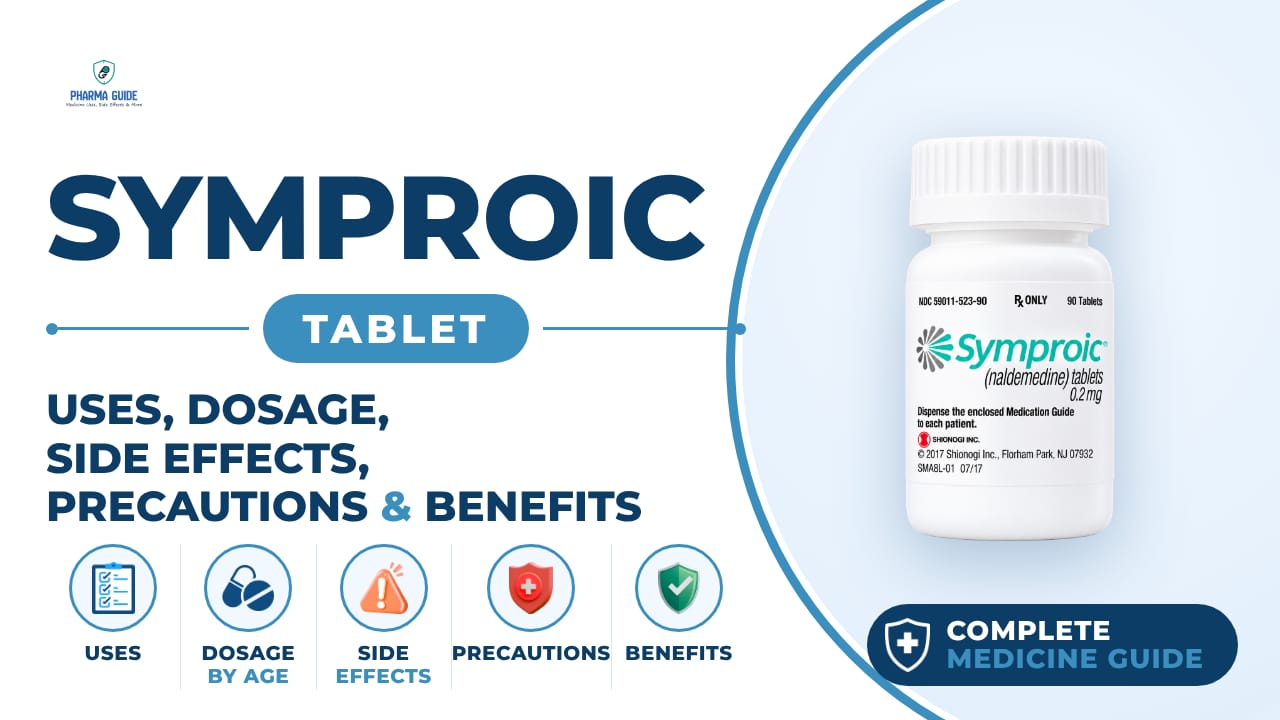
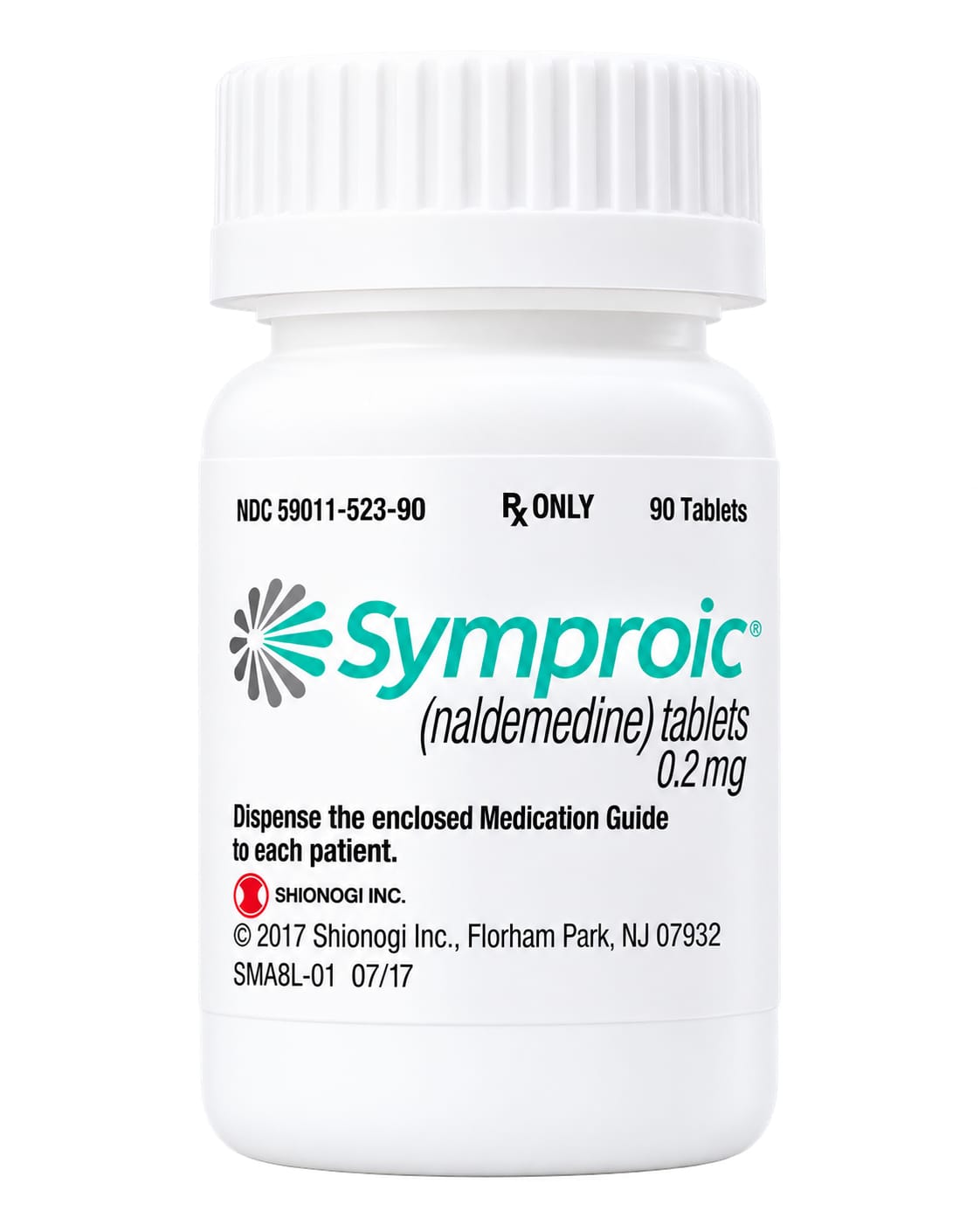
| Generic name | naldemedine |
|---|---|
| Drug class | Peripherally acting mu-opioid receptor antagonist (PAMORA) |
| Forms | Oral tablets |
Quick overview
Symproic Tablet contains naldemedine, a peripherally acting mu-opioid receptor antagonist (PAMORA), used to treat opioid-induced constipation in adults. It works in the gut to help restore regular bowel movements without reducing the pain-relieving effects of opioids. Symproic is taken once daily, with or without food, and is available as an oral tablet.
What is Symproic Tablet
Symproic is a prescription medicine used to treat constipation caused by opioid pain medicines. It contains the active ingredient naldemedine.
Symproic Tablet uses
- Treatment of opioid-induced constipation (OIC) in adults with chronic non-cancer pain, including patients with chronic pain related to prior cancer or its treatment who do not require frequent (e.g., weekly) opioid dosage escalation
- Treats opioid-induced constipation
- Helps restore bowel movement frequency in adults taking opioid pain medicines
Benefits of Symproic Tablet
- Helps restore more regular bowel movements in people taking opioid pain medicines
- Works on the gut without reducing the pain-relieving effects of the opioid
- Improves spontaneous bowel movements
- Targets opioid-related constipation without primarily reversing pain relief
- Taken as a convenient once-daily tablet
- Can be taken with or without food
- Does not usually require routine dose titration
How Symproic Tablet works
Symproic blocks opioid receptors in the gut so that opioids can no longer slow down the intestines, which helps relieve constipation without reversing the pain relief opioids give elsewhere in the body. It is designed not to cross into the brain in meaningful amounts, so it does not block the pain-relieving effects of opioids.
Symproic Tablet dosage
Take Symproic once daily, any time of day, with or without food. It may not work as well in people who have been taking opioids for less than 4 weeks. Stop taking Symproic if you stop taking your opioid pain medicine. If you miss a dose, take it as soon as you remember, but skip it if it is almost time for your next dose; do not take two doses at once.
| Age group | Dose |
|---|---|
| Under 17 years | Not established / not recommended. Safety and effectiveness have not been established in pediatric patients. |
| 18–74 years | 0.2 mg once daily |
Available forms and strengths
- Oral tablets
Side effects of Symproic Tablet
Common
- Stomach pain
- Diarrhea
- Nausea
- Vomiting
- Gastroenteritis (stomach flu)
Serious
- Severe allergic reactions (hives, trouble breathing, swelling of face/lips/tongue/throat, racing heart, fever, swollen lymph nodes)
- Opioid withdrawal symptoms (sweating, chills, hot flashes or flushing, tearing of the eyes, sneezing, fever, feeling cold, stomach pain, diarrhea, nausea, vomiting)
- Tears or holes in the stomach or intestine (perforation), especially in people with conditions affecting the gut wall
Warnings and precautions
- Do not use Symproic if you have a known or suspected blockage in your stomach or intestines, or if you are at increased risk of a blockage coming back, because of the risk of a tear forming in the gut.
- Do not use Symproic if you have had an allergic reaction to naldemedine in the past, which can include wheezing or rash.
- Tears in the wall of the stomach or intestine have happened with similar medicines, especially in people with conditions that weaken the gut wall. Watch for severe, ongoing, or worsening stomach pain and stop the medicine if this happens.
- Symproic can cause symptoms of opioid withdrawal. People whose blood-brain barrier is disrupted may be at higher risk for withdrawal or reduced pain relief, so doctors should weigh risks and benefits carefully and watch for withdrawal symptoms.
- Avoid taking Symproic with strong medicines that induce CYP3A (such as rifampin), as they may make Symproic less effective.
- Taking Symproic with certain antifungal medicines or other CYP3A or P-glycoprotein inhibitors may raise Symproic levels in the body, so your doctor should monitor you for side effects.
- Do not take Symproic together with another opioid-blocking medicine, since this can increase the risk of opioid withdrawal.
- Using Symproic during pregnancy may cause the baby to go through opioid withdrawal because the baby's blood-brain barrier is not fully developed. Your doctor should weigh the benefits and risks before prescribing it during pregnancy.
- It is not known if naldemedine passes into breast milk. Because of the risk of opioid withdrawal in the nursing infant, you and your doctor should decide whether to stop breastfeeding or stop the medicine.
- No routine dosage adjustment is generally required for mild to severe renal impairment, although patients should still be monitored clinically.
- Symproic should be avoided in people with severe liver problems. No dose change is needed for mild or moderate liver impairment.
- It is not known whether drinking alcohol affects how Symproic works.
- Symproic is not usually sedating, but avoid driving if dizziness or other symptoms affecting alertness occur.
Storage
- Store Symproic in a light resistant container at 20°C – 25°C (68°F to 77°F)
- Excursions permitted to 15°C to 30°C (59°F to 86°F)
- Store in the original container at room temperature, away from moisture and heat
When to see a doctor
- Get emergency help right away if you have signs of a serious allergic reaction, such as trouble breathing, swelling of the face, lips, mouth, tongue, or throat, hives, or a racing heart.
- Stop taking Symproic and contact your doctor immediately if you have severe stomach pain that does not go away, as this can be a sign of a serious problem with your gut.
- Tell your doctor right away if you notice symptoms of opioid withdrawal, such as sweating, chills, hot flashes, tearing eyes, sneezing, fever, feeling cold, stomach pain, diarrhea, nausea, or vomiting.
- If you think you or someone else has taken too much Symproic, get emergency medical help or contact your local poison control center right away.
Alternatives
- Naloxegol
- Methylnaltrexone
- Lubiprostone
Watch the video
FAQs
What is Symproic Tablet used for?
Symproic is used to treat opioid-induced constipation in adults with chronic non-cancer pain, including those with chronic pain related to prior cancer or its treatment who do not require frequent opioid dosage increases.
How should I take Symproic Tablet?
Take Symproic once daily, any time of day, with or without food. It may not work as well if you have been taking opioids for less than 4 weeks, and you should stop taking it if you stop your opioid pain medicine.
What are the common side effects of Symproic?
Common side effects include stomach pain, diarrhea, nausea, vomiting, and gastroenteritis (stomach flu).
Can Symproic cause opioid withdrawal symptoms?
Yes, Symproic can cause opioid withdrawal symptoms such as sweating, chills, hot flashes, tearing eyes, sneezing, fever, feeling cold, stomach pain, diarrhea, nausea, or vomiting.
Who should not take Symproic Tablet?
Symproic should not be used by people with a known or suspected blockage in the stomach or intestines, those at increased risk of a blockage returning, or anyone who has had an allergic reaction to naldemedine.
General information, not medical advice
Your prescriber and the leaflet in your pack know your situation. This page does not.
- Follow your prescriber and the leaflet
- Don't start, stop, or change a dose on your own
- Doses and warnings differ by country and product
Sources
Video
Related medicines

Injectafer Injection: Uses, Dosage, Side Effects, Precautions and Alternates
Iron products
Injectafer (ferric carboxymaltose) treats iron deficiency anemia and heart failure-related iron deficiency via IV. Learn uses, dosage, side effects, and

Gliclazide Tablet: Uses, Dosage, Side Effects, Precautions and Alternates
Sulfonylurea (hypoglycemic/antidiabetic agent)
Gliclazide Tablet is a sulfonylurea for type 2 diabetes that boosts insulin release. Learn about dosage, side effects, warnings, and precautions.