
Safety
General information, not medical advice
Your prescriber and the leaflet in your pack know your situation. This page does not.
- Follow your prescriber and the leaflet
- Don't start, stop, or change a dose on your own
- Doses and warnings differ by country and product
Symtuza Tablet: Uses, Dosage, Side Effects, Precautions and Alternates
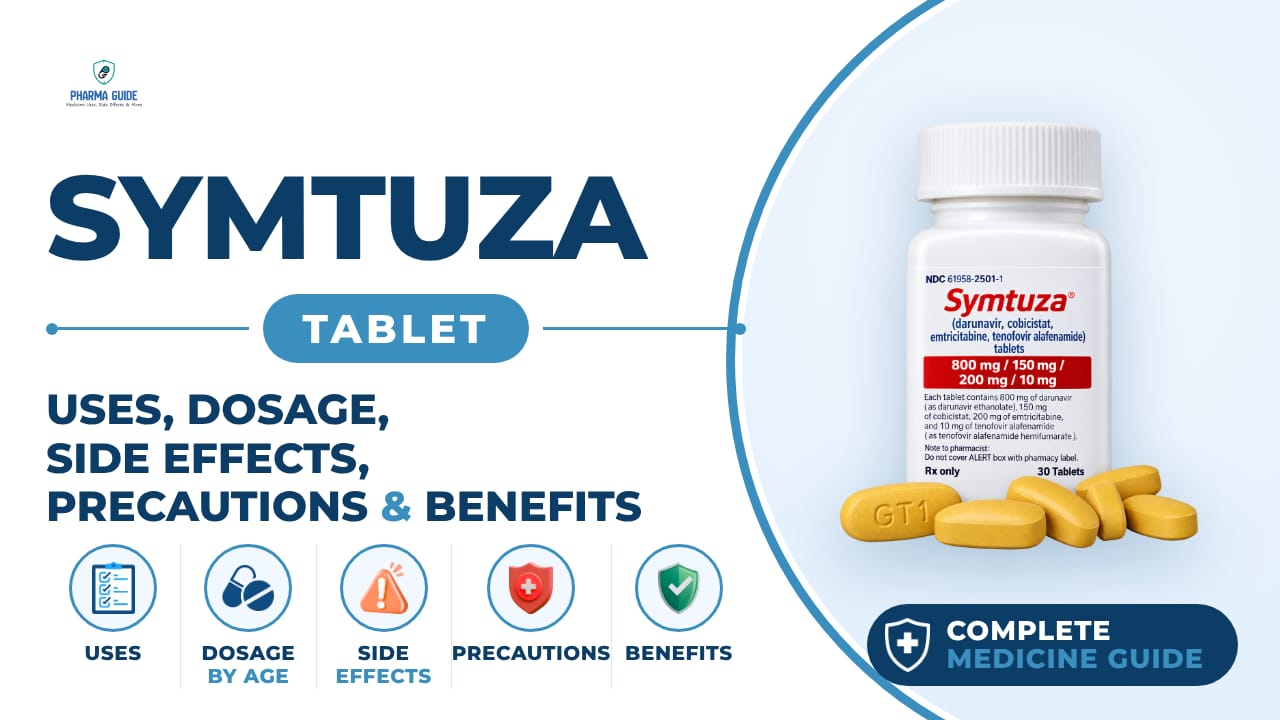
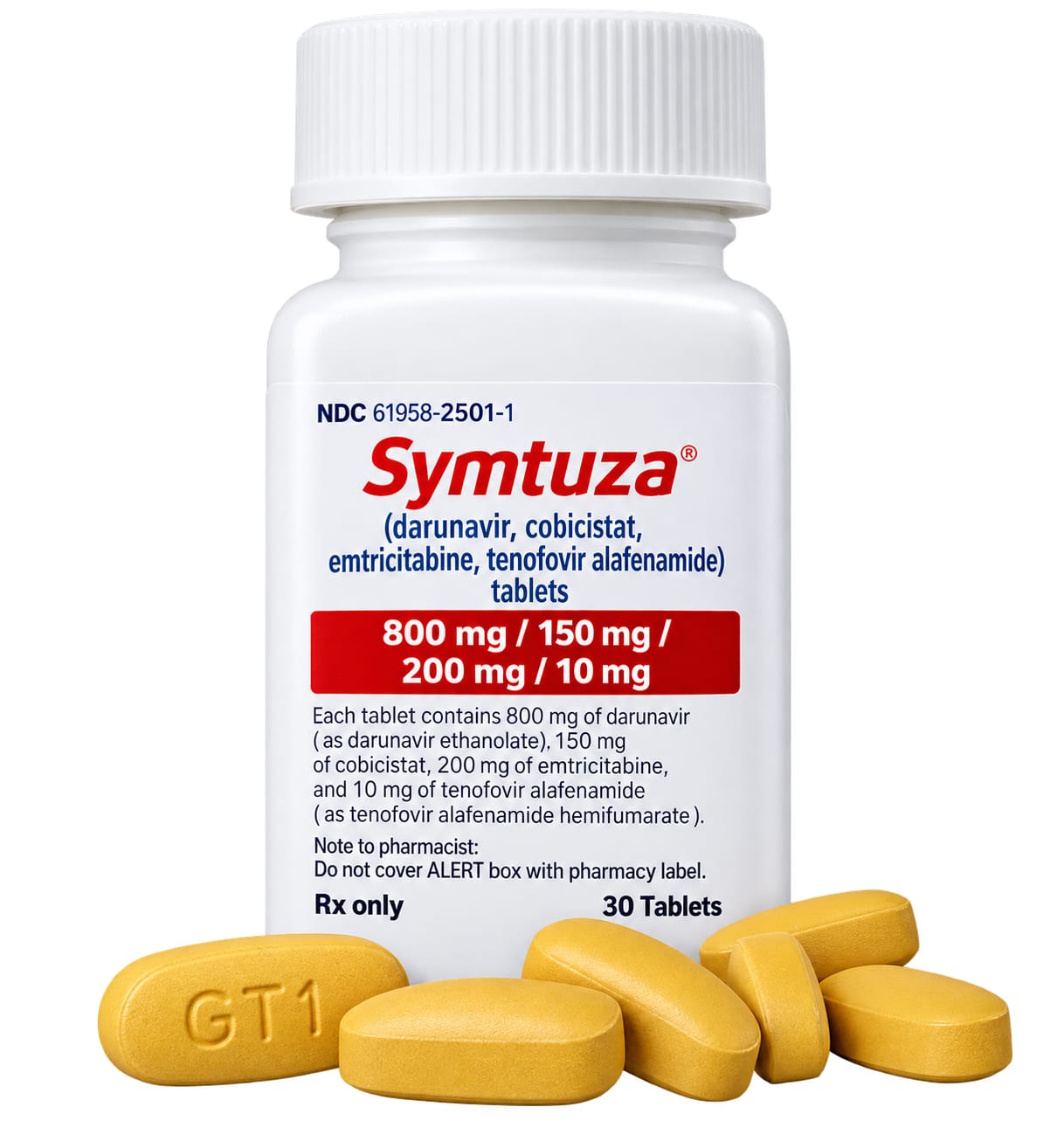
| Generic name | Darunavir, cobicistat, emtricitabine, and tenofovir alafenamide |
|---|---|
| Drug class | Antiviral combination (HIV protease inhibitor, CYP3A inhibitor/booster, and two nucleoside/nucleotide reverse transcriptase inhibitors) |
| Forms | Film-coated tablet |
Quick overview
Symtuza is a single tablet containing four medicines — darunavir, cobicistat, emtricitabine, and tenofovir alafenamide — used to treat HIV-1 infection. It is intended for adults and adolescents/children who meet the required age and weight criteria. Symtuza is not a cure for HIV but helps control the virus when taken once daily with food.
What is Symtuza Tablet
Symtuza is a single tablet containing four medicines that work together to treat HIV-1 infection. It is used in adults and children aged 12 and older (US) or 6 and older (EU) who weigh at least 40 kg (or 25 kg for the lower-strength EU tablet). It is not a cure for HIV, but it helps control the virus.
Symtuza Tablet uses
- Treatment of HIV-1 (Human Immunodeficiency Virus) infection in adults and adolescents/children who weigh at least 40 kg
- Used in people who have not been treated with HIV medicines before
- Used in people whose HIV is already controlled (virologically suppressed) who are switching from another stable HIV regimen
Benefits of Symtuza Tablet
- Reduces the amount of HIV in the blood, which helps the immune system work better
- Reduces the risk of developing illnesses related to HIV infection
- Taken as one tablet once a day
How Symtuza Tablet works
Symtuza contains four medicines. Three of them (darunavir, emtricitabine, and tenofovir alafenamide) directly reduce the amount of HIV in the body by blocking steps the virus needs to multiply. The fourth ingredient, cobicistat, does not fight HIV itself but boosts the levels of darunavir in the body so it works better.
Symtuza Tablet dosage
Take Symtuza with food every day, at approximately the same time each day; Symtuza cannot work properly without food. Eat a meal or snack within 30 minutes before taking the tablet; the type of food does not matter. Swallow the tablet whole with a drink such as water, milk, or another nutritional drink; do not crush the tablet. If you cannot swallow the tablet whole, it may be split into two pieces using a tablet-cutter, and both pieces should be taken right away with food.
Do not stop taking this medicine without talking to your doctor first, even if you feel better. Make sure you do not run out of medicine, since stopping even briefly can allow the virus to increase and become harder to treat. This medicine is not for use in children weighing less than 25 kg, and the higher-strength tablet is not for children weighing less than 40 kg.
If you miss a dose and notice within 12 hours of your usual time, take it right away with food; if you notice after 12 hours, skip the missed dose and take your next dose as usual; do not double up doses.
| Age group | Dose |
|---|---|
| Under 40 kg | Fixed-dose Symtuza tablet is generally not used |
| Adolescents ≥40 kg | 1 tablet once daily with food |
| 18–64 years | 1 tablet once daily with food |
Available forms and strengths
- Film-coated tablet
Side effects of Symtuza Tablet
Common
- Headache
- Abdominal pain / discomfort
- Diarrhoea
- Rash
- Fatigue
- Nausea
- Flatulence (gas)
- Abnormal dreams
- Joint pain
- Muscle pain, cramps, or weakness
- Dizziness
Serious
- Signs of an allergic reaction: rash, itching or hives, shortness of breath, wheezing or trouble breathing, swelling of the face, lips, tongue or other parts of the body
- Severe or life-threatening skin reactions (e.g., Stevens-Johnson syndrome, toxic epidermal necrolysis, DRESS) with fever, blisters, mouth sores, red or inflamed eyes
- Severe liver problems: yellowing of skin or eyes, dark urine, pale stools, nausea, vomiting, loss of appetite, pain or tenderness on the right side below the ribs
- New or worsening kidney problems
- Lactic acidosis: unusual tiredness, muscle pain, trouble breathing, stomach pain with nausea/vomiting, feeling cold, dizziness, fast or irregular heartbeat
- Immune reconstitution syndrome / inflammatory syndrome: new symptoms of infection or autoimmune disease shortly after starting treatment
- Worsening of hepatitis B after stopping the medicine
- New onset or worsening diabetes/high blood sugar
- Increased bleeding in people with hemophilia
- Bone problems such as osteonecrosis (joint pain, stiffness, difficulty moving)
Warnings and precautions
- If you have both HIV and hepatitis B, your hepatitis B may suddenly get much worse if you stop taking this medicine. Do not stop without talking to your doctor, and you may need blood tests for several months after stopping.
- This medicine can cause liver damage, including rare cases that have been fatal. Your doctor will check your liver function before and during treatment.
- Severe skin reactions can occur, including serious blistering skin conditions. Stop the medicine and get medical help right away if a rash develops along with fever, blisters, or mouth sores.
- Do not combine this medicine with certain other drugs, as this can cause serious or life-threatening reactions or make the medicine stop working properly.
- Kidney problems, including kidney failure, have been reported with this medicine. Your doctor will monitor your kidney function.
- This medicine does not stop you from passing HIV to others, so safer sex practices and other precautions should still be used.
- This medicine is not recommended during pregnancy because the levels of two of its ingredients become too low in the body, which could reduce how well it controls HIV. It should not be started during pregnancy, and anyone who becomes pregnant while taking it should switch to a different treatment.
- Women with HIV should not breastfeed because the virus can be passed to the baby through breast milk.
- This medicine should not be used in people with severe kidney problems, and kidney function should be checked before and during treatment.
- This medicine must not be used in people with severe liver problems, and should be used carefully in people with mild to moderate liver impairment.
- This medicine can cause dizziness. Do not drive or operate machinery if you feel dizzy after taking it.
Storage
- Store below 30°C (some formulations: store below 25°C), in the original container with the desiccant inside to protect from moisture
- Keep the bottle tightly closed
- Store in a cool, dry place away from moisture, heat, or sunlight; do not store in the bathroom, near a sink, in the car, or on windowsills
- Keep out of reach and sight of children
- Do not use after the expiry date
- If no longer needed or expired, take it to a pharmacy for safe disposal; do not throw away in wastewater or household trash
When to see a doctor
- Get emergency help right away if you have signs of a severe allergic reaction, such as swelling of the face, lips, tongue, throat, hives, or trouble breathing.
- Call your doctor right away if you notice yellowing of the skin or eyes, dark urine, pale stools, nausea, vomiting, loss of appetite, or pain on your right side below the ribs, as these may be signs of liver problems.
- Stop the medicine and contact your doctor immediately if you develop a rash along with fever, tiredness, muscle or joint pain, blisters, mouth sores, or red/inflamed eyes, as this could be a serious skin reaction.
- Tell your doctor right away if you notice symptoms of a new infection, as your immune system may react to hidden infections after starting treatment.
- Seek urgent medical attention if you think you have taken too much of this medicine, even if you feel fine.
Alternatives
- Biktarvy
- Dovato
- Triumeq
Watch the video
FAQs
What is Symtuza Tablet used for?
Symtuza is used to treat HIV-1 infection in adults and adolescents/children who weigh at least 40 kg, including those new to HIV treatment and those switching from another stable HIV regimen.
How should I take Symtuza Tablet?
Take Symtuza once daily with food, at approximately the same time each day. Eat a meal or snack within 30 minutes before taking the tablet and swallow it whole with water, milk, or another nutritional drink; do not crush it.
What should I do if I miss a dose of Symtuza?
If you notice within 12 hours of your usual time, take it right away with food. If more than 12 hours have passed, skip the missed dose and take your next dose as usual; do not double up doses.
What are the common side effects of Symtuza Tablet?
Common side effects include headache, abdominal pain, diarrhoea, rash, fatigue, nausea, flatulence, abnormal dreams, joint pain, muscle pain or cramps, and dizziness.
Can Symtuza be used during pregnancy?
Symtuza is not recommended during pregnancy because levels of two of its ingredients become too low, which could reduce how well it controls HIV. It should not be started during pregnancy, and anyone who becomes pregnant while taking it should switch to a different treatment.
General information, not medical advice
Your prescriber and the leaflet in your pack know your situation. This page does not.
- Follow your prescriber and the leaflet
- Don't start, stop, or change a dose on your own
- Doses and warnings differ by country and product
Sources
Video
Related medicines

Injectafer Injection: Uses, Dosage, Side Effects, Precautions and Alternates
Iron products
Injectafer (ferric carboxymaltose) treats iron deficiency anemia and heart failure-related iron deficiency via IV. Learn uses, dosage, side effects, and

Gliclazide Tablet: Uses, Dosage, Side Effects, Precautions and Alternates
Sulfonylurea (hypoglycemic/antidiabetic agent)
Gliclazide Tablet is a sulfonylurea for type 2 diabetes that boosts insulin release. Learn about dosage, side effects, warnings, and precautions.