
Safety
General information, not medical advice
Your prescriber and the leaflet in your pack know your situation. This page does not.
- Follow your prescriber and the leaflet
- Don't start, stop, or change a dose on your own
- Doses and warnings differ by country and product
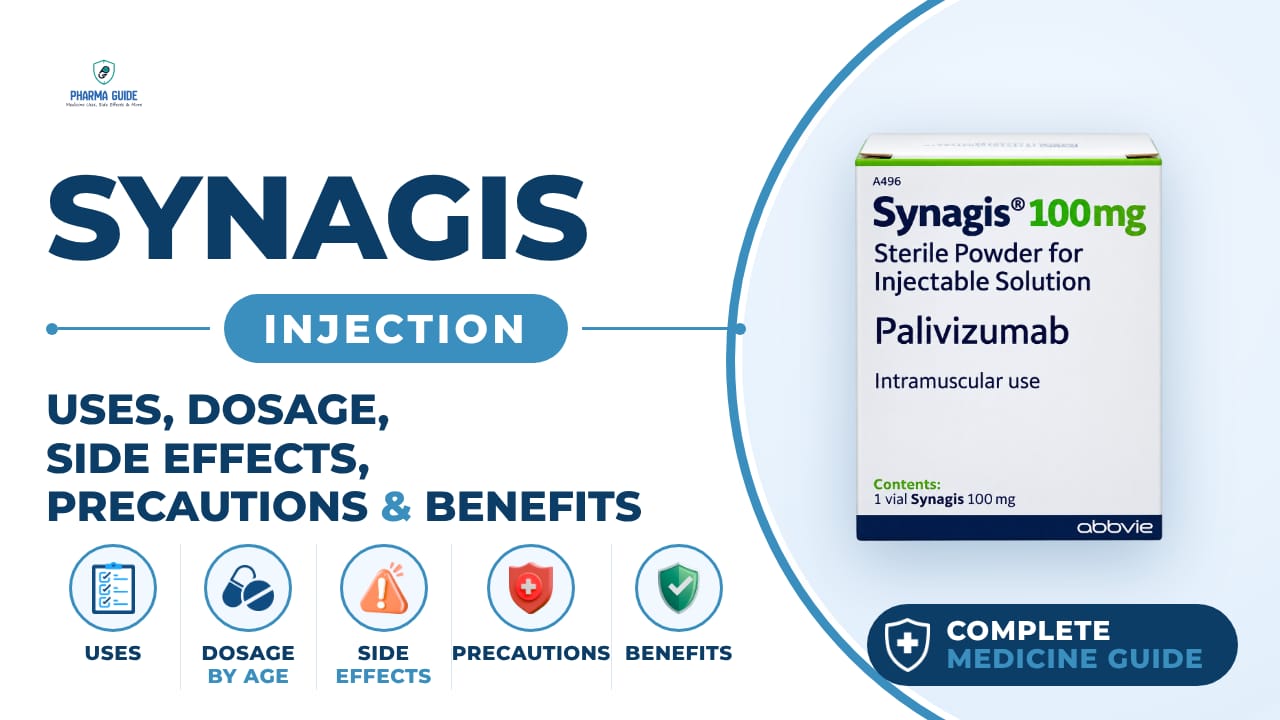
Synagis Injection: Uses, Dosage, Side Effects, Precautions and Alternates
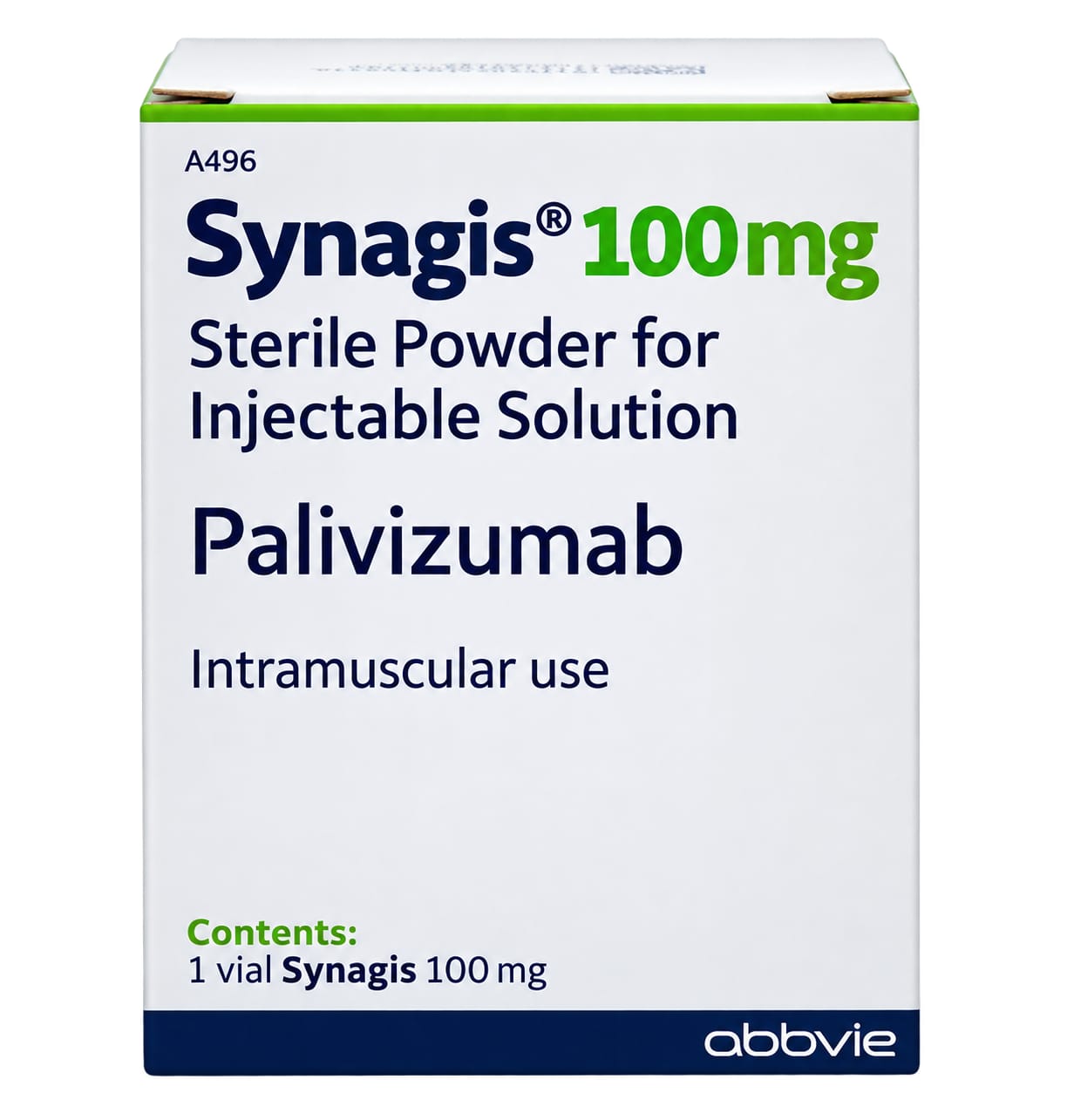
| Generic name | palivizumab |
|---|---|
| Drug class | RSV Agents (antiviral monoclonal antibody, respiratory syncytial virus agent) |
| Forms | Solution for injection (single-dose vials) |
Quick overview
Synagis Injection (palivizumab) is an RSV agent used to help prevent serious lung disease caused by respiratory syncytial virus (RSV) in certain high-risk infants and young children, including those born prematurely or with certain heart or lung conditions. It is given as a monthly injection during RSV season and does not treat a child who already has RSV disease. Side effects can range from mild cold-like symptoms to serious allergic reactions, so it should be given under medical supervision.
What is Synagis Injection
Synagis is a man-made antibody that helps prevent serious lung disease caused by respiratory syncytial virus (RSV) in babies who are premature or who have certain heart or lung conditions. It does not treat a child who already has RSV disease.
Synagis Injection uses
- Prevention of serious lower respiratory tract disease caused by RSV in children born prematurely (35 weeks gestation or less) who are 6 months of age or younger at the start of RSV season
- Prevention of serious RSV lung disease in children with bronchopulmonary dysplasia (BPD) that needed treatment within the last 6 months, who are 24 months of age or younger at the start of RSV season
- Prevention of serious RSV lung disease in children with certain types of heart disease (hemodynamically significant congenital heart disease) who are 24 months of age or younger at the start of RSV season
Benefits of Synagis Injection
- Helps prevent severe RSV infection in eligible infants
- Reduces the risk of RSV-related hospitalization
- Helps protect premature babies at high risk
- Helps protect eligible children with chronic lung disease
- Helps protect eligible children with certain congenital heart conditions
How Synagis Injection works
Synagis works by attaching to a protein on the surface of the RSV virus, which stops the virus from entering and infecting cells, especially in the lungs, and also prevents infected cells from spreading the virus to other cells.
Synagis Injection dosage
Synagis is given as a monthly injection into a muscle, usually in the thigh, by a healthcare provider. The first injection should be given before RSV season starts, and injections continue monthly throughout the season, usually every 28 to 30 days. If a child gets RSV infection, they should still keep getting their scheduled monthly injections to help prevent future RSV disease. If an injection is missed, contact the healthcare provider to schedule another one as soon as possible. Children who have heart surgery involving cardiopulmonary bypass may need an extra injection soon after the surgery, even if it is sooner than a month since the last dose. Synagis is not for use in adults.
Use exactly as prescribed by your doctor or pharmacist.
Available forms and strengths
- Solution for injection (single-dose vials)
Side effects of Synagis Injection
Common
- Diarrhea
- Vomiting
- Fever
- Cough
- Earache
- Runny or stuffy nose
- Sneezing
- Other cold symptoms
- Rash
- Injection site reactions (pain, redness, or swelling)
Serious
- Hives
- Difficulty breathing
- Swelling of face, lips, tongue, or throat
- Severe rash
- Itching
- Rapid or difficult breathing
- Blue-colored lips, skin, or fingernails
- Muscle weakness
- Being hard to wake up
- High fever, ear pain or drainage, tugging at the ear
- Warmth or swelling of the ear
- Crying or fussiness, especially while lying down
- Changes in sleeping patterns
- Poor feeding or loss of appetite
- Easy bruising or bleeding
- Trouble breathing
- Low platelet counts (severe thrombocytopenia)
Warnings and precautions
- Severe allergic reactions, including fatal cases of anaphylaxis, have happened after the first or later doses of Synagis. If a serious allergic reaction occurs, the child should stop receiving Synagis permanently.
- Synagis should not be given to a child who has had a serious allergic reaction to it before.
- Because the injection goes into a muscle, use caution in children with bleeding problems, easy bruising, or any blood clotting disorder.
- Synagis can affect the results of some RSV tests, so tell any doctor treating your child that they are receiving Synagis.
- Synagis has not been proven safe and effective for treating RSV disease once a child is already sick with it; it is only for prevention.
- Synagis is not meant for use in adults, including pregnant women, so it is not usually given during pregnancy.
- Synagis is not meant for use in adults, so it is not recommended while breastfeeding.
- Avoid if the child has a severe allergy to palivizumab or its ingredients.
- Use caution if the child has a bleeding disorder or low platelet count.
- It is not known whether drinking alcohol affects Synagis.
- Seek urgent medical help for breathing difficulty, facial swelling, or a severe allergic reaction after injection.
Storage
- Synagis is usually given by a healthcare provider in a hospital or clinic; you will not store it at home.
- Store at 2°C to 8°C (36°F and 46°F) in its original container.
- Do not freeze.
- Do not use beyond the expiration date.
When to see a doctor
- Get emergency medical help right away if your child shows signs of a severe allergic reaction, such as hives, trouble breathing, swelling of the face, lips, tongue, or throat, severe rash, itching, bluish skin or lips, muscle weakness, or being hard to wake up.
- Call the doctor right away if your child has high fever, ear pain or drainage, tugging at the ear, warmth or swelling of the ear, unusual crying or fussiness (especially lying down), changes in sleep patterns, poor feeding or loss of appetite, easy bruising or bleeding, or trouble breathing.
- Seek medical care right away for serious eye symptoms like sudden vision loss, blurred or tunnel vision, eye pain or swelling, or seeing halos around lights; serious heart symptoms like fast, irregular, or pounding heartbeat, chest fluttering, shortness of breath, or sudden dizziness or passing out; or severe neurological symptoms such as bad headache, confusion, slurred speech, limb weakness, trouble walking, loss of coordination, feeling unsteady, very stiff muscles, high fever, heavy sweating, or tremors.
- If you think too much Synagis was given, get medical help right away.
Alternatives
- Beyfortus
- Enflonsia
Watch the video
FAQs
What is Synagis Injection used for?
Synagis is used to help prevent serious lower respiratory tract disease caused by RSV in premature infants and in children with certain heart or lung conditions, such as bronchopulmonary dysplasia or hemodynamically significant congenital heart disease.
Does Synagis treat RSV infection?
No, Synagis does not treat a child who already has RSV disease. It has not been proven safe and effective for treatment once a child is already sick; it is only used for prevention.
How often is Synagis given?
Synagis is given as a monthly injection into a muscle, usually in the thigh, by a healthcare provider. The first injection is given before RSV season starts, and injections continue monthly, usually every 28 to 30 days, throughout the season.
What are the serious side effects of Synagis Injection?
Serious side effects can include severe allergic reactions such as hives, difficulty breathing, swelling of the face, lips, tongue, or throat, severe rash, bluish skin or lips, muscle weakness, being hard to wake up, and low platelet counts.
What should I do if my child has an allergic reaction to Synagis?
If a serious allergic reaction occurs, the child should stop receiving Synagis permanently, and you should seek emergency medical help right away for symptoms like hives, trouble breathing, or facial swelling.
General information, not medical advice
Your prescriber and the leaflet in your pack know your situation. This page does not.
- Follow your prescriber and the leaflet
- Don't start, stop, or change a dose on your own
- Doses and warnings differ by country and product
Sources
Video
Related medicines

Injectafer Injection: Uses, Dosage, Side Effects, Precautions and Alternates
Iron products
Injectafer (ferric carboxymaltose) treats iron deficiency anemia and heart failure-related iron deficiency via IV. Learn uses, dosage, side effects, and

Gliclazide Tablet: Uses, Dosage, Side Effects, Precautions and Alternates
Sulfonylurea (hypoglycemic/antidiabetic agent)
Gliclazide Tablet is a sulfonylurea for type 2 diabetes that boosts insulin release. Learn about dosage, side effects, warnings, and precautions.