
Safety
General information, not medical advice
Your prescriber and the leaflet in your pack know your situation. This page does not.
- Follow your prescriber and the leaflet
- Don't start, stop, or change a dose on your own
- Doses and warnings differ by country and product
Syndol Tablet: Uses, Dosage, Side Effects, Precautions and Alternates
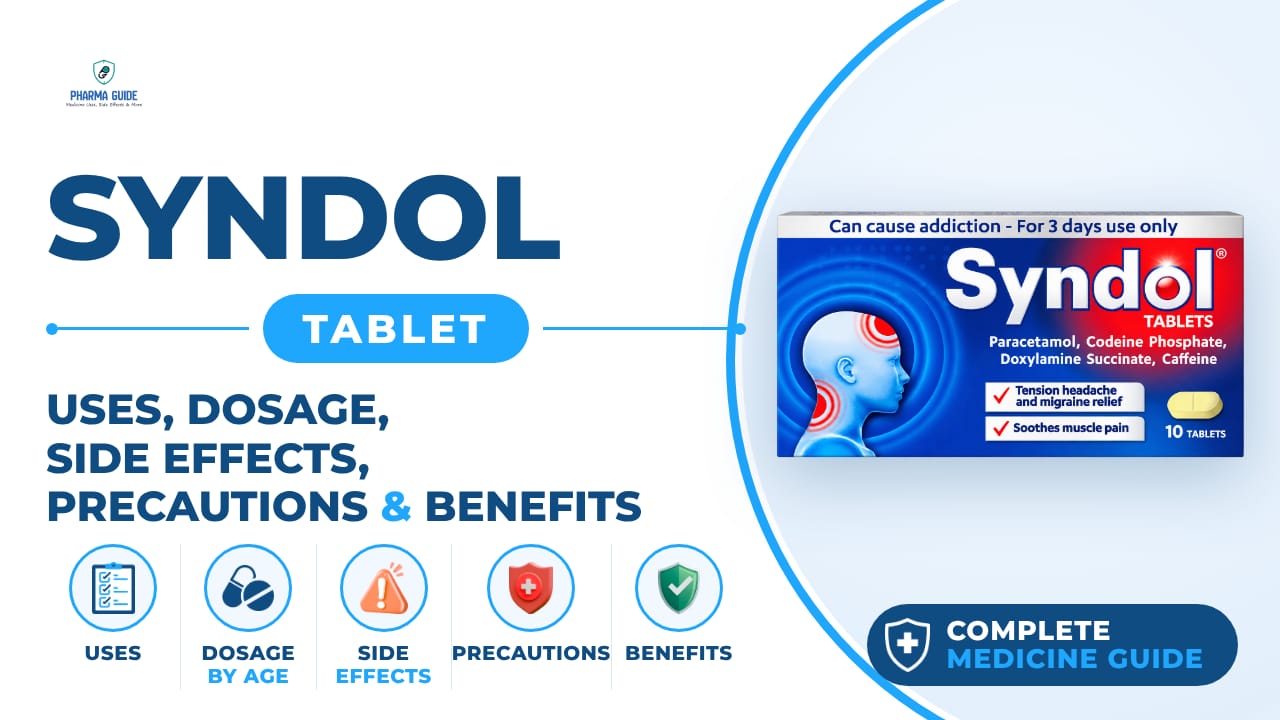
| Generic name | Paracetamol, Codeine Phosphate, Caffeine, Doxylamine Succinate |
|---|---|
| Drug class | Opioid analgesic combination (paracetamol, codeine, caffeine, and antihistamine) |
| Forms | Film-coated tablet |
Quick overview
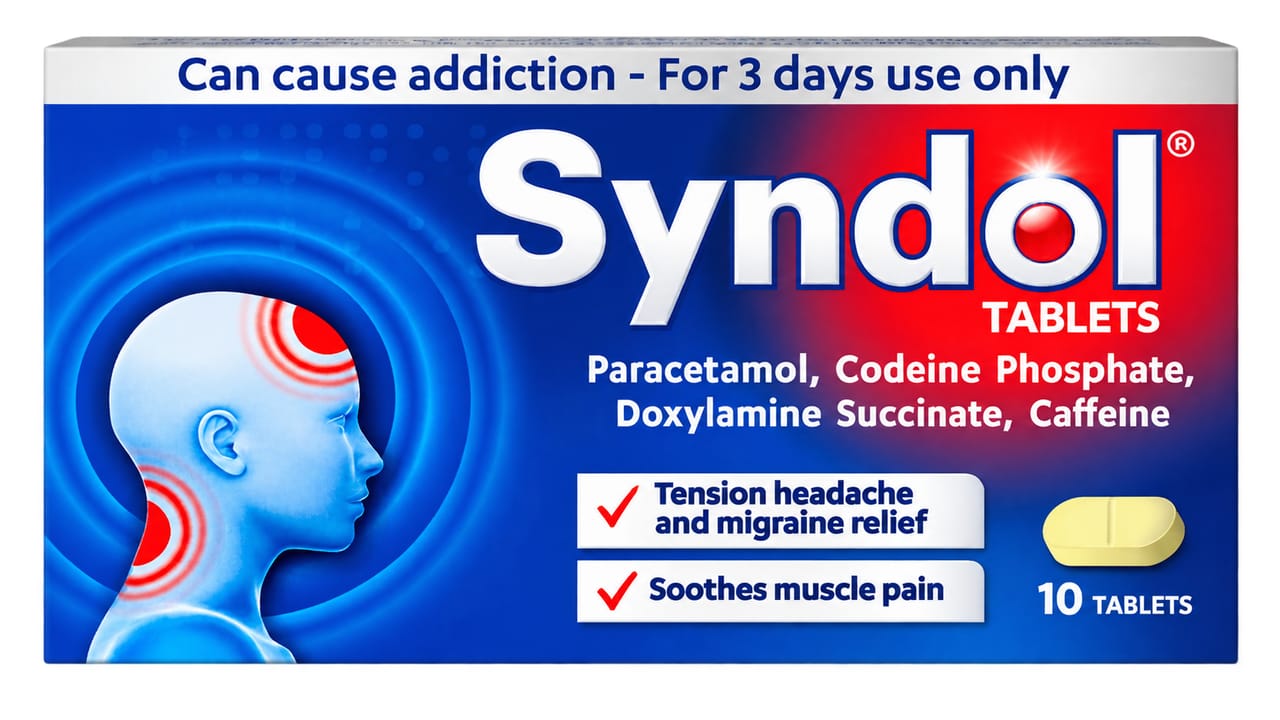
Syndol Tablet is a combination pain relief medicine containing paracetamol, codeine phosphate, caffeine, and doxylamine succinate. It is used for short-term treatment of moderate pain that has not been relieved by paracetamol, ibuprofen, or aspirin alone. It should not be taken for more than 3 days at a time due to the risk of addiction associated with its codeine content.
What is Syndol Tablet
Syndol is a combination pain relief tablet containing paracetamol, codeine phosphate, caffeine, and doxylamine succinate. It is used for short-term treatment of moderate pain that has not been relieved by paracetamol, ibuprofen, or aspirin alone, and should not be taken for more than 3 days at a time.
Syndol Tablet uses
- Headaches, including muscle contraction or tension headaches
- Migraine
- Neuralgia (nerve pain)
- Period pain
- Muscular and rheumatic aches and pains
- Pain following surgery or dental procedures
- Toothache and dental pain
- Acute moderate pain
Benefits of Syndol Tablet
- Provides fast, effective relief for many types of pain
- Combines four active ingredients to boost pain relief
- Can help when other painkillers like paracetamol, ibuprofen, or aspirin alone have not worked
How Syndol Tablet works
Syndol contains codeine, an opioid painkiller that blocks pain signals, along with paracetamol for pain and fever relief. Caffeine boosts the pain-relieving effect of paracetamol and helps keep you alert, while doxylamine is an antihistamine that also relieves sickness.
Syndol Tablet dosage
Swallow the tablets whole with water; do not chew them. Wait at least 4 hours before taking another dose. Do not take this medicine for more than 3 days in a row; see your doctor or pharmacist if you still need it after that. Do not take other medicines containing paracetamol or codeine at the same time. Avoid taking other antihistamines or excessive caffeine while using this medicine.
If you are older than 65 or in a weakened state, get advice from your doctor before taking this medicine, as your dose may need to be adjusted. This medicine is not recommended for children under 18 who have had their tonsils or adenoids removed due to Obstructive Sleep Apnoea Syndrome. Do not give to children under 12 years old.
| Age group | Dose |
|---|---|
| Under 12 years | Not recommended |
| 12–15 years | 1 tablet every 6 hours when needed; maximum 4 tablets/24 hours |
| 16–17 years | 1–2 tablets every 6 hours when needed; maximum 8 tablets/24 hours |
| 18–64 years | 1–2 tablets every 4–6 hours when needed; maximum 8 tablets/24 hours |
| 65+ years | Use with caution; medical/pharmacist advice recommended |
Available forms and strengths
- Film-coated tablet
Side effects of Syndol Tablet
Common
- Constipation
- Nausea and vomiting
- Dry mouth
- Restlessness
- Anxiety
- Sweating
- Itching
- Skin rash
- Headache
- Tremor
- Nervousness
- Confusion
- Irritability
- Mood changes
- Dizziness, light headedness, disorientation and drowsiness
- Vertigo
- Increased awareness of heartbeat
- Head rush or dizzy spells
- Increased heart rate
- Difficulty passing water, needing to pass urine more often, or passing less urine than usual
- Decreased libido or potency
- Muscle rigidity
- Smaller pupils
- Blurred or double vision
- Nightmares
Serious
- Allergic reactions: rash, itching, swollen red areas of skin, or swelling of the face
- Very rare serious skin reactions
- Signs of blood disorders: unexplained or unusual bruising or bleeding, fever, infections
- Unusually low heart rate
- Low blood pressure
- Hypothermia
- Hallucinations
- Restricted breathing
- Abdominal or back pain
Warnings and precautions
This medicine contains codeine, which can cause addiction if taken continuously for more than three days, and stopping suddenly may cause withdrawal symptoms. Taking this medicine for headaches for more than three days can actually make the headaches worse. Do not take other products containing paracetamol while taking this medicine.
Do not take this medicine if you are allergic to any of its ingredients, have acute asthma or severe respiratory disease, suffer from alcoholism, have had recent bile duct surgery, have paralytic ileus, have recently had a head injury or raised pressure in the skull, are breastfeeding, are a CYP2D6 ultra metaboliser, or are under 18 and have had your tonsils or adenoids removed.
This medicine contains lactose. If you have been told you are intolerant to some sugars, speak to your doctor before taking it. Codeine is not recommended for children with breathing problems, and should not be used for pain relief after tonsil or adenoid removal due to Obstructive Sleep Apnoea Syndrome.
If you are pregnant or think you may be pregnant, ask your doctor or pharmacist for advice before taking this medicine. Do not take this medicine if you are breastfeeding.
Talk to your doctor or pharmacist before taking this medicine if you have kidney problems. Talk to your doctor or pharmacist before taking this medicine if you have liver problems, including alcoholic liver disease. Do not take it if you have recently had an operation on your liver, gall bladder, or bile duct.
Do not drink alcohol while taking this medicine. This medicine may cause drowsiness or dizziness. Do not drive or use machinery until you know how it affects you.
Storage
- Keep this medicine out of the sight and reach of children
- Do not use this medicine after the expiry date printed on the pack
- Do not store above 25°C
- Store in the original packaging
When to see a doctor
Get medical help right away if you take too much of this medicine, even if you feel well, because too much paracetamol can cause serious, delayed liver damage. Go to your nearest hospital and take the medicine and leaflet with you.
Stop taking the tablets and contact your doctor immediately if you develop signs of an allergic reaction, blood disorders, heart or circulation effects, hallucinations, restricted breathing, or abdominal or back pain.
Talk to your doctor if you think you are suffering withdrawal symptoms after stopping this medicine.
Alternatives
- Paracetamol
- Ibuprofen
- Paracetamol + codeine
Watch the video
FAQs
What is Syndol Tablet used for?
Syndol Tablet is used for short-term treatment of moderate pain not relieved by paracetamol, ibuprofen, or aspirin alone, including headaches, migraine, neuralgia, period pain, muscular and rheumatic aches, and pain after surgery or dental procedures.
How long can I take Syndol Tablet?
Syndol should not be taken for more than 3 days in a row due to the risk of addiction from its codeine content. See your doctor or pharmacist if you still need it after that.
What is the dosage of Syndol Tablet for adults?
Adults aged 18–64 years can take 1–2 tablets every 4–6 hours when needed, up to a maximum of 8 tablets in 24 hours. Tablets should be swallowed whole with water.
Can children take Syndol Tablet?
Syndol should not be given to children under 12 years old. It is also not recommended for those under 18 who have had their tonsils or adenoids removed due to Obstructive Sleep Apnoea Syndrome.
What are the common side effects of Syndol Tablet?
Common side effects include constipation, nausea, dry mouth, dizziness, drowsiness, headache, tremor, mood changes, and blurred vision.
General information, not medical advice
Your prescriber and the leaflet in your pack know your situation. This page does not.
- Follow your prescriber and the leaflet
- Don't start, stop, or change a dose on your own
- Doses and warnings differ by country and product
Sources
Video
Related medicines

Injectafer Injection: Uses, Dosage, Side Effects, Precautions and Alternates
Iron products
Injectafer (ferric carboxymaltose) treats iron deficiency anemia and heart failure-related iron deficiency via IV. Learn uses, dosage, side effects, and

Gliclazide Tablet: Uses, Dosage, Side Effects, Precautions and Alternates
Sulfonylurea (hypoglycemic/antidiabetic agent)
Gliclazide Tablet is a sulfonylurea for type 2 diabetes that boosts insulin release. Learn about dosage, side effects, warnings, and precautions.