
Safety
General information, not medical advice
Your prescriber and the leaflet in your pack know your situation. This page does not.
- Follow your prescriber and the leaflet
- Don't start, stop, or change a dose on your own
- Doses and warnings differ by country and product
Synjardy Tablet: Uses, Dosage, Side Effects, Precautions and Alternates
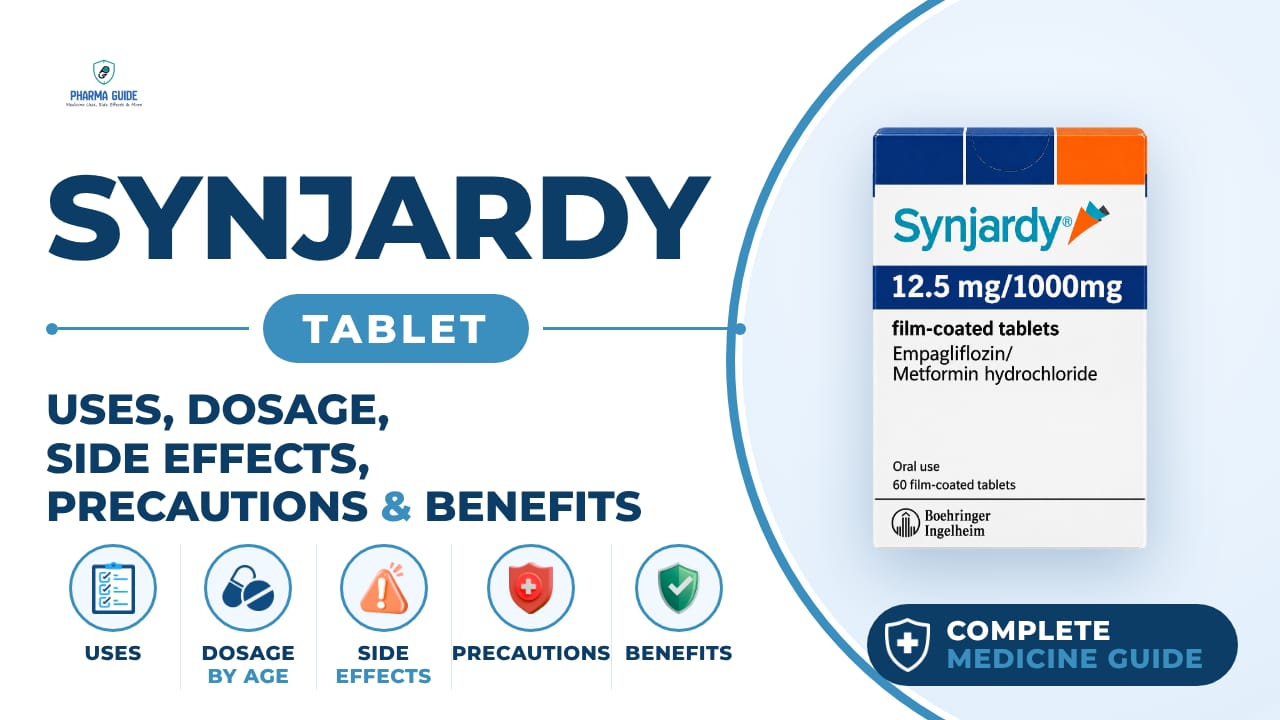
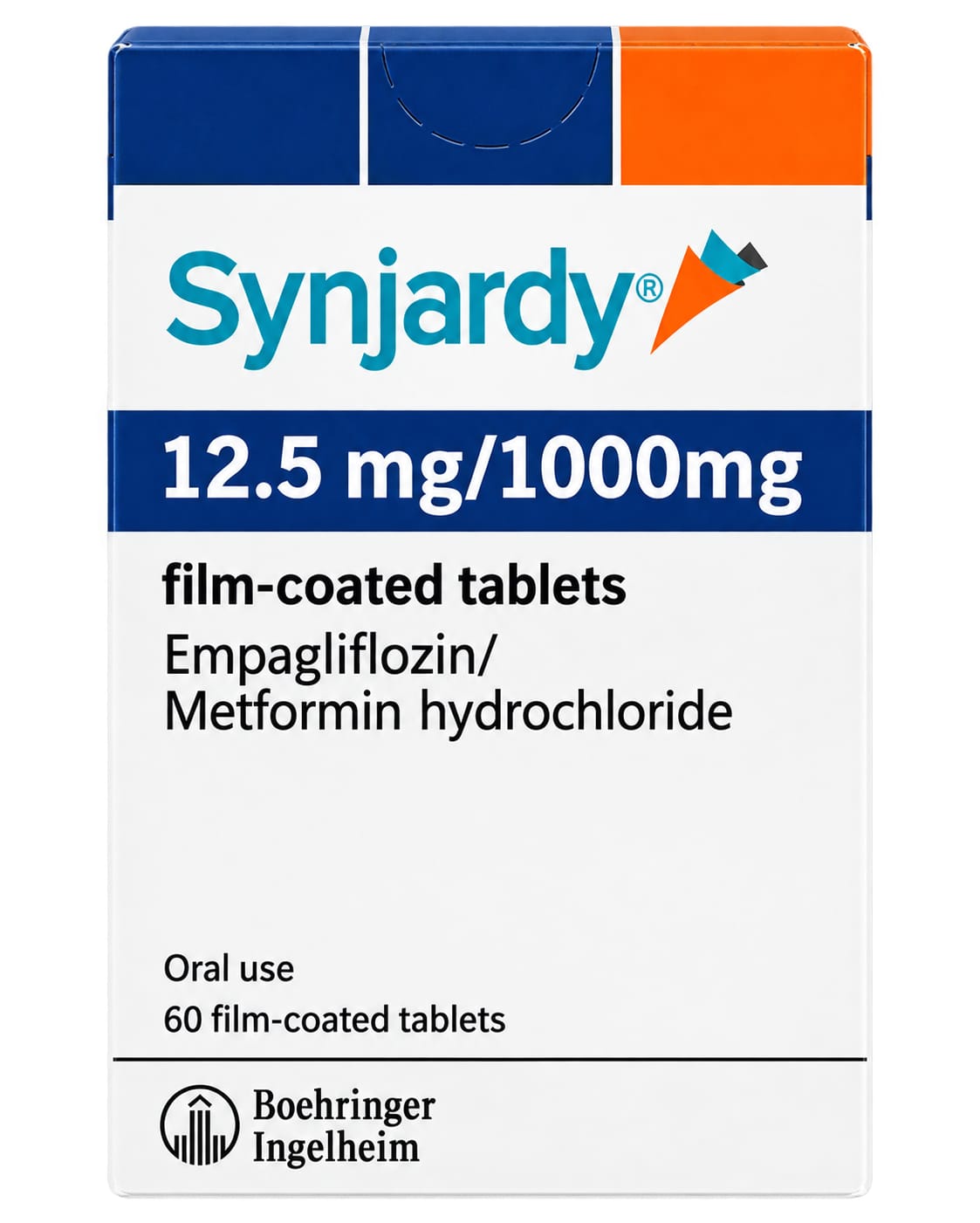
| Generic name | empagliflozin and metformin hydrochloride |
|---|---|
| Drug class | SGLT2 inhibitor and biguanide combination |
| Forms | Tablet (immediate-release, taken twice daily), Tablet (extended-release, Synjardy XR, taken once daily) |
Quick overview
Synjardy is a prescription tablet that combines two diabetes medicines, empagliflozin and metformin, from the SGLT2 inhibitor and biguanide drug classes. It is used along with diet and exercise to help control blood sugar in adults with type 2 diabetes. In adults with type 2 diabetes and known cardiovascular disease, it may also reduce the risk of cardiovascular death. It is available as a regular tablet taken twice daily and an extended-release tablet (Synjardy XR) taken once daily.
What is Synjardy Tablet
Synjardy is a prescription tablet that combines two diabetes medicines, empagliflozin and metformin, used along with diet and exercise to help control blood sugar in adults with type 2 diabetes.
Synjardy Tablet uses
- Improve blood sugar control in adults with type 2 diabetes, used along with diet and exercise, when treatment with both empagliflozin and metformin is appropriate
- In adults with type 2 diabetes and known cardiovascular disease, to reduce the risk of cardiovascular death when both empagliflozin and metformin are appropriate
- Not for treating type 1 diabetes or diabetic ketoacidosis
Benefits of Synjardy Tablet
- Lowers HbA1c (long-term blood sugar) levels
- Lowers fasting blood sugar levels
- Associated with modest body weight reduction
- Empagliflozin component can reduce the risk of cardiovascular death in adults with type 2 diabetes and established heart disease
How Synjardy Tablet works
Synjardy combines two medicines that lower blood sugar in different ways. Empagliflozin blocks a protein in the kidneys (SGLT2) that normally pulls sugar back into the blood, so more sugar leaves the body through urine. Metformin lowers the amount of sugar made by the liver, reduces sugar absorbed from food, and helps the body respond better to insulin.
Synjardy Tablet dosage
Take Synjardy with meals; the regular tablet is taken twice a day with meals, while the extended-release form is taken once a day with the morning meal. Taking it with food may lower the chance of an upset stomach. Swallow tablets whole; do not split, crush, dissolve, or chew them.
You may notice something that looks like the tablet in your stool; if this happens, tell your doctor, but do not stop taking the medicine without talking to your doctor first.
If you miss a dose, take it as soon as you remember, but if it is almost time for your next dose, skip the missed dose; do not take two doses at the same time. Stay on your prescribed diet and exercise program while taking this medicine. Your doctor may start you on a dose based on your current diabetes medicines and adjust it over time.
| Age group | Dose |
|---|---|
| Under 18 years | Safety and effectiveness are not established for Synjardy combination tablets |
| 18–64 years | Dose is individualized according to current empagliflozin/metformin therapy; commonly taken twice daily with meals |
| 65–74 years | Same adult dosing may be used, but kidney function and hydration status should be monitored more closely |
| 75 years and older | Use cautiously and individualize dosing because kidney impairment, dehydration, and metformin-related adverse effects are more likely |
Available forms and strengths
- Tablet (immediate-release, taken twice daily)
- Tablet (extended-release, Synjardy XR, taken once daily)
Side effects of Synjardy Tablet
Common
- Diarrhea
- Nausea and vomiting
- Flatulence (gas)
- Abdominal discomfort
- Indigestion
- Weakness (asthenia)
- Headache
- Urinary tract infection
- Female genital yeast infection
- Upper respiratory tract infection (such as a cold)
- Low vitamin B12 levels
- Joint pain
Serious
- Lactic acidosis (a rare but life-threatening buildup of lactic acid in the blood)
- Ketoacidosis (a buildup of ketones making the blood too acidic)
- Serious kidney injury
- Serious urinary tract infections, including kidney infection and bloodstream infection
- Low blood pressure and dehydration
- Low blood sugar, especially when combined with insulin or a sulfonylurea
- Genital yeast infections in men and women
- Fournier's gangrene (a rare, serious infection of the tissue around the genitals)
- Allergic reaction
- Increased LDL cholesterol
Warnings and precautions
- This medicine can cause a rare but serious condition called lactic acidosis, a buildup of lactic acid in the blood, which can be fatal and requires emergency hospital treatment. People with kidney problems, liver problems, heart failure, those over 65, those undergoing imaging procedures with contrast dye, or those who drink heavily are at higher risk for lactic acidosis.
- This medicine may need to be stopped before or at the time of an imaging test that uses injectable iodine dye, because of kidney and lactic acidosis risks. A serious condition called ketoacidosis, with high ketone levels in the blood, has been reported, even when blood sugar is not very high, and can be life-threatening.
- Sudden kidney injury has been reported, especially when fluid intake is reduced or fluid losses occur, such as during illness, vomiting, or diarrhea. Serious urinary tract infections, including kidney infections and bloodstream infections, have required hospitalization in some patients. A rare but serious infection of the genital area tissue, called Fournier's gangrene, can occur and can be life-threatening.
- This medicine is not recommended during the second and third trimesters of pregnancy because of possible risk to the baby's kidney development. Tell your doctor right away if you become pregnant.
- Breastfeeding is not recommended while taking this medicine, since it may pass into breast milk and could harm a nursing baby.
- This medicine should not be used in people with moderate to severe kidney problems, kidney failure, or those on dialysis, because of a higher risk of serious side effects like lactic acidosis.
- This medicine should generally be avoided in people with liver disease, because it can raise the risk of lactic acidosis.
- Avoid drinking large amounts of alcohol, or binge drinking, while taking this medicine, as it can increase the risk of serious side effects like lactic acidosis.
Storage
- Store at room temperature between 68°F to 77°F (20°C to 25°C)
- Store in a safe place out of reach of children
When to see a doctor
- Stop the medicine and call your doctor right away if you feel cold in your hands or feet, feel dizzy or lightheaded, have a slow or irregular heartbeat, feel very weak or tired, have unusual muscle pain, have trouble breathing, feel unusually sleepy, or have stomach pain, nausea, or vomiting — these may be signs of lactic acidosis.
- Stop the medicine and get medical help right away if you have nausea, vomiting, stomach pain, tiredness, or trouble breathing, as these can be signs of ketoacidosis, even if your blood sugar is not very high.
- Seek medical advice right away if you are eating or drinking less than usual due to illness, or if you are losing fluids from vomiting, diarrhea, or excessive heat exposure, since these situations can lead to kidney injury.
- Tell your doctor if you notice signs of a urinary tract infection, such as burning when passing urine, needing to urinate often or urgently, pain in the lower stomach area, or blood in the urine, sometimes with fever, back pain, nausea, or vomiting.
- Get emergency medical help right away for pain, tenderness, swelling, or skin discoloration near the genitals or rectum, along with fever or feeling unwell, as this could be Fournier's gangrene, a life-threatening infection.
- Call your doctor or seek emergency care right away if you think you have taken too much of this medicine.
Alternatives
- Jardiance
- Metformin
- Xigduo XR
Watch the video
FAQs
What is Synjardy tablet used for?
Synjardy is used along with diet and exercise to improve blood sugar control in adults with type 2 diabetes, and in those with known cardiovascular disease it may also reduce the risk of cardiovascular death.
How should I take Synjardy Tablet?
The regular tablet is taken twice a day with meals, while the extended-release form (Synjardy XR) is taken once a day with the morning meal. Tablets should be swallowed whole and not split, crushed, dissolved, or chewed.
What are the common side effects of Synjardy?
Common side effects include diarrhea, nausea and vomiting, gas, abdominal discomfort, indigestion, weakness, headache, urinary tract infection, genital yeast infection, upper respiratory infection, low vitamin B12 levels, and joint pain.
What serious risks are associated with Synjardy?
Synjardy carries risks of lactic acidosis, ketoacidosis, serious kidney injury, serious urinary tract infections, low blood pressure and dehydration, low blood sugar, genital yeast infections, Fournier's gangrene, and allergic reactions.
Can Synjardy be used during pregnancy or breastfeeding?
Synjardy is not recommended during the second and third trimesters of pregnancy due to possible risk to the baby's kidney development, and breastfeeding is not recommended since the medicine may pass into breast milk.
General information, not medical advice
Your prescriber and the leaflet in your pack know your situation. This page does not.
- Follow your prescriber and the leaflet
- Don't start, stop, or change a dose on your own
- Doses and warnings differ by country and product
Sources
Video
Related medicines

Injectafer Injection: Uses, Dosage, Side Effects, Precautions and Alternates
Iron products
Injectafer (ferric carboxymaltose) treats iron deficiency anemia and heart failure-related iron deficiency via IV. Learn uses, dosage, side effects, and

Gliclazide Tablet: Uses, Dosage, Side Effects, Precautions and Alternates
Sulfonylurea (hypoglycemic/antidiabetic agent)
Gliclazide Tablet is a sulfonylurea for type 2 diabetes that boosts insulin release. Learn about dosage, side effects, warnings, and precautions.