
Safety
General information, not medical advice
Your prescriber and the leaflet in your pack know your situation. This page does not.
- Follow your prescriber and the leaflet
- Don't start, stop, or change a dose on your own
- Doses and warnings differ by country and product
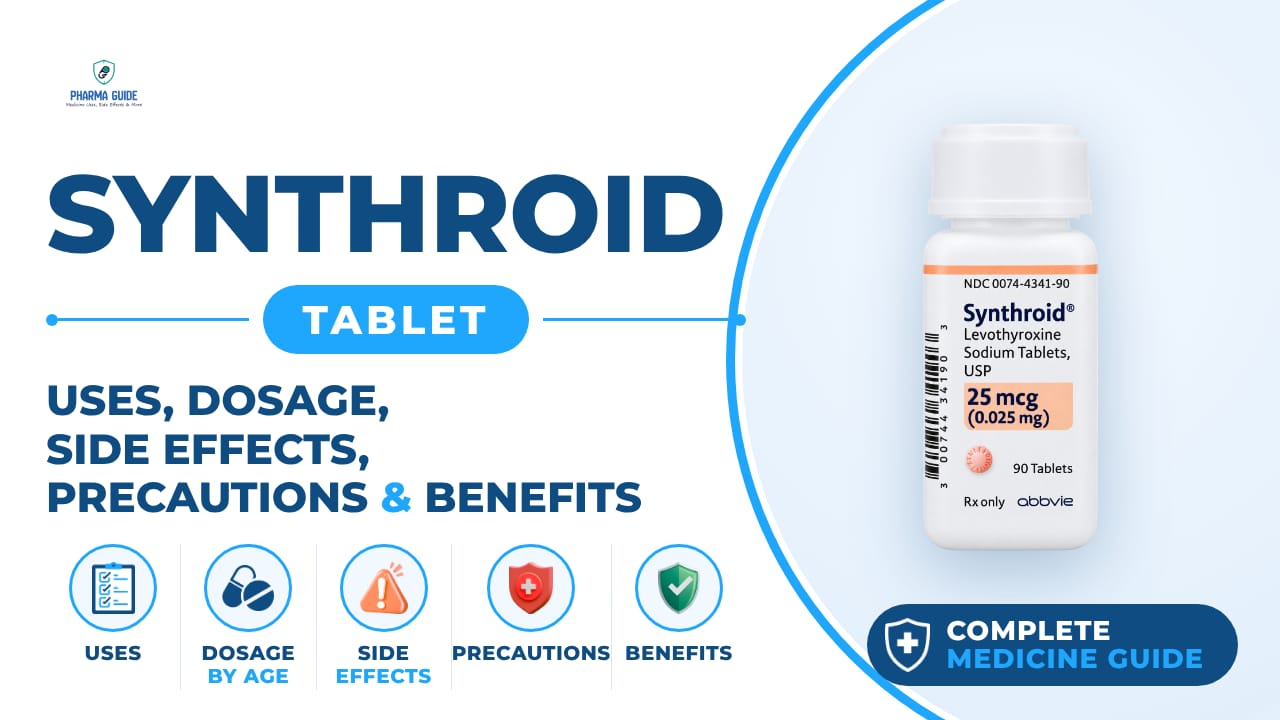
Synthroid Tablet: Uses, Dosage, Side Effects, Precautions and Alternates
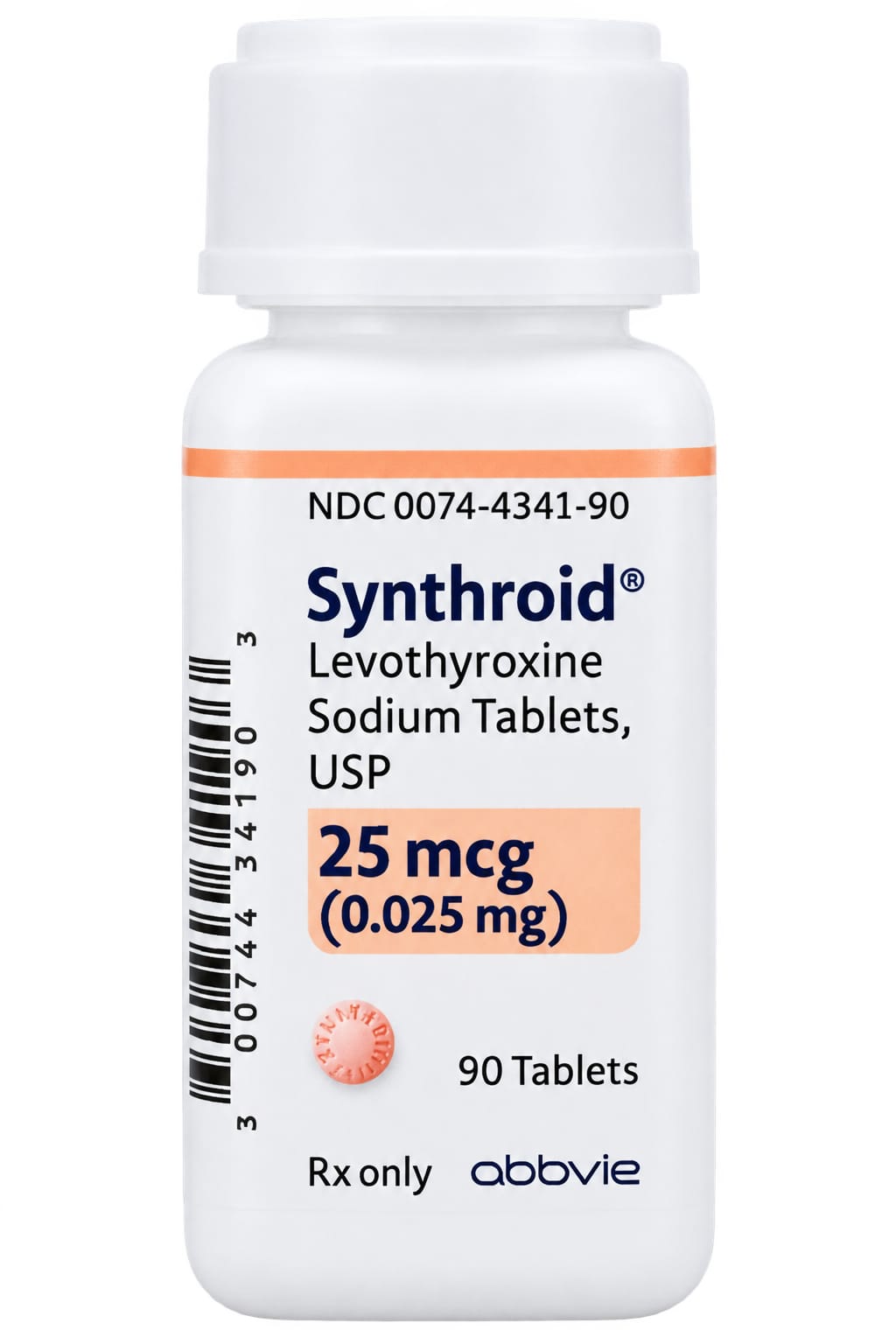
| Generic name | levothyroxine sodium |
|---|---|
| Drug class | Thyroid hormone drug |
| Forms | Oral tablet |
Quick overview
Synthroid Tablet contains levothyroxine sodium, a man-made version of the thyroid hormone T4. It is used to treat hypothyroidism and, alongside surgery and radioactive iodine treatment, to help manage certain thyroid cancers by lowering TSH levels. It is usually taken once daily on an empty stomach and is often a long-term or lifelong treatment.
What is Synthroid Tablet
Synthroid is a brand-name tablet containing levothyroxine, a man-made version of the thyroxine (T4) hormone your thyroid gland normally makes. It replaces or adds to the thyroid hormone in your body when your thyroid isn't making enough.
Synthroid Tablet uses
- Treating hypothyroidism (an underactive thyroid gland), including cases present from birth or developed later in life
- Helping to treat certain thyroid cancers by lowering thyroid stimulating hormone (TSH) levels, used together with surgery and radioactive iodine treatment
Benefits of Synthroid Tablet
- Restores thyroid hormone levels to a normal range, which can reduce tiredness, weight gain, muscle weakness, and constipation caused by low thyroid hormone
- Helps decrease the growth of certain thyroid cancer cells by lowering TSH levels when used with surgery and radioactive iodine therapy
How Synthroid Tablet works
Synthroid is a lab-made copy of the thyroid hormone T4. It replaces the T4 your thyroid isn't making enough of, and your body then converts this T4 into T3, the other main thyroid hormone. This helps bring your hormone levels back to normal and can reduce symptoms of low thyroid hormone. For thyroid cancer, restoring hormone levels lowers TSH, which in turn can reduce the growth of certain cancerous thyroid cells.
Synthroid Tablet dosage
Take as a single dose once a day, on an empty stomach, about 30 minutes to 1 hour before breakfast. Try to take it at the same time every day, and be consistent about whether you take it with or without food or drink. Swallow the tablet whole with a full glass of water. Take other medicines that can interact with this drug at least 4 hours before or after your dose.
If you can't swallow tablets whole (for example, infants or young children), the tablet can be crushed and mixed into a small amount of water, breast milk, or non-soybean formula and given right away by spoon or dropper; do not mix it into food or store the mixture.
This is usually a long-term, often lifelong, treatment. It may take several weeks before you notice symptoms improving. Older adults are usually started on a lower dose because of a higher chance of heart-related side effects.
| Age group | Dose |
|---|---|
| Infants & Children | Dose based on body weight (mcg/kg/day) as prescribed |
| Adults (18–64 Years) | Usually about 1.6 mcg/kg/day; adjusted according to thyroid hormone levels |
| Older Adults (65+ years) | Start with 12.5–25 mcg/day; increase gradually as needed |
| Pregnancy | Dose adjusted by doctor based on thyroid hormone requirements |
Available forms and strengths
- Oral tablet
Side effects of Synthroid Tablet
Common
- Shortness of breath
- Muscle spasms or weakness
- Hair loss (usually temporary)
- Anxiety or irritability
- Trouble sleeping
- Increased appetite
- Diarrhea
- Skin rash
- Irregular periods
- Weight loss or weight gain
- Headache
- Muscle cramps or tremors
- Feeling nervous
- Feeling hot or excessive sweating
Serious
- Heart problems such as irregular or fast heart rate, palpitations, chest pain, or shortness of breath
- Heart attack symptoms, including crushing chest pain spreading to the arm or jaw, sweating, nausea, and shortness of breath
- Decreased bone mineral density leading to bones that fracture easily or loss of height, especially with long-term over-treatment
- Serious allergic reaction: swelling of the face, lips, tongue, or throat, hives, and difficulty breathing or swallowing
- Seizures
- Signs of increased pressure in the brain in children, such as headaches, vision problems, ringing in the ears, and arm pain
- Slipped capital femoral epiphysis in children (a hip joint problem causing limping or pain in the knee or groin)
Warnings and precautions
- Synthroid should never be used to treat obesity or help with weight loss. If you don't have a thyroid problem, this medicine will not help you lose weight, and taking more than the recommended dose can cause dangerous effects including confusion, seizures, coma, and even death.
- Do not take Synthroid if you have untreated or uncorrected adrenal gland problems, since thyroid hormone can trigger a dangerous adrenal crisis.
- Synthroid is not meant to treat myxedema coma (a severe, life-threatening form of low thyroid function); this condition needs to be treated in a hospital with thyroid hormone given by injection, not with tablets.
- If you have heart disease or are older, your doctor should start you on a lower dose because too much thyroid hormone can cause serious heart problems like irregular heartbeat (atrial fibrillation), angina, or heart attack.
- If you have diabetes, Synthroid may raise your blood sugar levels and your diabetes medicine dose may need to be adjusted.
- Long-term use, especially at higher doses, can decrease bone density, which raises the risk of fractures, particularly in women after menopause.
- Taking biotin supplements can cause inaccurate thyroid blood test results, so stop biotin at least two days before having your thyroid levels checked.
- You can usually keep taking Synthroid during pregnancy, and doing so does not appear to increase the risk of birth defects or pregnancy loss.
- In fact, untreated low thyroid hormone during pregnancy can be harmful. Your dose may need to be increased, and your doctor will monitor your thyroid levels regularly throughout pregnancy.
- Small amounts of thyroid hormone pass into breast milk, but you can continue taking Synthroid while breastfeeding since adequate thyroid hormone replacement is generally needed to maintain normal milk production.
- Talk to your doctor about the risks and benefits for your situation.
- Thyroid hormone absorption and processing can be affected by malabsorption problems in the intestines, so tell your doctor if you have such conditions since your dose may need adjusting.
- There are no known interactions between Synthroid and alcohol, but check with your doctor about whether drinking alcohol is safe for you while taking this medicine.
- Synthroid may affect your ability to drive or use machinery safely. Be cautious and understand how the medicine affects you before doing tasks that need your full attention.
Storage
- Store SYNTHROID tablets at room temperature, between 68–77°F (20–25°C)
- Keep the drug in a tightly sealed container away from light
- Avoid storing this medication in areas where it could get damp or wet, such as in bathrooms
- Keep out of reach and sight of children
- Do not use tablets after the expiry date on the label; ask your pharmacist how to properly dispose of unused or expired medication
When to see a doctor
- Get emergency help right away for signs of a serious allergic reaction, such as swelling of the face, lips, tongue, or throat, hives, or trouble breathing or swallowing.
- Call your doctor right away, or get emergency care, if you have chest pain, a fast or irregular heartbeat, or shortness of breath, which could signal a heart problem.
- Seek emergency medical help or contact a poison control center right away if you think you or someone else has taken too much Synthroid, even if there are no symptoms yet, since overdose symptoms can take days to appear and can be fatal.
- Contact your doctor if you notice signs of an overdose or too much thyroid hormone, such as rapid heartbeat, nervousness, chest pain, shortness of breath, tremors, or unusual sweating.
Alternatives
- Levothyroxine
- Tirosint
- Liothyronine
Watch the video
FAQs
What is Synthroid Tablet used for?
Synthroid is used to treat hypothyroidism (underactive thyroid), including cases present from birth or developed later in life, and alongside surgery and radioactive iodine treatment to help manage certain thyroid cancers by lowering TSH levels.
How should I take Synthroid Tablet?
Take it as a single dose once a day on an empty stomach, about 30 minutes to 1 hour before breakfast, at the same time every day. Swallow the tablet whole with a full glass of water, and take other interacting medicines at least 4 hours before or after your dose.
Can Synthroid be used for weight loss?
No, Synthroid should never be used to treat obesity or for weight loss. If you don't have a thyroid problem, it won't help you lose weight, and taking more than the recommended dose can cause dangerous effects including confusion, seizures, coma, and even death.
Is Synthroid safe during pregnancy and breastfeeding?
You can usually keep taking Synthroid during pregnancy, as it does not appear to increase the risk of birth defects or pregnancy loss, and untreated low thyroid hormone can be harmful. Small amounts pass into breast milk, but it's generally safe to continue while breastfeeding; talk to your doctor about your specific situation.
What are common side effects of Synthroid?
Common side effects include shortness of breath, muscle spasms or weakness, hair loss, anxiety or irritability, trouble sleeping, increased appetite, diarrhea, skin rash, irregular periods, weight changes, headache, muscle cramps or tremors, nervousness, and feeling hot or sweating.
General information, not medical advice
Your prescriber and the leaflet in your pack know your situation. This page does not.
- Follow your prescriber and the leaflet
- Don't start, stop, or change a dose on your own
- Doses and warnings differ by country and product
Sources
Video
Related medicines

Injectafer Injection: Uses, Dosage, Side Effects, Precautions and Alternates
Iron products
Injectafer (ferric carboxymaltose) treats iron deficiency anemia and heart failure-related iron deficiency via IV. Learn uses, dosage, side effects, and

Gliclazide Tablet: Uses, Dosage, Side Effects, Precautions and Alternates
Sulfonylurea (hypoglycemic/antidiabetic agent)
Gliclazide Tablet is a sulfonylurea for type 2 diabetes that boosts insulin release. Learn about dosage, side effects, warnings, and precautions.