
Safety
General information, not medical advice
Your prescriber and the leaflet in your pack know your situation. This page does not.
- Follow your prescriber and the leaflet
- Don't start, stop, or change a dose on your own
- Doses and warnings differ by country and product
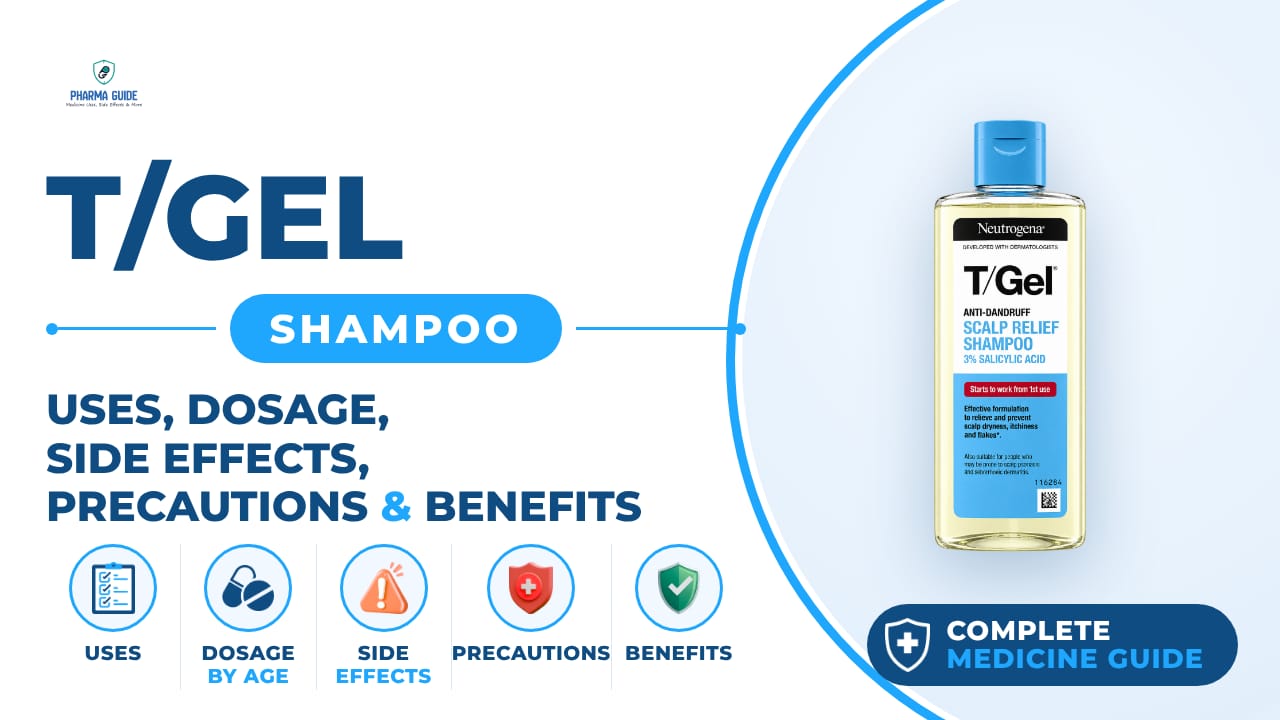
T/Gel Shampoo: Uses, Dosage, Side Effects, Precautions and Alternates
| Generic name | Coal tar topical (coal tar shampoo) |
|---|---|
| Drug class | Miscellaneous topical agent (keratoplastic) |
| Forms | Topical foam, Topical gel/jelly, Topical liquid, Topical lotion, Topical ointment, Topical shampoo, Topical solution |
Quick overview
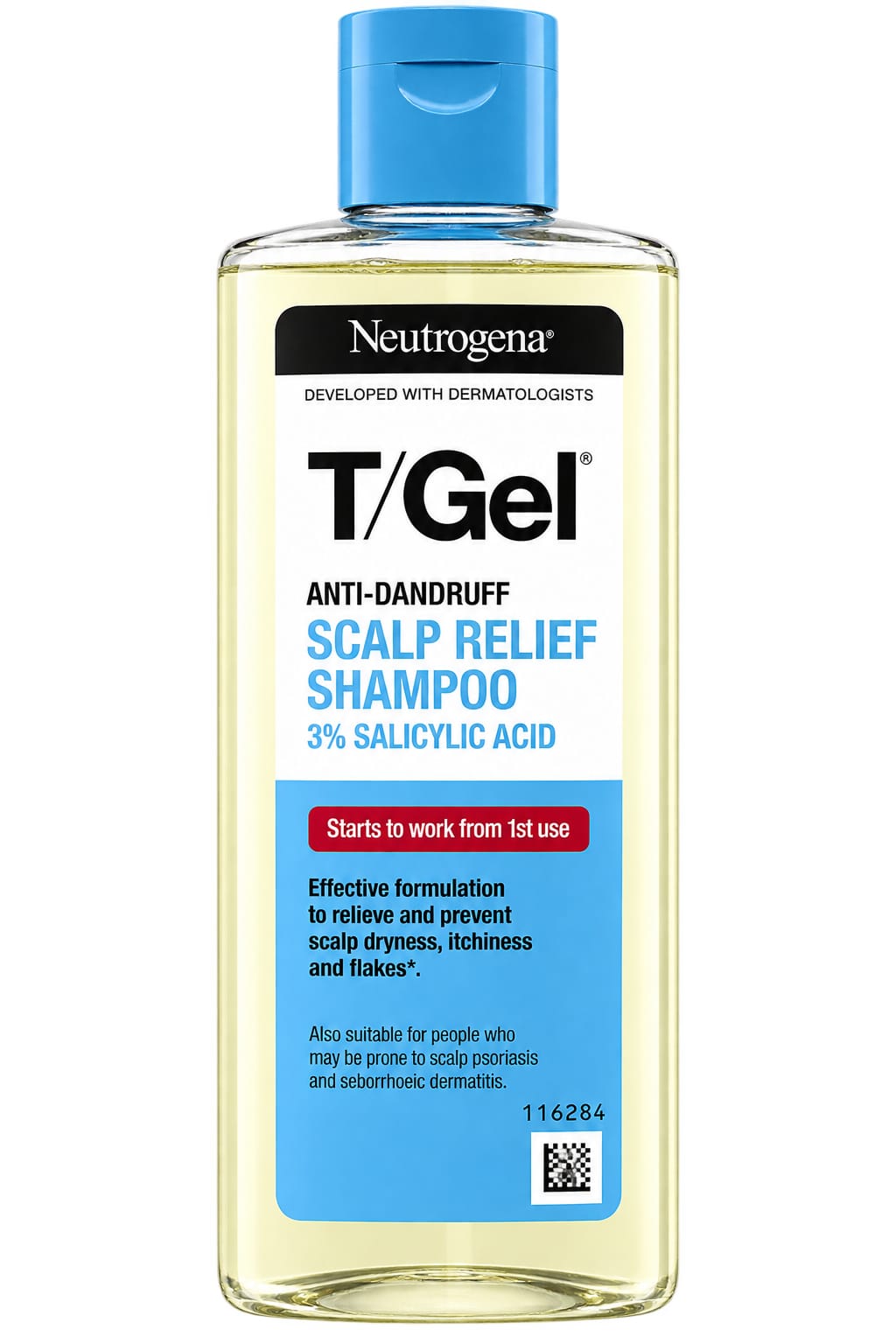
T/Gel Shampoo is a medicated shampoo containing coal tar, used on the hair and scalp to treat dandruff, scalp psoriasis, and seborrhoeic dermatitis. It works by slowing down excessive skin-cell growth and helping the scalp shed dead skin cells, which reduces scaling, dryness, and itchiness. It is applied directly to wet hair and scalp, typically at least twice weekly for adults, and is not recommended for children under 12 years old.
What is T/Gel Shampoo
T/Gel Shampoo is a medicated shampoo containing coal tar (Neutar solubilised coal tar extract), a member of the miscellaneous topical agent (keratoplastic) drug class. It is applied to the hair and scalp to treat dandruff, scalp psoriasis, and seborrhoeic dermatitis of the scalp.
T/Gel Shampoo uses
- Dandruff
- Scalp psoriasis
- Seborrhoeic dermatitis of the scalp
- Other scaly, itchy skin conditions of the scalp
Benefits of T/Gel Shampoo
- Helps control dandruff and scalp flaking
- Helps relieve itching and irritation of the scalp
- Can help manage symptoms of seborrheic dermatitis
- Helps reduce scaling and buildup associated with scalp psoriasis
- With regular use, can help keep itching, redness, and flakes under control
How T/Gel Shampoo works
Coal tar works by causing the skin to shed dead cells from its top layer and slowing down the growth of skin cells, which reduces scaling, dryness, and itchiness.
T/Gel Shampoo dosage
This shampoo is for use on the hair and scalp only. Avoid contact with the eyes, nose, mouth, groin, or rectum, and flush with cool water for 15 minutes if contact occurs. Wash your hands after use, and do not apply to broken or infected skin unless directed by your doctor.
Wet your hair and scalp thoroughly, apply a generous amount of shampoo, and massage it into a lather. Leave the lather on the scalp for several minutes, then rinse thoroughly and repeat the application before a final rinse. Keep your eyes closed while shampooing, and protect your eyes with a washcloth or towel to avoid getting the product in them. This product is not recommended for use in children under 12 years old.
If you miss a use, use it as soon as you remember. If it is near time for your next use, skip the missed one and continue on your regular schedule without doubling up. Completely wash off the medication before going out into the sun, and avoid sun exposure, tanning booths, and sunlamps for at least 24 hours after use unless your doctor says otherwise.
| Age group | Dose |
|---|---|
| Under 2 years | Use only on medical advice |
| 2–11 years | Use according to the specific product label or doctor's advice |
| 12–17 years | Wet hair, massage shampoo into scalp, rinse, then repeat application and rinse thoroughly |
| 18–64 years | Usually use at least twice weekly, or as directed by a doctor |
| 65+ years | Same general use; reduce frequency if significant irritation or dryness develops |
Available forms and strengths
- Topical foam
- Topical gel/jelly
- Topical liquid
- Topical lotion
- Topical ointment
- Topical shampoo
- Topical solution
Side effects of T/Gel Shampoo
Common
- Mild stinging, especially with gel and solution forms
- Skin or scalp irritation
- Staining of skin or hair, especially in blonde, bleached, dyed, or gray hair
- Dry hair
- Dry scalp
- Burning sensation at application site
- Itching at application site
Serious
- Skin irritation not present before use of the medicine
- Skin rash
- Hair loss
- Acne-like breakouts (tar acne) with long-term use
- Serious allergic reaction with rash, itching or swelling of the face, tongue, or throat, severe dizziness, or trouble breathing
- Swelling of the face, lips, mouth, tongue, or throat causing difficulty swallowing or breathing
- Sensitivity to light
Warnings and precautions
- Do not use this product if you have had a bad reaction to coal tar or any of its ingredients, if you have inflamed or broken skin, or if you have a rare and severe form of psoriasis with redness, inflammation and blistering (erythrodermic or pustular psoriasis).
- Coal tar may cause your skin to react to sunlight after use, so avoid direct sunlight immediately after applying the shampoo.
- Avoid getting this product in your eyes.
- This product may cause temporary discoloration of blond, bleached, or tinted hair.
- Coal tar may stain skin or clothing; avoid letting the product touch your clothing.
- In animal studies, coal tar has been shown to increase the chance of skin cancer.
- Long-term use of this product can cause hair follicle problems known as tar acne.
- Do not use if you are pregnant unless your doctor recommends it; use only when clearly needed, and discuss the risks and benefits with your doctor.
- Do not use if you are breastfeeding unless your doctor recommends it. It is not known if this drug passes into breast milk, so check with your doctor before breastfeeding.
- Reduce frequency of use if significant irritation or dryness develops.
- No specific liver-related precautions are normally required with limited topical shampoo use.
- No known interaction with drinking alcohol.
- Does not affect the ability to drive or operate machinery.
Storage
- Store at room temperature, according to the product label.
- Keep in a cool, dry place away from excessive heat.
- Protect from direct sunlight and extreme temperatures.
- Keep the bottle tightly closed after each use.
- Do not freeze and avoid prolonged exposure to heat.
- Keep out of reach of children.
When to see a doctor
- Get medical help right away if you notice signs of a serious allergic reaction, such as rash, itching or swelling of the face, tongue or throat, severe dizziness, or trouble breathing.
- If your skin condition lasts, gets worse, covers a large area, or you think you may have a serious medical problem, get medical help right away.
- If skin irritation develops or worsens, stop using this product and tell your doctor or pharmacist promptly.
- Contact your doctor if you notice new skin bumps or acne in the treated area.
- If you or your child accidentally swallow this shampoo, contact a doctor or go to your nearest emergency department, taking the pack with you.
- Tell your doctor right away if you get sunburned or develop skin blisters or redness after use.
Alternatives
- Salicylic Acid Shampoo
- Ciclopirox Shampoo
- Selenium Sulfide Shampoo
- Ketoconazole Shampoo
Watch the video
FAQs
What is T/Gel Shampoo used for?
T/Gel Shampoo is used to treat dandruff, scalp psoriasis, seborrhoeic dermatitis of the scalp, and other scaly, itchy skin conditions of the scalp.
How does T/Gel Shampoo work?
It contains coal tar, which causes the skin to shed dead cells from its top layer and slows down the growth of skin cells, reducing scaling, dryness, and itchiness.
How often should T/Gel Shampoo be used?
Adults typically use it at least twice weekly, or as directed by a doctor, applying it to wet hair and scalp, lathering, rinsing, then repeating before a final rinse.
Can T/Gel Shampoo be used by children?
It is not recommended for use in children under 12 years old. Children under 2 should only use it on medical advice, and those aged 2–11 should follow the specific product label or doctor's advice.
What are the common side effects of T/Gel Shampoo?
Common side effects include mild stinging, skin or scalp irritation, staining of skin or hair, dry hair, dry scalp, and burning or itching at the application site.
General information, not medical advice
Your prescriber and the leaflet in your pack know your situation. This page does not.
- Follow your prescriber and the leaflet
- Don't start, stop, or change a dose on your own
- Doses and warnings differ by country and product
Sources
Video
Related medicines

Injectafer Injection: Uses, Dosage, Side Effects, Precautions and Alternates
Iron products
Injectafer (ferric carboxymaltose) treats iron deficiency anemia and heart failure-related iron deficiency via IV. Learn uses, dosage, side effects, and

Gliclazide Tablet: Uses, Dosage, Side Effects, Precautions and Alternates
Sulfonylurea (hypoglycemic/antidiabetic agent)
Gliclazide Tablet is a sulfonylurea for type 2 diabetes that boosts insulin release. Learn about dosage, side effects, warnings, and precautions.