
Safety
General information, not medical advice
Your prescriber and the leaflet in your pack know your situation. This page does not.
- Follow your prescriber and the leaflet
- Don't start, stop, or change a dose on your own
- Doses and warnings differ by country and product
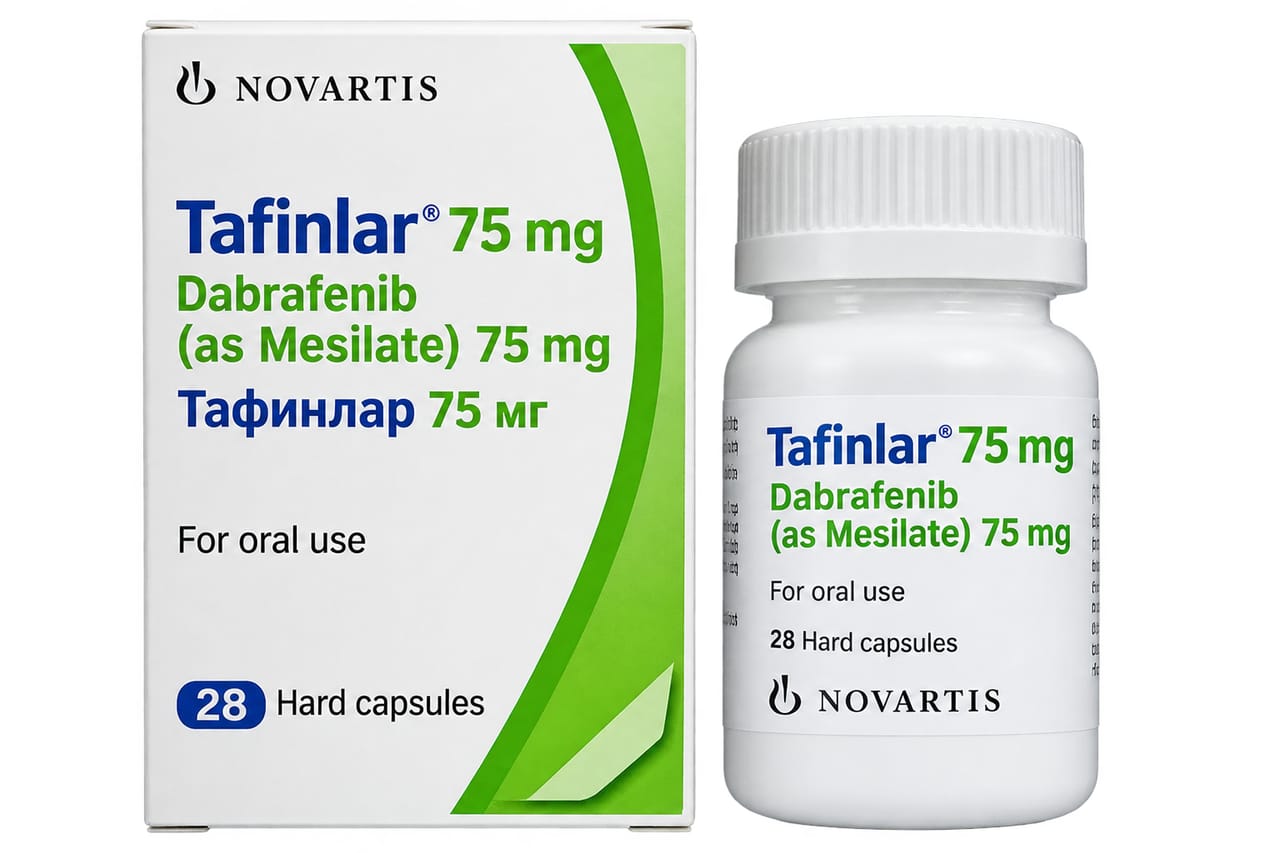
Tafinlar Capsule: Uses, Dosage, Side Effects, Precautions and Alternates

| Generic name | dabrafenib |
|---|---|
| Drug class | BRAF kinase inhibitor (selective BRAF inhibitor, targeted therapy / antineoplastic agent) |
| Forms | Capsules (50 mg and 75 mg), Tablets for oral suspension (10 mg) |
Quick overview
Tafinlar Capsule contains dabrafenib, a BRAF kinase inhibitor used as a targeted cancer therapy. It is used to treat melanoma and certain other cancers that carry a specific BRAF V600 gene mutation, often in combination with trametinib. Tafinlar works by blocking abnormal BRAF proteins that drive cancer cell growth, which can help shrink tumors and slow disease progression. It is taken as capsules on an empty stomach, following a dosing schedule set by your doctor.
What is Tafinlar Capsule
Tafinlar is a prescription cancer medicine that contains the active drug dabrafenib. It is a targeted therapy that works on cancers with a specific change (mutation) in the BRAF gene, called BRAF V600, which can cause cancer cells to grow faster than normal.
Tafinlar Capsule uses
- Treating melanoma (a type of skin cancer) that has spread or cannot be removed by surgery, used alone or with trametinib
- Helping prevent melanoma from coming back after it has been removed by surgery (adjuvant treatment), used with trametinib
- Treating a type of non-small cell lung cancer (NSCLC) that has spread, used with trametinib
- Treating anaplastic thyroid cancer or other thyroid cancer that is advanced or has spread, used with trametinib
- Treating certain other solid tumors with a BRAF V600E mutation that have come back or spread and have no other good treatment options, used with trametinib
- Treating low-grade glioma (a type of brain tumor) in children 1 year and older who need medicine treatment, used with trametinib
Benefits of Tafinlar Capsule
- Can shrink tumors and slow down cancer growth in people whose cancer has the BRAF V600 mutation
- Has been shown in studies to improve how long patients live without their cancer getting worse (progression-free survival) compared to some older treatments
- Can help lower the chance of melanoma returning after surgery
How Tafinlar Capsule works
Tafinlar blocks abnormal BRAF proteins that form because of a gene mutation. These abnormal proteins normally send signals telling cancer cells to grow and spread. By blocking these signals, Tafinlar can help slow the growth of the cancer and shrink tumors.
Tafinlar Capsule dosage
Swallow capsules whole with a full glass of water; do not chew, crush, break, or open them. Take each dose on an empty stomach — at least 1 hour before eating or at least 2 hours after eating. Take your two daily doses about 12 hours apart, at the same times each day (for example, morning and evening).
If you are taking Tafinlar together with trametinib, take the trametinib dose at the same time as either your morning or evening Tafinlar dose. If you vomit after taking a dose, do not take another dose — just take your next dose at its regular scheduled time.
Oral suspension tablets (for children) must be mixed with water as directed and swallowed as a liquid — never swallowed whole, chewed, or crushed; use the prepared suspension within 30 minutes or throw it away. Avoid grapefruit and grapefruit juice while taking this medicine. Children's doses are based on body weight and adjusted by the doctor as the child grows.
| Age group | Dose |
|---|---|
| Under 18 years | Not recommended |
| 18–64 years | 150 mg, twice/day |
| 65+ years | 150 mg, twice/day |
Available forms and strengths
- Capsules (50 mg and 75 mg)
- Tablets for oral suspension (10 mg)
Side effects of Tafinlar Capsule
Common
- Headache
- Mild fever, chills
- Joint pain, muscle pain, back pain, or pain in hands/feet
- Hair loss
- Fatigue, feeling weak
- Cough
- Nausea, vomiting, diarrhea, constipation, decreased appetite
- Common cold-like symptoms (nasopharyngitis)
- Fluid buildup/swelling (edema)
- Thickening of the skin (hyperkeratosis), dry skin, rash, warts (papilloma)
- Redness, swelling, peeling, or tenderness of hands or feet
Serious
- Heart problems such as weakened heart muscle or heart failure (shortness of breath, swelling in legs, chest pain/pressure, dizziness, pounding or skipping heartbeats)
- Eye problems such as uveitis (vision changes, light sensitivity, eye pain, redness)
- Severe fever reactions with chills, dehydration, low blood pressure, or kidney problems
- High blood sugar (increased thirst or hunger, frequent urination, fatigue, weight loss)
- New cancers, including skin cancers (new sores, lumps, warts, or changing moles) and cancers in other parts of the body
- Serious bleeding, including in the digestive tract or brain (blood in stool or vomit, nosebleeds, unusual bruising, coughing up blood, headache, dizziness)
- Serious skin reactions such as Stevens-Johnson syndrome or DRESS syndrome (blistering, peeling skin, mouth sores, widespread rash with fever)
- Severe allergic reactions (swelling of face/lips/tongue/throat, trouble breathing, hives)
- Overactive immune response (hemophagocytic lymphohistiocytosis) with fever, swollen glands, bruising, or rash occurring together
- Tumor lysis syndrome (nausea, irregular heartbeat, muscle cramps, seizures, decreased urine, tiredness)
Warnings and precautions
- This medicine can increase the risk of developing new cancers, including skin cancers, while being used to treat your current cancer. Regular skin checks by a dermatologist are needed before, during, and for months after treatment.
- Serious and sometimes fatal bleeding can occur, including bleeding in the brain or digestive tract, especially when combined with trametinib.
- This medicine may weaken the heart muscle or affect how well the heart pumps blood; heart function tests are needed before and during treatment.
- Eye inflammation (uveitis) can occur and may be serious; regular eye monitoring and prompt reporting of vision changes is important.
- Fever, sometimes severe, can occur and may be accompanied by dangerous complications like low blood pressure, dehydration, or kidney problems.
- Serious, potentially life-threatening skin reactions such as Stevens-Johnson syndrome and DRESS syndrome have been reported.
- This medicine can make hormonal birth control (pills, patches, injections) less effective, so a non-hormonal method such as condoms should be used instead during treatment and for a period afterward.
- Avoid grapefruit and grapefruit juice while on this medicine, as it may increase the risk or severity of side effects.
- Tafinlar is not safe to use during pregnancy because it may harm an unborn baby. A pregnancy test is usually required before starting treatment, and effective non-hormonal birth control should be used during treatment and for a period after stopping.
- Breastfeeding is not recommended during treatment and for a period after the last dose, since it is not known if the drug passes into breast milk and it could harm a nursing child.
- People with severe kidney problems were not included in clinical studies, so it isn't known if this increases side effect risk; your doctor can advise whether this medicine is safe for you and may use extra caution.
- People with severe liver problems were not included in clinical studies, so caution and extra monitoring may be needed since the liver is a main route for clearing this drug from the body.
- Alcohol is not expected to directly interact with this medicine, but it's a good idea to discuss your alcohol use with your doctor since they can advise on what amount may be safe for your condition.
- This medicine can cause tiredness and eye problems that may affect your ability to drive safely or use machines, so use caution until you know how it affects you.
Storage
- Store capsules at room temperature, between 68°F and 77°F (20°C to 25°C); brief exposure to 59–86°F (15–30°C) during travel is acceptable
- Keep the medicine in its original bottle with the desiccant (drying agent) canister inside; do not remove or eat the desiccant
- Store in a cool, dry place away from moisture and heat, such as not in a bathroom
- Throw away unused or expired medicine safely — ask your pharmacist how to dispose of it; do not flush down the drain or pour down a sink
- Keep out of the sight and reach of children
When to see a doctor
- Get help right away for signs of a severe allergic reaction, such as swelling of the face, lips, tongue, or throat, trouble breathing, or a severe rash.
- Seek medical care immediately for signs of serious bleeding, such as blood in stool or vomit, coughing up blood, frequent nosebleeds, or unusual bruising.
- Contact your doctor right away if you develop a fever, especially with chills, dehydration, low blood pressure, or confusion.
- Report any new skin changes right away, such as new sores, lumps, warts, or a mole that changes size or color, as these could indicate a new skin cancer.
- Seek immediate care for symptoms of a heart problem, such as pounding or irregular heartbeat, shortness of breath, swelling in the legs, or dizziness.
- Get medical attention promptly for eye symptoms like vision changes, eye pain, redness, or increased light sensitivity, which could signal serious eye inflammation.
- Tell your doctor immediately if you experience a combination of fever, swollen glands, bruising, or skin rash at the same time, which can signal a serious immune system reaction.
- Seek emergency care for symptoms suggesting tumor lysis syndrome, such as nausea, irregular heartbeat, muscle cramps, seizures, or decreased urination.
Alternatives
- Zykadia
- Zelboraf
- Braftovi
Watch the video
FAQs
What is Tafinlar Capsule used for?
Tafinlar is used to treat melanoma that has spread or cannot be removed by surgery, to help prevent melanoma recurrence after surgery, and to treat certain BRAF V600E-mutated cancers including non-small cell lung cancer, thyroid cancer, low-grade glioma in children, and other solid tumors, often in combination with trametinib.
How should I take Tafinlar Capsule?
Swallow the capsules whole with water on an empty stomach, at least 1 hour before or 2 hours after eating. Take the two daily doses about 12 hours apart at the same times each day, and avoid grapefruit or grapefruit juice while on this medicine.
What are the common side effects of Tafinlar Capsule?
Common side effects include headache, mild fever, chills, joint or muscle pain, hair loss, fatigue, cough, nausea, vomiting, diarrhea, decreased appetite, skin thickening or rash, and swelling of hands or feet.
What serious risks are associated with Tafinlar Capsule?
Serious risks include heart problems, eye inflammation (uveitis), severe fever reactions, high blood sugar, new cancers including skin cancers, serious bleeding, severe skin reactions like Stevens-Johnson syndrome or DRESS syndrome, and tumor lysis syndrome.
Can Tafinlar Capsule be used during pregnancy?
No, Tafinlar is not safe during pregnancy as it may harm an unborn baby. A pregnancy test is usually required before starting treatment, and effective non-hormonal birth control should be used during and after treatment since Tafinlar can make hormonal birth control less effective.
General information, not medical advice
Your prescriber and the leaflet in your pack know your situation. This page does not.
- Follow your prescriber and the leaflet
- Don't start, stop, or change a dose on your own
- Doses and warnings differ by country and product
Sources
Video
Related medicines

Injectafer Injection: Uses, Dosage, Side Effects, Precautions and Alternates
Iron products
Injectafer (ferric carboxymaltose) treats iron deficiency anemia and heart failure-related iron deficiency via IV. Learn uses, dosage, side effects, and

Gliclazide Tablet: Uses, Dosage, Side Effects, Precautions and Alternates
Sulfonylurea (hypoglycemic/antidiabetic agent)
Gliclazide Tablet is a sulfonylurea for type 2 diabetes that boosts insulin release. Learn about dosage, side effects, warnings, and precautions.