
Safety
General information, not medical advice
Your prescriber and the leaflet in your pack know your situation. This page does not.
- Follow your prescriber and the leaflet
- Don't start, stop, or change a dose on your own
- Doses and warnings differ by country and product
Tafluprost Eye Drops: Uses, Dosage, Side Effects, Precautions and Alternates
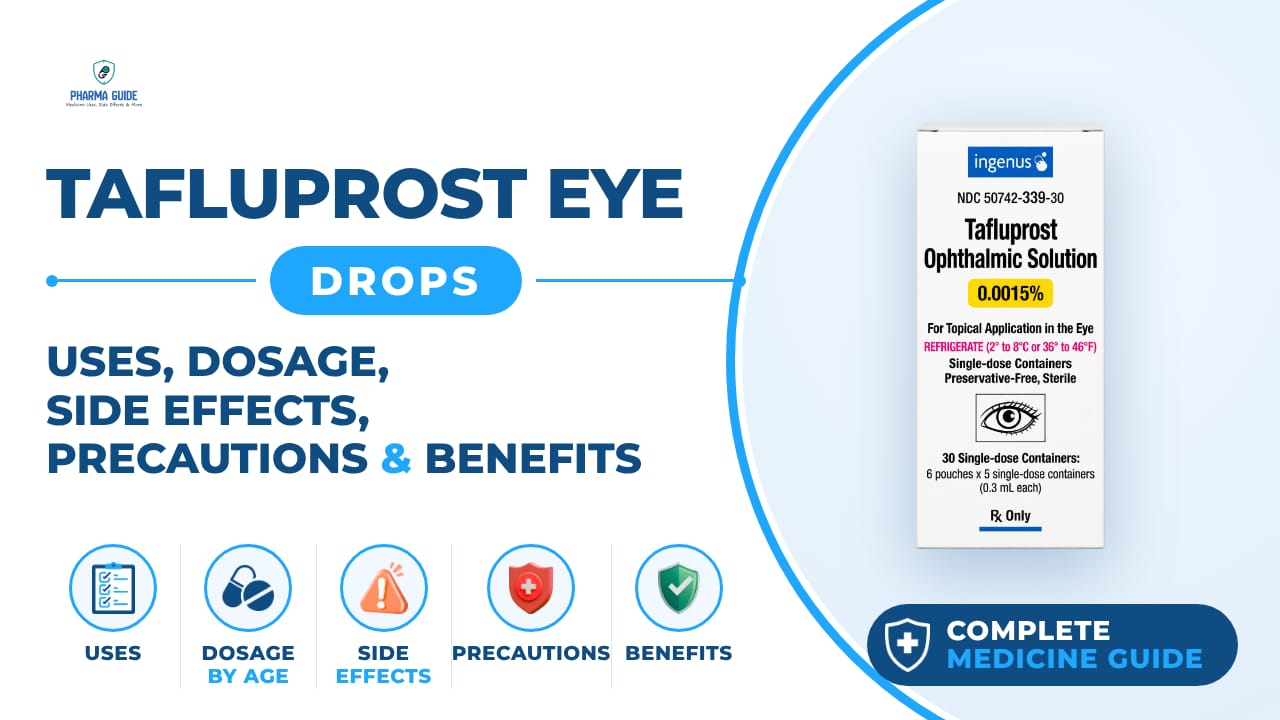
| Generic name | tafluprost |
|---|---|
| Drug class | prostaglandin analogue |
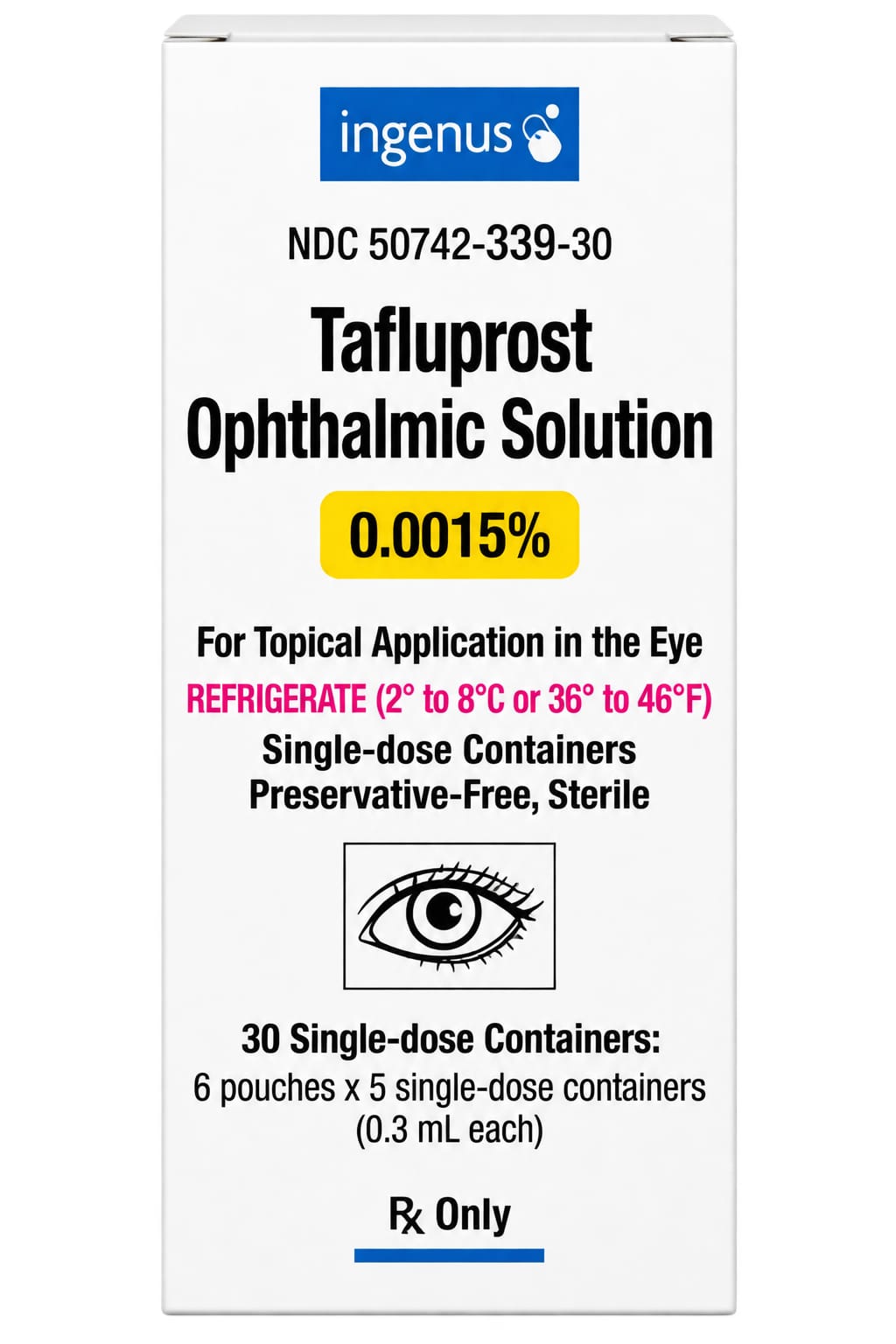
| Forms | Solution (eye drops) in single-dose containers |
Quick overview
Tafluprost Eye Drops (tafluprost) is a prostaglandin analogue used to reduce high pressure inside the eye caused by open-angle glaucoma or ocular hypertension. It works by increasing the drainage of natural fluid from the eye, which lowers eye pressure and helps protect against further eye damage and vision loss. It is given as a single daily drop in the evening and is available as a solution in single-dose containers.
What is Tafluprost Eye Drops
Tafluprost is a type of medicine called a prostaglandin analogue. It comes as eye drops used to reduce high pressure inside the eye caused by glaucoma or ocular hypertension.
Tafluprost Eye Drops uses
- Open-angle glaucoma
- Ocular hypertension (increased pressure in the eye)
Benefits of Tafluprost Eye Drops
- Lowers pressure inside the eye
- Helps prevent further eye damage and vision loss caused by high eye pressure
How Tafluprost Eye Drops works
Tafluprost increases the amount of natural fluid that drains out of the eye, which lowers the pressure inside the eye.
Tafluprost Eye Drops dosage
Place the drop in the affected eye or eyes, usually once a day in the evening, at around the same time each day. Wash your hands thoroughly before using the drops. Use each single-dose container right after opening; do not save it for later use. Do not touch the tip of the container to your eye, fingers, or any other surface.
Tilt your head back (or lie down if you cannot tilt your head), pull down the lower eyelid, and let one drop fall into the space between the lower eyelid and the eye. After using the drop, close your eye and gently press the inner corner of the eye near the nose for one to two minutes to keep the drop from draining away, and blot off any extra solution from the skin around the eye.
If you are using other eye medicines, wait at least 5 minutes between each one. Remove contact lenses before using the drops; they can be put back in 15 minutes afterward.
Keep using the drops regularly even if you feel well, since glaucoma often has no symptoms; do not stop without talking to your doctor. Vision may be blurred for a short time after using the drops, so wait until your vision clears before driving or using tools or machines. This medicine is not recommended for use in children or adolescents under 18 years of age.
| Age group | Dose |
|---|---|
| Under 18 years | Not recommended; safety concerns with long-term use in children |
| 18–64 years | 1 drop in the affected eye(s) once daily in the evening |
| 65 years and older | 1 drop in the affected eye(s) once daily in the evening |
Available forms and strengths
- Solution (eye drops) in single-dose containers
Side effects of Tafluprost Eye Drops
Common
- Stinging, irritation, or itching of the eye
- Dry eyes
- Blurry or cloudy vision
- Headache
- Eye redness
- Watery eyes
- Sensitivity to light
- Changes in eyelash length, thickness, or color
- Darkening of the skin around the eyes
- Change in eye color (iris pigmentation)
- Cough or sore throat
Serious
- Pain, swelling, or redness of eyes or eyelids
- Sudden changes or loss of vision
- Eye injury
- Eye infection
- Inflammation of the iris or uvea (iritis/uveitis): pain and sensitivity to light, possibly with blurred vision
- Cataract: clouding of the lens, blurry or dim vision, eye pain
- Corneal erosion: eye redness, pain, tearing, blurry vision, feeling of something in the eye
- Retinal detachment: flashing lights or floating spots, blurry or decreased vision
- Worsening of asthma, shortness of breath
- Signs of a severe allergic reaction: rash, hives, swelling of mouth/throat/lips, difficulty breathing, low blood pressure, loss of consciousness
Warnings and precautions
This medicine may permanently change the color of your eyes, making them a deeper brown, especially if used in only one eye, which can cause a difference in eye color between the two eyes. This medicine can cause eyelash changes and darkening of the skin around the eyes; eyelash and skin changes usually go away after stopping treatment, but eye color changes may be permanent.
Do not stop using this medicine without talking to your doctor, since eye pressure will rise again and this could permanently damage your eye. Use caution if you have active inflammation inside the eye, as this medicine is generally not recommended in that situation. This medicine should be used carefully in people with certain eye conditions, such as those without a natural lens or with a torn artificial lens, because of an increased risk of swelling in the retina. Only use one drop per dose; using more will not improve treatment but will increase the risk of side effects.
This medicine is not recommended during pregnancy unless your doctor decides it is necessary. Discuss the risks and benefits with your doctor. It is also not recommended while breastfeeding unless necessary; your doctor may prescribe a safer alternative, and if you do use it, your baby should be monitored for any effects.
This medicine has not been studied in people with kidney problems or liver problems, so it should be used carefully in these patients. It is not known whether this medicine interacts with alcohol; ask your doctor before drinking alcohol while using this medicine.
This medicine can cause temporary blurred vision after use. Wait until your vision clears before driving or operating tools or machinery.
Storage
- Store unopened foil pouches in the refrigerator
- Do not freeze
- Do not open the pouch until you are ready to use it
- Write down the date you open the pouch in the space provided
- Once opened, keep single-dose containers in the original foil pouch at room temperature, away from excess heat and moisture (not in the bathroom), and not above 25°C
- Discard any unused single-dose containers left in the pouch more than 28 to 30 days after it was first opened
- Discard an opened single-dose container and any remaining solution immediately after use
- Keep out of the sight and reach of children
- Do not flush this medication down the toilet; use a medicine take-back program, or ask your pharmacist about disposal options
When to see a doctor
- Get medical help right away if you have pain, swelling, or redness of the eyes or eyelids, sudden vision changes or loss of vision, an eye injury, or an eye infection
- Seek immediate medical help if you notice signs of a severe allergic reaction, such as rash, hives, swelling of the mouth, throat, or lips, difficulty breathing, or loss of consciousness
- Call your doctor if you notice your eye color changing, since this may not be reversible
- If you accidentally swallow this medicine, contact a doctor for advice right away
- If you think you have used too much of this medicine, contact a healthcare professional, hospital emergency department, or your local poison control center right away, even if you have no symptoms
Alternatives
- Latanoprost eye drops
- Bimatoprost eye drops
- Netarsudil eye drops
Watch the video
FAQs
What is Tafluprost Eye Drops used for?
It is used to treat open-angle glaucoma and ocular hypertension by reducing high pressure inside the eye.
How does Tafluprost Eye Drops work?
It increases the amount of natural fluid that drains out of the eye, which lowers the pressure inside the eye.
How often should Tafluprost Eye Drops be used?
Usually one drop is placed in the affected eye once a day in the evening, at around the same time each day, using a new single-dose container each time.
Can Tafluprost Eye Drops change eye color?
Yes, it may permanently change the color of your eyes to a deeper brown, especially if used in only one eye, which can cause a difference in eye color between the two eyes.
Is Tafluprost Eye Drops safe during pregnancy?
It is not recommended during pregnancy unless your doctor decides it is necessary, so you should discuss the risks and benefits with your doctor.
General information, not medical advice
Your prescriber and the leaflet in your pack know your situation. This page does not.
- Follow your prescriber and the leaflet
- Don't start, stop, or change a dose on your own
- Doses and warnings differ by country and product
Sources
- https://www.medlineplus.gov/druginfo/meds/a612030.html
- https://www.practo.com/medicine-info/tafluprost-1377-api
- https://www.mayoclinic.org (Tafluprost ophthalmic route)
- https://patient.info/medicine/tafluprost-eye-drops-saflutan
- https://www.msk.org (Tafluprost patient information)
- Health Canada Product Monograph, SAFLUTAN (tafluprost ophthalmic solution), Purdue Pharma
Video
Related medicines

Injectafer Injection: Uses, Dosage, Side Effects, Precautions and Alternates
Iron products
Injectafer (ferric carboxymaltose) treats iron deficiency anemia and heart failure-related iron deficiency via IV. Learn uses, dosage, side effects, and

Gliclazide Tablet: Uses, Dosage, Side Effects, Precautions and Alternates
Sulfonylurea (hypoglycemic/antidiabetic agent)
Gliclazide Tablet is a sulfonylurea for type 2 diabetes that boosts insulin release. Learn about dosage, side effects, warnings, and precautions.