
Safety
General information, not medical advice
Your prescriber and the leaflet in your pack know your situation. This page does not.
- Follow your prescriber and the leaflet
- Don't start, stop, or change a dose on your own
- Doses and warnings differ by country and product
Tagrisso Tablet: Uses, Dosage, Side Effects, Precautions and Alternates
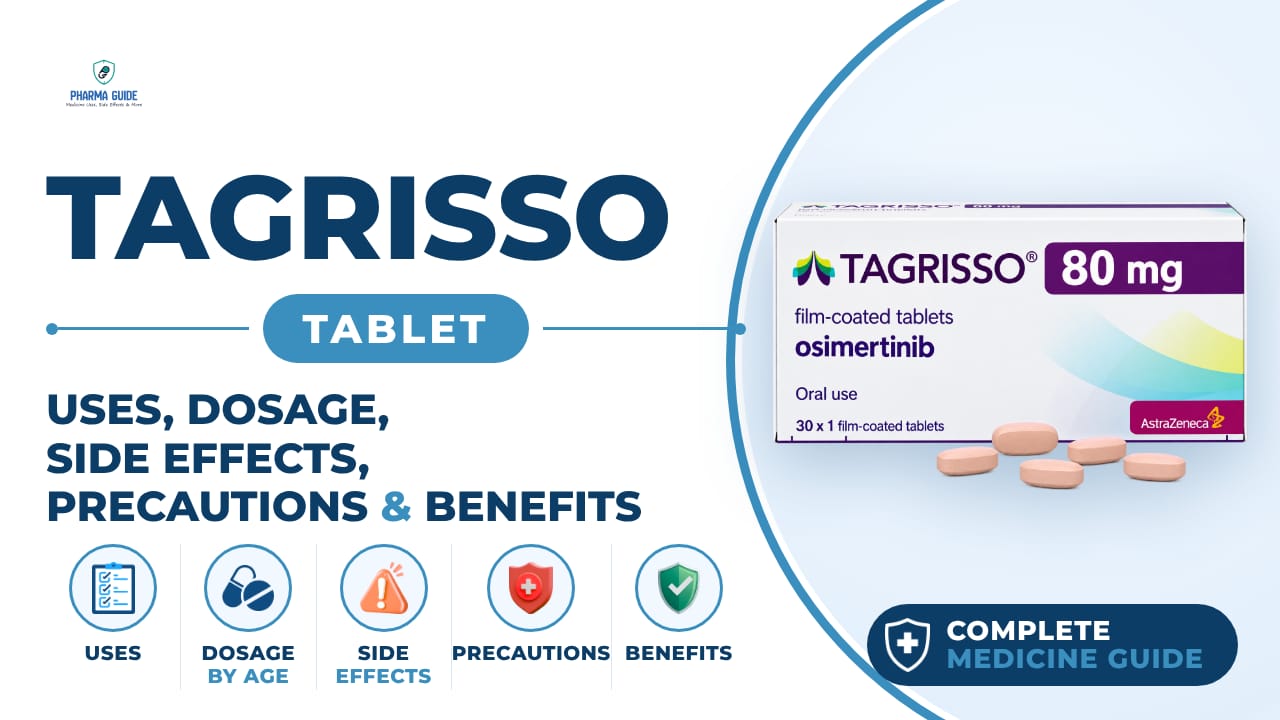
| Generic name | osimertinib |
|---|---|
| Drug class | EGFR tyrosine kinase inhibitor (a type of targeted cancer therapy) |
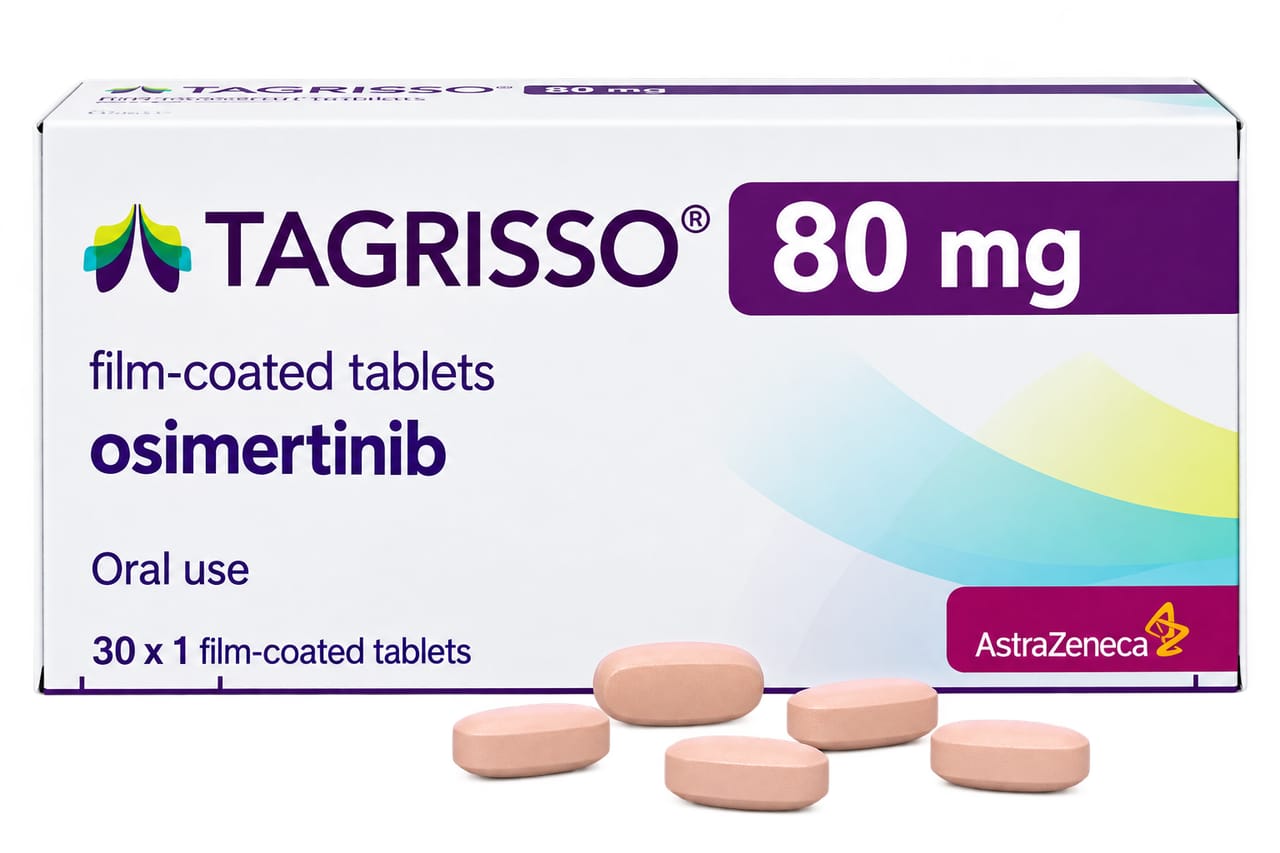
| Forms | Tablet (40 mg), Tablet (80 mg) |
Quick overview
Tagrisso Tablet (generic name osimertinib) is a prescription EGFR tyrosine kinase inhibitor used to treat certain types of non-small cell lung cancer (NSCLC) in adults whose tumors have specific abnormal EGFR genes. It is a targeted therapy, not chemotherapy or immunotherapy. It is taken once daily and works by blocking signals that make cancer cells grow, multiply, and spread.
What is Tagrisso Tablet
Tagrisso is a prescription tablet used to treat certain types of non-small cell lung cancer (NSCLC) in adults whose tumors have specific abnormal EGFR genes. It is a targeted therapy, not chemotherapy or immunotherapy.
Tagrisso Tablet uses
- Helps prevent certain EGFR-mutated non-small cell lung cancer from coming back after the tumor has been removed by surgery
- Treats metastatic EGFR T790M mutation-positive non-small cell lung cancer that has gotten worse after treatment with another EGFR TKI medicine
- Used as a first treatment for metastatic EGFR-positive NSCLC with exon 19 deletion or exon 21 L858R mutations
- Treats locally advanced non-small cell lung cancer that cannot be removed by surgery
Benefits of Tagrisso Tablet
- Lung Cancer Treatment: Used for certain EGFR-mutated non-small-cell lung cancers (NSCLC).
- Targeted Therapy: Specifically targets abnormal EGFR signaling involved in cancer-cell growth.
- Post-Surgery Treatment: Used in eligible patients after complete tumor removal to reduce recurrence risk.
- Advanced Cancer Support: Used for certain locally advanced or metastatic EGFR-mutated NSCLC.
- Brain Metastasis Activity: Can reach the central nervous system and may help control eligible EGFR-mutated lung cancer involving the brain.
How Tagrisso Tablet works
Tagrisso attaches to abnormal EGFR proteins found on cancer cells and blocks the signals that make the cancer cells grow, multiply, and spread. It can also affect some healthy cells.
Tagrisso Tablet dosage
Take this medicine once a day, with or without food. Try to take your dose at the same time each day, though you can take it any time of day. Swallow the tablet whole; do not crush, heat, or use ultrasound on it.
If you have trouble swallowing the tablet whole, it can be stirred into plain (non-carbonated) water until it breaks into small pieces (it will not fully dissolve), then drunk right away; rinse the container with more water and drink that too to get your full dose.
If you miss a dose, do not take an extra dose to make up for it — just take your next dose at the regular time. Your doctor may change your dose, or temporarily or permanently stop treatment if you have side effects. Treatment after surgery may be planned for up to 3 years, or as directed by your doctor.
| Age group | Dose |
|---|---|
| Under 18 Years | Use only under specialist oncology supervision |
| 18–64 Years | 80 mg once daily, as prescribed |
| Older Adults (65+ Years) | 80 mg once daily, with adjustment if medically required |
Available forms and strengths
- Tablet (40 mg)
- Tablet (80 mg)
Side effects of Tagrisso Tablet
Common
- Low white blood cell counts
- Low platelet counts
- Low red blood cell counts (anemia)
- Diarrhea
- Rash
- Muscle, bone, or joint pain
- Changes in nails (redness, tenderness, pain, inflammation, brittleness, separation from nailbed, shedding)
- Dry skin
- Mouth sores
- Tiredness
- Cough
- Nausea and vomiting
- Reduced appetite
- Dizziness
- Hair loss or thinning
Serious
- Severe lung problems (pneumonitis/interstitial lung disease) that may lead to death
- Heart problems, including heart failure
- Abnormal heart rhythm (long QT syndrome/QTc prolongation)
- Eye problems, including keratitis, which in rare cases could lead to blindness if untreated
- Inflammation of the blood vessels in the skin
- Severe skin reactions, including ring-shaped rashes, blistering, or peeling skin
- Blood and bone marrow problems, including aplastic anemia
- Allergic reactions, which in rare cases can be severe
Warnings and precautions
- Tagrisso may cause severe lung problems that can be life-threatening. Tell your healthcare provider right away about new or worsening breathing symptoms, cough, or fever.
- Tagrisso may cause heart problems, including heart failure, which can be life-threatening. Your heart function should be checked before and during treatment.
- Tagrisso may cause inflammation of the blood vessels in the skin, with symptoms such as purple spots, redness that doesn't fade with pressure, or large hives that don't go away within 24 hours.
- Tagrisso may cause serious skin problems, including ring-shaped rashes or severe blistering and peeling of the skin.
- Tagrisso may cause blood and bone marrow problems, including a condition where the bone marrow cannot make enough new blood cells, which may be life-threatening.
- Avoid taking strong CYP3A inhibitors or inducers, and certain drugs like St. John's Wort, with Tagrisso unless your doctor says it's okay, because they can change how well Tagrisso works or increase side effects.
- Tagrisso can harm an unborn baby and is not considered safe during pregnancy. Women who can become pregnant should have a pregnancy test before starting treatment and use effective birth control during treatment and for 6 weeks after the last dose. Men with partners who can become pregnant should use effective birth control during treatment and for 4 months after the last dose.
- It is not known if Tagrisso passes into breast milk. Do not breastfeed during treatment and for 2 weeks after the last dose.
- No dose change is needed for mild or moderate kidney problems. There is no recommended dose for people with severe kidney impairment or end-stage kidney disease.
- No dose change is needed for mild liver impairment. There is no recommended dose for people with moderate or severe liver impairment.
- There are no known interactions between Tagrisso and alcohol, and alcohol isn't expected to affect how the medicine works, but it may worsen certain side effects such as nausea, diarrhea, and dizziness.
Storage
- Store at room temperature between 68°F and 77°F (20°C to 25°C)
- Safely throw away medicine that is out of date or no longer needed
- Keep out of the reach of children
When to see a doctor
- Get medical help right away if you notice new or worsening breathing symptoms such as trouble breathing, shortness of breath, cough, or fever.
- Get medical help right away if you have signs of a heart problem such as a pounding or racing heartbeat, shortness of breath, swelling in your ankles and feet, dizziness, lightheadedness, or feeling faint.
- Get medical help right away if you have eye symptoms such as watery eyes, sensitivity to light, eye pain, eye redness, or vision changes.
- Get medical help right away if you develop signs of blood or bone marrow problems, such as a new or ongoing fever, easy bruising or bleeding that won't stop, unusually pale skin, infection, tiredness, or weakness.
- If you think you have taken too much Tagrisso, call your doctor or your local poison control center right away. If your symptoms seem severe, go to the nearest emergency room.
Alternatives
- Gefitinib
- Erlotinib
- Afatinib
Watch the video
FAQs
What is Tagrisso Tablet used for?
Tagrisso is used to treat certain EGFR-mutated non-small cell lung cancers, including preventing recurrence after surgery, treating metastatic EGFR T790M mutation-positive NSCLC after another EGFR TKI, first treatment for metastatic EGFR-positive NSCLC with exon 19 deletion or exon 21 L858R mutations, and locally advanced NSCLC that cannot be removed by surgery.
How should I take Tagrisso Tablet?
Take it once a day, with or without food, at the same time each day. Swallow the tablet whole without crushing, heating, or using ultrasound on it. If you have trouble swallowing, it can be stirred into plain water and drunk right away.
What are the common side effects of Tagrisso?
Common side effects include low white blood cell, platelet, and red blood cell counts, diarrhea, rash, muscle or joint pain, nail changes, dry skin, mouth sores, tiredness, cough, nausea, vomiting, reduced appetite, dizziness, and hair loss or thinning.
What serious risks are associated with Tagrisso?
Tagrisso may cause severe lung problems, heart problems including heart failure, abnormal heart rhythm, eye problems like keratitis, blood vessel inflammation, severe skin reactions, and blood or bone marrow problems such as aplastic anemia.
Can Tagrisso be taken during pregnancy?
Tagrisso can harm an unborn baby and is not considered safe during pregnancy. Women who can become pregnant should have a pregnancy test before starting treatment and use effective birth control during and after treatment, and men should also use effective birth control after treatment.
General information, not medical advice
Your prescriber and the leaflet in your pack know your situation. This page does not.
- Follow your prescriber and the leaflet
- Don't start, stop, or change a dose on your own
- Doses and warnings differ by country and product
Sources
Video
Related medicines

Injectafer Injection: Uses, Dosage, Side Effects, Precautions and Alternates
Iron products
Injectafer (ferric carboxymaltose) treats iron deficiency anemia and heart failure-related iron deficiency via IV. Learn uses, dosage, side effects, and

Gliclazide Tablet: Uses, Dosage, Side Effects, Precautions and Alternates
Sulfonylurea (hypoglycemic/antidiabetic agent)
Gliclazide Tablet is a sulfonylurea for type 2 diabetes that boosts insulin release. Learn about dosage, side effects, warnings, and precautions.