
Safety
General information, not medical advice
Your prescriber and the leaflet in your pack know your situation. This page does not.
- Follow your prescriber and the leaflet
- Don't start, stop, or change a dose on your own
- Doses and warnings differ by country and product
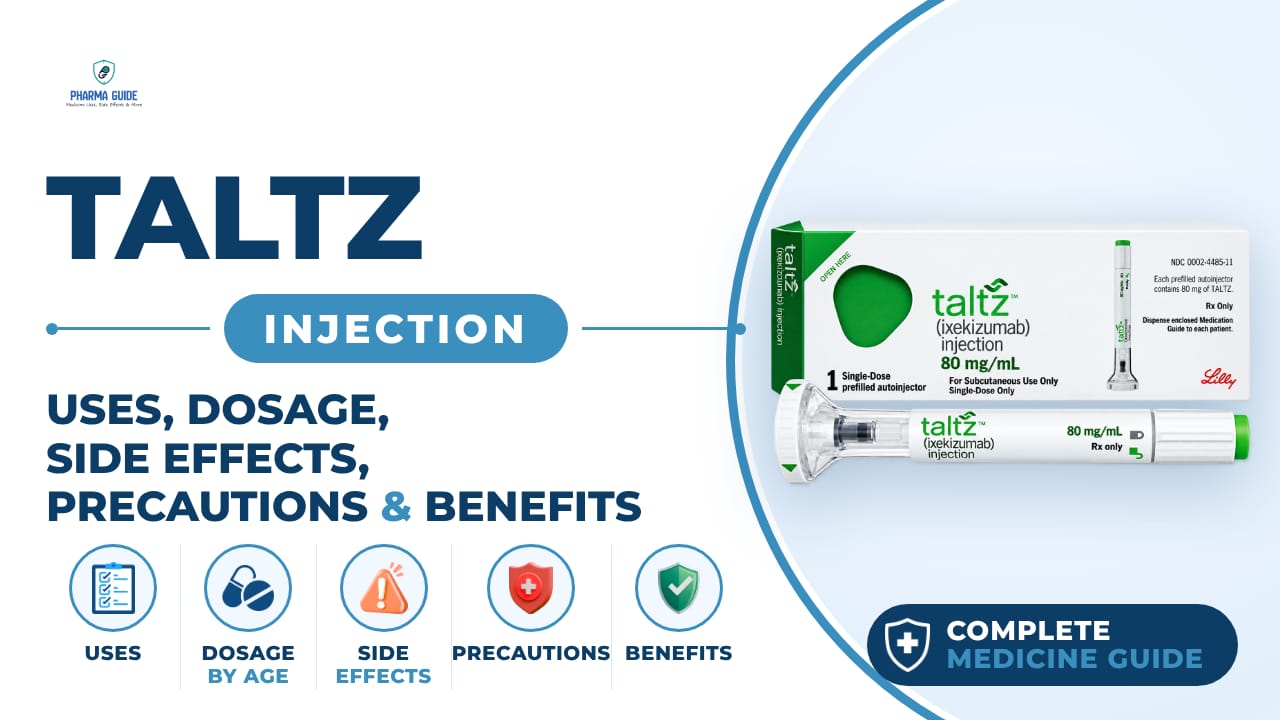
Taltz Injection: Uses, Dosage, Side Effects, Precautions and Alternates
| Generic name | Ixekizumab |
|---|---|
| Drug class | Interleukin (IL) inhibitor (monoclonal antibody) |
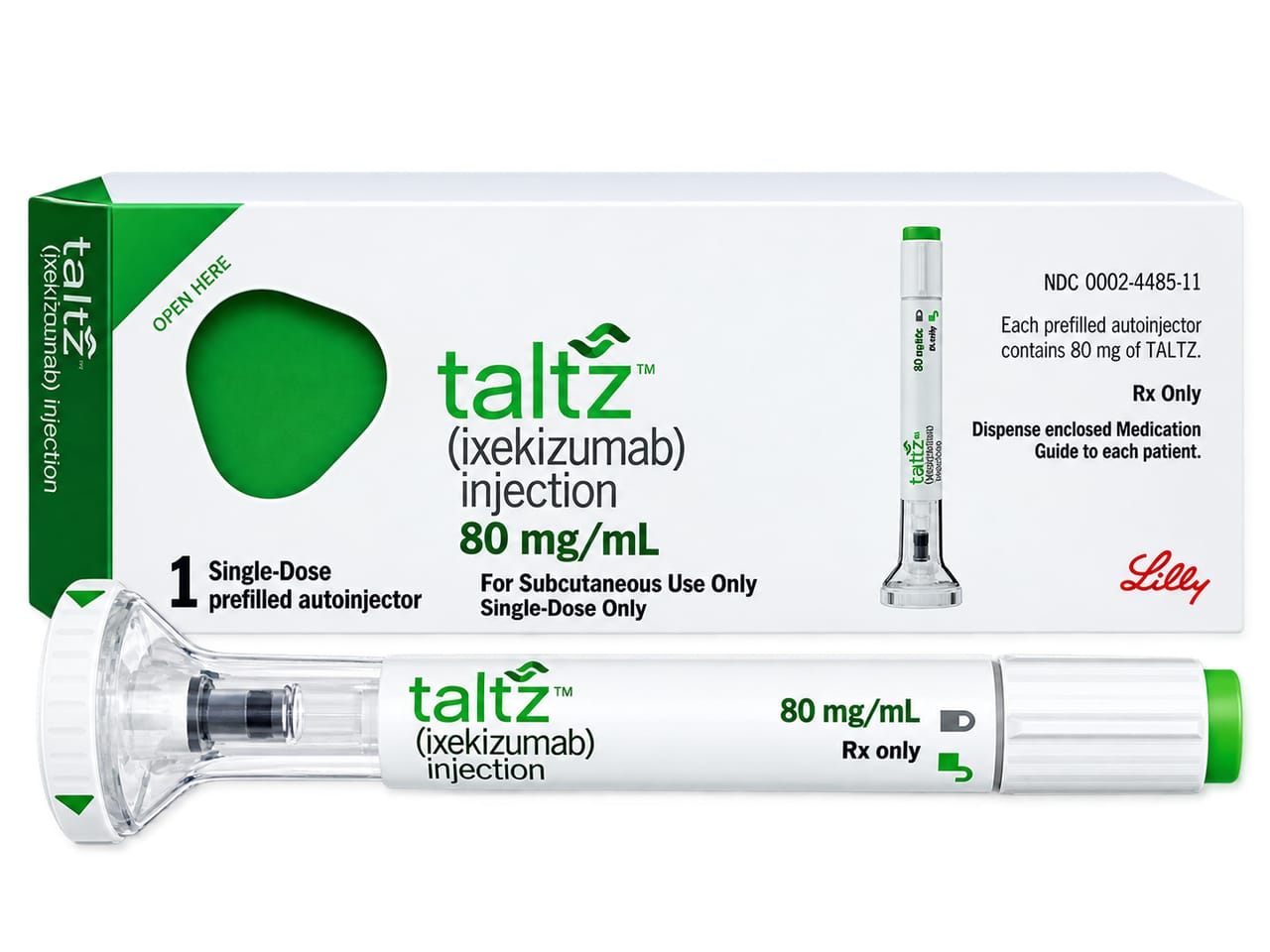
| Forms | Prefilled autoinjector (pen), Prefilled syringe, Solution for injection |
Quick overview
Taltz Injection (ixekizumab) is an interleukin (IL) inhibitor, a type of monoclonal antibody, given by injection under the skin. It is used to treat plaque psoriasis, psoriatic arthritis, ankylosing spondylitis, and non-radiographic axial spondyloarthritis. It works by blocking a protein called IL-17A that drives inflammation in these conditions. Taltz is available as a prefilled autoinjector, prefilled syringe, or solution for injection.
What is Taltz Injection
Taltz is a brand name for ixekizumab, a medicine given by injection under the skin. It is used to treat certain autoimmune conditions where the immune system causes inflammation in the skin or joints.
Taltz Injection uses
- Plaque psoriasis
- Psoriatic arthritis
- Ankylosing spondylitis (radiographic axial spondyloarthritis)
- Non-radiographic axial spondyloarthritis
Benefits of Taltz Injection
- Reduces inflammation and symptoms of plaque psoriasis, such as scaling, itching and pain
- Can be used alone or with other medicines, such as methotrexate, for psoriatic arthritis
How Taltz Injection works
Ixekizumab is a monoclonal antibody that works by calming down an overactive immune system. It blocks a protein called IL-17A, which is found in high levels in psoriasis and causes inflammation.
Taltz Injection dosage
This medication is injected under the skin, usually by a care team member, but it may also be given at home after proper training. Use exactly as directed and take it at the same time as scheduled; keep taking it unless your care team tells you to stop. Your first dose should be given by a doctor, nurse, or pharmacist; do not inject yourself until you have been trained.
Inject the whole contents of the single-use autoinjector or syringe. If you miss a dose at home, take it as soon as you remember, then continue your normal schedule; do not take double or extra doses. If you miss an appointment for a dose given at a hospital or clinic, call your care team as soon as possible.
Do not use the medicine if it looks cloudy, discolored, or has particles in it, or if the packaging is damaged. Put used needles and syringes in a special sharps container, not in the regular trash.
Use exactly as prescribed by your doctor or pharmacist.
Available forms and strengths
- Prefilled autoinjector (pen)
- Prefilled syringe
- Solution for injection
Side effects of Taltz Injection
Common
- Injection site reactions (such as pain, redness, discoloration, or irritation at the injection site)
- Upper respiratory tract infections, such as the common cold, flu, sore throat, or stuffy nose
- Nausea
- Fungal infections, such as athlete's foot or oral thrush
- Conjunctivitis (pink eye), especially in children
- Fever, sore throat, or mouth ulcers
- Itchy rash, dry skin, or dry patches
Serious
- Signs of serious allergic reaction, such as skin rash, itching, hives, or swelling of the face, lips, tongue, or throat, which can make it hard to breathe
- Signs of serious infection, such as fever, chills, cough, sore throat, wounds that don't heal, pain when passing urine, night sweats, or feeling very tired
- Inflammatory bowel disease (Crohn's disease or ulcerative colitis), which may cause blood in the stool, stomach cramping, or diarrhea
- Severe skin reactions resembling eczema that can lead to hospitalization, including scaly or dry patches, sores, skin color changes, itchiness, or rash
- Severe skin peeling and inflammation of most of the skin surface (exfoliative dermatitis)
- Sudden or severe stomach pain, bloody diarrhea, fever, nausea, or vomiting
Warnings and precautions
- Do not use Taltz if you have ever had an allergic reaction to it or any of its ingredients.
- Tell your doctor if you have an active infection, long-term infections, or tuberculosis, as you may need treatment or testing before starting Taltz.
- Tell your doctor if you have ulcerative colitis or Crohn's disease, as Taltz may cause or worsen inflammatory bowel disease.
- Do not receive live vaccines while using Taltz. Tell your doctor about your vaccination history and any planned vaccinations.
- Do not use the medicine if it appears cloudy, discolored, has particles in it, or if the packaging is damaged or shows signs of tampering.
- Do not share this medicine with anyone else, even if they have the same condition.
- It is not known whether Taltz is safe to use during pregnancy. Tell your doctor if you are pregnant or planning to become pregnant before starting treatment.
- It is not known whether Taltz passes into breast milk or how it may affect a breastfed child. Talk to your doctor if you are breastfeeding or planning to breastfeed.
- Tell your doctor about active or recurrent infections before treatment. Evaluation for tuberculosis is recommended before starting treatment.
- There are no known direct interactions between alcohol and Taltz, but alcohol can lower immune system activity, and so can Taltz, which could raise your risk of infection.
- Talk to your doctor about how much alcohol may be safe during treatment.
- No routine dose adjustment is generally established for kidney impairment, but kidney disease should be reported.
Storage
- Store in the refrigerator between 2°C to 8°C. Do not freeze.
- Do not shake.
- Keep in the original container to protect from light.
- Use the dose within 30 minutes of removing it from the refrigerator.
- If needed, it can be left out of the refrigerator for up to 5 days at a temperature not above 30°C, such as while traveling; after 5 days out of the fridge it must be thrown away.
- Do not use if it has been frozen or exposed to excessive heat.
- Get rid of any unused medication after the expiration date.
- Take unneeded or expired medication to a medication take-back program or pharmacy for safe disposal.
- Dispose of empty autoinjectors and syringes in a sharps container or similar puncture-proof hard plastic or glass container.
When to see a doctor
- Get emergency help right away for signs of a serious allergic reaction, such as difficulty breathing or swallowing, swelling of the face, lips, tongue, or throat, or severe itching with red rash or raised bumps.
- Stop using Taltz and call your doctor immediately if you notice signs of a serious infection, such as fever, flu-like symptoms, night sweats, feeling tired or short of breath, a cough that won't go away, or warm, red, painful skin or a painful rash with blisters.
- If you think you have used too much Taltz, you may need urgent medical attention. Contact your doctor or go to the emergency department, even if you feel fine.
- Call your care team if you develop fever, chills, sore throat, or other symptoms of a cold or flu, since this medicine can increase your risk of infection.
Alternatives
- Guselkumab
- Risankizumab
- Ustekinumab
- Secukinumab
Watch the video
FAQs
What is Taltz Injection used for?
Taltz is used to treat plaque psoriasis, psoriatic arthritis, ankylosing spondylitis, and non-radiographic axial spondyloarthritis.
How does Taltz Injection work?
Ixekizumab, the active ingredient in Taltz, is a monoclonal antibody that calms an overactive immune system by blocking IL-17A, a protein found in high levels in psoriasis that causes inflammation.
What are the common side effects of Taltz Injection?
Common side effects include injection site reactions, upper respiratory tract infections, nausea, fungal infections, conjunctivitis, fever, sore throat, mouth ulcers, and itchy rash or dry skin.
How should Taltz Injection be stored?
Store Taltz in the refrigerator between 2°C to 8°C, do not freeze or shake it, and keep it in its original container to protect from light. It can be left out of the fridge for up to 5 days at a temperature not above 30°C if needed, such as while traveling.
Can I drink alcohol while using Taltz Injection?
There are no known direct interactions between alcohol and Taltz, but both alcohol and Taltz can lower immune system activity, which could raise the risk of infection. Talk to your doctor about how much alcohol may be safe during treatment.
General information, not medical advice
Your prescriber and the leaflet in your pack know your situation. This page does not.
- Follow your prescriber and the leaflet
- Don't start, stop, or change a dose on your own
- Doses and warnings differ by country and product
Sources
Video
Related medicines

Injectafer Injection: Uses, Dosage, Side Effects, Precautions and Alternates
Iron products
Injectafer (ferric carboxymaltose) treats iron deficiency anemia and heart failure-related iron deficiency via IV. Learn uses, dosage, side effects, and

Gliclazide Tablet: Uses, Dosage, Side Effects, Precautions and Alternates
Sulfonylurea (hypoglycemic/antidiabetic agent)
Gliclazide Tablet is a sulfonylurea for type 2 diabetes that boosts insulin release. Learn about dosage, side effects, warnings, and precautions.