
Safety
General information, not medical advice
Your prescriber and the leaflet in your pack know your situation. This page does not.
- Follow your prescriber and the leaflet
- Don't start, stop, or change a dose on your own
- Doses and warnings differ by country and product
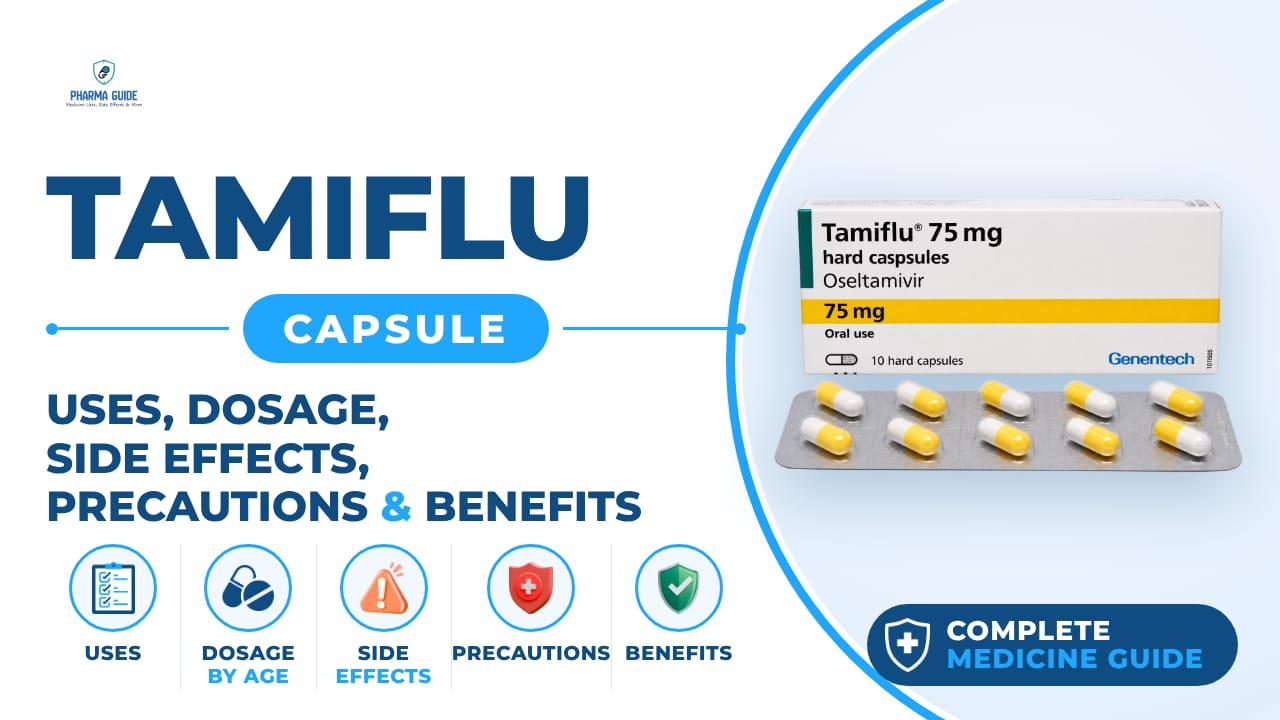
Tamiflu Capsule: Uses, Dosage, Side Effects, Precautions and Alternates
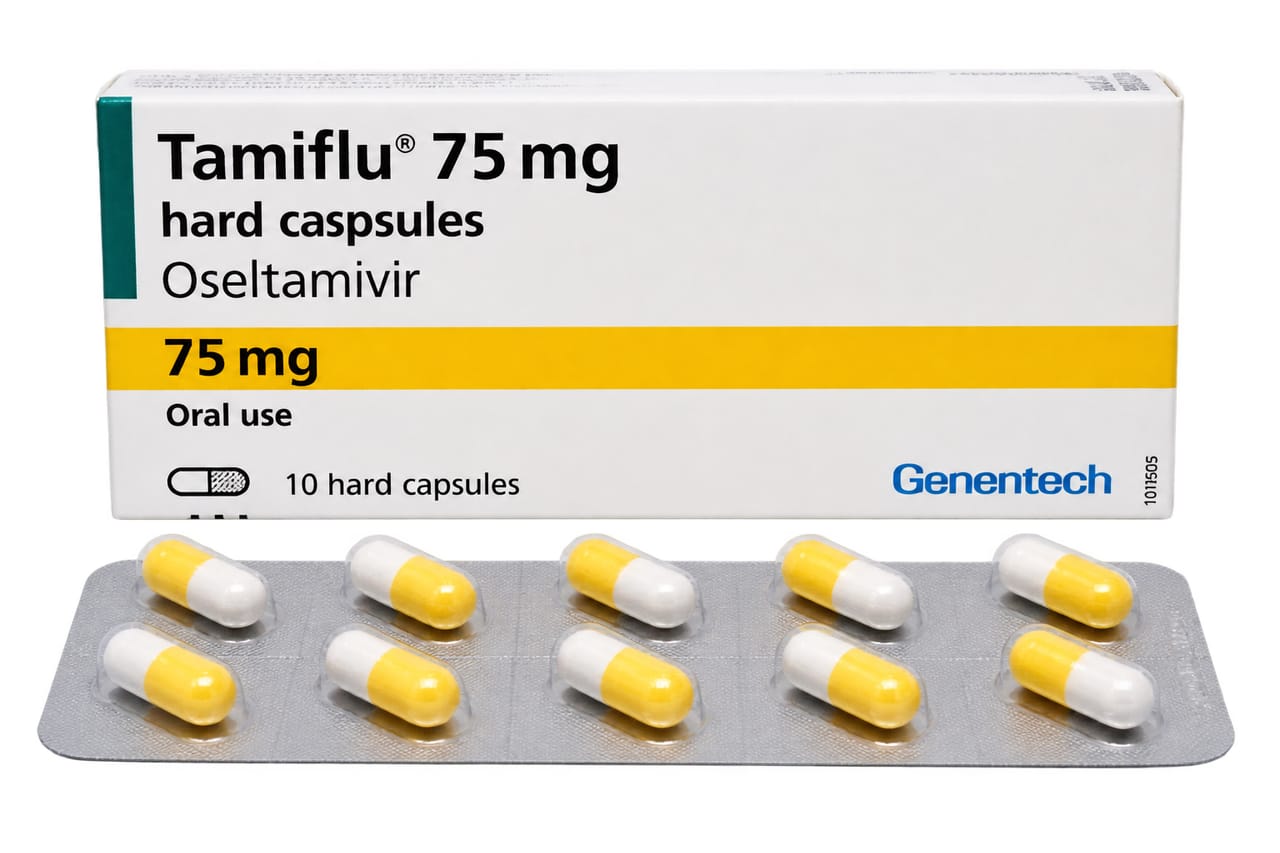
| Generic name | Oseltamivir |
|---|---|
| Drug class | Neuraminidase inhibitor (antiviral medicine) |
| Forms | Capsules (30 mg, 45 mg, 75 mg), Oral suspension (6 mg/mL) |
Quick overview
Tamiflu Capsule (oseltamivir) is an antiviral medicine known as a neuraminidase inhibitor. It is used to treat and prevent influenza (flu) caused by the influenza virus, but it does not work on the common cold or other respiratory virus infections. It may help you feel better faster if you have the flu and can help reduce the risk of flu complications. Tamiflu is taken as a capsule, swallowed whole with water.
What is Tamiflu Capsule
Tamiflu is an antiviral medicine used to treat and prevent influenza (flu) caused by the influenza virus. It does not work on the common cold or other respiratory virus infections.
Tamiflu Capsule uses
- Treatment of influenza (flu) in people who have had symptoms for a short time
- Prevention of influenza in people who may have been exposed but do not yet have symptoms
Benefits of Tamiflu Capsule
- May help you feel better faster if you already have the flu
- Helps reduce the chance of passing the flu on to someone else
- Can help prevent you from catching the flu
- Makes you less likely to develop complications of influenza such as bronchitis, pneumonia and sinusitis
How Tamiflu Capsule works
Tamiflu attacks the influenza virus and stops it from spreading inside your body, working at the main sites of infection to treat the cause of the flu.
Tamiflu Capsule dosage
Swallow the capsule whole with a glass of water, with or without food. If Tamiflu upsets your stomach, taking it with food may help. Do not break or chew the capsules before swallowing. If you cannot swallow capsules, ask your doctor about the oral suspension form instead.
For treatment, take one dose in the morning and one dose in the evening. For prevention, take your dose once a day. Start treatment as soon as possible after flu symptoms begin, and no later than 48 hours after they start. Take your medicine at the same time each day to help you remember.
Keep taking it until your doctor tells you to stop or your course is finished, even if you start to feel better. If you have kidney problems, your doctor may tell you to take it less often.
If you miss a dose, skip it if it's almost time for your next dose; otherwise take it as soon as you remember, then continue as normal. Do not take a double dose to make up for a missed one.
Do not stop taking this medicine suddenly or change the dose without checking with your doctor first. Do not give this medicine to anyone else, even if they have the same symptoms.
| Age group | Dose |
|---|---|
| Under 1 year | Specialist-directed dosing only |
| 1–12 years | Dose is weight-based; capsules may not be suitable for smaller children |
| 13–17 years | 75 mg twice daily for 5 days |
| Adults ≥18 years | 75 mg twice daily for 5 days |
Available forms and strengths
- Capsules (30 mg, 45 mg, 75 mg)
- Oral suspension (6 mg/mL)
Side effects of Tamiflu Capsule
Common
- Nausea (feeling like vomiting)
- Vomiting
- Stomach ache, indigestion
- Diarrhoea
- Dizziness or spinning sensation (vertigo)
- Headache
- Insomnia (difficulty sleeping)
- Sinusitis (stuffy nose or feeling of fullness in the nose, cheeks and behind the eyes)
- Runny nose or nose bleeds
- Cough
- Bronchitis
- Asthma symptoms (breathlessness, wheezing, cough, tightness in chest)
- Ear problems or ear infection
- Conjunctivitis (discharge from the eyes with itching and crusty eyelids)
- Visual disturbances
- Fatigue
- Aches and pains
- Mild skin rash
- Pain
Serious
- Diarrhoea with blood, along with fever and severe stomach pain
- Signs of allergic reaction: rash, itching or hives, swelling of the face, lips, tongue or other parts of the body, shortness of breath, wheezing or trouble breathing
- Yellowing of the skin and/or eyes, itching and dark coloured urine
- Chest infection with fever, chills, shortness of breath, cough, phlegm and occasional blood
- Convulsions, confusion, drowsiness, abnormal behaviour, delusions, hallucinations, agitation, anxiety and nightmares
- Skin blistering and peeling
- Blisters or sores in the mouth
- Chest pain or tightness
- Speech problems or shaky movements
- Hearing voices or seeing things that are not there
Warnings and precautions
- Do not use Tamiflu if you are allergic to oseltamivir or any of its ingredients, if the package is torn or tampered with, or if it is past its expiry date.
- Check with your doctor before use if you have kidney problems, a weakened immune system, or take other medicines.
- Do not give Tamiflu to children under 1 year of age to prevent the flu, since its safety and effectiveness have not been established for that use in this age group.
- People with the flu, especially children and teenagers, can develop unusual behavior or nervous system problems; they should be watched closely.
- Do not stop taking this medicine suddenly or change your dose without checking with your doctor.
- Do not use a nasal flu vaccine within 2 weeks before or 48 hours after taking Tamiflu, as it may make the vaccine less effective.
- Check with your doctor if you are pregnant or plan to become pregnant. It is not known if Tamiflu can harm an unborn baby, so your doctor will discuss the risks and benefits with you if you need to take it while pregnant.
- Talk to your doctor if you are breastfeeding or planning to breastfeed. Tamiflu may pass into breast milk, and your doctor will discuss the risks and benefits with you.
- Tell your doctor if you have kidney failure, impairment, or any other kidney problems, as your dose may need to be adjusted.
- Be careful driving or operating machinery until you know how Tamiflu affects you, although it is not expected to affect your ability to drive or use machines.
Storage
- Keep your capsules in the blister pack until it is time to take them, as they may not keep well outside the pack
- Keep Tamiflu capsules in a cool dry place where the temperature stays below 25°C
- Store in a cool dry place away from moisture, heat or sunlight; do not store in the bathroom, near a sink, in the car, or on windowsills
- Keep it where young children cannot reach it
- If you no longer need the medicine or it is out of date, take it to any pharmacy for safe disposal
- Do not use this medicine after the expiry date
When to see a doctor
- Get medical help immediately if you notice signs of a serious allergic reaction, such as rash, itching or hives, swelling of the face, lips, tongue or other body parts, or trouble breathing.
- Call your doctor right away if your symptoms get worse after starting Tamiflu.
- Seek urgent medical attention if you think you have taken too much Tamiflu, even if you feel fine.
- Go straight to the emergency department or call your doctor if you notice serious side effects such as bloody diarrhoea with fever and stomach pain, yellowing of skin or eyes, signs of chest infection, or confusion, hallucinations, or unusual behaviour.
- Stop taking Tamiflu and get medical help right away for serious skin or allergic reactions, including skin blistering and peeling, swelling of the face, lips, tongue or throat, or trouble breathing.
Alternatives
- Tamiflu oral suspension (liquid)
- Oseltamivir (generic, capsule and liquid suspension forms)
Watch the video
FAQs
What is Tamiflu Capsule used for?
Tamiflu is an antiviral medicine used to treat influenza in people who have had symptoms for a short time, and to prevent influenza in people who may have been exposed but do not yet have symptoms. It does not work on the common cold or other respiratory virus infections.
How should I take Tamiflu Capsule?
Swallow the capsule whole with a glass of water, with or without food, without breaking or chewing it. For treatment, take one dose in the morning and one in the evening; for prevention, take your dose once a day. Start treatment as soon as possible and no later than 48 hours after flu symptoms begin.
What is the adult dosage of Tamiflu Capsule?
Adults aged 18 years and over typically take 75 mg twice daily for 5 days.
What are the common side effects of Tamiflu Capsule?
Common side effects include nausea, vomiting, stomach ache, indigestion, diarrhoea, dizziness, headache, insomnia, sinusitis, runny nose or nose bleeds, cough, bronchitis, fatigue, aches and pains, and mild skin rash.
What should I do if I miss a dose of Tamiflu Capsule?
If you miss a dose, skip it if it's almost time for your next dose; otherwise take it as soon as you remember, then continue as normal. Do not take a double dose to make up for a missed one.
General information, not medical advice
Your prescriber and the leaflet in your pack know your situation. This page does not.
- Follow your prescriber and the leaflet
- Don't start, stop, or change a dose on your own
- Doses and warnings differ by country and product
Sources
- Tamiflu Consumer Medicine Information, Roche Products Pty Limited, May 2023 (safetyandquality.gov.au)
- Drugs.com Tamiflu page, reviewed August 2026, referencing Tamiflu Prescribing Information, Genentech, Inc. 2019
Video
Related medicines

Injectafer Injection: Uses, Dosage, Side Effects, Precautions and Alternates
Iron products
Injectafer (ferric carboxymaltose) treats iron deficiency anemia and heart failure-related iron deficiency via IV. Learn uses, dosage, side effects, and

Gliclazide Tablet: Uses, Dosage, Side Effects, Precautions and Alternates
Sulfonylurea (hypoglycemic/antidiabetic agent)
Gliclazide Tablet is a sulfonylurea for type 2 diabetes that boosts insulin release. Learn about dosage, side effects, warnings, and precautions.