
Safety
General information, not medical advice
Your prescriber and the leaflet in your pack know your situation. This page does not.
- Follow your prescriber and the leaflet
- Don't start, stop, or change a dose on your own
- Doses and warnings differ by country and product
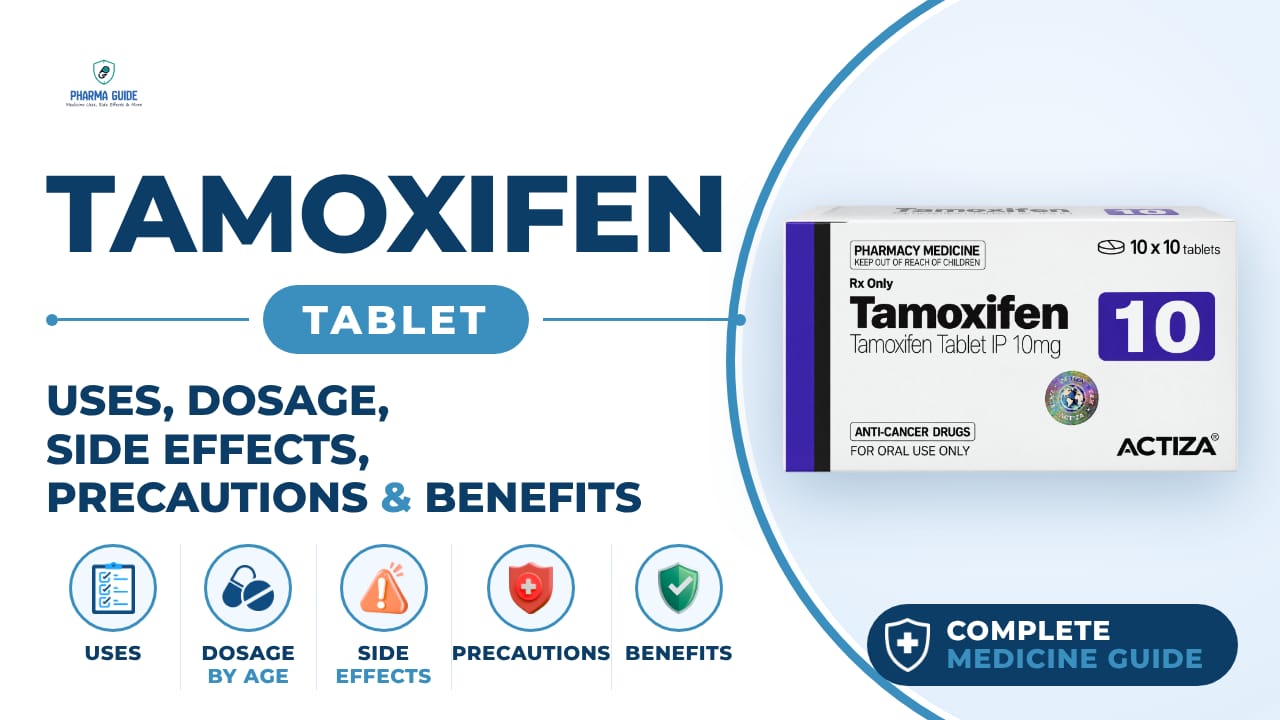
Tamoxifen Tablet: Uses, Dosage, Side Effects, Precautions and Alternates
| Generic name | tamoxifen |
|---|---|
| Drug class | Selective estrogen receptor modulator (SERM) / antiestrogen |
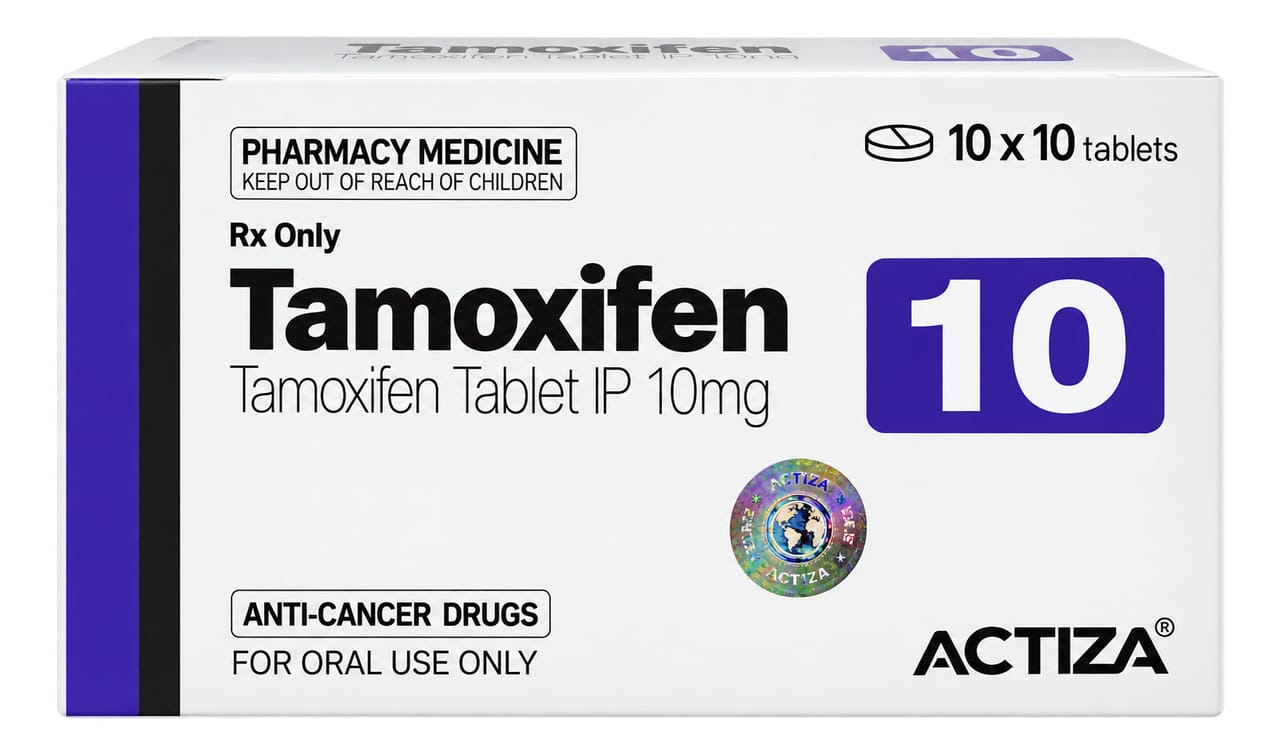
| Forms | oral tablet (10 mg; 20 mg), oral solution (10 mg/5 mL) |
Quick overview
Tamoxifen Tablet (generic: tamoxifen) is a selective estrogen receptor modulator (SERM) used mainly to treat and help prevent certain types of estrogen receptor-positive breast cancer. It works by blocking the effects of estrogen in breast tissue. It is taken by mouth, usually once daily, and is also used in some cases to help trigger ovulation or to treat McCune-Albright syndrome.
What is Tamoxifen Tablet
Tamoxifen is a hormone-blocking medicine used mainly to treat and help prevent certain types of breast cancer. It works by blocking the effects of estrogen in breast tissue.
Tamoxifen Tablet uses
- Treat estrogen receptor-positive breast cancer that has spread to other parts of the body, in women and men
- Treat early-stage estrogen receptor-positive breast cancer after surgery, radiation, or chemotherapy, and reduce the chance of cancer in the other breast
- Lower the risk of invasive breast cancer after surgery and radiation for ductal carcinoma in situ (DCIS)
- Lower the chance of developing breast cancer in women at high risk due to age, personal history, or family history
- Sometimes used to help trigger ovulation in women trying to become pregnant, or to treat McCune-Albright syndrome
Benefits of Tamoxifen Tablet
- Can reduce the chance of getting breast cancer in high-risk women
- Can lower the chance of invasive breast cancer in women with DCIS
- Can help stop the growth or spread of hormone-sensitive breast cancer
- Can lower the chance of getting a new cancer in the other breast
How Tamoxifen Tablet works
Tamoxifen blocks the hormone estrogen from acting on breast tissue, which can stop or slow the growth of breast cancers that need estrogen to grow. In other parts of the body, like the uterus and bones, it can act somewhat like estrogen instead.
Tamoxifen Tablet dosage
Take it at the same time each day, with or without food. Swallow tablets whole; do not split, chew, or crush them. Swallow with water or another non-alcoholic drink. Take it exactly as prescribed, and do not stop early without talking to your doctor. Treatment for breast cancer risk reduction is usually for five years; for breast cancer treatment your doctor will decide the length of treatment.
Check your breasts for lumps monthly and keep up with mammograms and gynecologic exams. Tell any doctor or lab that treats you that you are taking tamoxifen, as it can affect test results.
If you miss a dose, take it as soon as you remember, but skip it if your next dose is almost due; do not take two doses at once.
| Age group | Dose |
|---|---|
| Under 18 years | Not routinely established; doctor-directed |
| 18–64 years | 20–40 mg once daily for breast cancer |
| 65+ years | 20–40 mg once daily; individualized by doctor |
Available forms and strengths
- Oral tablet (10 mg; 20 mg)
- Oral solution (10 mg/5 mL)
Side effects of Tamoxifen Tablet
Common
- Hot flashes
- Vaginal discharge, bleeding, or dryness
- Irregular or absent menstrual periods
- Fluid retention, swelling, weight changes
- Nausea, tiredness, mood changes
- Skin changes, rash, or hair thinning
- Headache
- Dizziness or light-headedness
- Loss of sexual desire or ability (in men)
Serious
- Signs of a stroke, such as sudden numbness or weakness, severe headache, slurred speech, or problems with vision or balance
- Signs of a blood clot in the lung, such as chest pain, sudden cough or shortness of breath, dizziness, or coughing up blood
- Signs of a blood clot deep in the body, such as pain, swelling, or warmth in one leg
- Unusual vaginal bleeding or discharge, even a small amount
- Changes in menstrual periods, or pain or pressure in the pelvic area
- A new breast lump
- Blurred vision, slow clouding of vision, eye pain or redness, or halos around lights
- Liver problems, including liver cancer: nausea, upper stomach pain, itching, tiredness, loss of appetite, dark urine, clay-colored stools, or jaundice
- High blood calcium: confusion, tiredness, nausea, vomiting, constipation, increased thirst or urination, or weight loss
- Low blood cell counts: fever, chills, easy bruising, unusual bleeding, pale skin, or feeling light-headed
- Severe upper stomach pain spreading to the back (possible pancreatitis)
- A spreading rash, blistering or peeling skin, or sores in the mouth or eyes
- Signs of an allergic reaction: hives, difficulty breathing, swelling of the face, lips, tongue, or throat
Warnings and precautions
- Tamoxifen can cause serious and life-threatening problems including uterine cancer, stroke, and blood clots in the lungs, especially when used to lower breast cancer risk rather than to treat existing cancer.
- Discuss the risks and benefits with your doctor before starting. If you already have breast cancer, the benefits of taking tamoxifen are greater than these risks.
- Blood clots can still occur for a couple of months after you stop taking tamoxifen.
- Do not take tamoxifen to lower your breast cancer risk if you have had a blood clot in your legs or lungs, need a blood thinner like warfarin, or have other risk factors for blood clots.
- Taking tamoxifen while planning breast reconstruction surgery using your own tissue can raise the risk of surgical complications.
- Do not take tamoxifen if you are pregnant, as it can harm an unborn baby. Use effective non-hormonal birth control during treatment and for a period after stopping, and tell your doctor right away if you become pregnant. Do not breastfeed while taking tamoxifen or for a period after your last dose.
- Tell your doctor if you have liver disease. Tamoxifen can cause liver problems, including liver cancer, so your doctor may check your liver function during treatment.
- Follow your doctor's instructions about food, drink, and activity while taking this medicine.
- Tamoxifen is unlikely to affect your ability to drive or operate machinery, but it can cause tiredness and weakness, so be careful driving or using machines if you have these symptoms.
Storage
- Tablets: store at 20°C to 25°C (68°F to 77°F) in a well-closed, light-resistant container, away from moisture and heat. Do not store in a bathroom.
- Keep tamoxifen and all medicines out of the reach of children.
- Do not flush unused medicine. Ask your pharmacist about a take-back programme.
- Store at room temperature 15°C to 30°C. Protect from light.
- Do not store in damp places. Heat or moisture may cause the medicine to break down.
- Do not keep outdated medicine or medicine no longer needed.
When to see a doctor
Get emergency help right away if you have signs of an allergic reaction: hives, difficulty breathing, or swelling of the face, lips, tongue, or throat. Call your doctor immediately if you notice signs of a stroke, a blood clot in the lung, or a blood clot deep in the body. Call your doctor right away if you have any new breast lump, unusual vaginal bleeding or discharge, or pelvic pain or pressure. Seek urgent medical attention if you think you or someone else may have taken too much tamoxifen.
Alternatives
- Toremifene
- Exemestane
- Letrozole
Watch the video
FAQs
What is Tamoxifen Tablet used for?
It is used to treat estrogen receptor-positive breast cancer that has spread, treat early-stage breast cancer after surgery or chemotherapy, lower invasive breast cancer risk after DCIS treatment, reduce breast cancer risk in high-risk women, and sometimes to trigger ovulation or treat McCune-Albright syndrome.
How should I take Tamoxifen Tablet?
Take it at the same time each day, with or without food, swallowing tablets whole without splitting, chewing, or crushing them. Follow your doctor's prescribed length of treatment, which is usually five years for risk reduction.
What is the usual dose of Tamoxifen Tablet?
For adults aged 18 to 64 and those 65 and older, the typical dose is 20 to 40 mg once daily for breast cancer, individualized by a doctor. Dosing in children under 18 is not routinely established.
What are the serious side effects of Tamoxifen Tablet?
Serious effects include signs of stroke, blood clots in the lung or legs, unusual vaginal bleeding, a new breast lump, vision changes, liver problems, high blood calcium, low blood cell counts, and allergic reactions.
Can I take Tamoxifen Tablet if I am pregnant?
No, tamoxifen can harm an unborn baby, so you should not take it while pregnant. Use effective non-hormonal birth control during treatment and for a period after stopping, and avoid breastfeeding.
General information, not medical advice
Your prescriber and the leaflet in your pack know your situation. This page does not.
- Follow your prescriber and the leaflet
- Don't start, stop, or change a dose on your own
- Doses and warnings differ by country and product
Sources
Video
Related medicines

Injectafer Injection: Uses, Dosage, Side Effects, Precautions and Alternates
Iron products
Injectafer (ferric carboxymaltose) treats iron deficiency anemia and heart failure-related iron deficiency via IV. Learn uses, dosage, side effects, and

Gliclazide Tablet: Uses, Dosage, Side Effects, Precautions and Alternates
Sulfonylurea (hypoglycemic/antidiabetic agent)
Gliclazide Tablet is a sulfonylurea for type 2 diabetes that boosts insulin release. Learn about dosage, side effects, warnings, and precautions.