
Safety
General information, not medical advice
Your prescriber and the leaflet in your pack know your situation. This page does not.
- Follow your prescriber and the leaflet
- Don't start, stop, or change a dose on your own
- Doses and warnings differ by country and product
Tapentadol Tablet: Uses, Dosage, Side Effects, Precautions and Alternates
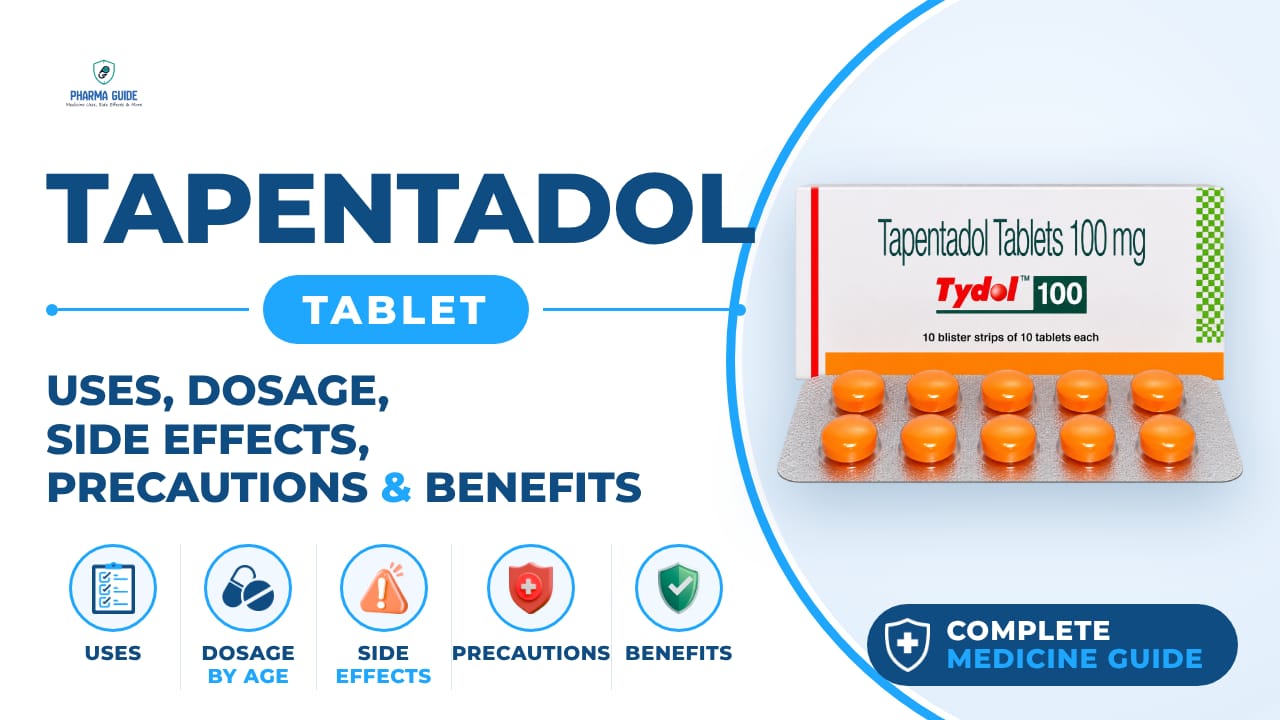
| Generic name | Tapentadol |
|---|---|
| Drug class | Opioid analgesic |
| Forms | Oral tablet (immediate-release), Oral tablet (controlled-release / extended-release / sustained-release), Oral solution |
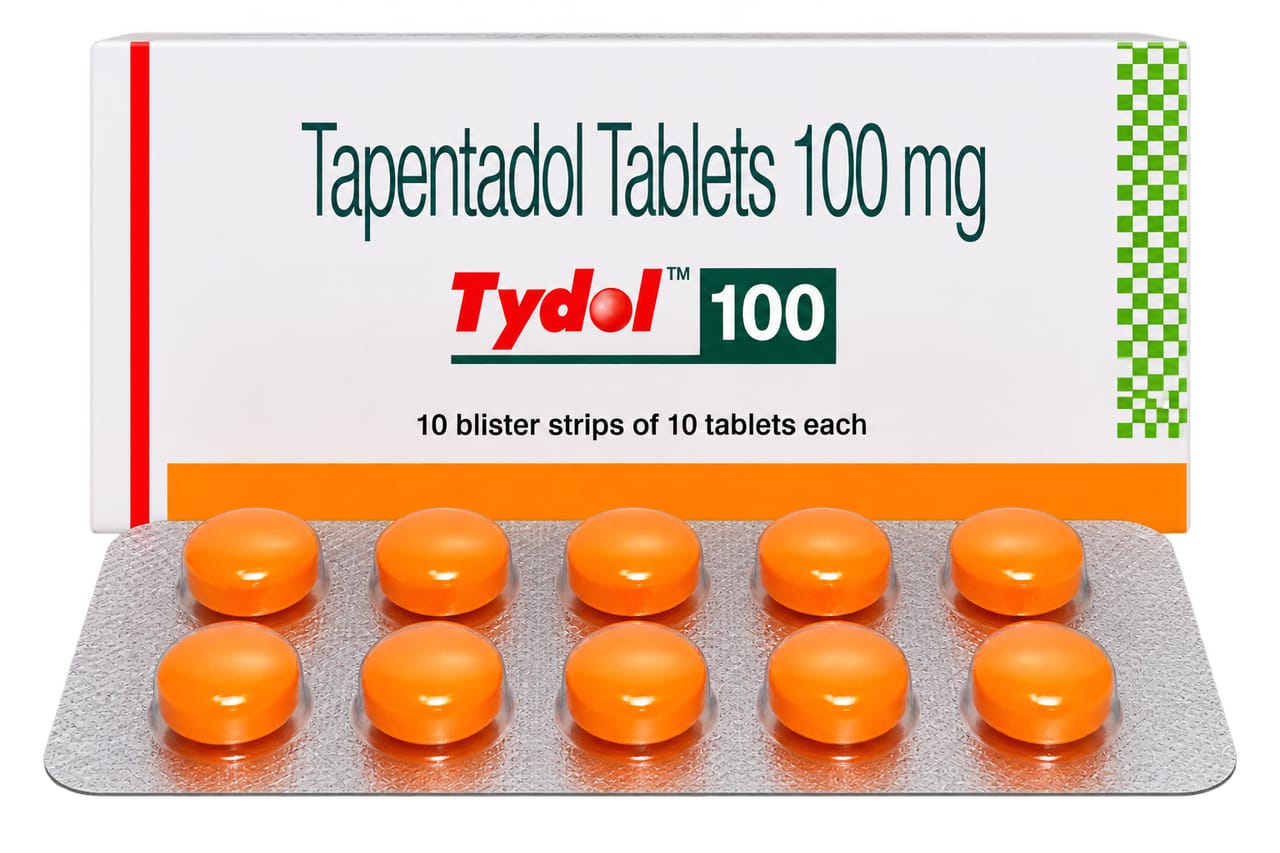
Quick overview
Tapentadol Tablet (generic name: tapentadol) is a strong prescription opioid analgesic used to manage moderate to severe pain in adults. It works on opioid receptors and increases noradrenaline levels to relieve pain. Tapentadol is available only with a doctor's prescription and must be used exactly as directed due to serious risks, including dependence and breathing problems.
What is Tapentadol Tablet
Tapentadol is a strong prescription pain medicine that belongs to the opioid (narcotic) family. It is used to treat moderate to severe pain and only becomes available with a doctor's prescription.
Tapentadol Tablet uses
- Management of moderate to severe acute pain in adults
- Relief of severe pain when other pain medicines have not worked well enough or cannot be used
- Around-the-clock treatment of pain that needs daily, ongoing management (extended-release form)
Benefits of Tapentadol Tablet
- Provides strong pain relief for moderate to severe pain
- May cause fewer typical opioid side effects because it also increases noradrenaline levels
- Can be used when non-opioid pain relievers are not effective or not tolerated
How Tapentadol Tablet works
Tapentadol works in two ways: it acts directly on opioid receptors in the brain and spinal cord to reduce pain signals, and it also raises levels of a brain chemical called noradrenaline, which helps block pain and may reduce typical opioid side effects.
Tapentadol Tablet dosage
Take exactly as prescribed by your doctor; do not take more, more often, or for longer than directed. Tapentadol can be taken with or without food. Swallow tablets whole with enough liquid; do not cut, break, crush, chew, or dissolve them, especially controlled-release or extended-release tablets. Take at the same times each day. Do not take a double dose to make up for a missed dose. Do not stop taking suddenly after prolonged use; your doctor will guide you on tapering the dose gradually. Never give your tapentadol to another person or take tapentadol prescribed for someone else.
| Age group | Dose |
|---|---|
| Under 18 years | Not recommended |
| 18–64 years | 50–100 mg every 4–6 hours as needed |
| 65 years and older | Start at the lowest appropriate dose and increase cautiously |
| Maximum | 700 mg on Day 1; 600 mg/day thereafter |
Available forms and strengths
- Oral tablet (immediate-release)
- Oral tablet (controlled-release / extended-release / sustained-release)
- Oral solution
Side effects of Tapentadol Tablet
Common
- Constipation
- Headache or dizziness
- Fatigue or drowsiness, especially right after a dose
- Loss of appetite, nausea and vomiting
- Dry mouth
- Itching
- Increased sweating
- Stomach pain or discomfort
- Insomnia
Serious
- Life-threatening or fatal breathing problems (respiratory depression), especially when starting treatment or after a dose increase
- Severe allergic reaction (anaphylaxis) with rash, hives, swollen face, throat tightness, trouble breathing or swallowing
- Seizures
- Serotonin syndrome (agitation, hallucinations, fever, fast heart rate, muscle stiffness or twitching, loss of coordination, diarrhea)
- Severe constipation or bowel blockage
- Adrenal gland problems (adrenal insufficiency) with nausea, vomiting, weakness, dizziness, low blood pressure
- Severe low blood pressure, dizziness or fainting
- Physical dependence, tolerance, and withdrawal symptoms after stopping
- Opioid use disorder, misuse, and addiction
- Overdose leading to slow or stopped breathing, loss of consciousness, or death
Warnings and precautions
- Because opioids carry a risk of addiction, abuse, and misuse even at recommended doses, and can cause fatal overdose, tapentadol should only be used when non-opioid pain medicines are not effective, not tolerated, or not suitable.
- Tablets must be swallowed whole. Cutting, breaking, crushing, chewing, or dissolving the tablet can cause dangerous effects including death.
- Even a single dose taken accidentally by someone else, especially a child, can be fatal.
- Using tapentadol together with benzodiazepines, alcohol, or other central nervous system depressants can cause profound sedation, breathing problems, coma, and death.
- Do not combine tapentadol with monoamine oxidase inhibitors (MAOIs) or use it within 14 days of stopping an MAOI, due to potentially dangerous interactions.
- Suddenly stopping tapentadol can cause withdrawal symptoms.
- Tapentadol is not recommended during pregnancy. Using it during pregnancy can cause life-threatening withdrawal symptoms in the newborn baby, including with prolonged use.
- Tapentadol should not be used while breastfeeding, as it passes into breast milk and can cause life-threatening breathing problems in a nursing infant.
- People with severe kidney problems should not use tapentadol, and those with milder kidney problems may need a lower dose and closer monitoring.
- Tapentadol should not be used by people with severe liver problems, and those with moderate liver problems need a lower, less frequent dose under a doctor's care.
- Do not drink alcohol or use products containing alcohol while taking tapentadol, as this combination can cause dangerous, sometimes fatal, side effects.
- Tapentadol can make you drowsy, dizzy, or lightheaded, and may affect your ability to drive or operate machinery safely, especially when starting treatment or after a dose change.
Storage
- Store at room temperature between 15°C and 30°C
- Protect from moisture
- Keep out of the reach and sight of children and pets
- Store in a safe, secure place to prevent theft or misuse
- Do not keep unused tapentadol 'just in case'; return unused medicine to a pharmacy for safe disposal
- Never throw medicines into household trash or flush them down the toilet unless instructed to do so
When to see a doctor
- Get emergency help right away if breathing becomes slow, weak, or stops, or if a person is unresponsive or cannot be woken up.
- Seek immediate medical attention for signs of overdose, such as extreme sleepiness, difficulty breathing, loss of consciousness, or pinpoint pupils.
- Call your doctor immediately if you notice signs of an allergic reaction, such as rash, hives, swollen face, lips or throat, or trouble breathing or swallowing.
- Seek medical help immediately if you have a seizure while taking this medicine.
- Get medical help right away if a baby born to a mother who took this medicine shows signs of withdrawal, such as breathing changes, being very hard to comfort, tremors, or fever.
- Contact your doctor if your pain is not well controlled, or if you experience new, unexpected, or unwanted side effects.
- Call your doctor right away if you notice symptoms of serotonin syndrome, such as agitation, hallucinations, fever, fast heart rate, muscle stiffness or twitching, or loss of coordination.
Alternatives
- Tramadol
- Hydromorphone
- Codeine
Watch the video
FAQs
What is Tapentadol Tablet used for?
Tapentadol is used to manage moderate to severe acute pain in adults, including pain that other medicines have not relieved well enough, and in extended-release form for around-the-clock pain management.
How should Tapentadol Tablet be taken?
Take it exactly as prescribed, with or without food, swallowing tablets whole with enough liquid. Do not cut, break, crush, chew, or dissolve them, and do not stop suddenly after prolonged use without your doctor's guidance.
What is the maximum dose of Tapentadol?
For adults 18-64 years, the usual dose is 50-100 mg every 4-6 hours as needed, with a maximum of 700 mg on Day 1 and 600 mg per day thereafter.
What are the serious side effects of Tapentadol?
Serious risks include life-threatening breathing problems, severe allergic reactions, seizures, serotonin syndrome, severe constipation, adrenal gland problems, dependence, addiction, and fatal overdose.
Can Tapentadol be used during pregnancy or breastfeeding?
Tapentadol is not recommended during pregnancy as it can cause life-threatening withdrawal symptoms in newborns, and it should not be used while breastfeeding due to the risk of life-threatening breathing problems in the infant.
General information, not medical advice
Your prescriber and the leaflet in your pack know your situation. This page does not.
- Follow your prescriber and the leaflet
- Don't start, stop, or change a dose on your own
- Doses and warnings differ by country and product
Sources
- Healthdirect Australia (healthdirect.gov.au/tapentadol), reviewed April 2025
- APO-TAPENTADOL Product Monograph, Apotex Inc., last revised February 16, 2022
- Drugs.com Tapentadol monograph, medically reviewed February 21, 2025
- Practo Medicine Info: Tapentadol
- UpToDate Lexidrug Patient & Caregiver Education: Tapentadol, last updated December 12, 2022
- Cureus 2024;16(11):e74307. Zavaleta-Monestel et al., 'Tapentadol: A Comprehensive Review of Its Role in Pain Management'
Video
Related medicines
Butorphanol Nasal Spray: Uses, Dosage, Side Effects, Precautions and Alternates
Opioid analgesic
Butorphanol Nasal Spray is a prescription opioid for short-term moderate to severe pain in adults, used for up to 3 days with careful dosing.
Methadone Tablet: Uses, Dosage, Side Effects, Precautions and Alternates
Opioid analgesic
Methadone Tablet is an opioid used for severe pain and opioid addiction treatment. Learn about its uses, dosage, side effects, and safety warnings.