
Safety
General information, not medical advice
Your prescriber and the leaflet in your pack know your situation. This page does not.
- Follow your prescriber and the leaflet
- Don't start, stop, or change a dose on your own
- Doses and warnings differ by country and product
Targiniq Tablet: Uses, Dosage, Side Effects, Precautions and Alternates
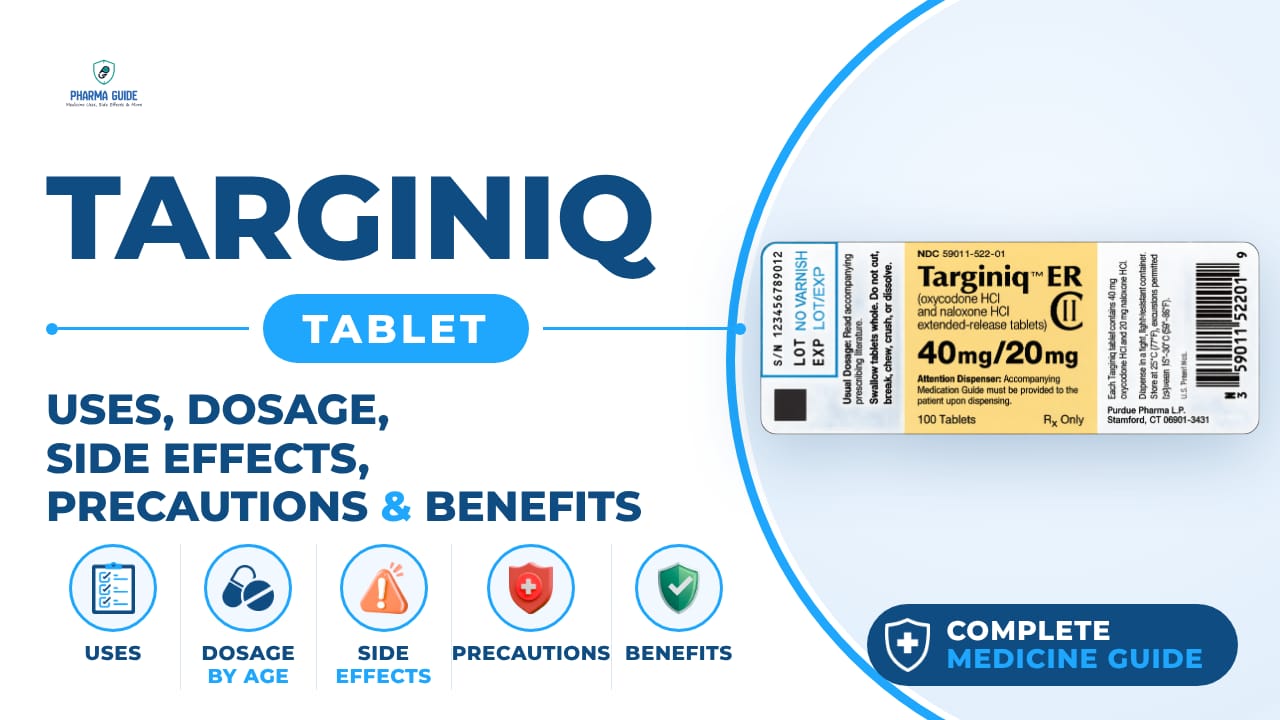
| Generic name | oxycodone hydrochloride and naloxone hydrochloride extended-release tablets |
|---|---|
| Drug class | Narcotic analgesic combinations (Opioid agonist/antagonist combination) |
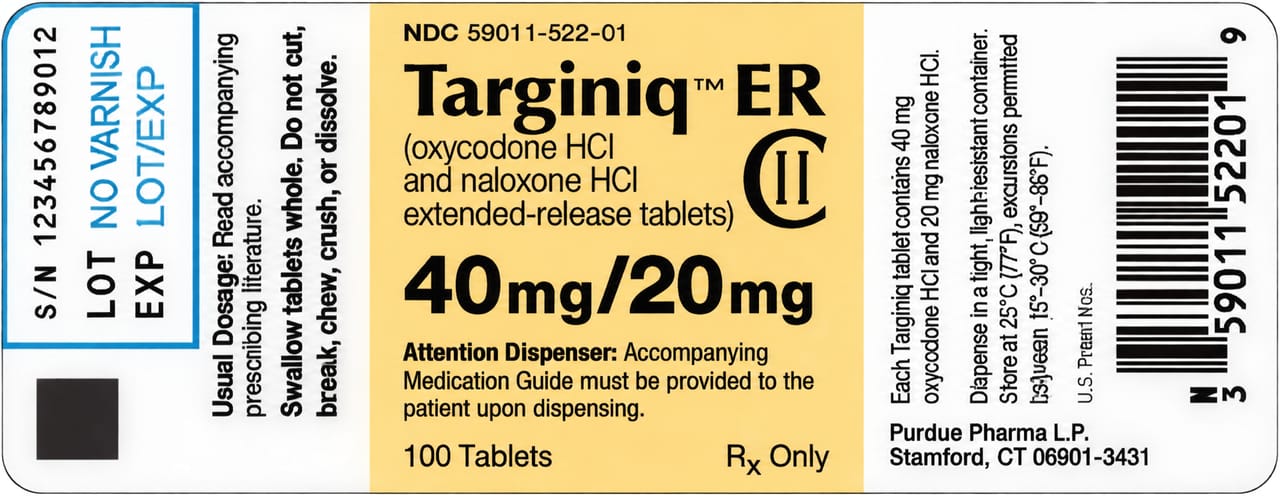
| Forms | Extended-release tablets (10 mg/5 mg, 20 mg/10 mg, and 40 mg/20 mg oxycodone/naloxone) |
Quick overview
Targiniq Tablet is an extended-release combination of oxycodone hydrochloride, a narcotic pain medication, and naloxone hydrochloride, which is included to help prevent misuse. It is used for around-the-clock treatment of severe pain that is not controlled by other medicines. Note that the Targiniq ER brand and its generics have been discontinued in the United States. It must be taken exactly as prescribed due to serious risks including addiction, overdose, and life-threatening breathing problems.
What is Targiniq Tablet
Targiniq ER contains a combination of naloxone and oxycodone. Oxycodone is an opioid pain medication (a narcotic), and naloxone is included to help prevent misuse of the narcotic ingredient. The Targiniq ER brand and its generics have been discontinued in the United States.
Targiniq Tablet uses
- Around-the-clock treatment of severe pain that is not controlled by other medicines
- Not for use on an as-needed basis for pain that is not around-the-clock
Benefits of Targiniq Tablet
- Provides long-acting (extended-release) relief for severe, chronic pain requiring daily opioid treatment when other treatments do not work well enough or cannot be tolerated
How Targiniq Tablet works
Oxycodone is an opioid pain reliever that acts on receptors in the brain and spinal cord to reduce the feeling of pain. Naloxone is included to block certain effects of the opioid, including the feelings of well-being that can lead to abuse, helping to discourage misuse of the medicine.
Targiniq Tablet dosage
Take exactly as prescribed and follow all directions on your prescription label. Swallow the tablet whole; do not crush, chew, break, dissolve, snort, or inject it, as this can cause a fatal overdose. This medicine is usually taken every 12 hours, at the same time each day. Do not take more than your prescribed amount in a 12-hour period. If you miss a dose, take your next dose at your usual scheduled time; do not take extra medicine to make up for a missed dose. It can be taken with or without food. Do not stop taking this medicine suddenly after long-term use; ask your doctor how to stop safely to avoid withdrawal symptoms. Never share this medicine with anyone else, especially someone with a history of drug abuse or addiction.
| Age group | Dose |
|---|---|
| Under 18 years | Not recommended |
| 18–64 years | 10 mg/5 mg every 12 hours initially in opioid-naïve/non-tolerant patients; adjust individually |
| 65+ years | Start cautiously at the lowest appropriate dose; doctor supervision required |
| Maximum | 40 mg/20 mg every 12 hours (80 mg/40 mg per day) |
Available forms and strengths
- Extended-release tablets (10 mg/5 mg, 20 mg/10 mg, and 40 mg/20 mg oxycodone/naloxone)
Side effects of Targiniq Tablet
Common
- Drowsiness
- Headache
- Dizziness
- Stomach pain
- Nausea
- Constipation
- Anxiety
- Sweating
- Vomiting
- Itching
- Insomnia
- Back pain
Serious
- Shallow breathing, slow heartbeat, cold, clammy skin
- Seizure (convulsions)
- Confusion, severe drowsiness
- A light-headed feeling, like you might pass out
- Infertility, missed menstrual periods
- Impotence, sexual problems, loss of interest in sex
- Low cortisol levels - nausea, vomiting, loss of appetite, dizziness, worsening tiredness or weakness
- Signs of allergic reaction: hives, feeling light-headed, chest pain, fast heartbeats, difficult breathing, swelling of face, lips, tongue, or throat
- Signs of serotonin syndrome: agitation, hallucinations, fever, sweating, shivering, fast heart rate, muscle stiffness, twitching, loss of coordination, nausea, vomiting, or diarrhea
- Symptoms of opioid withdrawal: tremors, chills, diarrhea, irritability, and yawning
Warnings and precautions
Do not use this medicine if you have severe asthma or breathing problems, severe liver disease, or a blockage in your stomach or intestines. This medicine can slow or stop your breathing. Never take it in larger amounts or for longer than prescribed, and always swallow the tablet whole to avoid a potentially fatal dose.
Misusing this narcotic medicine can cause addiction, overdose, or death, especially in a child or someone using it without a prescription. Never crush, break, chew, dissolve, or inject the tablet to misuse it — doing so has caused deaths. Taking this medicine with other opioids, benzodiazepines, alcohol, or other central nervous system depressants can cause severe drowsiness, breathing problems, coma, and death.
Never give this medicine to anyone else. It could cause their death. Keep it stored safely away from children and to prevent theft or misuse. Serious, life-threatening breathing problems can happen at any time, but the risk is greatest when starting the medicine or after a dose increase. Accidentally swallowing even one dose, especially by a child, can result in a fatal overdose.
Tell your doctor if you are pregnant or planning to become pregnant. Using this medicine for a long time during pregnancy can cause withdrawal symptoms in the newborn baby that could be life-threatening if not recognized and treated. Breastfeeding is not recommended while taking this medicine because it may harm the baby.
Tell your doctor if you have kidney disease. Drug levels can build up more in people with kidney problems, so your doctor may need to lower your dose and monitor you closely. This medicine should not be used by people with severe liver disease. For mild liver problems, your doctor may need to lower your dose and monitor you closely.
Do not drink alcohol while taking this medicine, as it can cause dangerous side effects or death. This medicine may affect your thinking or reactions. Do not drive or operate machinery until you know how it affects you, since dizziness or severe drowsiness can cause falls or accidents.
Storage
- Store at room temperature, away from heat, moisture, and light
- Keep track of the amount of medicine used from each new bottle
- Do not keep leftover tablets; ask your pharmacist about a drug take-back disposal program
- If there is no take-back program, flush any unused tablets down the toilet
- Keep this and all other medicines out of the reach of children
When to see a doctor
Get emergency help right away if you show signs of an allergic reaction, such as hives, feeling light-headed, chest pain, fast heartbeats, trouble breathing, or swelling of the face, lips, tongue, or throat. Seek emergency medical attention if you think you have taken too much of this medicine (overdose), which can be fatal. Watch for overdose symptoms such as extreme drowsiness, weak or limp muscles, cold and clammy skin, pinpoint pupils, loss of consciousness, weak pulse, or slowed or stopped breathing, and get help immediately if these occur.
Call your doctor right away if you have shallow breathing, slow heartbeat, cold clammy skin, seizures, confusion, severe drowsiness, a light-headed feeling like you might pass out, missed menstrual periods, sexual problems, or symptoms of low cortisol such as nausea, vomiting, loss of appetite, dizziness, or worsening tiredness. Get medical help right away if you notice symptoms of serotonin syndrome, such as agitation, hallucinations, fever, sweating, shivering, fast heart rate, muscle stiffness, twitching, loss of coordination, nausea, vomiting, or diarrhea. Call your healthcare provider if you notice symptoms that may be related to opioid withdrawal, including tremors, chills, diarrhea, irritability, and yawning.
Alternatives
- Oxycodone
- Morphine
- Hydromorphone
Watch the video
FAQs
What is Targiniq Tablet used for?
It is used for around-the-clock treatment of severe pain that is not controlled by other medicines. It is not for as-needed use on pain that is not continuous.
How does Targiniq Tablet work?
Oxycodone acts on receptors in the brain and spinal cord to reduce pain, while naloxone is included to block certain opioid effects, such as feelings of well-being, helping to discourage misuse.
How should Targiniq Tablet be taken?
Swallow the tablet whole without crushing, chewing, breaking, dissolving, snorting, or injecting it, as this can cause a fatal overdose. It is usually taken every 12 hours at the same time each day and can be taken with or without food.
What are the serious side effects of Targiniq Tablet?
Serious side effects include shallow breathing, slow heartbeat, cold clammy skin, seizures, confusion, severe drowsiness, light-headedness, infertility, sexual problems, low cortisol symptoms, allergic reactions, serotonin syndrome, and opioid withdrawal symptoms.
Is Targiniq Tablet still available in the United States?
No, the Targiniq ER brand and its generics have been discontinued in the United States.
General information, not medical advice
Your prescriber and the leaflet in your pack know your situation. This page does not.
- Follow your prescriber and the leaflet
- Don't start, stop, or change a dose on your own
- Doses and warnings differ by country and product
Sources
Video
Related medicines

Injectafer Injection: Uses, Dosage, Side Effects, Precautions and Alternates
Iron products
Injectafer (ferric carboxymaltose) treats iron deficiency anemia and heart failure-related iron deficiency via IV. Learn uses, dosage, side effects, and

Gliclazide Tablet: Uses, Dosage, Side Effects, Precautions and Alternates
Sulfonylurea (hypoglycemic/antidiabetic agent)
Gliclazide Tablet is a sulfonylurea for type 2 diabetes that boosts insulin release. Learn about dosage, side effects, warnings, and precautions.