
Safety
General information, not medical advice
Your prescriber and the leaflet in your pack know your situation. This page does not.
- Follow your prescriber and the leaflet
- Don't start, stop, or change a dose on your own
- Doses and warnings differ by country and product
Tasigna Capsule: Uses, Dosage, Side Effects, Precautions and Alternates
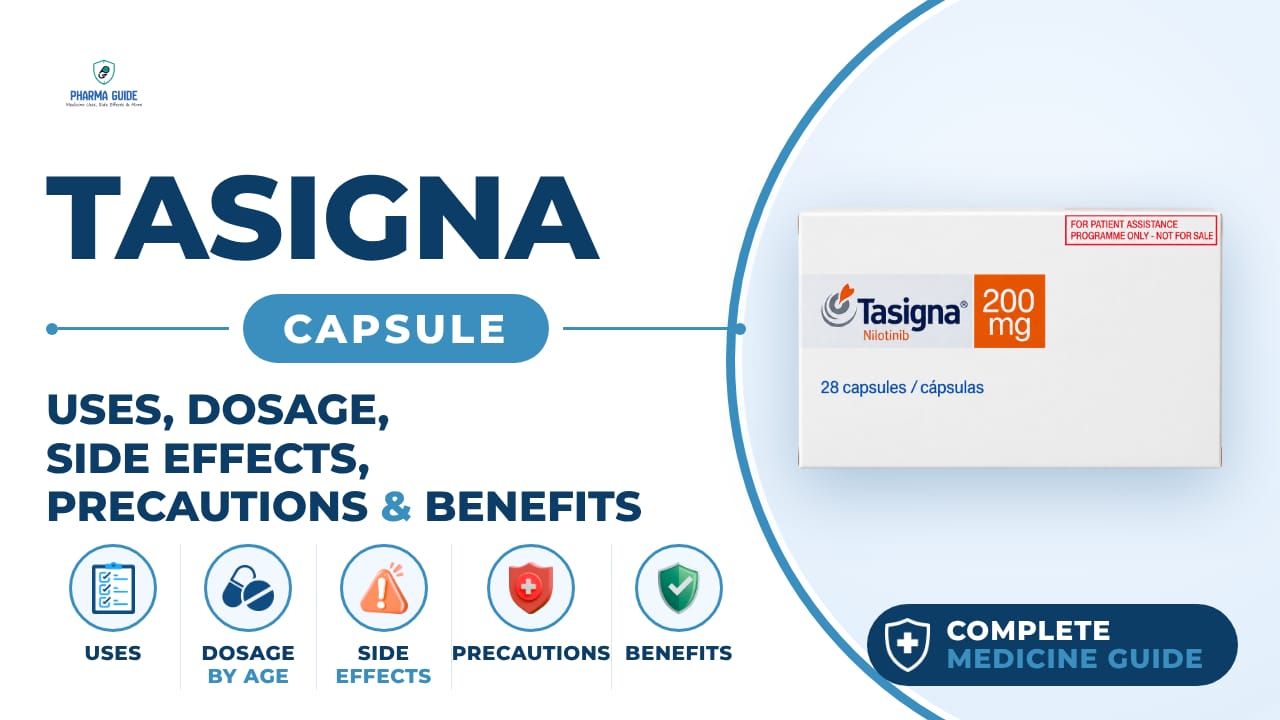
| Generic name | nilotinib |
|---|---|
| Drug class | BCR-ABL tyrosine kinase inhibitor |
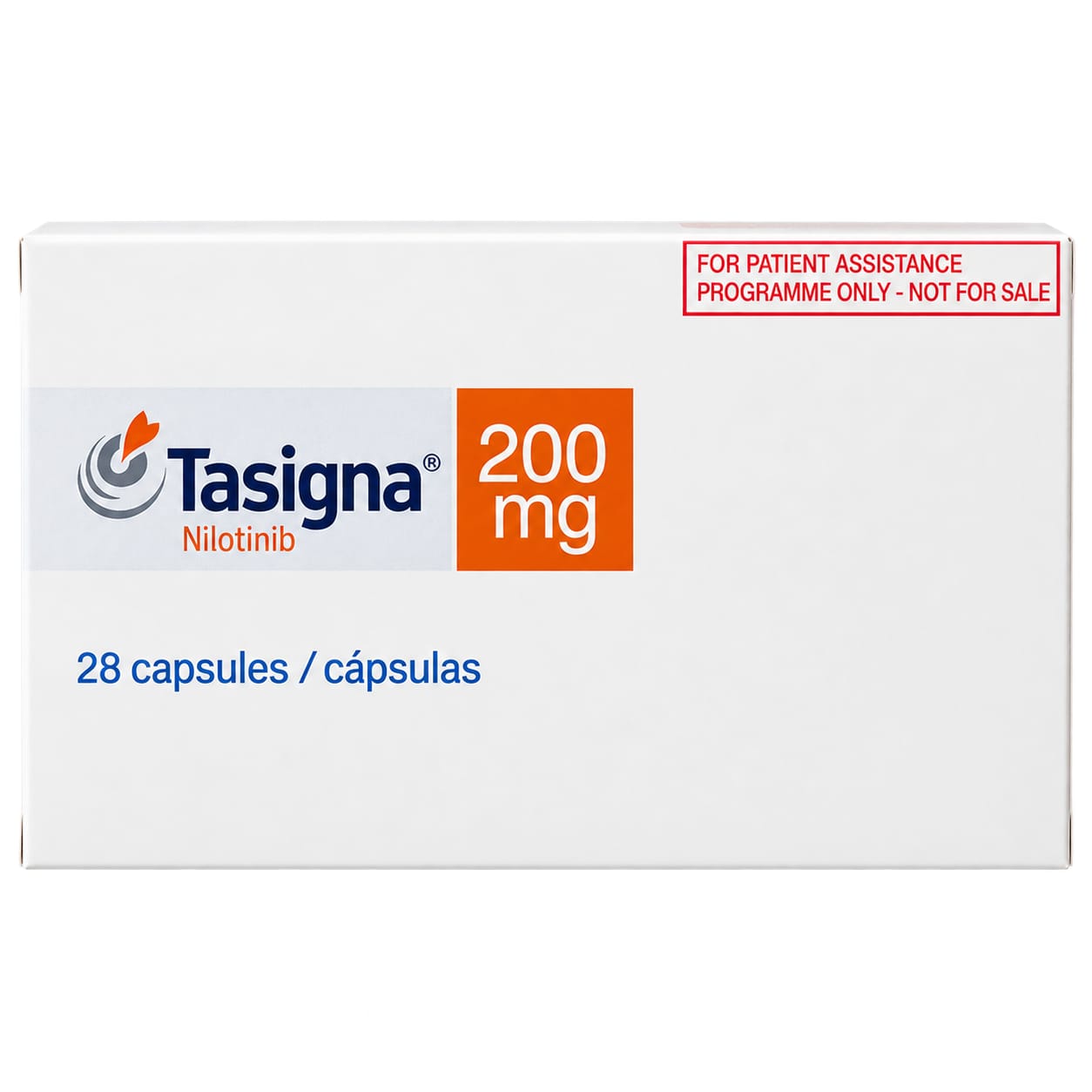
| Forms | Capsule (50 mg, 150 mg, and 200 mg strengths) |
Quick overview
Tasigna Capsule contains nilotinib, a BCR-ABL tyrosine kinase inhibitor used to treat Philadelphia chromosome-positive chronic myeloid leukemia (CML). It works by targeting the abnormal protein that drives leukemia cell growth, helping to slow or stop the disease. It is taken twice daily on an empty stomach and is available in multiple capsule strengths. It carries a boxed warning for a serious heart rhythm problem called QT prolongation.
What is Tasigna Capsule
Tasigna is a targeted cancer medicine used to treat a type of blood cancer called Philadelphia chromosome-positive chronic myeloid leukemia (CML). It works differently from traditional chemotherapy by targeting specific cancer cells rather than killing all fast-growing cells in the body.
Tasigna Capsule uses
- Treats newly diagnosed Philadelphia chromosome-positive chronic myeloid leukemia (CML) in the chronic phase in adults and children 1 year and older
- Treats chronic phase or accelerated phase Ph+ CML in adults who did not respond to or could not tolerate earlier treatment that included imatinib
- Treats chronic phase Ph+ CML in children who did not respond to or could not tolerate earlier treatment with a tyrosine kinase inhibitor
Benefits of Tasigna Capsule
- Helps slow or stop the growth and spread of leukemia cells
- Can help achieve long-term remission
- Some eligible patients who reach a very deep, sustained response may be able to stop treatment under close doctor supervision
How Tasigna Capsule works
Tasigna attaches to an abnormal protein made by cancer cells (caused by a gene change called BCR-ABL) and blocks it from sending signals that make cancer cells grow and spread. This causes the cancer cells to die while sparing many healthy cells.
Tasigna Capsule dosage
Take Tasigna twice a day, about 12 hours apart. Take on an empty stomach; do not take with food. Avoid eating for at least 2 hours before your dose and for at least 1 hour after your dose. Swallow the capsule whole with a full glass of water; do not chew or crush it.
If you cannot swallow the capsule, you may open it and sprinkle the contents into a small amount of applesauce, then swallow right away without chewing; do not save this mixture for later. This medicine is meant for long-term use; do not stop taking it unless your doctor tells you to.
If you miss a dose, just take your next dose at the regular time; do not take two doses together to make up for a missed one.
Caregivers should wear gloves when handling a patient's body fluids, soiled diapers, trash, or laundry, since the drug can pass into urine, stool, and vomit.
| Age group | Dose |
|---|---|
| 1–17 years | 230 mg/m² twice daily, rounded to the nearest available capsule strength; maximum 400 mg twice daily |
| Adults 18–64 years, newly diagnosed chronic-phase Ph+ CML | 300 mg twice daily |
| Adults 18–64 years, resistant/intolerant Ph+ CML | 400 mg twice daily |
Available forms and strengths
Capsule (50 mg, 150 mg, and 200 mg strengths)
Side effects of Tasigna Capsule
Common
- Rash and itchy skin
- Headache and fatigue
- Nausea, vomiting, diarrhea, or constipation
- Muscle and joint pain
- Hair loss
- Night sweats
- Fever
- Cough, runny or stuffy nose, sore throat
Serious
- Low blood cell counts (can increase infection or bleeding risk)
- Serious heart rhythm problems (QT prolongation) that can cause fainting, seizures, or sudden death
- Pancreatitis (inflammation of the pancreas)
- Liver damage
- Reduced blood flow to the legs, heart, or brain
- Electrolyte imbalances affecting the heart and muscles
- Tumor lysis syndrome
- Severe bleeding
- Severe fluid retention, including around the lungs or heart
- Slowed growth in children
- Severe allergic reaction
- Reactivation of hepatitis B in people who carry the virus
Warnings and precautions
- This medicine carries a boxed warning (the FDA's most serious type of warning) for a dangerous heart rhythm problem called QT prolongation, which can cause fainting, seizures, or sudden death. It should not be taken by people with long QT syndrome or low potassium or magnesium levels.
- Taking this medicine with food significantly raises drug levels in the body and increases the risk of dangerous side effects, so it must always be taken on an empty stomach.
- Grapefruit and grapefruit juice can increase the amount of this medicine in your body and should be avoided.
- This medicine should not be taken with certain other drugs that also affect heart rhythm or that increase its levels in the body, as this raises the risk of a serious heart problem.
- People who are chronic carriers of hepatitis B may have the virus become active again during treatment, which in some cases has led to serious liver problems or death.
- In children, this medicine can slow down growth, so growth should be monitored closely during treatment.
- Tasigna should not be used during pregnancy unless clearly needed, because it could harm the unborn baby. Effective birth control should be used during treatment and for at least 2 weeks after the last dose.
- Breastfeeding should be avoided during treatment and for at least 2 weeks after the last dose, since it is not known whether the drug passes into breast milk and whether it could harm a nursing baby.
- Clinical studies have not specifically looked at people with kidney problems, but because the drug and its byproducts are not cleared by the kidneys, a lower clearance is not expected in people with kidney impairment.
- People with liver problems may have higher levels of this medicine in their body and should be treated with caution; your doctor may check your liver function regularly.
- There is no known direct interaction between this medicine and alcohol, but both can affect the liver, so drinking alcohol could add to the risk of liver damage. Ask your doctor whether it is safe for you to drink alcohol during treatment.
- This medicine has little or no expected effect on driving or using machinery, but if you feel dizzy, tired, or have vision problems, you should avoid these activities until you feel better.
Storage
- Store at room temperature away from moisture and heat
- Do not store above 30°C
- Store in the original package to protect from moisture
- Keep this and all other medicines out of the reach of children
When to see a doctor
- Get emergency help right away if you have signs of a severe allergic reaction, such as hives, difficulty breathing, or swelling of the face, lips, tongue, or throat.
- Call your doctor right away or get emergency help if you have fast or pounding heartbeats along with sudden dizziness, as if you might pass out — these can be signs of a serious heart rhythm problem.
- Call your doctor right away if you notice unusual bleeding or bruising, blood in your urine or stool, sudden headache with confusion or vision changes, signs of liver or pancreas problems (upper stomach pain, nausea, dark urine, yellowing skin or eyes), signs of low blood cell counts (fever, chills, mouth sores, unusual weakness), signs of poor blood flow (leg pain or coldness, chest pain, numbness, trouble walking or speaking), or rapid weight gain with swelling or shortness of breath.
- Seek care for symptoms that may suggest tumor cell breakdown, such as confusion, weakness, muscle cramps, nausea, vomiting, an abnormal heart rate, reduced urination, or tingling in the hands, feet, or around the mouth.
- If you think you have taken too much of this medicine, contact your doctor or a poison control service right away, or go to the nearest emergency room, especially if you have drowsiness or vomiting.
Alternatives
- Asciminib
- Ponatinib
- Dasatinib
- Imatinib
Watch the video
FAQs
How should I take Tasigna Capsule?
Take it twice a day, about 12 hours apart, on an empty stomach. Avoid eating for at least 2 hours before and 1 hour after your dose, and swallow the capsule whole with a full glass of water without chewing or crushing it.
What is the boxed warning for Tasigna?
Tasigna carries a boxed warning for QT prolongation, a serious heart rhythm problem that can cause fainting, seizures, or sudden death. It should not be taken by people with long QT syndrome or low potassium or magnesium levels.
Can I eat grapefruit while taking Tasigna?
No, grapefruit and grapefruit juice can increase the amount of Tasigna in your body and should be avoided.
What should I do if I miss a dose of Tasigna?
If you miss a dose, just take your next dose at the regular time. Do not take two doses together to make up for a missed one.
What are the common side effects of Tasigna Capsule?
Common side effects include rash, itchy skin, headache, fatigue, nausea, vomiting, diarrhea, constipation, muscle and joint pain, hair loss, night sweats, fever, and cold-like symptoms such as cough or sore throat.
General information, not medical advice
Your prescriber and the leaflet in your pack know your situation. This page does not.
- Follow your prescriber and the leaflet
- Don't start, stop, or change a dose on your own
- Doses and warnings differ by country and product
Sources
Video
Related medicines

Injectafer Injection: Uses, Dosage, Side Effects, Precautions and Alternates
Iron products
Injectafer (ferric carboxymaltose) treats iron deficiency anemia and heart failure-related iron deficiency via IV. Learn uses, dosage, side effects, and

Gliclazide Tablet: Uses, Dosage, Side Effects, Precautions and Alternates
Sulfonylurea (hypoglycemic/antidiabetic agent)
Gliclazide Tablet is a sulfonylurea for type 2 diabetes that boosts insulin release. Learn about dosage, side effects, warnings, and precautions.