
Safety
General information, not medical advice
Your prescriber and the leaflet in your pack know your situation. This page does not.
- Follow your prescriber and the leaflet
- Don't start, stop, or change a dose on your own
- Doses and warnings differ by country and product
Tasmar Tablet: Uses, Dosage, Side Effects, Precautions and Alternates
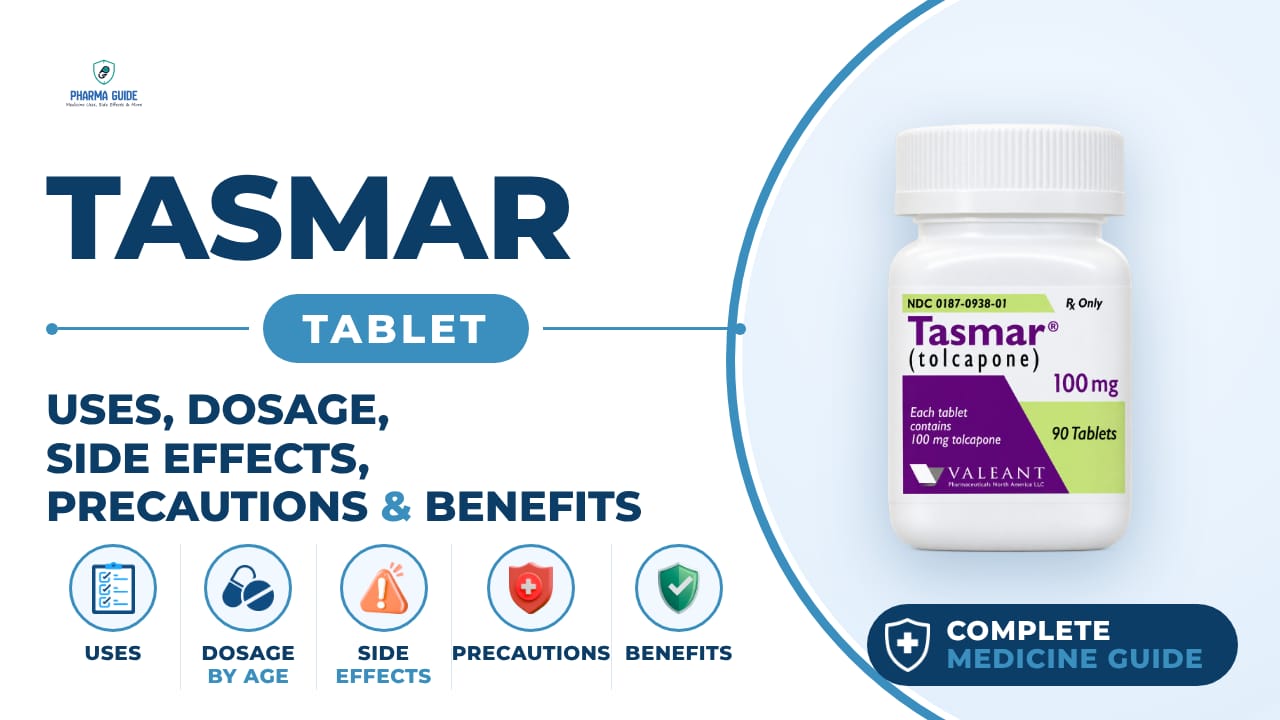
| Generic name | tolcapone |
|---|---|
| Drug class | COMT inhibitor (antiparkinson agent) |
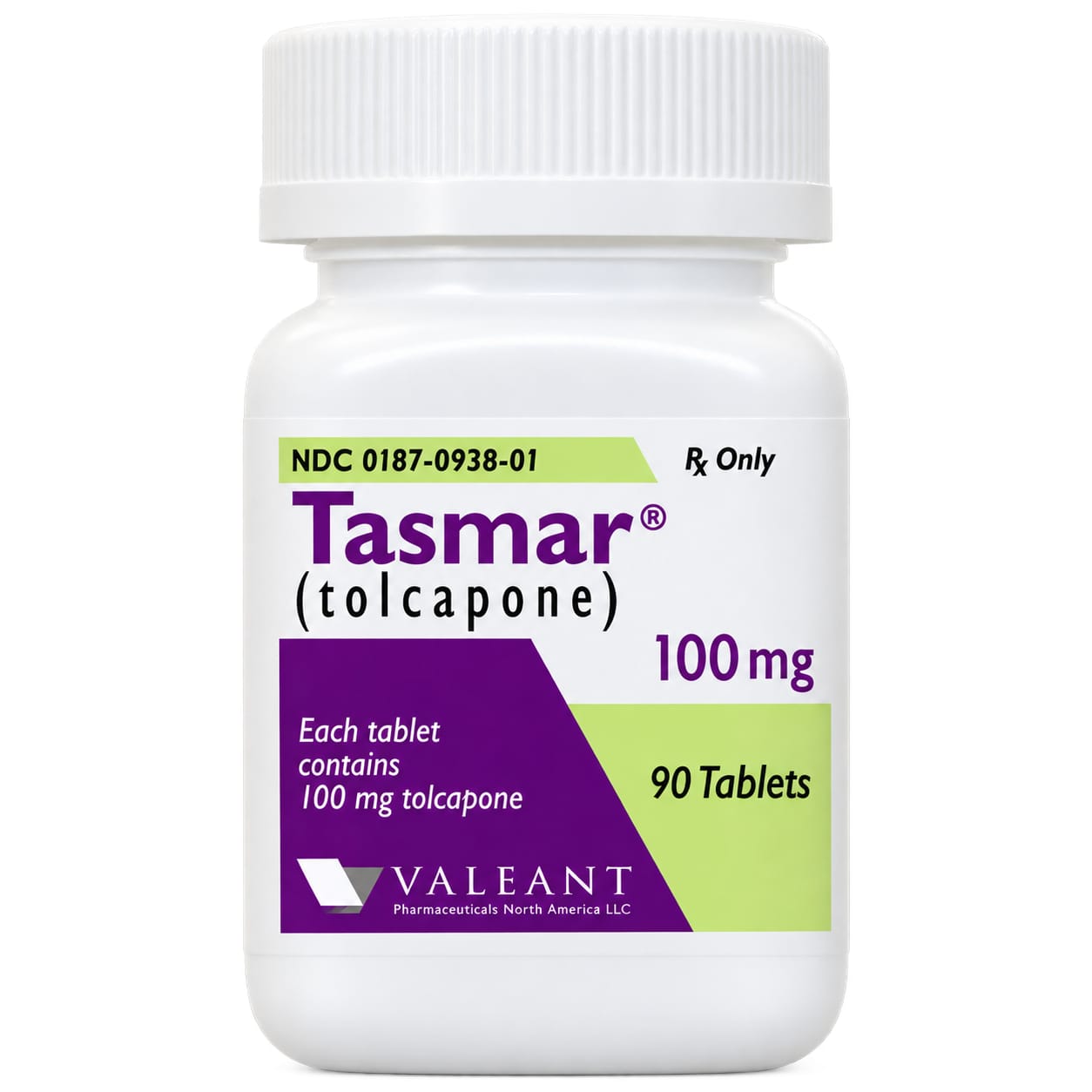
| Forms | Tablet (film-coated, 100 mg) |
Quick overview
Tasmar Tablet contains tolcapone, a COMT inhibitor used together with carbidopa and levodopa to treat Parkinson's disease. It is typically prescribed for people with advanced Parkinson's disease whose symptoms fluctuate and who have not responded well to other similar treatments. Tasmar works by helping levodopa stay active longer in the body, which can provide more stable symptom control. It carries a boxed warning for rare but potentially fatal liver failure, so regular liver monitoring is required.
What is Tasmar Tablet
Tasmar is a prescription medicine used along with carbidopa and levodopa to treat Parkinson's disease. It is usually given to people who have already tried carbidopa and levodopa without full success in controlling their symptoms.
Tasmar Tablet uses
- Used together with carbidopa and levodopa to treat symptoms of Parkinson's disease, such as stiffness, tremors, muscle spasms, and poor muscle control
- Used for patients with advanced Parkinson's disease who have motor fluctuations and have not responded well to or cannot use other similar treatments
- Treatment is usually stopped if no clear benefit is seen within 3 weeks
Benefits of Tasmar Tablet
- Helps reduce 'wearing-off' effects where Parkinson's symptoms return between scheduled doses of levodopa
- Keeps levodopa active in the body longer, giving more stable symptom control
- Prolongs the therapeutic effects of levodopa
- May reduce daily OFF time
- Helps maintain improved movement control
- Can increase periods of better mobility
How Tasmar Tablet works
Tasmar blocks an enzyme called COMT that normally breaks down levodopa in the body. By blocking this enzyme, it helps levodopa stay active longer so its effects don't wear off before the next dose.
Tasmar Tablet dosage
Take by mouth with or without food as directed by your doctor, usually three times daily. The first daily dose is taken together with your first daily dose of carbidopa and levodopa, with the other two doses spaced several hours apart later in the day. You will start on a low dose, and your doctor may increase it after a few weeks if they think you will benefit.
Use this medication regularly and try to take it at the same times each day to help you remember. Do not take this medicine as your only Parkinson's treatment; it must be used together with carbidopa and levodopa. Do not suddenly stop taking this medication unless your doctor tells you to, since this may make your Parkinson's symptoms much worse. Tell your doctor if your condition does not improve or gets worse after a few weeks of treatment.
If you miss a dose, take it as soon as you remember, but skip it if it is almost time for your next dose; do not double up to make up for a missed dose.
| Age group | Dose |
|---|---|
| 18–39 years | 100 mg three times daily; specialist maximum 200 mg three times daily |
| 40–64 years | 100 mg three times daily; specialist maximum 200 mg three times daily |
| 65–74 years | 100 mg three times daily; maximum 200 mg three times daily, with closer monitoring |
| 75 years and older | 100 mg three times daily; maximum 200 mg three times daily, with careful monitoring |
Available forms and strengths
- Tablet (film-coated, 100 mg)
Side effects of Tasmar Tablet
Common
- Nausea, vomiting, and diarrhea (diarrhea can sometimes be severe)
- Involuntary or uncontrolled muscle movements (dyskinesia)
- Drowsiness, dizziness, or lightheadedness when standing up
- Trouble sleeping (insomnia) or increased/vivid dreaming
- Muscle cramps, dry mouth, sweating, or abdominal pain
- Urine discoloration
- Constipation
- Loss of appetite
- Headache
- Cold-like symptoms (stuffy nose, sneezing, sore throat)
- Weight loss
- Agitation or anxiety
Serious
- Liver damage, including rare but potentially fatal acute liver failure
- Hallucinations, confusion, or unusual thoughts/behavior
- Sudden sleep attacks during daily activities
- Severe or ongoing diarrhea
- Lightheadedness or fainting (low blood pressure)
- Worsening tremors, stiffness, or muscle spasms
- Muscle breakdown (rhabdomyolysis) that can lead to kidney failure, especially with unexplained muscle pain, tenderness, or weakness plus fever or dark urine
- Increased urges to gamble, spend money, eat, or have sex that are hard to control
- Allergic reaction: hives, difficulty breathing, swelling of face, lips, tongue, or throat
- High fever, severe muscle stiffness, profuse sweating, confusion, and tremors (a rare but serious reaction that can occur with sudden withdrawal)
Warnings and precautions
- Tasmar carries a boxed warning for rare but potentially fatal sudden liver failure. It should generally only be used in people with Parkinson's disease whose symptoms fluctuate and who haven't responded well to, or can't use, other similar add-on treatments.
- If you don't see clear improvement within three weeks of starting treatment, your doctor should stop the medicine because of the ongoing liver risk.
- People who had liver injury from Tasmar before and stopped the drug should generally not try it again, since restarting it raises the risk of liver damage.
- Stopping this medicine suddenly, or lowering the dose too quickly, can cause a serious reaction with high fever, severe muscle stiffness, and confusion.
- Do not take Tasmar with certain other medicines called non-selective MAO inhibitors, as the combination could be dangerous.
- People with Parkinson's disease, including those taking Tasmar, may have a higher risk of a type of skin cancer called melanoma, so regular skin checks are recommended.
- This medicine can cause you to fall asleep suddenly during normal daily activities, sometimes without warning signs of drowsiness beforehand.
- It is not known whether Tasmar is safe during pregnancy. Tell your doctor if you are pregnant or plan to become pregnant, since the medicine should only be used if the possible benefit is worth the possible risk to the baby.
- It is not known if this medicine passes into human breast milk. It does pass into milk in animal studies, so caution is advised and you should tell your doctor if you are breastfeeding.
- No dose change is needed for mild to moderate kidney problems, but people with severe kidney impairment should use this medicine with caution since its safety hasn't been well studied in that group.
- This medicine must not be started in anyone with liver disease or abnormal liver test results, because it carries a risk of rare but serious, sometimes fatal, liver failure. Regular liver blood tests are required before and during treatment.
- Drinking alcohol while taking Tasmar can increase side effects such as drowsiness.
- This medicine can cause sudden sleepiness or drowsiness, even during activities like driving, so use caution with driving or operating machinery until you know how it affects you.
Storage
- Store at room temperature in a tightly closed container, away from moisture and heat
- Do not store in the bathroom
- Keep all medications away from children and pets
- Do not flush medications down the toilet or pour them into a drain unless instructed to do so
- Properly discard this product when it is expired or no longer needed; consult your pharmacist or local waste disposal company
When to see a doctor
- Get emergency help right away if you have signs of an allergic reaction, such as hives, trouble breathing, or swelling of the face, lips, tongue, or throat.
- Call your doctor right away if you have unexplained muscle pain, tenderness, or weakness, especially with fever, unusual tiredness, or dark urine, as this could signal a rare but serious muscle breakdown problem.
- Contact your doctor immediately for signs of liver problems, such as nausea, loss of appetite, pain in the upper right side of your stomach, tiredness, dark urine, light-colored stools, or yellowing of the skin or eyes.
- Call your doctor at once if you feel like you might pass out, have severe or ongoing diarrhea, confusion, hallucinations, unusual thoughts or behavior, or worsening tremors, stiffness, or muscle spasms.
- Seek medical care right away for serious eye symptoms like sudden vision loss, blurred or tunnel vision, eye pain or swelling, or seeing halos around lights.
- Seek medical care right away for serious heart symptoms such as a fast, irregular, or pounding heartbeat, fluttering in the chest, shortness of breath, or sudden dizziness or passing out.
- Get medical help right away for severe headache, confusion, slurred speech, arm or leg weakness, trouble walking, loss of coordination, feeling unsteady, very stiff muscles, high fever, heavy sweating, or tremors.
Alternatives
- Selegiline
- Safinamide
- Rasagiline
- Entacapone
Watch the video
FAQs
What is Tasmar Tablet used for?
Tasmar is used together with carbidopa and levodopa to treat Parkinson's disease symptoms like stiffness, tremors, muscle spasms, and poor muscle control, especially in advanced cases with motor fluctuations that haven't responded well to other treatments.
How does Tasmar Tablet work?
Tasmar blocks an enzyme called COMT that normally breaks down levodopa, helping levodopa stay active longer so its effects don't wear off before the next dose.
What is the dosage of Tasmar Tablet?
Tasmar is usually taken three times daily by mouth, with the first dose taken together with your first daily dose of carbidopa and levodopa, starting at 100 mg three times daily and possibly increased by your doctor, up to a specialist maximum of 200 mg three times daily.
What are the serious side effects of Tasmar Tablet?
Serious side effects include rare but potentially fatal liver failure, hallucinations or confusion, sudden sleep attacks, severe diarrhea, fainting from low blood pressure, worsening Parkinson's symptoms, muscle breakdown (rhabdomyolysis), and increased urges like gambling or overeating.
Why does Tasmar Tablet have a boxed warning?
Tasmar carries a boxed warning for rare but potentially fatal sudden liver failure, so it is generally only used when other similar treatments haven't worked, and regular liver monitoring is required.
General information, not medical advice
Your prescriber and the leaflet in your pack know your situation. This page does not.
- Follow your prescriber and the leaflet
- Don't start, stop, or change a dose on your own
- Doses and warnings differ by country and product
Sources
Video
Related medicines

Injectafer Injection: Uses, Dosage, Side Effects, Precautions and Alternates
Iron products
Injectafer (ferric carboxymaltose) treats iron deficiency anemia and heart failure-related iron deficiency via IV. Learn uses, dosage, side effects, and

Gliclazide Tablet: Uses, Dosage, Side Effects, Precautions and Alternates
Sulfonylurea (hypoglycemic/antidiabetic agent)
Gliclazide Tablet is a sulfonylurea for type 2 diabetes that boosts insulin release. Learn about dosage, side effects, warnings, and precautions.