
Safety
General information, not medical advice
Your prescriber and the leaflet in your pack know your situation. This page does not.
- Follow your prescriber and the leaflet
- Don't start, stop, or change a dose on your own
- Doses and warnings differ by country and product
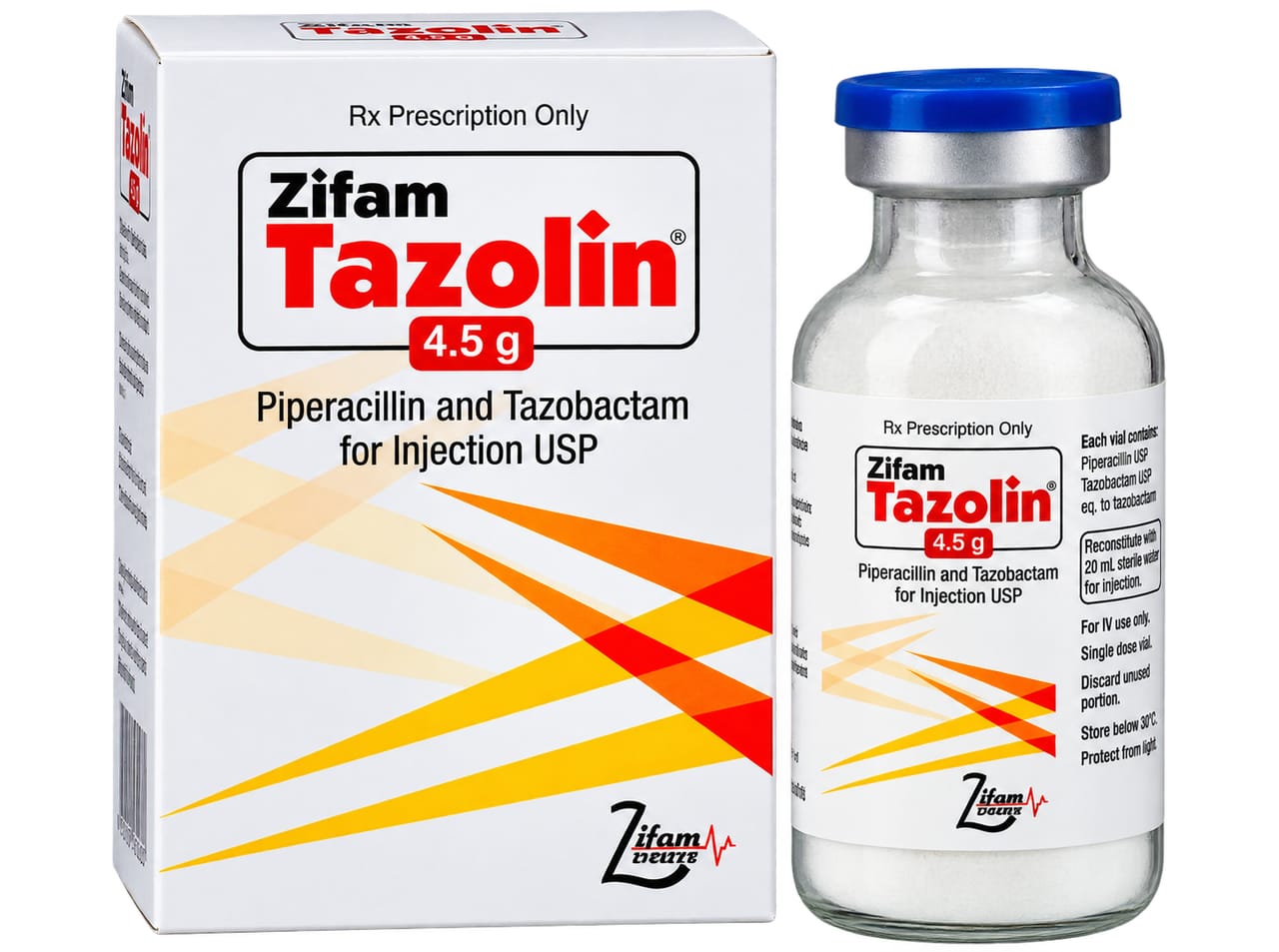
Tazocin Injection: Uses, Dosage, Side Effects, Precautions and Alternates

| Generic name | Piperacillin Sodium/Tazobactam Sodium |
|---|---|
| Drug class | Combination antibiotic (penicillin antibiotic with a beta-lactamase inhibitor) |
| Forms | Injection (sterile powder for reconstitution), Premixed intravenous product |
Quick overview
Tazocin Injection is a broad-spectrum, combination antibiotic containing piperacillin sodium (a penicillin antibiotic) and tazobactam sodium (a beta-lactamase inhibitor). It is given intravenously, mainly in hospital settings, to treat moderate-to-severe bacterial infections. It is not effective against viral infections such as the common cold or flu.
What is Tazocin Injection
Tazocin Injection is a broad-spectrum, combination antibiotic containing two active ingredients: piperacillin (a penicillin antibiotic) and tazobactam (a beta-lactamase inhibitor). It is a powerful intravenous medication used primarily in hospital settings to treat moderate-to-severe bacterial infections. It is ineffective against viral infections like the cold or flu.
Tazocin Injection uses
- Severe lung infections, such as hospital-acquired or community-acquired pneumonia
- Abdominal infections, including complicated stomach infections, peritonitis, or gallbladder infections
- Skin and soft tissue infections, such as deep tissue cellulitis, diabetic foot ulcers, or abscesses
- Urinary tract infections (UTIs), specifically complicated UTIs or kidney infections
- Gynecological infections, such as severe postpartum or pelvic infections
- Sepsis and bacteremia (severe bloodstream infections)
- Febrile neutropenia (used as empiric treatment for patients with low white blood cell counts who develop a fever)
Benefits of Tazocin Injection
- Overcomes bacterial resistance by blocking the enzyme (beta-lactamase) that some bacteria use to destroy penicillin
- Broad spectrum action against Gram-positive, Gram-negative, and anaerobic bacteria
- Effective for mixed infections caused by multiple types of bacteria at once, commonly found in the abdomen
How Tazocin Injection works
Piperacillin kills bacteria by stopping them from building their cell walls. Tazobactam blocks an enzyme that bacteria use to destroy piperacillin, so the combination works against more types of bacteria than piperacillin alone.
Tazocin Injection dosage
This medicine is given into a vein (intravenously) either as a slow injection or a slow infusion over a set period of time. It is given at regular intervals throughout the day as directed by your doctor. The length of treatment depends on your general health, the type of infection you have, and how well you respond to the medication. You may receive it in a hospital, or you may be shown how to give it to yourself at home. After your condition improves, your doctor may switch you to another antibiotic you can take by mouth to finish your treatment. You should begin to feel better during the first few days of treatment; call your doctor if your symptoms do not improve or get worse. Antibiotics will not work for colds, flu, or other viral infections.
| Age group | Dose |
|---|---|
| Under 2 months | Dosing not routinely established; specialist guidance required |
| 2–9 months | 90 mg/kg every 6–8 hours, depending on infection |
| >9 months–17 years, ≤40 kg | 112.5 mg/kg every 6–8 hours, depending on infection |
| >40 kg / 18–64 years | Commonly 4.5 g every 6–8 hours, depending on infection |
| 65+ years | Adult dosing; adjust for kidney impairment |
Available forms and strengths
- Injection (sterile powder for reconstitution)
- Premixed intravenous product
Side effects of Tazocin Injection
Common
- Diarrhea or constipation
- Nausea and vomiting
- Headache
- Trouble sleeping (insomnia)
- Pain, swelling, or redness at the injection site
- Oral thrush or vaginal yeast infections
- Heartburn or stomach pain
- Fever
- Mouth sores
Serious
- Severe allergic reactions (anaphylaxis): skin rash, hives, swelling of the face, lips, or tongue, and difficulty breathing
- Severe skin reactions such as dangerous blistering or peeling skin conditions, including Stevens-Johnson syndrome
- C. diff-associated diarrhea: severe, watery, or bloody diarrhea with stomach cramps and fever, which may occur up to two months or more after treatment
- Kidney injury: marked decrease in urination or swelling in the feet and ankles
- Seizures, especially in patients receiving high doses or those with pre-existing kidney disease
- Muscle pain or weakness, dark urine
Warnings and precautions
- Pregnancy: There is not enough human study data on using this medicine during pregnancy.
- Pregnant women should be treated only if the expected benefit outweighs the possible risks to the mother and baby.
- Breastfeeding: There is not enough study data on using this medicine while breastfeeding.
- Breastfeeding women should be treated only if the expected benefit outweighs the possible risks to the woman and child.
- Kidney: People with kidney problems need their dose adjusted based on how well their kidneys are working, and should tell their doctor about any kidney disease.
- Liver: Using this medicine together with a beta-lactamase inhibitor may slightly increase the risk of liver-related side effects, and liver function should be kept in mind during treatment.
- Do not use this medicine if you have a history of severe allergic reactions to penicillins, cephalosporins, or beta-lactamase inhibitors, or any of its ingredients.
- Serious and sometimes fatal allergic reactions have happened in patients taking penicillin or cephalosporin antibiotics, including this medicine.
- This medicine may cause severe skin reactions such as Stevens-Johnson syndrome and other serious skin conditions.
- If a skin rash develops, patients should be watched closely and the medicine stopped if the rash gets worse.
- Antibiotic-related colitis caused by C. difficile bacteria can occur, ranging from mild to life-threatening, and may appear even weeks after stopping the antibiotic.
- Low white blood cell counts can occur, especially with prolonged treatment, so regular blood tests are recommended.
- Seizures can occur, especially with high doses or in people with kidney problems.
- This medicine may make hormonal birth control (pills, patches, rings, injections) less effective, so another method of contraception should be used during treatment.
- Tell your doctor if you have cystic fibrosis, as this can increase the risk of fever and rash with this medicine.
- Bleeding problems have occurred in some patients taking piperacillin, more often in those with kidney failure.
- If you have diabetes, this medicine can cause false results with certain urine glucose tests, so talk to your doctor about alternative testing.
Storage
- Vials containing sterile powder for injection should be stored at controlled room temperature (15°C - 25°C) in the original container
- Vials containing reconstituted solutions for intravenous use are stable for 24 hours when stored under refrigeration (2°C - 8°C)
- Diluted solutions prepared for intravenous use are stable for 24 hours when stored under refrigeration (2°C - 8°C) in I.V. bags or syringes
- Dispose of unneeded medications in a way so that pets, children, and other people cannot take them
- Do not flush this medication down the toilet; use a medicine take-back program
- Keep all medication out of sight and reach of children
When to see a doctor
- Get emergency medical help right away if you develop a rash, itching, hives, difficulty breathing or swallowing, or wheezing.
- Call your doctor immediately if you have severe diarrhea (watery or bloody stools), which may happen with or without fever and stomach cramps, even up to two months after finishing treatment.
- Call your doctor immediately if you notice muscle pain or weakness, or dark urine.
- Seek immediate medical attention for signs of a severe allergic reaction, including facial or throat swelling and difficulty breathing.
- Seek medical help if you notice a marked decrease in urination or swelling in the feet and ankles, which may signal kidney injury.
Alternatives
- Imipenem + Cilastatin
- Ertapenem
- Cefoperazone + Sulbactam
- Ampicillin + Sulbactam
- Aztreonam
- Ceftazidime + Avibactam
- Ceftriaxone
Watch the video
FAQs
What is Tazocin Injection used for?
It treats moderate-to-severe bacterial infections such as pneumonia, abdominal infections, skin and soft tissue infections, complicated UTIs, gynecological infections, sepsis, and febrile neutropenia.
How does Tazocin Injection work?
Piperacillin kills bacteria by stopping them from building their cell walls, while tazobactam blocks an enzyme bacteria use to destroy piperacillin, allowing the combination to work against more types of bacteria.
How is Tazocin Injection given?
It is given intravenously as a slow injection or infusion at regular intervals, either in a hospital or at home as shown by a healthcare provider, with treatment length depending on the infection and response.
What are the serious side effects of Tazocin Injection?
Serious side effects include severe allergic reactions, severe skin reactions like Stevens-Johnson syndrome, C. diff-associated diarrhea, kidney injury, seizures, and muscle pain or weakness with dark urine.
Can Tazocin Injection affect birth control?
Yes, it may make hormonal birth control such as pills, patches, rings, or injections less effective, so another contraception method should be used during treatment.
General information, not medical advice
Your prescriber and the leaflet in your pack know your situation. This page does not.
- Follow your prescriber and the leaflet
- Don't start, stop, or change a dose on your own
- Doses and warnings differ by country and product
Sources
Video
Related medicines

Injectafer Injection: Uses, Dosage, Side Effects, Precautions and Alternates
Iron products
Injectafer (ferric carboxymaltose) treats iron deficiency anemia and heart failure-related iron deficiency via IV. Learn uses, dosage, side effects, and

Gliclazide Tablet: Uses, Dosage, Side Effects, Precautions and Alternates
Sulfonylurea (hypoglycemic/antidiabetic agent)
Gliclazide Tablet is a sulfonylurea for type 2 diabetes that boosts insulin release. Learn about dosage, side effects, warnings, and precautions.