
Safety
General information, not medical advice
Your prescriber and the leaflet in your pack know your situation. This page does not.
- Follow your prescriber and the leaflet
- Don't start, stop, or change a dose on your own
- Doses and warnings differ by country and product
Tazorac Gel: Uses, Dosage, Side Effects, Precautions and Alternates
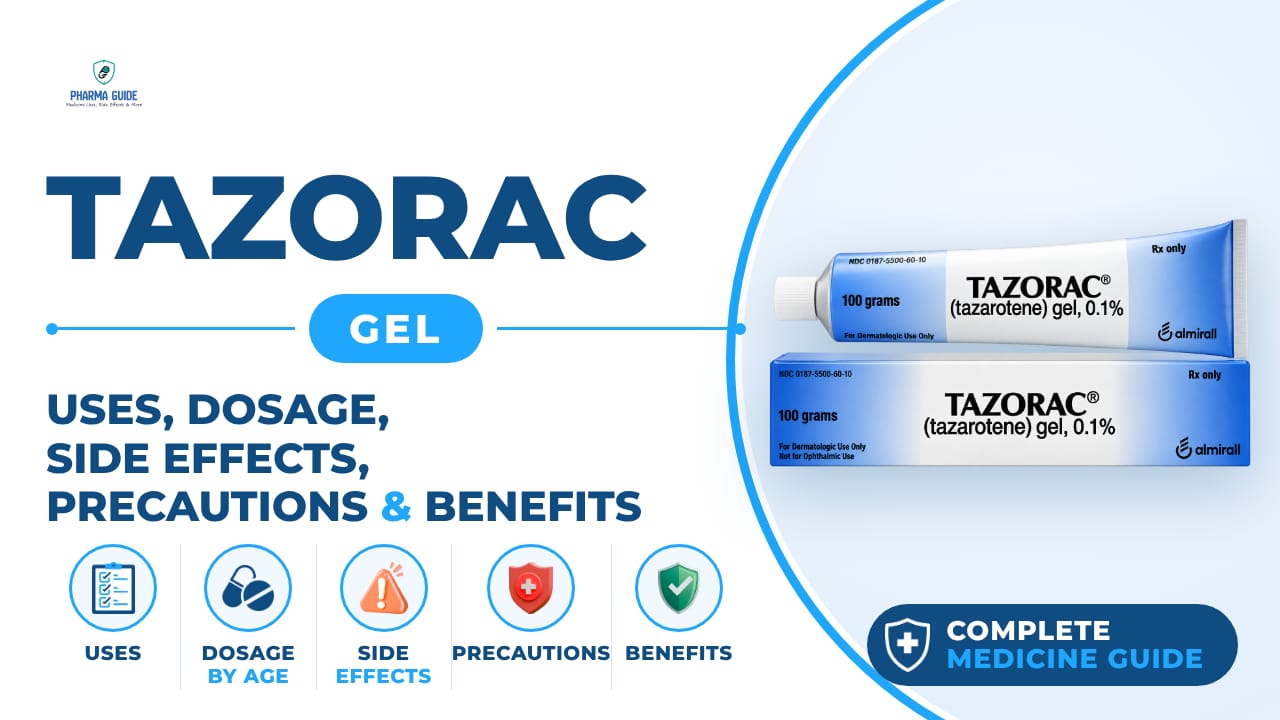
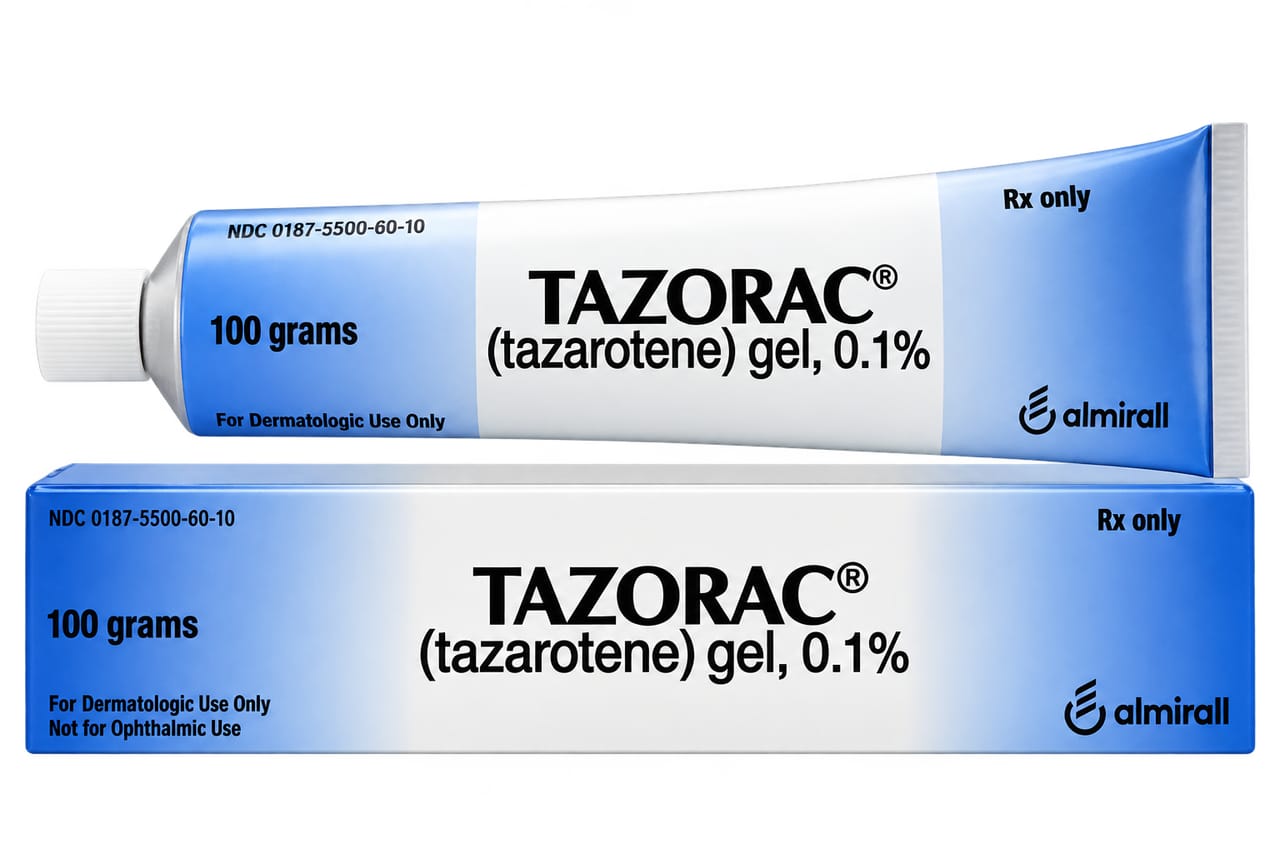
| Generic name | tazarotene topical |
|---|---|
| Drug class | Topical acne agents, Topical antipsoriatics |
| Forms | Gel (0.05% and 0.1%), Cream (0.05% and 0.1%) |
Quick overview
Tazorac Gel (tazarotene topical) is a retinoid medicine applied to the skin to treat plaque psoriasis and mild to moderate facial acne vulgaris in adults and adolescents 12 years and older. It works by helping the skin renew itself more quickly, which may improve the appearance and texture of the skin. It is applied once daily and must be used exactly as directed, with care taken to avoid sun exposure, eyes, and damaged or eczema-affected skin.
What is Tazorac Gel
Tazorac Gel is a compound similar to vitamin A (a retinoid). It helps the skin renew itself more quickly and may improve the appearance and texture of skin. It is used on the skin to treat plaque psoriasis and facial acne vulgaris.
Tazorac Gel uses
- Treats plaque psoriasis (raised, silvery flaking of the skin) covering up to 20% of the body surface in adults and adolescents 12 years and older
- Treats mild to moderate facial acne vulgaris in adults and adolescents 12 years and older
Benefits of Tazorac Gel
- May improve the appearance and texture of skin by helping it renew itself more quickly
- Significantly reduces plaque elevation, scaling, and erythema in psoriasis compared with vehicle gel
- Significantly reduces acne lesion counts compared with vehicle gel
How Tazorac Gel works
Tazorac is changed by the skin into its active form, which attaches to certain receptors in skin cells. This may change how genes work in the skin, though doctors are not fully sure how this leads to improvement in psoriasis and acne.
Tazorac Gel dosage
Apply once daily in the evening or at bedtime. This medicine is for use on the skin only; do not take it by mouth. Do not use it on open wounds, sunburned, windburned, dry, chapped, or irritated skin, or on areas of eczema; wait until these areas have fully healed before using. If it gets in your eyes, nose, mouth, rectum, or vagina, rinse with water. Women should start the medication during a menstrual period.
Avoid applying to unaffected areas; if it accidentally gets on areas that don't need treatment, wash it off. For acne, gently cleanse the face and dry it before applying a thin layer to areas where acne appears. For psoriasis, apply a thin film only to the psoriasis lesions, not to unaffected skin.
If you bathe or shower before applying, let your skin dry first. If using a moisturizer or emollient, apply it at least one hour before this medicine. Wash your hands thoroughly after applying. Use sunscreen and wear protective clothing while using this medicine.
If you miss a dose, apply as soon as you can, but skip it if it's almost time for your next dose; do not apply two doses at once.
| Age group | Dose |
|---|---|
| Under 12 years | Not established / not recommended |
| 12–17 years | Acne: 0.1% gel, thin layer once daily in the evening. Psoriasis: start with 0.05% once daily; 0.1% may be used if tolerated and prescribed |
| 18–64 years | Acne: 0.1% once daily in the evening. Psoriasis: 0.05% once daily, increasing to 0.1% if tolerated and medically indicated |
| 65+ years | Same general adult dosing; use with caution because older adults may experience more adverse effects |
Available forms and strengths
- Gel (0.05% and 0.1%)
- Cream (0.05% and 0.1%)
Side effects of Tazorac Gel
Common
- Dry, scaly, or peeling skin
- Skin pain, redness, or burning
- Itching or other irritation of treated skin
- Worsening of psoriasis (for psoriasis use)
Serious
- Severe skin irritation (pain, dryness, flaking, peeling, burning, stinging, itching) after applying the medicine
- Blistering or peeling skin
- Severe redness or discomfort
- Swelling, warmth, oozing, or other signs of skin infection
- Signs of an allergic reaction: hives, difficulty breathing, swelling of the face, lips, tongue, or throat
Warnings and precautions
- For external use only; do not use in the eyes, mouth, vagina, or other mucous membranes. Rinse thoroughly with water if it gets into the eyes.
- May cause burning, itching, redness, dryness, peeling, or skin pain. If severe irritation occurs, temporarily stop treatment or reduce the application frequency as directed.
- Do not apply to eczematous skin because severe irritation may occur.
- Avoid damaged or sunburned skin until it has healed.
- Tazorac increases sensitivity to sunlight and may increase the risk of sunburn. Avoid excessive sunlight, tanning beds, and sunlamps. Use sunscreen and protective clothing.
- Use caution with photosensitizing medicines such as tetracyclines, fluoroquinolones, thiazides, phenothiazines, and sulfonamides, because they may further increase sun sensitivity.
- Avoid strongly drying cosmetics, topical medicines, or other irritating products, which may increase skin irritation.
- Cold or windy weather can make irritation worse.
- For psoriasis, apply only to psoriasis lesions and avoid unaffected skin. Treatment should generally not cover more than 20% of the body surface area.
- Stop using it and seek medical advice if hives or other signs of an allergic reaction occur.
- Safety and effectiveness have not been established in children under 12 years. Wash hands after applying the gel and keep it away from children.
- This medicine can cause birth defects, so it should not be used during pregnancy.
- Your skin may look worse before it starts to look better after starting treatment.
Storage
- Store at room temperature, away from moisture and heat.
- Store at 20ºC to 25ºC (68ºF to 77ºF). Excursions permitted from 15ºC to 30ºC (59ºF to 86ºF).
- Keep TAZORAC Gel and all medicines out of the reach of children.
When to see a doctor
- Get emergency medical help if you have signs of an allergic reaction such as hives, difficulty breathing, or swelling of the face, lips, tongue, or throat.
- Stop using this medicine and call your doctor right away if you have severe skin irritation such as pain, dryness, flaking, peeling, burning, stinging, or itching after applying it.
- Stop using this medicine and get medical help if you notice blistering or peeling skin.
- Stop using this medicine and call your doctor if you have severe redness or discomfort of the skin.
- Stop using this medicine and call your doctor if you notice swelling, warmth, oozing, or other signs of skin infection.
- If this medicine gets in or near your eyes and irritation does not go away after rinsing with water, seek medical attention.
- If you accidentally swallow this medicine, call your doctor or go to the nearest hospital emergency room right away.
- Stop using this medicine and tell your doctor right away if you become pregnant, stop using birth control, or miss a menstrual period.
Alternatives
- Adapalene
- Azelaic acid
- Calcipotriene
Watch the video
FAQs
What is Tazorac Gel used for?
Tazorac Gel is used to treat plaque psoriasis covering up to 20% of the body surface and mild to moderate facial acne vulgaris in adults and adolescents 12 years and older.
How do you apply Tazorac Gel?
Apply a thin layer once daily in the evening or at bedtime to the affected skin only. For acne, cleanse and dry the face first; for psoriasis, apply only to the lesions, avoiding unaffected skin.
What are the common side effects of Tazorac Gel?
Common side effects include dry, scaly, or peeling skin, skin pain, redness or burning, itching or irritation of treated skin, and worsening of psoriasis.
Can I use Tazorac Gel during pregnancy?
No, Tazorac Gel can cause birth defects and should not be used during pregnancy. Women should start the medication during a menstrual period and tell their doctor right away if they become pregnant.
Does Tazorac Gel increase sun sensitivity?
Yes, Tazorac increases sensitivity to sunlight and may increase the risk of sunburn, so you should avoid excessive sunlight, tanning beds, and sunlamps, and use sunscreen and protective clothing.
General information, not medical advice
Your prescriber and the leaflet in your pack know your situation. This page does not.
- Follow your prescriber and the leaflet
- Don't start, stop, or change a dose on your own
- Doses and warnings differ by country and product
Sources
Video
Related medicines

Injectafer Injection: Uses, Dosage, Side Effects, Precautions and Alternates
Iron products
Injectafer (ferric carboxymaltose) treats iron deficiency anemia and heart failure-related iron deficiency via IV. Learn uses, dosage, side effects, and

Gliclazide Tablet: Uses, Dosage, Side Effects, Precautions and Alternates
Sulfonylurea (hypoglycemic/antidiabetic agent)
Gliclazide Tablet is a sulfonylurea for type 2 diabetes that boosts insulin release. Learn about dosage, side effects, warnings, and precautions.