
Safety
General information, not medical advice
Your prescriber and the leaflet in your pack know your situation. This page does not.
- Follow your prescriber and the leaflet
- Don't start, stop, or change a dose on your own
- Doses and warnings differ by country and product
Tecentriq Injection: Uses, Dosage, Side Effects, Precautions and Alternates
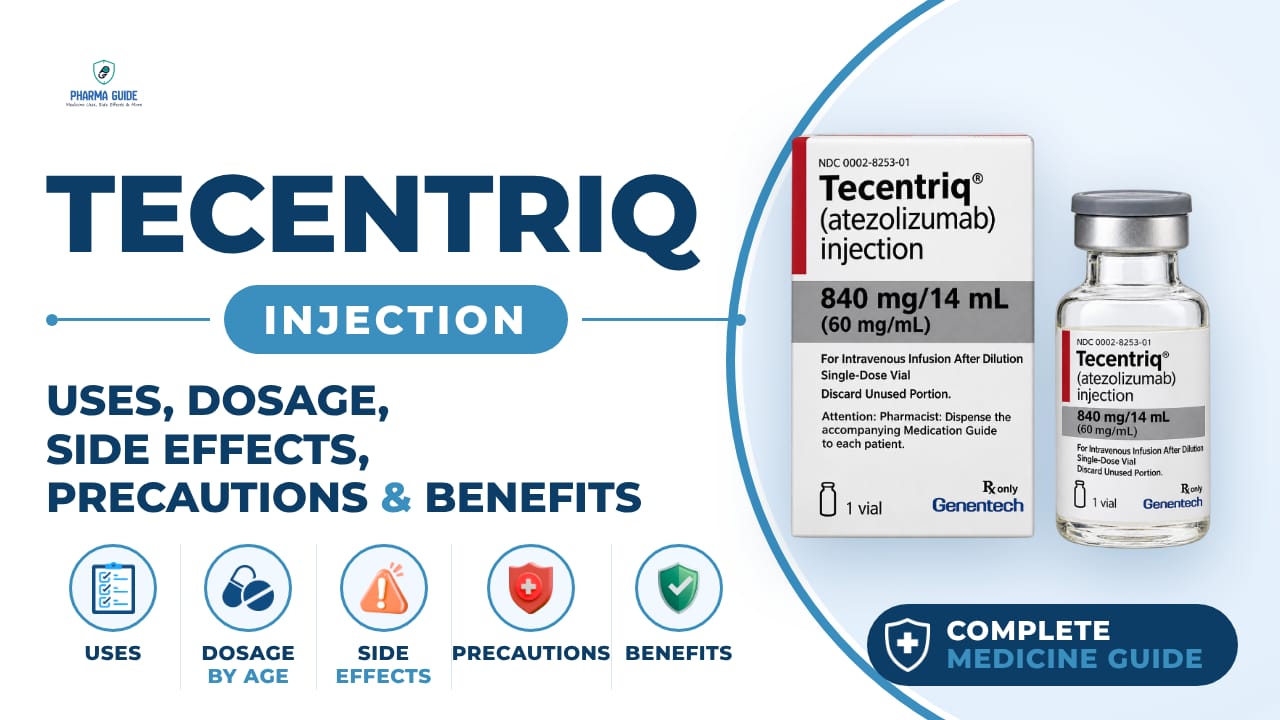
| Generic name | atezolizumab |
|---|---|
| Drug class | PD-L1 inhibitor, monoclonal antibody (immune checkpoint inhibitor) |
| Forms | Injection |
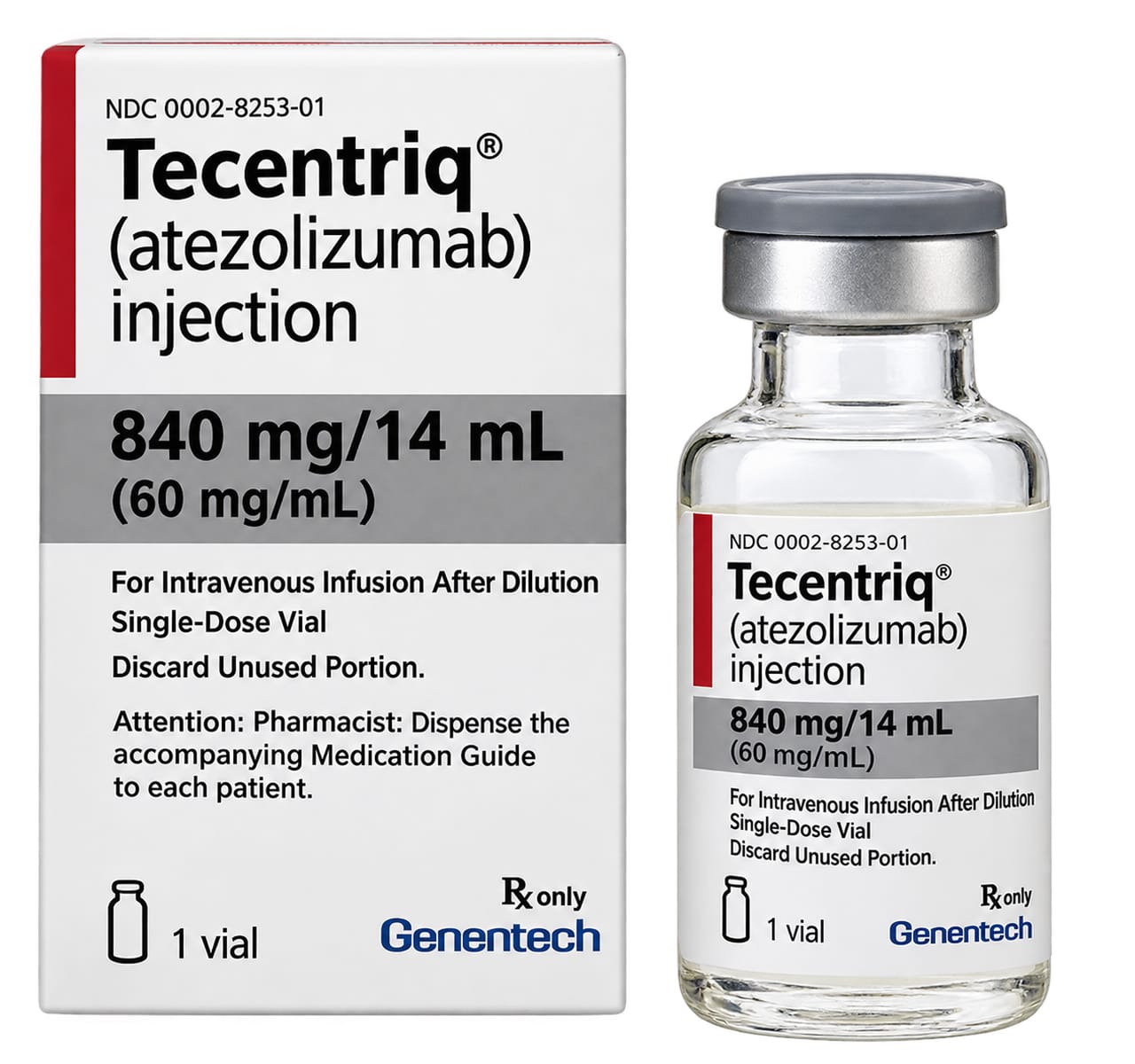
Quick overview
Tecentriq Injection (atezolizumab) is a prescription PD-L1 inhibitor and monoclonal antibody used to treat several types of cancer, including breast, lung, bladder, liver, and skin cancers. It is an immunotherapy drug that works with your immune system to find and fight cancer cells, and it is given as an intravenous infusion by a healthcare provider. Tecentriq may help shrink tumors and improve survival time, but it can also cause serious immune-related side effects that require monitoring.
What is Tecentriq Injection
Tecentriq is a prescription medicine used to treat several types of cancer. It is an immunotherapy drug, which means it works with your immune system to find and fight cancer cells. It is given as an intravenous (IV) infusion by a healthcare provider.
Tecentriq Injection uses
- Triple-negative breast cancer (TNBC)
- Small cell lung cancer (SCLC)
- Non-small cell lung cancer (NSCLC)
- Urothelial carcinoma (a type of bladder and urinary tract cancer)
- Liver cancer (hepatocellular carcinoma)
- Melanoma (a type of skin cancer)
- Alveolar soft part sarcoma (ASPS)
- Muscle invasive bladder cancer (MIBC)
Benefits of Tecentriq Injection
- Can help shrink tumors or make them disappear completely in some people
- May increase the time you live without your cancer getting worse (progression-free survival)
- May increase overall survival time
How Tecentriq Injection works
Tecentriq blocks a protein called PD-L1 that cancer cells use to hide from your immune system. By blocking this protein, Tecentriq allows your immune system to recognize and attack the cancer cells, which can slow or stop tumor growth.
Tecentriq Injection dosage
Tecentriq is given as a slow intravenous infusion by a doctor or nurse, not taken at home. The first infusion is given over about 60 minutes to check for reactions. If the first infusion is well tolerated, later infusions may be given over about 30 minutes. It is usually given once every 2, 3, or 4 weeks depending on the cancer type and treatment plan, and it is often given together with other cancer drugs such as chemotherapy, depending on the condition being treated. If you miss an appointment, contact your healthcare provider's office right away to reschedule. Tecentriq is not established as safe and effective for use in children for most conditions, though some pediatric use exists for alveolar soft part sarcoma.
| Age group | Dose |
|---|---|
| Under 18 years | Not recommended |
| 18–64 years | 1,200 mg, once every 3 weeks |
| 65+ years | 1,200 mg, once every 3 weeks |
Available forms and strengths
Injection
Side effects of Tecentriq Injection
Common
- Fatigue (feeling tired or weak)
- Nausea
- Cough
- Trouble breathing or shortness of breath
- Decreased appetite
- Constipation
- Diarrhea
- Hair loss
- Headache
- Vomiting
- Muscle, bone, or joint pain
- Rash
- Itching
- Fever
Serious
- Severe infusion reactions (chills, itching, rash, trouble breathing, swelling of face or lips, dizziness, fever)
- Lung problems such as pneumonitis (chest pain, trouble breathing, new or worsening cough)
- Liver problems such as hepatitis (yellowing of skin or eyes, nausea or vomiting, belly pain, dark urine, easy bruising or bleeding)
- Intestinal problems such as colitis (diarrhea, blood in stool, severe belly pain)
- Hormone gland problems affecting thyroid, pancreas, adrenal glands, or pituitary (headaches, fatigue, weight changes, increased hunger or thirst, nausea, mood changes)
- Eye problems such as uveitis (eye pain or redness, vision problems)
- Heart problems such as myocarditis (chest pain, irregular heartbeat, trouble breathing, confusion)
- Kidney problems such as nephritis (decreased urine, blood in urine, swelling in ankles)
- Severe allergic reaction (swelling of face, lips, tongue, or throat; trouble breathing; hives)
- Severe skin reactions (blistering, peeling skin, mouth or throat sores)
- Nervous system problems (severe muscle weakness, numbness or tingling, confusion)
- Severe infections
Warnings and precautions
- Tecentriq can cause your immune system to attack normal organs and tissues anywhere in the body, which can lead to serious or life-threatening problems, sometimes resulting in death.
- If you have an immune system condition such as Crohn's disease or lupus, Tecentriq may make it worse.
- Talk to your doctor if you have any immune system problems before starting treatment. If you have had an organ transplant, Tecentriq may cause your body to attack and reject the transplant. People who have had a stem cell transplant using donor cells may have serious, even life-threatening complications related to Tecentriq treatment.
- Severe or life-threatening infusion reactions can occur during or shortly after the infusion is given.
- Tecentriq is not safe to take during pregnancy and can harm an unborn baby. A pregnancy test is done before starting treatment, and effective birth control should be used during treatment and for at least 5 months after the last dose.
- It is not known if Tecentriq passes into breast milk. Because it may cause serious harm to a breastfed child, you should not breastfeed during treatment and for at least 5 months after the last dose.
- The effect of severe kidney problems on how this drug works in the body is unknown. Tecentriq can also cause kidney problems caused by the immune system, so your doctor may monitor you.
- If you have a history of liver problems, your doctor may monitor you more closely, since Tecentriq can cause immune-related liver problems such as hepatitis that may worsen an existing liver condition.
- There are no known interactions between Tecentriq and alcohol, but both can increase the risk of liver problems, so drinking alcohol during treatment may further raise this risk. Ask your doctor if there is a safe amount of alcohol for you to drink.
- It is not known whether Tecentriq affects your ability to drive or use machines, so be careful until you know how the medicine affects you.
Storage
- Store vials under refrigeration
- Store in the original carton to protect from light
- Do not freeze
- Do not shake the vial
When to see a doctor
- Get medical help right away for new or worsening cough, chest pain, or shortness of breath, which could be signs of lung inflammation (pneumonitis).
- Get medical help right away for yellowing of skin or eyes, severe nausea or vomiting, pain on the right side of your belly, drowsiness, dark urine, or easy bruising or bleeding, which could be signs of liver problems (hepatitis).
- Get medical help right away for diarrhea, blood or mucus in your stool, or severe belly pain, which could be signs of intestinal inflammation (colitis).
- Get medical help right away for signs of hormone gland problems, such as headaches that won't go away, extreme tiredness, weight changes, dizziness, increased hunger or thirst, hair loss, feeling cold, constipation, or mood changes.
- Get medical help right away for signs of infection such as fever, cough, flu-like symptoms, or pain when urinating.
- Get medical help right away for signs of an infusion reaction, such as chills or shaking, itching or rash, flushing, shortness of breath or wheezing, swelling of the face or lips, dizziness, or fever.
- Tell your doctor right away if you become pregnant or think you may be pregnant during treatment, since Tecentriq can harm an unborn baby.
Alternatives
- Imfinzi
- Opdivo
- Keytruda
Watch the video
FAQs
What is Tecentriq Injection used for?
Tecentriq is used to treat several cancers, including triple-negative breast cancer, small cell and non-small cell lung cancer, urothelial carcinoma, liver cancer, melanoma, alveolar soft part sarcoma, and muscle invasive bladder cancer.
How is Tecentriq given?
Tecentriq is given as a slow intravenous infusion by a doctor or nurse. The first infusion is given over about 60 minutes, and later infusions may be given over about 30 minutes if well tolerated. It is usually given once every 2, 3, or 4 weeks depending on the cancer type.
How does Tecentriq work?
Tecentriq blocks a protein called PD-L1 that cancer cells use to hide from the immune system. By blocking this protein, it allows the immune system to recognize and attack cancer cells, which can slow or stop tumor growth.
What are the serious side effects of Tecentriq?
Serious side effects include severe infusion reactions, lung problems such as pneumonitis, liver problems such as hepatitis, intestinal problems such as colitis, hormone gland problems, eye problems, heart problems, kidney problems, severe allergic reactions, severe skin reactions, and severe infections.
Can Tecentriq be used during pregnancy?
No, Tecentriq is not safe during pregnancy and can harm an unborn baby. A pregnancy test is done before starting treatment, and effective birth control should be used during treatment and for at least 5 months after the last dose.
General information, not medical advice
Your prescriber and the leaflet in your pack know your situation. This page does not.
- Follow your prescriber and the leaflet
- Don't start, stop, or change a dose on your own
- Doses and warnings differ by country and product
Sources
Video
Related medicines

Injectafer Injection: Uses, Dosage, Side Effects, Precautions and Alternates
Iron products
Injectafer (ferric carboxymaltose) treats iron deficiency anemia and heart failure-related iron deficiency via IV. Learn uses, dosage, side effects, and

Gliclazide Tablet: Uses, Dosage, Side Effects, Precautions and Alternates
Sulfonylurea (hypoglycemic/antidiabetic agent)
Gliclazide Tablet is a sulfonylurea for type 2 diabetes that boosts insulin release. Learn about dosage, side effects, warnings, and precautions.