
Safety
General information, not medical advice
Your prescriber and the leaflet in your pack know your situation. This page does not.
- Follow your prescriber and the leaflet
- Don't start, stop, or change a dose on your own
- Doses and warnings differ by country and product
Tecfidera Capsule: Uses, Dosage, Side Effects, Precautions and Alternates
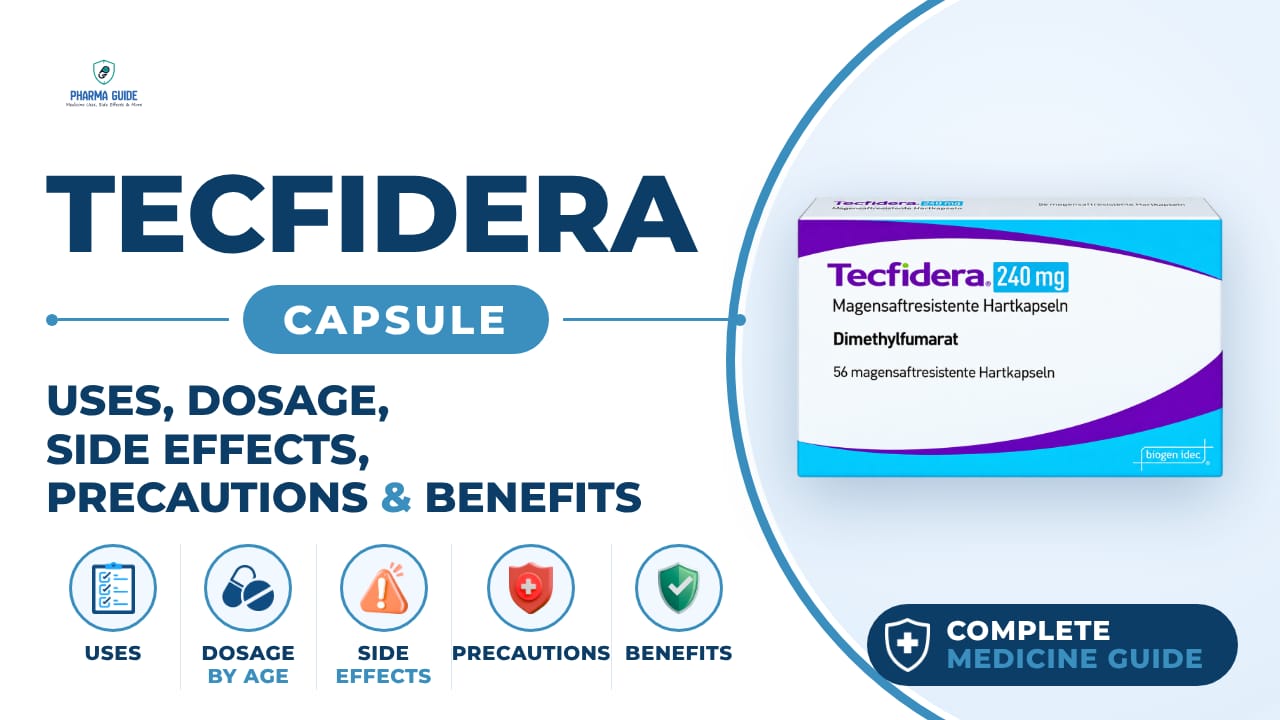
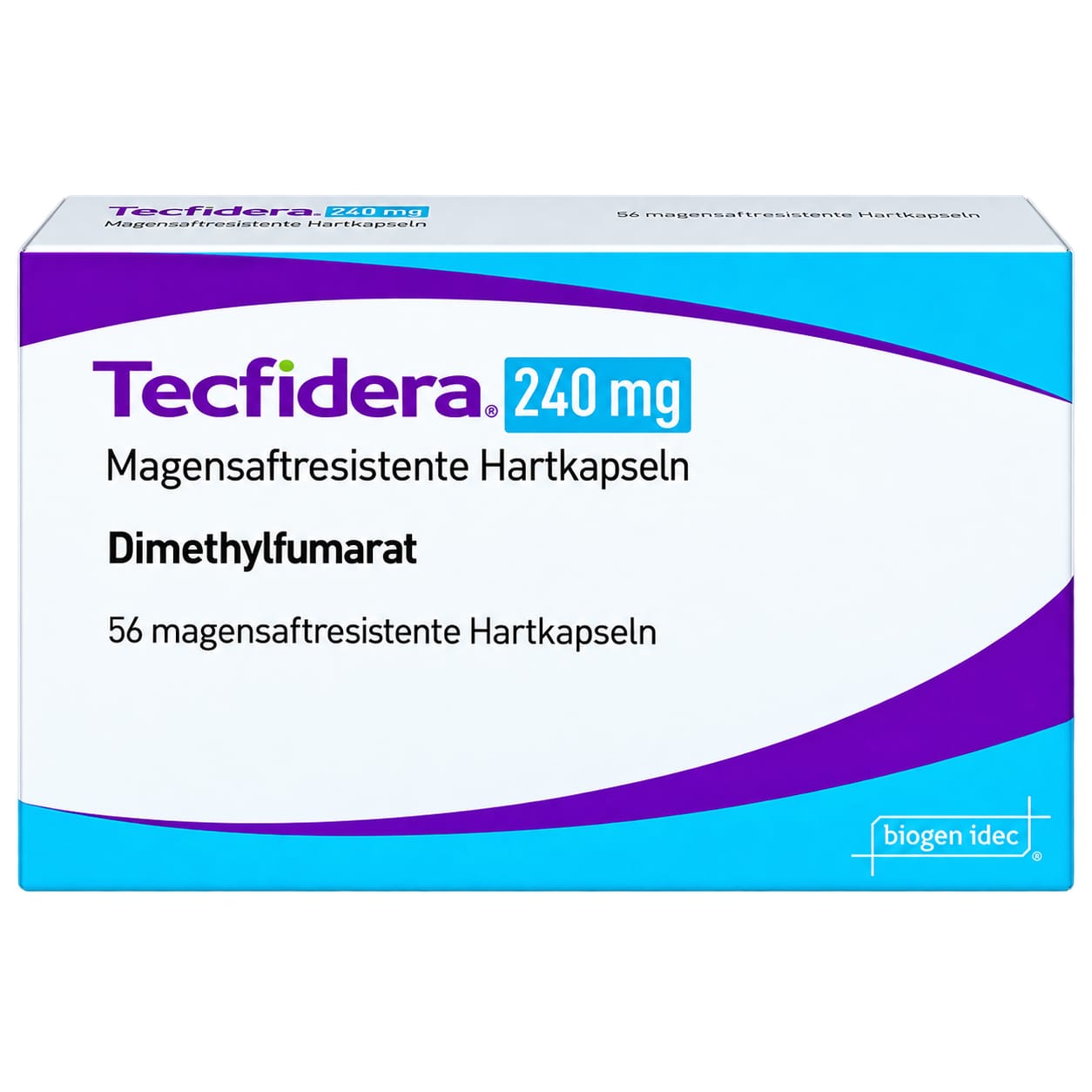
| Generic name | dimethyl fumarate |
|---|---|
| Drug class | Selective immunosuppressants |
| Forms | Delayed-release capsules (120 mg, 240 mg) |
Quick overview
Tecfidera Capsule (dimethyl fumarate) is a prescription medicine belonging to the selective immunosuppressants drug class, used to treat relapsing forms of multiple sclerosis (MS) in adults. It helps reduce relapses and new brain lesions by lowering inflammation in the brain. It is taken by mouth twice daily, and dosing is typically started low before being increased after one week. Like all medicines, it carries certain risks and precautions that should be discussed with a doctor.
What is Tecfidera Capsule
Tecfidera is the brand name for dimethyl fumarate, a prescription medicine used to treat relapsing forms of multiple sclerosis (MS) in adults. It is a disease-modifying therapy that belongs to a group of medicines called selective immunosuppressants.
Tecfidera Capsule uses
- Treats relapsing forms of multiple sclerosis (MS), including clinically isolated syndrome, relapsing-remitting disease, and active secondary progressive disease, in adults
Benefits of Tecfidera Capsule
- Reduces the yearly relapse rate compared with placebo in studies
- Reduces the number of new or enlarging brain lesions seen on MRI scans
- May slow the progression of physical disability in people with relapsing forms of MS
- Decreases the number of MS flare-ups (relapses)
How Tecfidera Capsule works
Tecfidera reduces inflammation in the brain caused by MS, which helps lower nerve damage. It activates a cell pathway involved in how cells handle stress and can also lower the number of certain white blood cells involved in the immune system, though exactly how it treats MS is not fully understood.
Tecfidera Capsule dosage
Tecfidera is taken by mouth twice daily, with or without food. Taking it with food may help reduce flushing and stomach side effects. Swallow the capsule whole with a glass of water; do not crush, chew, break, divide, or dissolve it. Try to take it at the same time each day, such as during breakfast and dinner, to help you remember. Your doctor may suggest taking non-enteric-coated aspirin before your dose to help reduce flushing. Tecfidera is not approved for use in anyone younger than 18 years old.
If you miss a dose, take it as soon as you remember, but skip it if it is almost time for your next dose; do not take two doses at once.
| Age group | Dose |
|---|---|
| Under 18 years | Safety and effectiveness have not been established for routine use |
| 18–64 years | 120 mg twice daily for 7 days, then 240 mg twice daily |
Available forms and strengths
- Delayed-release capsules (120 mg, 240 mg)
Side effects of Tecfidera Capsule
Common
- Flushing (warmth, redness, itching, or burning)
- Stomach pain or cramps
- Diarrhea
- Nausea
- Vomiting
- Itching
- Rash
- Indigestion (dyspepsia)
- Inflammation of the stomach or intestine lining
- Hair thinning
- Runny nose
Serious
- Signs of allergic reaction such as hives, difficulty breathing, or swelling of the face, lips, tongue, or throat
- Symptoms of a serious brain infection (PML): problems with speech, thought, vision, or muscle movement, weakness on one side of the body, clumsiness, confusion, or personality changes
- Symptoms of herpes/shingles infection: flu-like symptoms, cold sores, a tingly or painful blistering rash, or burning pain in the thigh or lower back
- Low white blood cell counts: fever, mouth sores, skin sores, sore throat, cough, or trouble breathing
- Liver problems: severe tiredness, loss of appetite, pain on the upper right side of the stomach, dark urine, or yellowing of the skin or eyes
- Pancreatitis: severe upper stomach pain spreading to the back, nausea, or vomiting
- Serious stomach or bowel problems: ongoing stomach pain, bright red or black tarry stools, severe vomiting, severe diarrhea, coughing up blood, or vomiting blood or material that looks like coffee grounds
Warnings and precautions
- Tecfidera can cause serious allergic reactions, including anaphylaxis and swelling, after the first dose or at any time during treatment. Stop the medicine and get emergency help if you have trouble breathing, hives, or swelling of the throat or tongue.
- A rare but serious brain infection called PML can occur, usually in people with low white blood cell counts lasting more than 6 months. Tell your doctor right away about symptoms that get worse over days or weeks, such as weakness on one side of the body, clumsiness, vision problems, confusion, or changes in thinking, memory, or personality.
- Serious shingles and other serious viral, fungal, and bacterial infections have occurred with Tecfidera, even in people with normal white blood cell counts. Tell your doctor about any signs of infection.
- Tecfidera can lower your white blood cell count, and it may take months to recover after stopping. Your doctor will check your blood counts regularly.
- Serious stomach and bowel problems, including bleeding, ulcers, tears, and blockage, have been reported, most often within the first 6 months of treatment, and some have been fatal. Tell your doctor right away about new or worsening severe stomach or bowel symptoms.
- Do not take Tecfidera together with other medicines that contain fumaric acid, such as diroximel fumarate, because they turn into the same active substance in the body.
- Tell your doctor if you are pregnant or plan to become pregnant. It is not known if Tecfidera will harm an unborn baby, so you and your doctor will need to decide together if you should take it during pregnancy.
- Tell your doctor if you are breastfeeding or plan to breastfeed. It is not known if Tecfidera passes into breast milk, so you and your doctor should decide together whether you should take it.
- Tell your doctor if you have kidney problems before starting Tecfidera. Your doctor will check a urine test for kidney function before you start and may repeat it during treatment.
- Tecfidera can cause liver injury, which may start days to months after starting treatment. Your doctor will check your liver function before and during treatment.
- Tell your doctor if you drink alcohol while taking Tecfidera.
- Be careful before driving or using machines or tools until you know how Tecfidera affects you.
Storage
- Store at 15°C to 30°C (59°F to 86°F)
- Protect the capsules from light
- Store in the original container
- Keep your capsules in the pack until it is time to take them
- Keep your capsules in a cool dry place away from light where the temperature stays below 30°C
- Do not store in the bathroom, near a sink, in the car, or on window sills
- Keep it where young children cannot reach it
- If you no longer need the medicine or it is out of date, take it to a pharmacy for safe disposal
- Do not use this medicine after the expiry date
When to see a doctor
- Get emergency medical help if you have signs of an allergic reaction, such as hives, difficulty breathing, or swelling of your face, lips, tongue, or throat
- Call your doctor right away if you have problems with speech, thought, vision, or muscle movement, as these may be signs of a serious brain infection that can start gradually and get worse quickly
- Call your doctor straight away if you think you have an infection, have a fever, or feel like you have the flu
- Call your doctor right away or go to the emergency department if you notice symptoms similar to an MS relapse, such as new or worsening weakness on one side of the body, clumsiness, changes in vision, thinking, or memory, or confusion or personality changes lasting more than several days
- If you think you have taken too much Tecfidera, seek urgent medical attention right away, even if you feel fine
Alternatives
- Vumerity (diroximel fumarate)
- Bafiertam (monomethyl fumarate)
- Aubagio (teriflunomide)
Watch the video
FAQs
What is Tecfidera Capsule used for?
Tecfidera treats relapsing forms of multiple sclerosis in adults, including clinically isolated syndrome, relapsing-remitting disease, and active secondary progressive disease.
How is Tecfidera Capsule taken?
It is taken by mouth twice daily, with or without food, swallowed whole with water. Dosing starts at 120 mg twice daily for 7 days, then increases to 240 mg twice daily.
What are the common side effects of Tecfidera?
Common side effects include flushing, stomach pain or cramps, diarrhea, nausea, vomiting, itching, rash, indigestion, and hair thinning.
What serious risks are linked to Tecfidera Capsule?
Serious risks include allergic reactions, a rare brain infection called PML, serious infections like shingles, low white blood cell counts, liver problems, pancreatitis, and serious stomach or bowel problems.
What are alternatives to Tecfidera Capsule?
Alternatives mentioned include Vumerity (diroximel fumarate), Bafiertam (monomethyl fumarate), and Aubagio (teriflunomide).
General information, not medical advice
Your prescriber and the leaflet in your pack know your situation. This page does not.
- Follow your prescriber and the leaflet
- Don't start, stop, or change a dose on your own
- Doses and warnings differ by country and product
Sources
Video
Related medicines

Injectafer Injection: Uses, Dosage, Side Effects, Precautions and Alternates
Iron products
Injectafer (ferric carboxymaltose) treats iron deficiency anemia and heart failure-related iron deficiency via IV. Learn uses, dosage, side effects, and

Gliclazide Tablet: Uses, Dosage, Side Effects, Precautions and Alternates
Sulfonylurea (hypoglycemic/antidiabetic agent)
Gliclazide Tablet is a sulfonylurea for type 2 diabetes that boosts insulin release. Learn about dosage, side effects, warnings, and precautions.