
Safety
General information, not medical advice
Your prescriber and the leaflet in your pack know your situation. This page does not.
- Follow your prescriber and the leaflet
- Don't start, stop, or change a dose on your own
- Doses and warnings differ by country and product
Teczine Tablet: Uses, Dosage, Side Effects, Precautions and Alternates
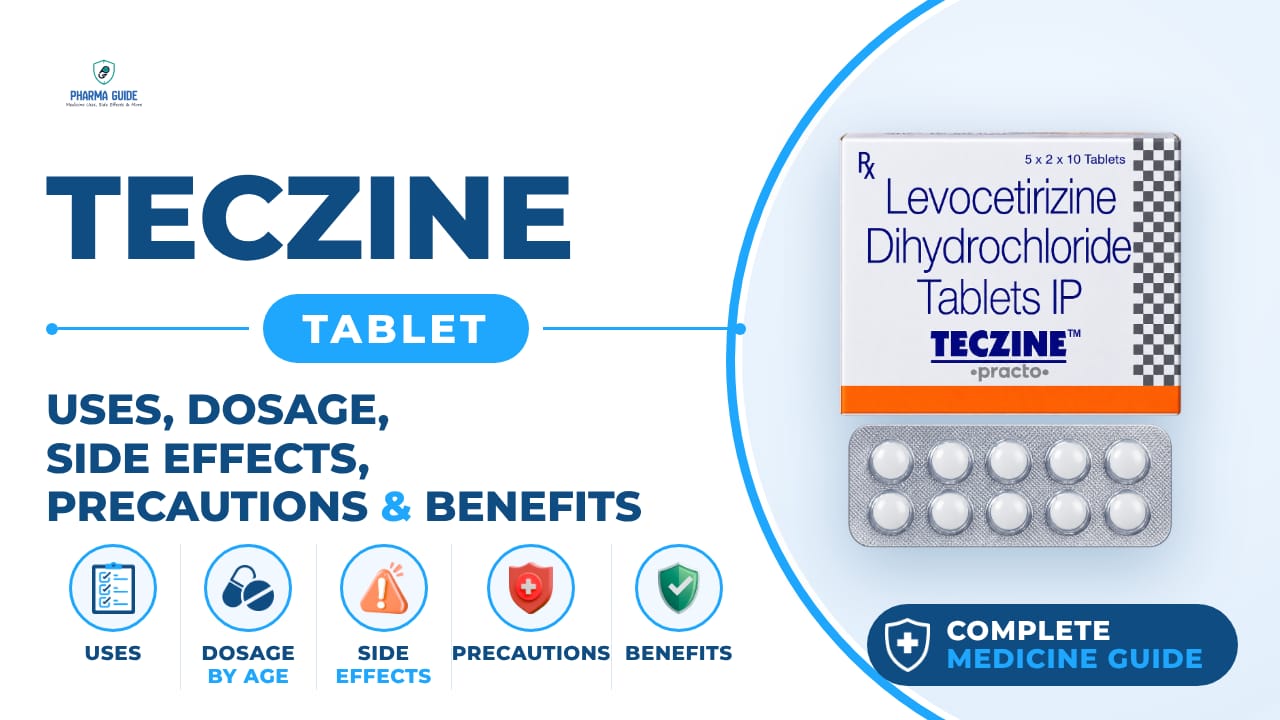
| Generic name | Levocetirizine |
|---|---|
| Drug class | Second-generation antihistamine (H1-Receptor Blocker) |
| Forms | Tablet, Capsule, Dispersible Tablet, Oral Solution, Syrup, Suspension |
Quick overview
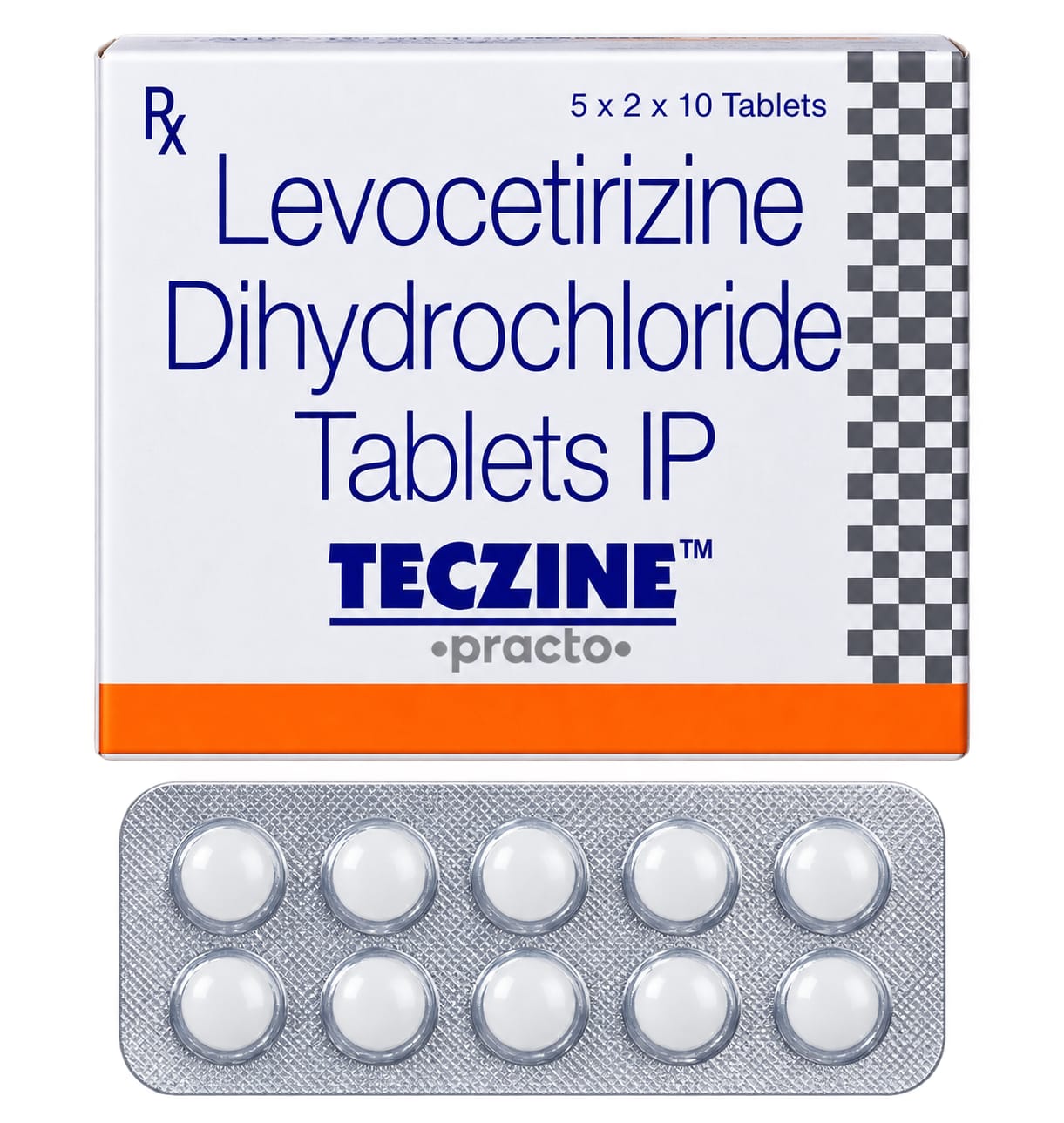
Teczine Tablet contains levocetirizine, a second-generation antihistamine used to treat allergy symptoms such as sneezing, runny nose, itchy or watery eyes, and skin rashes or hives. It works by blocking histamine, a substance the body releases during allergic reactions. It is commonly used for allergic rhinitis, chronic urticaria, and allergic conjunctivitis.
What is Teczine Tablet
Teczine Tablet contains levocetirizine, a second-generation antihistamine (H1-receptor blocker) used to treat allergy symptoms like sneezing, runny nose, itchy or watery eyes, and skin rashes or hives. It works by blocking histamine, a substance the body releases during allergic reactions.
Teczine Tablet uses
- Allergic rhinitis (sneezing, runny or blocked nose, nasal congestion, itchy nose, red and watery eyes)
- Chronic idiopathic urticaria (hives with itching and reddish raised patches)
- Allergic conjunctivitis (itchy, red, watery eyes)
- Skin allergies and itching from insect bites or hives
Benefits of Teczine Tablet
- Allergy Relief: Helps relieve sneezing, runny nose, and nasal itching.
- Eye Symptom Relief: Helps reduce itchy and watery eyes caused by allergies.
- Hives Relief: Helps reduce itching and symptoms associated with urticaria.
- Histamine Control: Blocks histamine, which contributes to allergic symptoms.
- Long-Lasting Action: Provides symptom relief for approximately 24 hours.
- Seasonal Allergy Support: Helps manage symptoms of seasonal allergic rhinitis.
How Teczine Tablet works
Levocetirizine blocks the action of histamine, a natural chemical released by the body during allergic reactions. Histamine causes symptoms like sneezing, itching, runny nose, and watery eyes. By selectively blocking histamine H1 receptors, the medicine reduces these allergy symptoms.
Teczine Tablet dosage
Take the tablet exactly as prescribed by your doctor and do not exceed the recommended dose. It can be taken with or without food. Swallow the tablet whole with a glass of water; do not crush, break, or chew it unless your doctor advises otherwise. Try to take it at the same time each day for consistent symptom control. If it causes drowsiness, your doctor may suggest taking it in the evening or before bedtime. Avoid alcohol while taking this medicine, as it may increase sleepiness or dizziness. Do not stop taking the medicine without consulting your doctor.
If you miss a dose, take it as soon as you remember; if it is almost time for your next dose, skip the missed one and continue your regular schedule — do not double up.
| Age group | Dose |
|---|---|
| Under 6 Years | Use an age-appropriate liquid formulation only as directed by a healthcare professional |
| 6–11 Years | 2.5 mg (½ of a 5 mg tablet) once daily in the evening |
| 12 Years and Above | 5 mg (1 tablet) once daily in the evening |
Available forms and strengths
- Tablet (5 mg)
- Capsule
- Dispersible Tablet
- Oral Solution
- Syrup
- Suspension
Side effects of Teczine Tablet
Common
- Dry mouth
- Diarrhoea or constipation
- Headache
- Tiredness/fatigue
- Sleepiness/drowsiness
- Difficulty sleeping
- Stomach (abdominal) pain
- Nausea or vomiting
- Increased heart rate
- Nasopharyngitis (cold-like symptoms, throat/nasal inflammation)
Serious
- Signs of a severe allergic reaction such as rash, itching, swelling of the face, lips, tongue, or throat
- Difficulty breathing or swallowing
- Severe dizziness or fainting
- Unusual agitation, confusion, or hallucinations
- Difficulty passing urine or inability to urinate
- Severe skin reactions with redness, blistering, or peeling
- Persistent or worsening side effects that do not improve with time
Warnings and precautions
- Do not take this medicine if you are allergic to cetirizine, hydroxyzine, levocetirizine, or any other ingredient in it. Seek medical attention if you develop rash, itching, swelling, or difficulty breathing.
- Tell your doctor before taking this medicine if you have epilepsy or are at risk of seizures, if you cannot pass urine due to spinal cord injury or an enlarged prostate, or if you are scheduled for allergy testing.
- Elderly patients may be more sensitive to the effects of this medicine, particularly drowsiness, and should use it with caution, especially if kidney function is reduced. People with epilepsy should use this medicine with caution, as it may increase the risk of seizures.
- This medicine should be used during pregnancy only if recommended by a healthcare professional.
- This medicine may pass into breast milk in small amounts. Breastfeeding mothers should consult a doctor before using it, as it may affect the baby or reduce milk supply.
- People with kidney problems should use this medicine with caution, as dose adjustments may be needed.
- Caution is advised in people with mild to moderate liver impairment. Discuss any liver problems with your doctor before starting this tablet.
- Avoid or limit alcohol while taking this medicine, as it may increase drowsiness and impair concentration.
- This medicine may cause drowsiness, dizziness, or tiredness. Avoid driving or operating machinery until you know how it affects you.
Storage
- Store at room temperature, ideally between 20°C to 25°C
- Keep away from direct sunlight and moisture
- Store in its original package for protection
- Keep out of reach and sight of children
- Use before its expiry date for optimal efficacy
When to see a doctor
If someone takes more than the prescribed dose, seek medical help immediately or go to the nearest hospital. Overdose can cause excessive drowsiness, dizziness, confusion, restlessness, headache, or rapid heartbeat. Children may become unusually excited or irritable.
Stop taking the medicine and contact your doctor right away if you notice signs of a severe allergic reaction, breathing or swallowing difficulty, severe dizziness or fainting, confusion, or severe skin reactions.
Alternatives
- Levocet 5mg Tablet
- Cetloc L 5 Tablet
- Cetcip-L 5 MG Tablet
- Starcet 5 MG Tablet
- Xevor 5 MG Tablet
- LESET MD TABLET
- Levoset Tablet
Watch the video
FAQs
What is Teczine Tablet used for?
It is used to treat allergic rhinitis, chronic idiopathic urticaria, allergic conjunctivitis, and skin allergies such as itching from insect bites or hives.
How does Teczine Tablet work?
It contains levocetirizine, which blocks histamine, a chemical released during allergic reactions, by selectively blocking H1 receptors, thereby reducing allergy symptoms like sneezing, itching, and watery eyes.
What is the dosage of Teczine Tablet for adults?
For people 12 years and above, the dose is 5 mg (1 tablet) once daily in the evening, taken with or without food.
What are the common side effects of Teczine Tablet?
Common side effects include dry mouth, diarrhoea or constipation, headache, tiredness, drowsiness, difficulty sleeping, stomach pain, nausea or vomiting, and increased heart rate.
Can I drink alcohol while taking Teczine Tablet?
Alcohol should be avoided or limited while taking this medicine as it may increase drowsiness and impair concentration.
General information, not medical advice
Your prescriber and the leaflet in your pack know your situation. This page does not.
- Follow your prescriber and the leaflet
- Don't start, stop, or change a dose on your own
- Doses and warnings differ by country and product
Sources
- KD Tripathi. Histamines and Antihistamines. Autocoids and related drugs. Essentials of Medical Pharmacology. seventh edition. 2013. Page-164,167.
- Nettis, E., G. F. Calogiuri, E. Di Leo, F. Cardinale, L. Macchia, A. Ferrannini, and A. Vacca. Once daily levocetirizine for the management of allergic rhinitis and chronic idiopathic urticaria. NIH. National Library of Medicine, National Centre for Biotechnology Information. PMC. PubMed Central.
- Glenmark Pharmaceuticals s.r.o. Electronic Medicines Compendium (EMC).
- UCB, Inc., U.S. Food & Drug Administration.
- Levocetirizine Dihydrochloride Tablet, Film Coated. Dailymed.com.
- MedlinePlus. Levocetirizine, MedlinePlus Drug Information.
- U.S. Food and Drug Administration. FDA Package Insert for Levocetirizine.
- HIGHLIGHTS OF PRESCRIBING INFORMATION. XYZAL.
- Levocetirizine: uses, interactions, mechanism of action | DrugBank Online.
Video
Related medicines

Injectafer Injection: Uses, Dosage, Side Effects, Precautions and Alternates
Iron products
Injectafer (ferric carboxymaltose) treats iron deficiency anemia and heart failure-related iron deficiency via IV. Learn uses, dosage, side effects, and

Gliclazide Tablet: Uses, Dosage, Side Effects, Precautions and Alternates
Sulfonylurea (hypoglycemic/antidiabetic agent)
Gliclazide Tablet is a sulfonylurea for type 2 diabetes that boosts insulin release. Learn about dosage, side effects, warnings, and precautions.