
Safety
General information, not medical advice
Your prescriber and the leaflet in your pack know your situation. This page does not.
- Follow your prescriber and the leaflet
- Don't start, stop, or change a dose on your own
- Doses and warnings differ by country and product
Tedizolid Tablet: Uses, Dosage, Side Effects, Precautions and Alternates
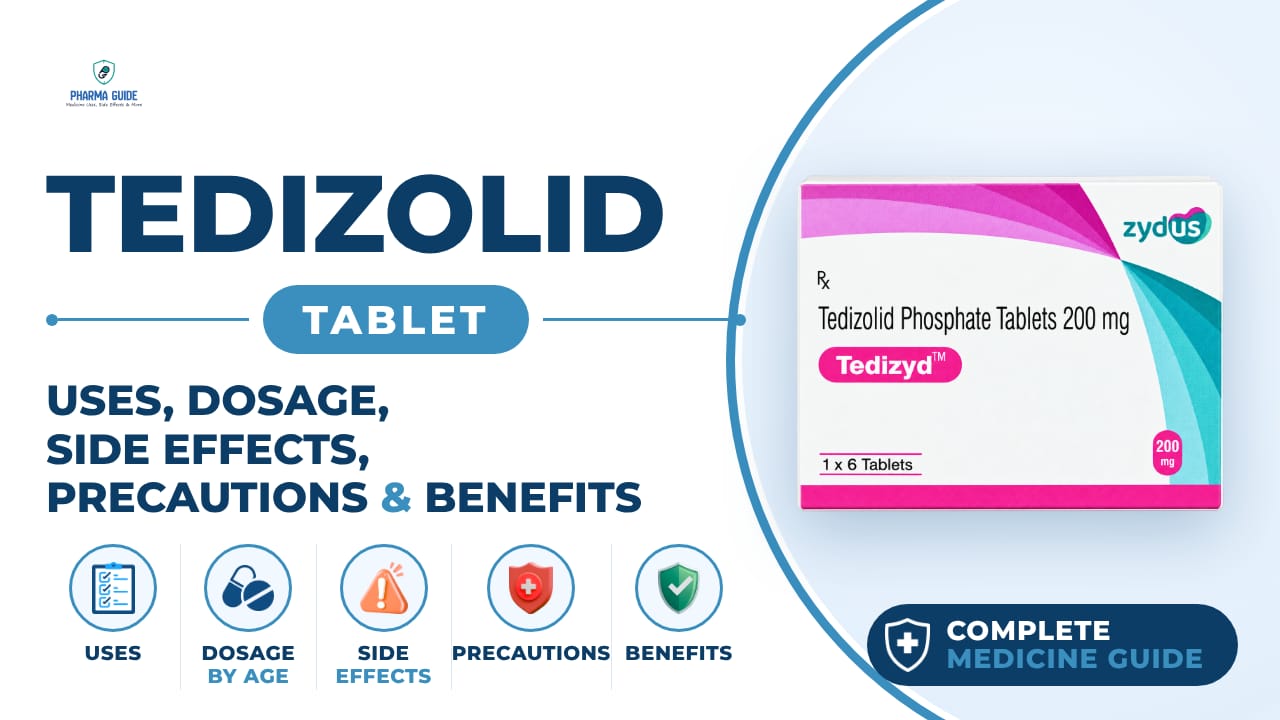
| Generic name | Tedizolid phosphate |
|---|---|
| Drug class | Oxazolidinone antibacterial |
| Forms | Film-coated tablet, Powder for concentrate for solution for infusion (intravenous), Powder for oral suspension |
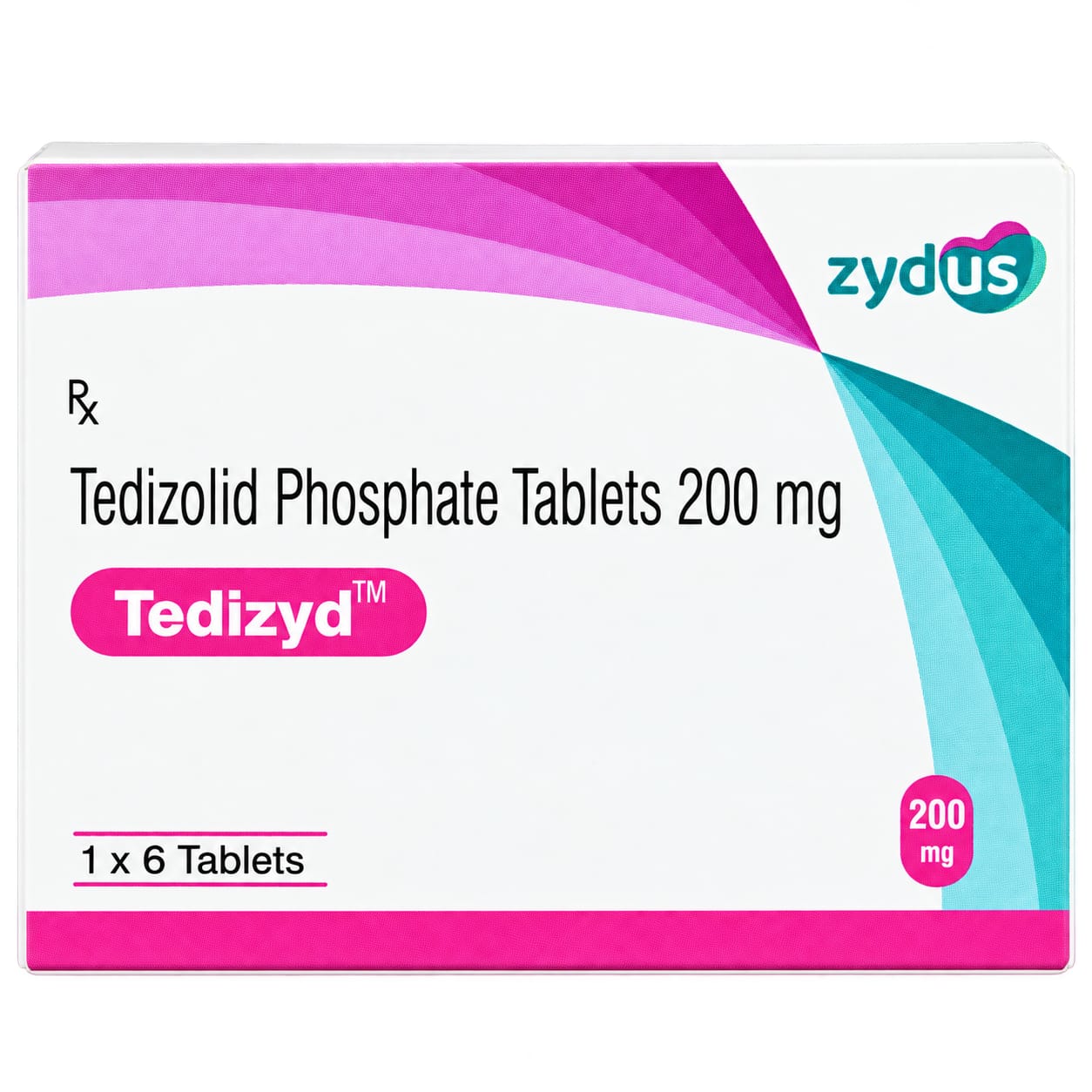
Quick overview
Tedizolid Tablet contains tedizolid phosphate, an antibacterial medicine belonging to the oxazolidinone class. It is used to treat acute bacterial skin and skin structure infections by stopping the growth of certain bacteria. It is available as a tablet, intravenous infusion, or oral suspension, and treatment is typically given as a short 6-day course.
What is Tedizolid Tablet
Sivextro is an antibiotic that contains the active substance tedizolid phosphate. It belongs to a group of medicines called oxazolidinones. It works by stopping the growth of certain bacteria that can cause serious infections.
Tedizolid Tablet uses
- Treatment of acute bacterial skin and skin structure infections (ABSSSI) in adults
- Treatment of acute bacterial skin and skin structure infections in adolescents and children weighing at least 35 kg (tablets)
- Treatment of acute bacterial skin and skin structure infections in patients from birth (powder for infusion and oral suspension)
Benefits of Tedizolid Tablet
- Stops the growth of certain bacteria that cause skin and skin structure infections
- Can be given as a short 6-day course of treatment
- Available as tablet, intravenous infusion, or oral suspension, allowing flexible treatment and switching between forms
How Tedizolid Tablet works
Tedizolid phosphate is converted in the body into its active form, tedizolid. Tedizolid works by attaching to a part of the bacteria called the ribosome, which stops the bacteria from making the proteins they need to grow, slowing or stopping the infection.
Tedizolid Tablet dosage
Tablets should be swallowed whole and can be taken with or without food or drink. The oral suspension can be taken with or without food and should be taken within 30 minutes after it is mixed. The intravenous infusion is given through a drip into a vein over about 1 hour, by a doctor or nurse. Patients who start treatment with the infusion may be switched to tablets or oral suspension when their doctor decides it is appropriate. You should take all doses to complete the course of treatment, even if you miss a dose. If you stop treatment early without your doctor's advice, your symptoms may get worse.
| Age group | Dose |
|---|---|
| Under 12 years | Safety and effectiveness are not established for routine tablet use |
| 12–17 years | 200 mg once daily for 6 days |
| 18–64 years | 200 mg once daily for 6 days |
Available forms and strengths
- Film-coated tablet
- Powder for concentrate for solution for infusion (intravenous)
- Powder for oral suspension
Side effects of Tedizolid Tablet
Common
- Nausea
- Headache
- Diarrhoea
- Vomiting
- Itching all over the body (pruritus generalised)
- Tiredness (fatigue)
- Dizziness
- Infusion site reactions (phlebitis), for the infusion form
Serious
- Severe or persistent diarrhoea, which may be a sign of Clostridioides difficile associated diarrhoea (CDAD), ranging from mild diarrhoea to fatal colitis
- Bleeding or bruising easily (low platelet count/thrombocytopenia)
- Low red blood cell count (anaemia)
- Low white blood cell count
- Numbness, tingling, prickling, or sharp pains in hands or feet (peripheral neuropathy)
- Changes in eyesight such as blurred vision, changes in colour vision, difficulty seeing detail, or restricted field of vision (possible optic nerve problems)
- Serotonin syndrome symptoms such as feeling disoriented, difficulty concentrating, high temperature, increased reflexes, or difficulty coordinating muscle movements, especially when taken with certain antidepressants or opioids
- Severe allergic reaction such as hives, itching, rash, swelling of the mouth, throat, lips, or hands, or difficulty breathing
Warnings and precautions
- Using this medicine when there is no proven or strongly suspected bacterial infection will not help and increases the risk that bacteria will become resistant to antibiotics in the future.
- This medicine has not been well studied in people with neutropenia (a type of low white blood cell count), and alternative treatments should be considered for these patients.
- If you are allergic to other oxazolidinone antibiotics, you may also be allergic to this medicine.
- Taking this medicine with certain antidepressants or opioid pain medicines can raise the risk of a serious condition called serotonin syndrome.
- This medicine is generally not effective against gram-negative bacteria, so it should not be relied upon alone if such bacteria are suspected to be part of the infection.
- This medicine has mainly been studied for specific types of skin infections (cellulitis, abscesses, and wound infections) and has not been studied for other types of skin infections or for very severe infections with sepsis or septic shock.
- There is no information on the safety of this medicine in pregnant women. Animal studies showed effects on the developing baby, so it is preferable to avoid this medicine during pregnancy unless your doctor decides the benefit outweighs the risk.
- It is not known if this medicine passes into human breast milk. Because a risk to the breastfeeding infant cannot be ruled out, you and your doctor should decide together whether to continue breastfeeding or continue the medicine.
- No dose change is needed for people with kidney problems, including those on dialysis, though you should still tell your doctor if you have kidney problems.
- No dose change is needed for people with liver problems, including moderate to severe liver impairment.
- This medicine may cause dizziness, tiredness, or in rare cases sleepiness, which could affect your ability to drive or use machines safely. Do not drive or use machines if you feel this way.
Storage
- This medicine does not require any special storage conditions for the tablets and the powder for infusion
- Keep out of the sight and reach of children
- Do not use after the expiry date shown on the carton or label
- The oral suspension sachets should be stored in a refrigerator (2°C to 8°C) in the original package; it can be kept at room temperature (25°C or below) for up to 14 days
- After mixing, the oral suspension should be used within 30 minutes at room temperature
- Once the infusion solution is reconstituted and diluted, it should be used within 24 hours if stored at room temperature or in a refrigerator (2°C to 8°C)
- Any unused medicine or waste material should be disposed of in accordance with local requirements
When to see a doctor
- Get medical help right away if you develop severe or persistent diarrhea, with or without fever and stomach pain, during or after treatment, as this could be a sign of a serious bowel infection.
- Tell your doctor promptly if you notice any changes in your eyesight, such as blurred vision, changes in how you see color, trouble seeing details, or a narrowed field of vision.
- Seek medical attention if you notice unusual bleeding or bruising, as this could be a sign of a drop in blood platelets.
- Get help immediately if you experience signs of a severe allergic reaction, such as hives, swelling of the mouth, throat, lips, or hands, or difficulty breathing.
- Contact your doctor if you experience symptoms that could suggest serotonin syndrome, such as feeling disoriented, difficulty concentrating, high temperature, increased reflexes, or trouble coordinating muscle movements, especially if you are also taking antidepressants or opioid medicines.
Alternatives
- Linezolid
- Vancomycin
- Daptomycin
Watch the video
FAQs
What is Tedizolid Tablet used for?
It is used to treat acute bacterial skin and skin structure infections (ABSSSI) in adults, adolescents, and children weighing at least 35 kg.
How is Tedizolid Tablet taken?
Tablets are swallowed whole with or without food, usually as 200 mg once daily for 6 days. It can also be given as an oral suspension or intravenous infusion, and patients may switch between forms as directed by their doctor.
What are the common side effects of Tedizolid Tablet?
Common side effects include nausea, headache, diarrhoea, vomiting, itching all over the body, tiredness, dizziness, and infusion site reactions for the infusion form.
Can Tedizolid Tablet cause serious side effects?
Yes, serious effects may include severe diarrhoea (possible C. difficile infection), low platelet or blood cell counts, peripheral neuropathy, eyesight changes, serotonin syndrome, and severe allergic reactions.
Is Tedizolid Tablet safe during pregnancy or breastfeeding?
There is no safety information in pregnant women, and animal studies showed effects on the developing baby, so it is preferable to avoid it unless the doctor decides the benefit outweighs the risk. It is also unknown if it passes into breast milk, so a doctor should help decide whether to continue breastfeeding or the medicine.
General information, not medical advice
Your prescriber and the leaflet in your pack know your situation. This page does not.
- Follow your prescriber and the leaflet
- Don't start, stop, or change a dose on your own
- Doses and warnings differ by country and product
Sources
Video
Related medicines

Injectafer Injection: Uses, Dosage, Side Effects, Precautions and Alternates
Iron products
Injectafer (ferric carboxymaltose) treats iron deficiency anemia and heart failure-related iron deficiency via IV. Learn uses, dosage, side effects, and

Gliclazide Tablet: Uses, Dosage, Side Effects, Precautions and Alternates
Sulfonylurea (hypoglycemic/antidiabetic agent)
Gliclazide Tablet is a sulfonylurea for type 2 diabetes that boosts insulin release. Learn about dosage, side effects, warnings, and precautions.