
Safety
General information, not medical advice
Your prescriber and the leaflet in your pack know your situation. This page does not.
- Follow your prescriber and the leaflet
- Don't start, stop, or change a dose on your own
- Doses and warnings differ by country and product
Telavancin Injection: Uses, Dosage, Side Effects, Precautions and Alternates
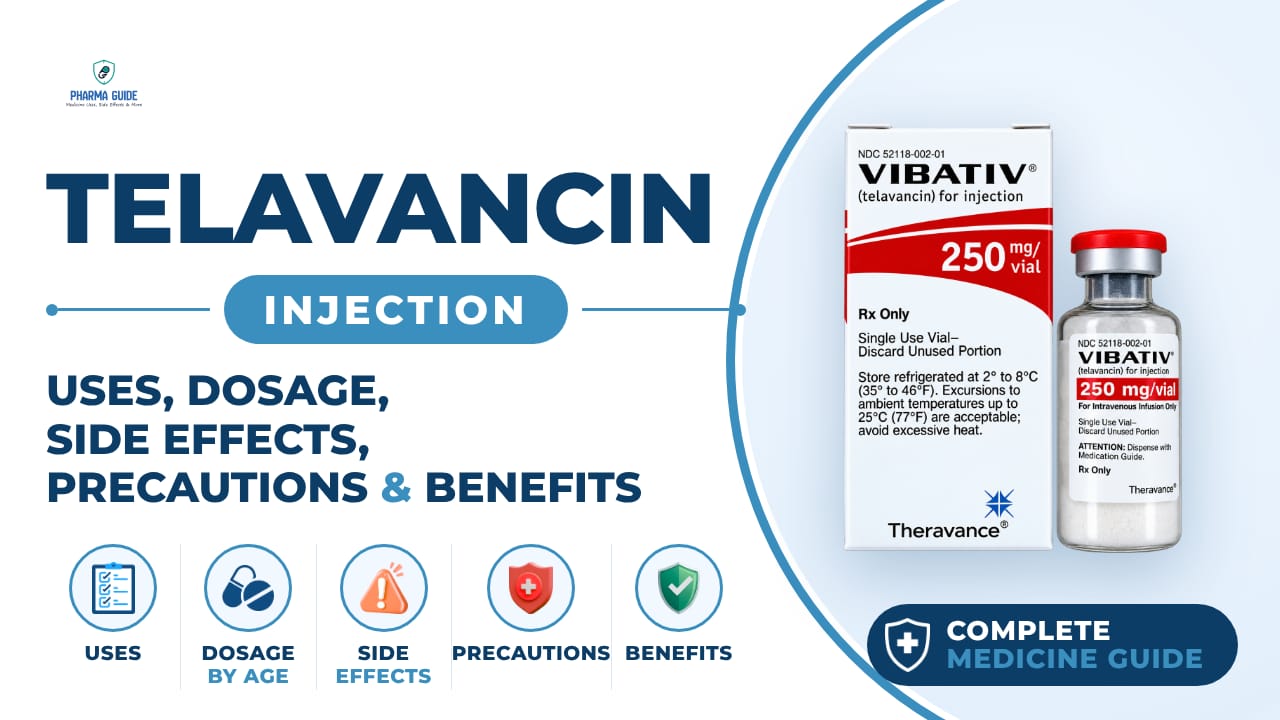
| Generic name | Telavancin (as telavancin hydrochloride) |
|---|---|
| Drug class | Lipoglycopeptide antibiotic |
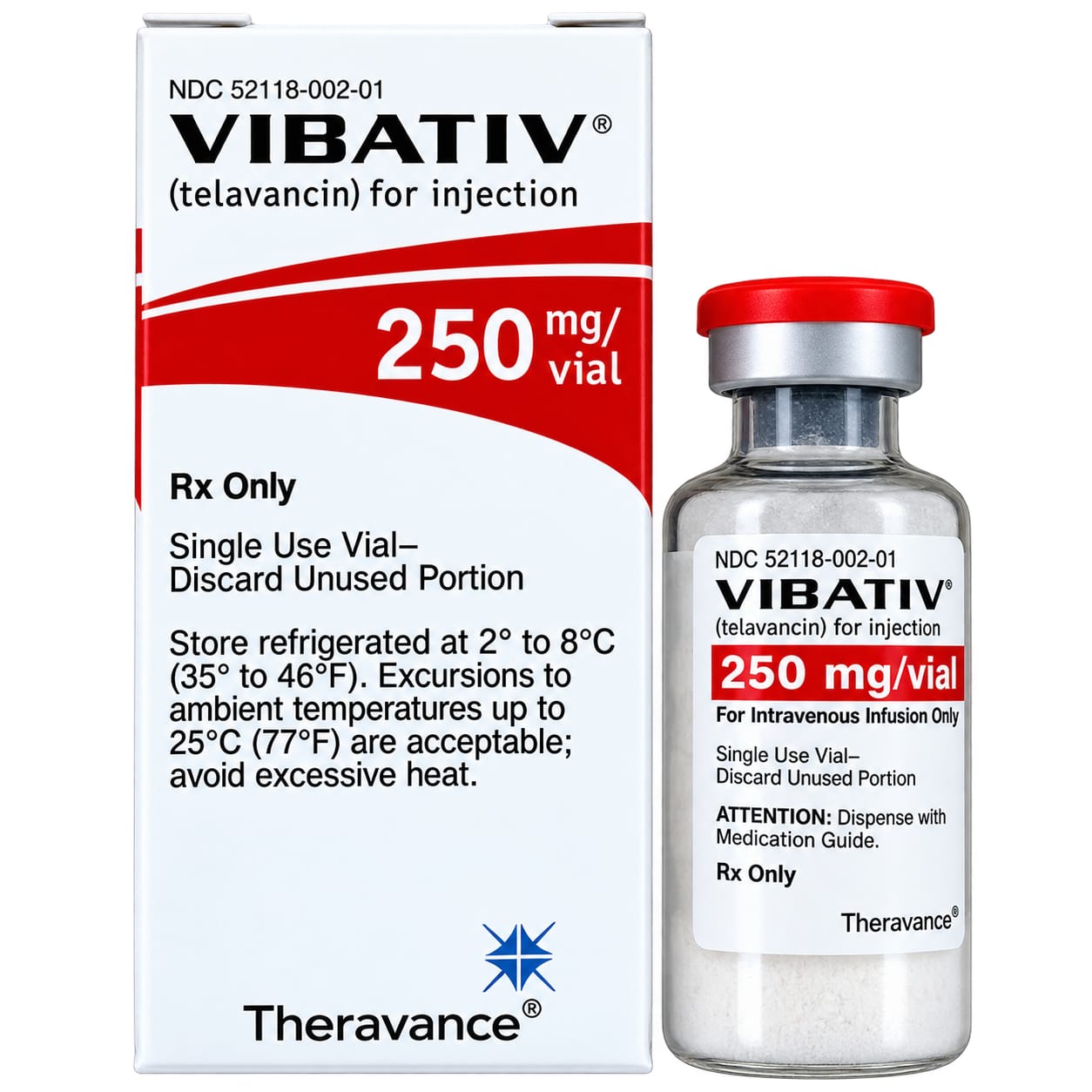
| Forms | Lyophilized powder for intravenous infusion, 250 mg per vial, Lyophilized powder for intravenous infusion, 750 mg per vial |
Quick overview
Telavancin Injection (VIBATIV) is a prescription lipoglycopeptide antibiotic given through a vein to treat certain serious bacterial infections in adults, including skin infections and selected types of pneumonia. It works by disrupting bacterial cell wall formation and the bacterial outer membrane, causing the bacteria to die. It is given as a once-daily IV infusion, and treatment requires monitoring of kidney function. Common side effects include taste changes and nausea, while serious risks include kidney problems and allergic reactions.
What is Telavancin Injection
VIBATIV is a prescription antibiotic medicine given through a vein (IV). It belongs to a class of antibiotics called lipoglycopeptides and is used to treat certain serious bacterial infections in adults.
Telavancin Injection uses
- Treats complicated skin and skin-structure infections
- Treats certain Gram-positive bacterial infections
- Active against susceptible MRSA
- Treats selected hospital-acquired bacterial pneumonia
- Treats selected ventilator-associated bacterial pneumonia
Benefits of Telavancin Injection
- Provides potent Gram-positive antibacterial activity
- Offers activity against certain drug-resistant bacteria
- Provides convenient once-daily IV dosing when kidney function is normal
- Can be used when selected alternative antibiotics are unsuitable
How Telavancin Injection works
Telavancin works by stopping bacteria from building new cell walls and by disrupting the bacteria's outer membrane, which are both needed for the bacteria to survive. This causes the bacteria to die.
Telavancin Injection dosage
Telavancin is given as an infusion directly into a vein over about 60 minutes, once daily. It should not be given faster than over 60 minutes, to reduce the risk of infusion-related reactions such as flushing, hives, itching, or rash. The course of treatment usually lasts 7 to 14 days for skin infections or 7 to 21 days for pneumonia, as determined by your doctor.
It is important to receive all scheduled doses; do not skip doses or stop treatment early even if you feel better. Contact your healthcare provider right away if you miss a dose or stop treatment before finishing it. Your doctor will order blood tests to check your kidney function before, during, and after treatment.
| Age group | Dose |
|---|---|
| Under 18 years | Safety and effectiveness have not been established |
| 18–64 years | 10 mg/kg IV every 24 hours, infused over 60 minutes |
| 65–74 years | Usually 10 mg/kg IV every 24 hours when kidney function is adequate |
Available forms and strengths
- Lyophilized powder for intravenous infusion, 250 mg per vial
- Lyophilized powder for intravenous infusion, 750 mg per vial
Side effects of Telavancin Injection
Common
- Taste disturbance (metallic or soapy taste)
- Nausea
- Vomiting
- Foamy urine (urine abnormality)
- Headache
- Diarrhea
- Constipation
- Anemia
- Low potassium levels (hypokalemia)
- Low blood pressure (hypotension)
- Insomnia
- Dizziness
- Rash
- Decreased appetite
- Fatigue
- Chills (rigors)
Serious
- New or worsening kidney problems, including acute kidney failure
- Serious allergic reactions (hypersensitivity), including anaphylaxis, with symptoms such as severe rash, itching, swelling of hands and feet, trouble breathing, or chest discomfort
- Infusion-related reactions resembling "Red-man syndrome," including flushing of the upper body, hives, itching, or rash if infused too quickly
- Clostridium difficile-associated diarrhea (CDAD), which can range from mild diarrhea to life-threatening colitis
- QT interval prolongation (a heart rhythm change) which may increase risk of an irregular heartbeat called Torsades de pointes
- Septic shock
- Multi-organ failure
- Hearing loss or other ear/balance problems (ototoxicity)
- Liver problems (elevated liver enzymes)
Warnings and precautions
- Treating hospital-acquired or ventilator-associated pneumonia with VIBATIV in patients who already have moderate to severe kidney problems was linked to a higher risk of death compared with vancomycin.
- VIBATIV can cause new or worsening kidney damage; kidney function should be checked in all patients before, during, and after treatment.
- Serious allergic reactions, including life-threatening anaphylaxis, have occurred after the first or later doses of VIBATIV.
- VIBATIV can prolong the QT interval of the heart's electrical cycle, which may raise the risk of a dangerous heart rhythm problem; caution is needed in patients with heart rhythm risk factors or who take certain other heart medicines.
- Using antibiotics like VIBATIV can lead to a serious intestinal infection called Clostridium difficile-associated disease, which can range from mild diarrhea to life-threatening colitis, and can occur even two months after finishing treatment.
- Animal studies showed that telavancin exposure during pregnancy caused limb and skeletal defects, so it raises concern about possible harm to human babies if used during pregnancy.
- VIBATIV should not be used during pregnancy unless your doctor decides the benefits clearly outweigh the risks. Animal studies have shown it may cause limb defects or developmental harm in the baby. Women who could become pregnant should have a pregnancy test before starting treatment and should use effective birth control during treatment.
- It is not known if telavancin passes into breast milk. Breastfeeding should be stopped during treatment with VIBATIV.
- VIBATIV can cause new or worsening kidney problems, especially in people with existing kidney disease or those taking other medicines that affect the kidneys. It is not recommended for people with severe kidney impairment or those on hemodialysis, and a lower dose is needed for people with moderate kidney impairment. Kidney function will be monitored regularly during treatment.
- No dose change is needed for people with mild to moderate liver problems. VIBATIV has not been studied in people with severe liver impairment.
- No major direct interaction with alcohol is established, but avoiding alcohol during a serious infection is generally appropriate.
- Avoid driving if dizziness, weakness, or other treatment effects impair alertness.
Storage
- VIBATIV in its original package should be stored refrigerated at 2°C to 8°C
- Keep out of reach and sight of children
- Store VIBATIV in the original package, keep refrigerated between 35°F to 46°F (2°C to 8°C), and keep out of heat
When to see a doctor
- Get medical help right away if you develop signs of a serious allergic reaction, such as severe rash, itching, swelling of the hands or feet, trouble breathing, chest discomfort, or skin flushing.
- Seek medical attention if you develop watery or bloody diarrhea, with or without stomach cramps or fever, even up to two months after finishing treatment, as this could be a sign of a serious intestinal infection.
- Tell your doctor right away if you notice signs of kidney problems, such as foamy urine or decreased urination.
- Contact your doctor immediately if you develop heart palpitations or fainting spells.
- Call your healthcare provider right away if you become pregnant while taking this medicine.
Alternatives
- Vancomycin
- Linezolid
- Daptomycin
Watch the video
FAQs
What is Telavancin Injection used for?
It treats complicated skin and skin-structure infections, certain Gram-positive bacterial infections including susceptible MRSA, and selected hospital-acquired or ventilator-associated bacterial pneumonia in adults.
How is Telavancin Injection given?
It is given as an IV infusion over about 60 minutes, once daily. Treatment usually lasts 7 to 14 days for skin infections or 7 to 21 days for pneumonia, as determined by your doctor.
What are the common side effects of Telavancin Injection?
Common side effects include taste disturbance (metallic or soapy taste), nausea, vomiting, foamy urine, headache, diarrhea, constipation, anemia, low potassium, low blood pressure, insomnia, dizziness, rash, decreased appetite, fatigue, and chills.
What serious risks are linked to Telavancin Injection?
Serious risks include new or worsening kidney problems, serious allergic reactions including anaphylaxis, infusion-related reactions, Clostridium difficile-associated diarrhea, QT interval prolongation, septic shock, multi-organ failure, hearing loss, and liver problems.
Can Telavancin Injection be used during pregnancy?
It should not be used during pregnancy unless the benefits clearly outweigh the risks, since animal studies showed it may cause limb and skeletal defects. Women who could become pregnant should have a pregnancy test before starting and use effective birth control during treatment.
General information, not medical advice
Your prescriber and the leaflet in your pack know your situation. This page does not.
- Follow your prescriber and the leaflet
- Don't start, stop, or change a dose on your own
- Doses and warnings differ by country and product
Sources
Video
Related medicines

Injectafer Injection: Uses, Dosage, Side Effects, Precautions and Alternates
Iron products
Injectafer (ferric carboxymaltose) treats iron deficiency anemia and heart failure-related iron deficiency via IV. Learn uses, dosage, side effects, and

Gliclazide Tablet: Uses, Dosage, Side Effects, Precautions and Alternates
Sulfonylurea (hypoglycemic/antidiabetic agent)
Gliclazide Tablet is a sulfonylurea for type 2 diabetes that boosts insulin release. Learn about dosage, side effects, warnings, and precautions.