
Safety
General information, not medical advice
Your prescriber and the leaflet in your pack know your situation. This page does not.
- Follow your prescriber and the leaflet
- Don't start, stop, or change a dose on your own
- Doses and warnings differ by country and product
Telmisartan Tablet: Uses, Dosage, Side Effects, Precautions and Alternates
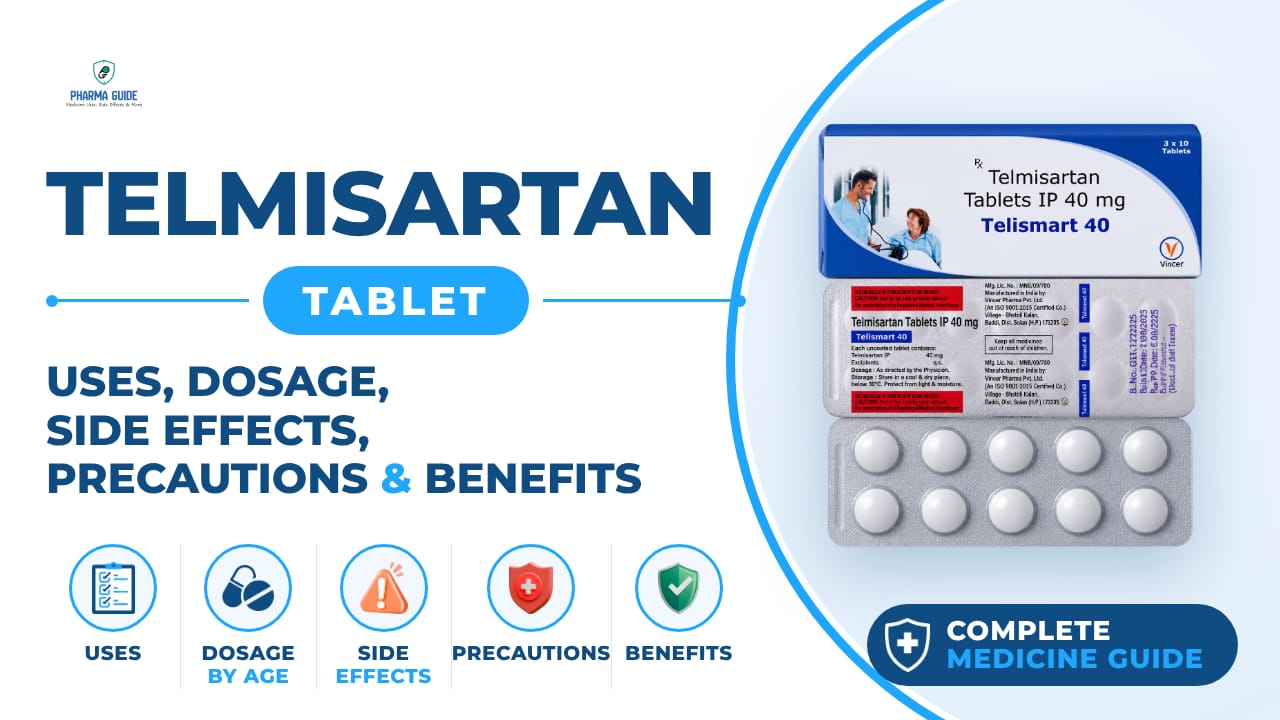
| Generic name | Telmisartan |
|---|---|
| Drug class | Angiotensin II AT1 Receptor Blocker (ARB) |
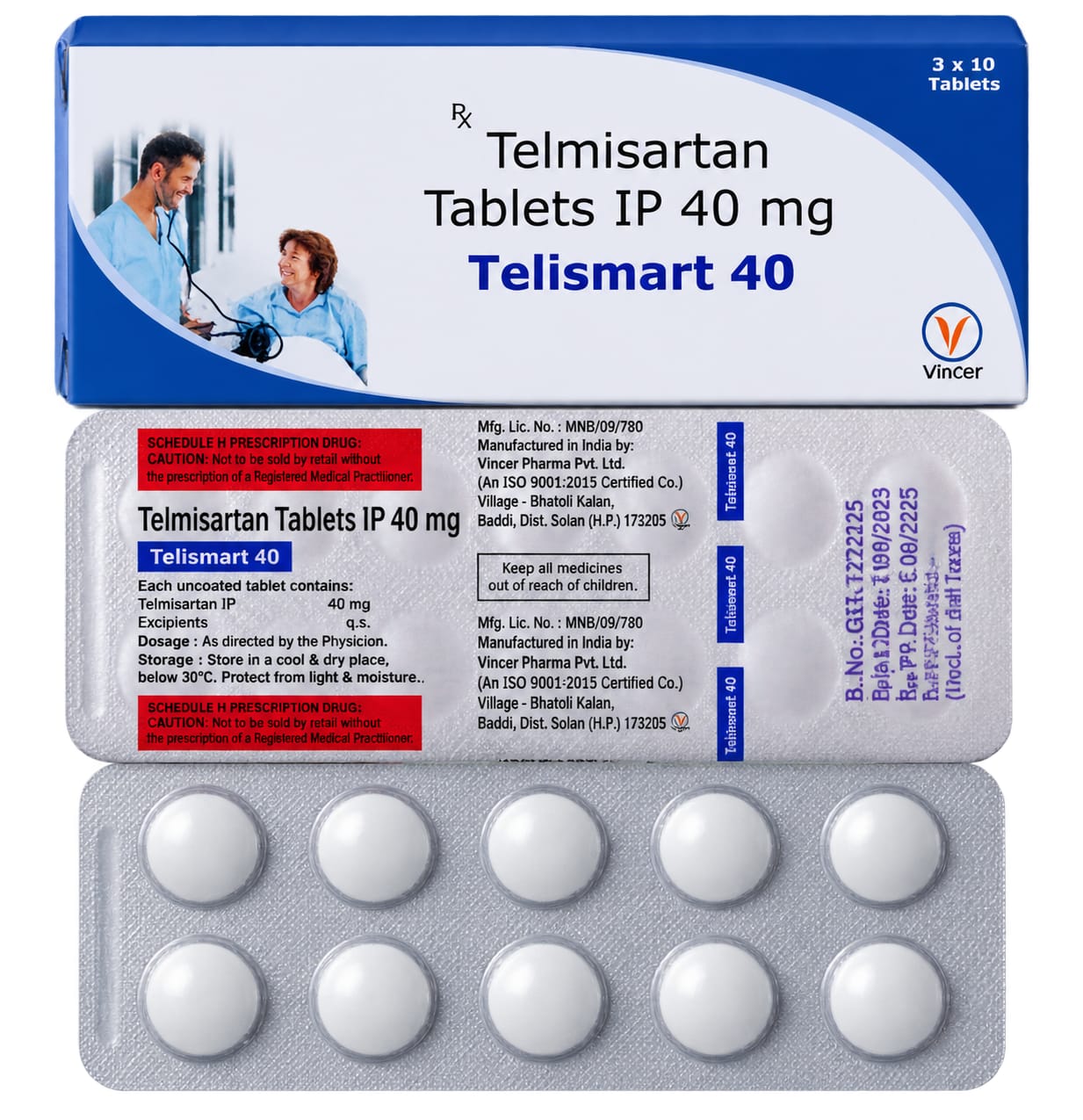
| Forms | Tablet (40 mg and 80 mg) |
Quick overview
Telmisartan Tablet contains telmisartan, an angiotensin II AT1 receptor blocker (ARB) used to treat high blood pressure in adults. It helps control blood pressure but does not cure the underlying condition, so it must be taken regularly as directed. It may also help reduce the risk of non-fatal stroke or heart attack in certain high-risk adults, and is sometimes used to help protect kidney function in people with diabetes.
What is Telmisartan Tablet
Telmisartan is an angiotensin receptor blocker (ARB) used to treat high blood pressure. It helps control blood pressure but does not cure the underlying condition, so it must be taken regularly.
Telmisartan Tablet uses
- Treatment of high blood pressure (hypertension) in adults
- Reduce the risk of non-fatal stroke or non-fatal heart attack in adults 55 years or older at high risk of cardiovascular events who cannot tolerate an ACE inhibitor
- Sometimes used to help protect kidney function in people with diabetes
- Sometimes used to treat heart failure and diabetic kidney disease (diabetic nephropathy)
Benefits of Telmisartan Tablet
- Lowers high blood pressure by relaxing blood vessels
- May reduce the risk of non-fatal heart attack or stroke in high-risk patients
- Helps protect against long-term damage to the heart, brain, kidneys, and blood vessels caused by uncontrolled high blood pressure
How Telmisartan Tablet works
Telmisartan blocks a natural substance called angiotensin II from attaching to its receptor. This stops the blood vessels from tightening, so they relax and blood pressure goes down.
Telmisartan Tablet dosage
Take once daily, with or without food, at about the same time every day. Swallow the tablet whole with a full glass of liquid; do not break or crush it. Do not open the blister pack until you are ready to take the tablet.
Continue taking this medicine even if you feel well, because it controls blood pressure but does not cure the condition. Do not stop taking this medicine without talking to your doctor first.
Blood pressure may start to improve within the first couple of weeks, but it may take about four weeks to see the full effect. Avoid salt substitutes containing potassium unless your doctor says it's okay. If your doctor has you on a low-salt diet, follow it carefully.
| Age group | Dose |
|---|---|
| Under 18 years | Not routinely recommended; doctor's advice required |
| 18 years & older | 40 mg once daily |
| Adults | 40 mg once daily; may be increased to 80 mg once daily |
| Older adults | Usually 40 mg once daily, adjusted by doctor |
Available forms and strengths
- Tablet (40 mg and 80 mg)
Side effects of Telmisartan Tablet
Common
- Back pain
- Leg pain, muscle cramps or muscle spasms
- Joint pain
- Headache
- Anxiety
- Diarrhea
- Constipation
- Nausea
- Vomiting
- Upset stomach or abdominal pain
- Flatulence
- Dry mouth
- Rash, eczema, or skin eruptions
- Drowsiness, insomnia, or fatigue
- Visual disturbances
- Upper respiratory tract infection
- Sinus pain and congestion
- Dizziness
- Chest pain
- Flu-like symptoms
Serious
- Signs of allergic reaction: swelling of the face, lips, tongue, or throat, difficulty breathing or swallowing, or severe skin rash/hives
- Low blood pressure: dizziness, fainting, lightheadedness
- Shortness of breath
- Symptoms of depression: low mood, loss of interest, changes in appetite or sleep
- Kidney problems: change in frequency of urination, nausea, vomiting, swelling of extremities, fatigue
- High potassium levels: irregular heartbeats, muscle weakness, feeling generally unwell
- Urinary tract infection symptoms: frequent or painful urination, feeling unwell
- Liver problems: yellowing of skin or eyes, dark urine, abdominal pain, nausea, vomiting, loss of appetite
- Low blood sugar (in diabetic patients): shakiness, irregular heartbeat, sweating, hunger, dizziness
- Low blood sodium: nausea, vomiting, abdominal cramps, agitation, confusion, hallucinations
- Easy bruising or bleeding, fatigue, weakness (low platelets)
- Sepsis: chills, confusion, fever or low body temperature, shakiness, irregular heartbeat
- Unexplained muscle pain, tenderness, weakness, or dark brown urine (possible rhabdomyolysis)
Warnings and precautions
- This medicine should not be used during pregnancy because it can seriously harm or cause death to the developing baby.
- If you find out you are pregnant while taking this medicine, stop taking it and contact your doctor right away.
- It isn't known for certain whether this medicine passes into human breast milk, so it isn't recommended while breastfeeding.
- People with kidney problems should use this medicine with caution, and kidney function should be checked appropriately, especially if there is a history of narrowing in the arteries to the kidneys.
- People with liver problems have reduced clearance of this medicine, so it should be used with caution, and a lower starting dose is generally recommended.
- Avoid alcohol while taking this medicine, as it can add to the blood-pressure-lowering effect and cause dizziness, lightheadedness, headache, or changes in heart rate.
- Be careful when driving or operating machinery until you know how this medicine affects you, since it can cause dizziness, lightheadedness, or fainting, especially after the first dose or a dose increase.
- A rare but fatal case of severe swelling (angioedema) of the airway occurred in a patient who had taken this medicine for about six months.
- People who are dehydrated, or who have low salt/fluid levels from water pills, a low-salt diet, dialysis, diarrhea, or vomiting, may experience a sudden drop in blood pressure when starting this medicine.
- Combining this medicine with certain other blood-pressure medicines (like ACE inhibitors or aliskiren) in patients with diabetes or moderate-to-severe kidney impairment is not allowed, because it increases the risk of low blood pressure, kidney failure, and high potassium.
- This medicine can raise potassium levels in the blood, especially when combined with potassium supplements, potassium-sparing water pills, or salt substitutes containing potassium.
- In diabetic patients with undiagnosed heart disease, lowering blood pressure with this medicine could increase the risk of a serious heart attack or unexpected cardiovascular death, so a heart evaluation may be recommended before starting treatment.
Storage
- Store at room temperature, 15°C to 30°C (59°F to 86°F)
- Protect from light
- Tablets should not be removed from blisters and bottles until immediately prior to administration
- Keep out of reach and sight of children
- Keep this medication in the blister pack it came in, tightly closed, and out of reach of children
- Store away from excess heat and moisture (not in the bathroom)
- Do not flush this medication down the toilet; use a medicine take-back program
- Do not use this medicine after the expiry date
When to see a doctor
- Get medical help right away if you have swelling of the face, lips, tongue, or throat, or sudden difficulty breathing or swallowing — this can be a life-threatening allergic reaction.
- Seek immediate medical help for signs of blood poisoning (sepsis), such as chills, confusion, fever or unusually low body temperature, shakiness, or an irregular heartbeat.
- Get medical help if you have unexplained muscle pain, tenderness, weakness, or dark brown urine, which could signal a serious muscle breakdown condition.
- If you think you or someone else has taken too much of this medicine, get medical help immediately even if there are no symptoms.
- Call your doctor right away if you notice yellowing of the skin or eyes, dark urine, or stomach pain with nausea and vomiting, which could indicate a liver problem.
- Seek medical care if you experience symptoms of high potassium levels, such as irregular heartbeats, muscle weakness, or generally feeling unwell.
Alternatives
- MICARDIS®
- Micardis®
- Micardis HCT®
- Twynsta®
- Widaplik®
Watch the video
FAQs
What is Telmisartan Tablet used for?
It is used to treat high blood pressure in adults, may reduce the risk of non-fatal stroke or heart attack in high-risk adults 55 or older who cannot tolerate an ACE inhibitor, and is sometimes used to help protect kidney function in people with diabetes.
How should I take Telmisartan Tablet?
Take it once daily, with or without food, at about the same time every day. Swallow the tablet whole with a full glass of liquid; do not break or crush it, and do not open the blister pack until ready to take it.
How long does it take for Telmisartan Tablet to work?
Blood pressure may start to improve within the first couple of weeks, but it may take about four weeks to see the full effect.
What is the dosage of Telmisartan Tablet for adults?
The usual adult dose is 40 mg once daily, which may be increased to 80 mg once daily if needed.
Can Telmisartan Tablet be taken during pregnancy?
No, it should not be used during pregnancy because it can seriously harm or cause death to the developing baby. If you find out you are pregnant while taking it, stop and contact your doctor right away.
General information, not medical advice
Your prescriber and the leaflet in your pack know your situation. This page does not.
- Follow your prescriber and the leaflet
- Don't start, stop, or change a dose on your own
- Doses and warnings differ by country and product
Sources
Video
Related medicines

Injectafer Injection: Uses, Dosage, Side Effects, Precautions and Alternates
Iron products
Injectafer (ferric carboxymaltose) treats iron deficiency anemia and heart failure-related iron deficiency via IV. Learn uses, dosage, side effects, and

Gliclazide Tablet: Uses, Dosage, Side Effects, Precautions and Alternates
Sulfonylurea (hypoglycemic/antidiabetic agent)
Gliclazide Tablet is a sulfonylurea for type 2 diabetes that boosts insulin release. Learn about dosage, side effects, warnings, and precautions.