
Safety
General information, not medical advice
Your prescriber and the leaflet in your pack know your situation. This page does not.
- Follow your prescriber and the leaflet
- Don't start, stop, or change a dose on your own
- Doses and warnings differ by country and product
Tenoretic Tablet: Uses, Dosage, Side Effects, Precautions and Alternates
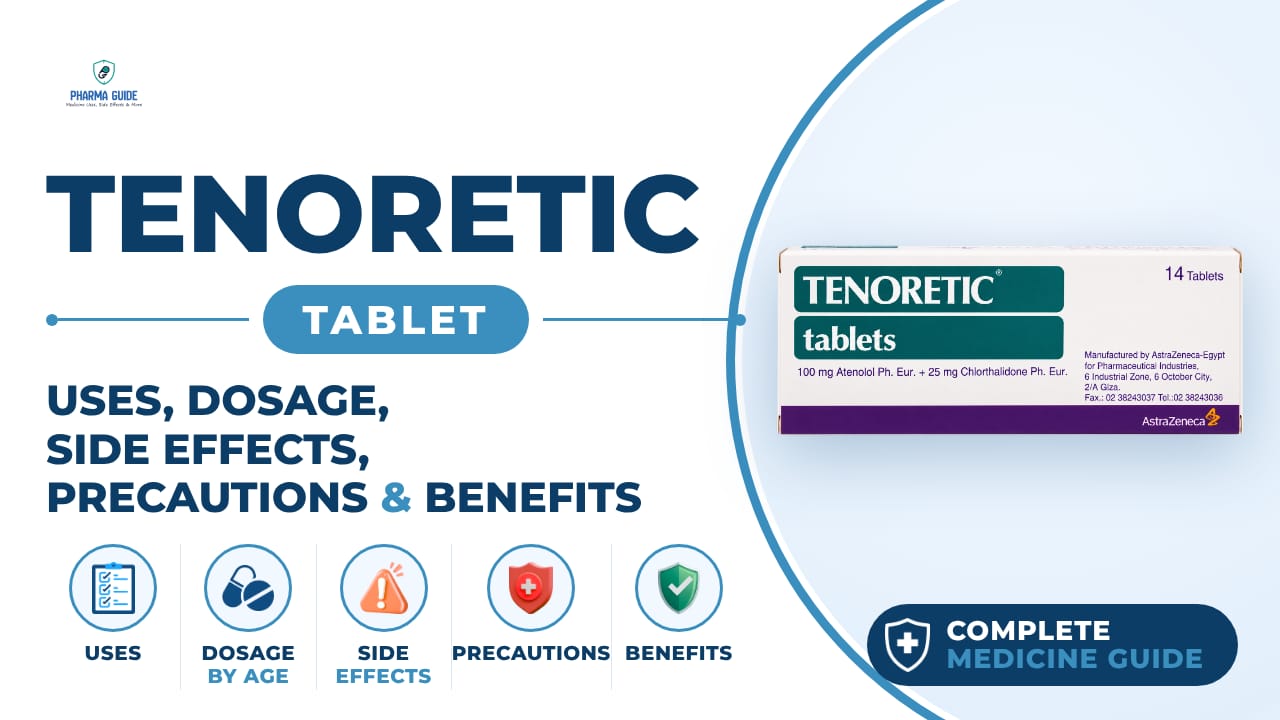
| Generic name | atenolol and chlorthalidone |
|---|---|
| Drug class | Beta blockers with thiazides |
| Forms | Tablet |
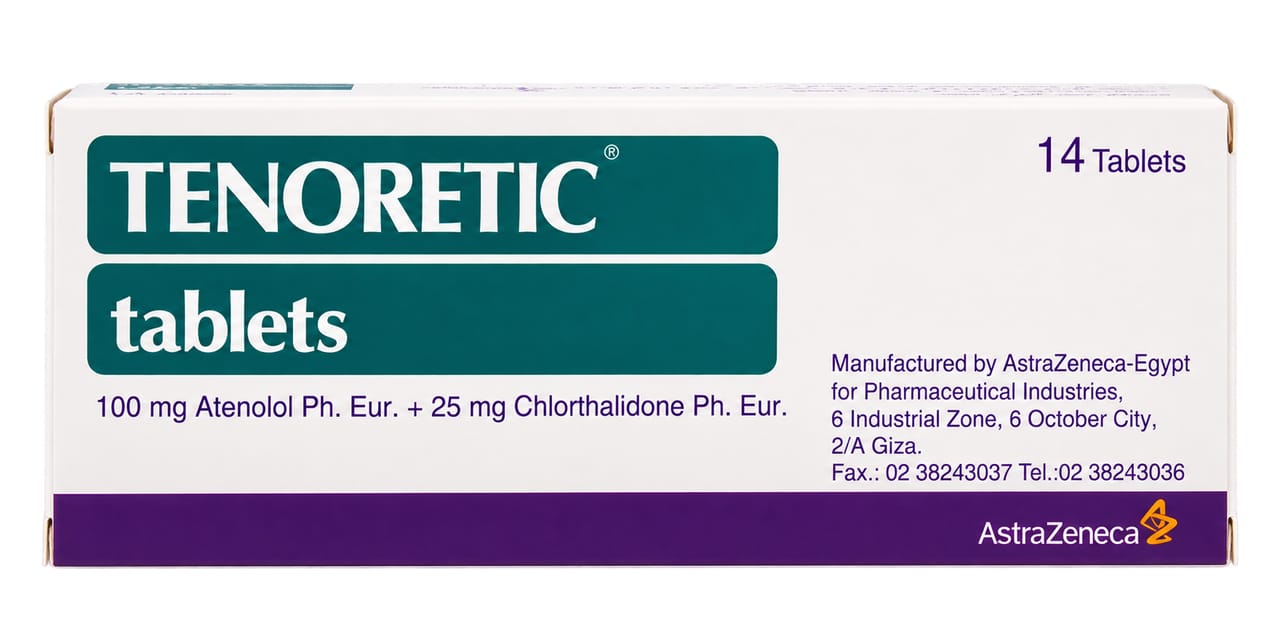
Quick overview
Tenoretic Tablet contains atenolol and chlorthalidone, two medicines combined to treat high blood pressure. Atenolol is a beta blocker and chlorthalidone is a diuretic (water pill); together they help control blood pressure better than one drug alone. It is taken once a day and may help lower the risk of stroke or heart attack by controlling blood pressure.
What is Tenoretic Tablet
Tenoretic is a combination medicine that contains two drugs, atenolol (a beta-blocker) and chlorthalidone (a water pill, or diuretic). It is used together because one drug alone may not control blood pressure well enough.
Tenoretic Tablet uses
- High blood pressure (hypertension)
- Lowering blood pressure to help reduce the risk of stroke or heart attack
Benefits of Tenoretic Tablet
- Combines two medications into one pill to help lower blood pressure better
- Only need to take once a day
- Can take with or without food
- Gets rid of extra fluids in your body
How Tenoretic Tablet works
Atenolol is a beta blocker that slows the heart rate and makes the heart beat with less force, lowering blood pressure. Chlorthalidone is a diuretic that helps the kidneys remove extra water and salt from the body, which also helps lower blood pressure.
Tenoretic Tablet dosage
Take this medicine exactly as your doctor has told you, usually once a day. Swallow the tablet with a drink of water. You can take it with or without food.
It is best to take this medication at least 4 hours before bedtime to avoid needing to wake up to urinate. Avoid drinking apple or orange juice within 4 hours of taking this medication unless your doctor says otherwise. If you also take cholesterol medicines such as cholestyramine or colestipol, take this medicine at least 2 hours before or 4 hours after them.
Keep taking this medicine even if you feel well, since high blood pressure often has no symptoms. It may take several weeks before you feel the full benefit of this medicine. Do not stop taking this medicine suddenly without talking to your doctor; it may need to be stopped gradually.
This medicine is not for use in children. Older adults may need a different starting dose than younger adults.
Use exactly as prescribed by your doctor or pharmacist.
Available forms and strengths
- Tablet
Side effects of Tenoretic Tablet
Common
- Slow heartbeats
- Feeling weak or tired
- Dizziness, drowsiness
- Numbness or tingling
- Pale skin, bruising or bleeding
- Depression
- Upset stomach, loss of appetite, constipation
- Cold hands and feet
- Diarrhoea
- Feeling sick (nausea)
- Dizziness when standing up too quickly
- Stomach irritation or cramps
- Skin that's more sensitive to the sun
- Muscle spasms
- Dry eye
- Skin rash
Serious
- New or worsening chest pain
- Slow or uneven heartbeats
- A light-headed feeling, like you might pass out
- Shortness of breath (even with mild exertion), swelling, rapid weight gain
- Cold feeling in your hands and feet
- Jaundice (yellowing of the skin or eyes)
- Low sodium level - headache, confusion, slurred speech, severe weakness, vomiting, loss of coordination, feeling unsteady
- Low potassium level - leg cramps, constipation, irregular heartbeats, fluttering in your chest, increased thirst or urination, numbness or tingling, muscle weakness or limp feeling
- Signs of allergic reaction: hives, difficult breathing, swelling of face, lips, tongue, or throat
- Heart block (abnormal heart beat, dizziness, tiredness, or fainting)
- Decrease in vision or eye pain, possible signs of fluid accumulation in the eye or increased eye pressure, which can lead to permanent vision loss if untreated
- Changes in personality (psychoses) or hallucinations
- Pancreatitis (inflammation of a gland behind the stomach)
- A reduced number of white blood cells
Warnings and precautions
- Do not take this medicine if you are pregnant, trying to become pregnant, or breastfeeding, as it could harm the unborn baby. It may not be safe to breastfeed while using this medicine; ask your doctor about any risks before breastfeeding.
- This medicine should not be used if you have problems with your kidneys, and your dose may need to be adjusted if you have kidney disease. Tell your doctor if you have liver problems, as this medicine can affect fluid and electrolyte levels which can be riskier with liver disease.
- This medicine is not likely to affect your ability to drive or use machines, but wait to see how it affects you first, and be careful if you feel dizzy or tired.
- Do not stop taking this medicine suddenly, as it can raise your risk of serious heart problems like chest pain or heart attack.
- You should not use this medicine if you have a serious heart problem such as heart block or a very slow heart rate, if you are unable to urinate, or if you are allergic to sulfa drugs.
- This medicine may hide the warning signs of low blood sugar, which is especially important for people with diabetes to know.
- If you have asthma, wheezing, or breathing problems, talk to your doctor before taking this medicine, as beta-blockers can tighten the airways.
- If you have diabetes or thyroid problems, this medicine may hide some warning symptoms, so tell your doctor about these conditions.
- If you need surgery, tell the surgical team you are taking this medicine, since it can affect blood pressure during anesthesia.
Storage
- Store at room temperature away from moisture, heat, and light.
- Do not store above 25°C. Store your tablets in the original package. Keep the blister strip in the carton to protect your medicine from light and moisture.
- Do not use your tablets after the expiry date stated on the blister strip and carton.
- Do not throw any medicine into wastewater or household waste; ask your pharmacist how to dispose of medicines you no longer use.
When to see a doctor
- Get emergency medical help right away if you have signs of an allergic reaction such as hives, difficulty breathing, or swelling of your face, lips, tongue, or throat.
- Call your doctor right away if you have new or worsening chest pain, slow or uneven heartbeats, feeling like you might faint, shortness of breath, swelling, rapid weight gain, or cold hands and feet.
- Get medical help right away if you have chest tightness, chest pain spreading to your arms and neck, shortness of breath, dizziness, and fatigue, as these can be signs of serious heart problems.
- If you experience a decrease in vision or eye pain, seek medical attention, as this could be a sign of a serious eye problem that can cause permanent vision loss if not treated.
- If you take more of this medicine than prescribed, talk to a doctor or go to a hospital right away and bring the medicine pack with you.
Alternatives
- Metoprolol
- Bisoprolol
- Chlorthalidone
- Atenolol
Watch the video
FAQs
What is Tenoretic Tablet used for?
Tenoretic Tablet is used to treat high blood pressure (hypertension) and to help lower the risk of stroke or heart attack by controlling blood pressure.
How does Tenoretic Tablet work?
Tenoretic contains atenolol, a beta blocker that slows the heart rate and makes the heart beat with less force, and chlorthalidone, a diuretic that helps the kidneys remove extra water and salt from the body, both of which help lower blood pressure.
How should I take Tenoretic Tablet?
Take it exactly as your doctor has told you, usually once a day, with or without food. It is best to take it at least 4 hours before bedtime to avoid needing to wake up to urinate.
Can I stop taking Tenoretic Tablet suddenly?
No, you should not stop taking this medicine suddenly without talking to your doctor, as it may need to be stopped gradually and sudden stopping can raise your risk of serious heart problems like chest pain or heart attack.
What are the common side effects of Tenoretic Tablet?
Common side effects include slow heartbeats, feeling weak or tired, dizziness, drowsiness, numbness or tingling, upset stomach, nausea, diarrhoea, cold hands and feet, and skin that's more sensitive to the sun.
General information, not medical advice
Your prescriber and the leaflet in your pack know your situation. This page does not.
- Follow your prescriber and the leaflet
- Don't start, stop, or change a dose on your own
- Doses and warnings differ by country and product
Sources
Video
Related medicines
Corzide Tablet: Uses, Dosage, Side Effects, Precautions and Alternates
Beta blockers with thiazides
Corzide Tablet combines nadolol and bendroflumethiazide to treat high blood pressure. Learn about its uses, dosage, side effects, and precautions.

Injectafer Injection: Uses, Dosage, Side Effects, Precautions and Alternates
Iron products
Injectafer (ferric carboxymaltose) treats iron deficiency anemia and heart failure-related iron deficiency via IV. Learn uses, dosage, side effects, and