
Safety
General information, not medical advice
Your prescriber and the leaflet in your pack know your situation. This page does not.
- Follow your prescriber and the leaflet
- Don't start, stop, or change a dose on your own
- Doses and warnings differ by country and product
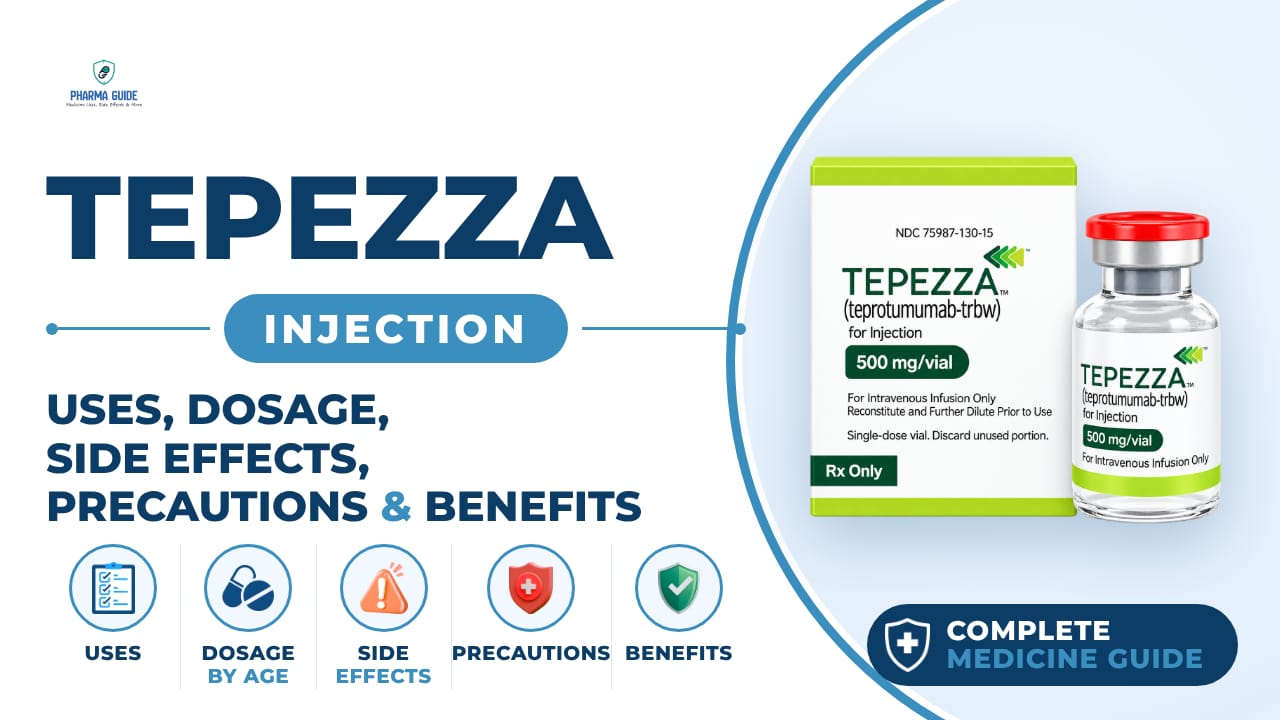
Tepezza Injection: Uses, Dosage, Side Effects, Precautions and Alternates
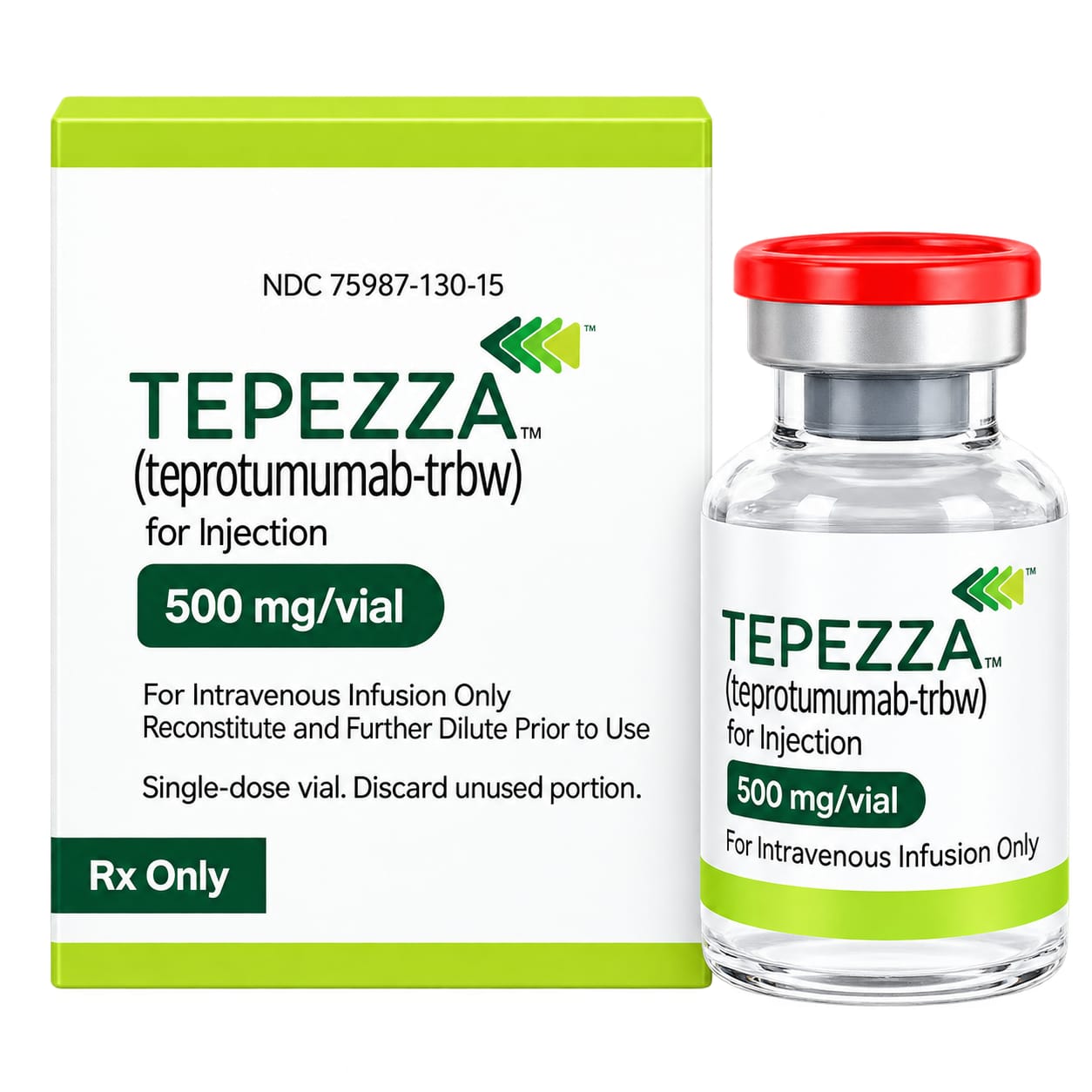
| Generic name | teprotumumab |
|---|---|
| Drug class | Insulin-like growth factor-1 receptor (IGF-1R) inhibitor; human IGF-1R-directed antibody |
| Forms | Lyophilized powder for concentrate for solution for intravenous infusion, 500 mg per single-dose vial |
Quick overview
Tepezza Injection (teprotumumab) is a biologic medicine given by IV infusion to treat Thyroid Eye Disease (TED), a condition that can cause eye bulging, double vision, swelling, redness, pain, and pressure behind the eyes. It is used in adults with moderate to severe active TED, and according to the US label, regardless of disease activity or duration. Tepezza works by blocking a protein called IGF-1R to reduce inflammation and swelling behind the eyes. It is given as a series of IV infusions by a healthcare professional, not self-administered.
What is Tepezza Injection
Tepezza is a biologic medicine given by IV infusion to treat Thyroid Eye Disease (TED), a condition that can cause eye bulging, double vision, swelling, redness, pain, and pressure behind the eyes. The generic name is teprotumumab, and it belongs to the drug class known as insulin-like growth factor-1 receptor (IGF-1R) inhibitors; it is a human IGF-1R-directed antibody.
Tepezza Injection uses
- Treatment of moderate to severe active Thyroid Eye Disease (TED) in adults
- Treatment of Thyroid Eye Disease regardless of disease activity or duration (US label)
Benefits of Tepezza Injection
- In clinical studies, most patients treated with Tepezza had a meaningful reduction in eye bulging (proptosis) compared to placebo
- Many patients also had improvement in double vision (diplopia)
- Improvement in eye bulging was seen as early as 6 weeks and continued to improve over 24 weeks
How Tepezza Injection works
Tepezza attaches to a protein called IGF-1R, which is found at higher levels in the tissues around the eyes in people with thyroid eye disease. By blocking this protein, the medicine helps reduce inflammation and swelling of the muscles and fatty tissue behind the eyes, easing symptoms like eye bulging, double vision, redness, and discomfort.
Tepezza Injection dosage
Tepezza is given by a healthcare professional as an infusion into a vein (IV), not as an injection you give yourself. It is usually given once every three weeks for a total of 8 infusions. The first two infusions are usually given over about 90 minutes; later infusions may be shortened to 60 minutes if earlier ones were well tolerated, but will stay at 90 minutes if they were not well tolerated.
Tepezza must not be given as a quick push or bolus, and should not be infused together with other medicines in the same line. Before each treatment, your healthcare professional will check your blood sugar and hearing. Women who can become pregnant will have a pregnancy test before starting treatment.
If you miss an infusion, your healthcare professional will decide when to give your next dose, aiming to keep infusions three weeks apart.
| Age group | Dose |
|---|---|
| Under 18 years | Safety and effectiveness have not been established |
| 18–64 years | 10 mg/kg IV for the first infusion, then 20 mg/kg IV every 3 weeks for 7 additional infusions |
Available forms and strengths
- Lyophilized powder for concentrate for solution for intravenous infusion, 500 mg per single-dose vial
Side effects of Tepezza Injection
Common
- Muscle spasms
- Hair loss (alopecia)
- Diarrhea
- Nausea
- High blood sugar (hyperglycemia)
- Hearing impairment
- Fatigue/tiredness
- Change in sense of taste (dysgeusia)
- Dry skin
- Headache
- Weight decrease
- Nail disorders
- Ear discomfort (pressure, fullness, or feeling of clogged ears)
- Menstrual disorders (missed periods, spotting, painful periods)
Serious
- Severe hearing impairment, including hearing loss, which may be permanent
- Diabetic ketoacidosis (DKA)
- Hyperosmolar hyperglycemic state (HHS)
- Inflammatory bowel disease flare, including in people with no prior history of IBD
- Serious infusion reactions (difficulty breathing, chest pain, fast heartbeat, dizziness, loss of consciousness, flushing or rash, chills, swelling of face/tongue/throat)
- Bowel perforation
- Encephalopathy
Warnings and precautions
- Some people treated with Tepezza have developed diabetic ketoacidosis or hyperosmolar hyperglycemic state, both serious, life-threatening conditions linked to high blood sugar. Your doctor needs to know if you have diabetes or are at risk, and your blood sugar should be well controlled before and during treatment.
- Tepezza can cause serious hearing problems, including permanent hearing loss in some cases. Your hearing will be tested before, during, and after treatment.
- Tepezza can cause infusion reactions, which may happen during treatment or within about 90 minutes afterward. Symptoms include feeling hot, fast heartbeat, trouble breathing, headache, and muscle pain.
- If you have inflammatory bowel disease (such as Crohn's disease or ulcerative colitis), Tepezza may cause your symptoms to flare up, even if you've never had IBD before.
- Tepezza must not be used during pregnancy because it may cause serious harm to an unborn baby.
- Tepezza must not be used in pregnancy. It may harm an unborn baby, so women who can become pregnant need a pregnancy test before starting and should use effective birth control before, during, and for 6 months after finishing treatment.
- Tell your doctor right away if you become pregnant during treatment.
- It is not known if Tepezza passes into breast milk or if it could harm a nursing baby, so as a precaution it should not be used while breastfeeding.
- No specific routine kidney-based dose adjustment is established; significant renal disease should be reviewed by the treating specialist.
- It isn't known how liver problems affect this medicine, since this hasn't been studied.
- How alcohol use interacts with this medicine has not been studied.
- This medicine can cause tiredness and headaches, which may affect your ability to drive or use machinery safely. Avoid driving or operating machines if you have these symptoms.
Storage
- Refrigerate at 2°C to 8°C in original carton until time of use to protect from light.
- Do not freeze.
- Keep out of reach and sight of children.
- The product does not contain any preservative. The combined storage time of reconstituted Tepezza solution in the vial and the diluted solution in the infusion bag containing 0.9% Sodium Chloride Injection is a total of 4 hours at room temperature 20°C to 25°C or up to 48 hours under refrigerated conditions 2°C to 8°C protected from light. If refrigerated prior to administration, allow the diluted solution to reach room temperature prior to infusion.
When to see a doctor
- Get medical help right away if you notice signs of very high blood sugar, such as being extremely thirsty, needing to urinate a lot, dark urine, nausea, vomiting, stomach pain, extreme tiredness, trouble thinking clearly, fruity-smelling breath, unexpected weight loss, or passing out.
- Tell your healthcare team right away if you notice any changes in your hearing, such as ringing in the ears, muffled hearing, or hearing loss.
- Get emergency help if you have signs of a serious allergic or infusion reaction, such as hives, trouble breathing, swelling of your face, lips, tongue or throat, chest pain, fast heartbeat, dizziness, or passing out.
- Call your doctor right away if you have diarrhea (with or without blood), stomach cramps, sudden bowel movements, loss of bowel control, a feeling you can't fully empty your bowels, or rectal bleeding, as these could be signs of bowel disease flare.
- Tell your healthcare professional right away if you become pregnant while being treated with Tepezza.
Alternatives
- Intravenous corticosteroid therapy
- Oral corticosteroid therapy
- Orbital radiotherapy
Watch the video
FAQs
What is Tepezza Injection used for?
Tepezza is used to treat moderate to severe active Thyroid Eye Disease (TED) in adults, and according to the US label, regardless of disease activity or duration.
How is Tepezza given?
Tepezza is given by a healthcare professional as an IV infusion, not self-administered. It is usually given once every three weeks for a total of 8 infusions, with the first two infusions given over about 90 minutes.
How does Tepezza work?
Tepezza attaches to a protein called IGF-1R, found at higher levels in tissues around the eyes in people with thyroid eye disease, helping reduce inflammation and swelling behind the eyes.
What are the serious side effects of Tepezza?
Serious side effects include severe hearing impairment (which may be permanent), diabetic ketoacidosis, hyperosmolar hyperglycemic state, inflammatory bowel disease flares, serious infusion reactions, bowel perforation, and encephalopathy.
Can Tepezza be used during pregnancy?
No, Tepezza must not be used during pregnancy because it may cause serious harm to an unborn baby. Women who can become pregnant need a pregnancy test before starting and should use effective birth control before, during, and for 6 months after finishing treatment.
General information, not medical advice
Your prescriber and the leaflet in your pack know your situation. This page does not.
- Follow your prescriber and the leaflet
- Don't start, stop, or change a dose on your own
- Doses and warnings differ by country and product
Sources
Video
Related medicines

Injectafer Injection: Uses, Dosage, Side Effects, Precautions and Alternates
Iron products
Injectafer (ferric carboxymaltose) treats iron deficiency anemia and heart failure-related iron deficiency via IV. Learn uses, dosage, side effects, and

Gliclazide Tablet: Uses, Dosage, Side Effects, Precautions and Alternates
Sulfonylurea (hypoglycemic/antidiabetic agent)
Gliclazide Tablet is a sulfonylurea for type 2 diabetes that boosts insulin release. Learn about dosage, side effects, warnings, and precautions.