
Safety
General information, not medical advice
Your prescriber and the leaflet in your pack know your situation. This page does not.
- Follow your prescriber and the leaflet
- Don't start, stop, or change a dose on your own
- Doses and warnings differ by country and product
Terazosin Capsule: Uses, Dosage, Side Effects, Precautions and Alternates
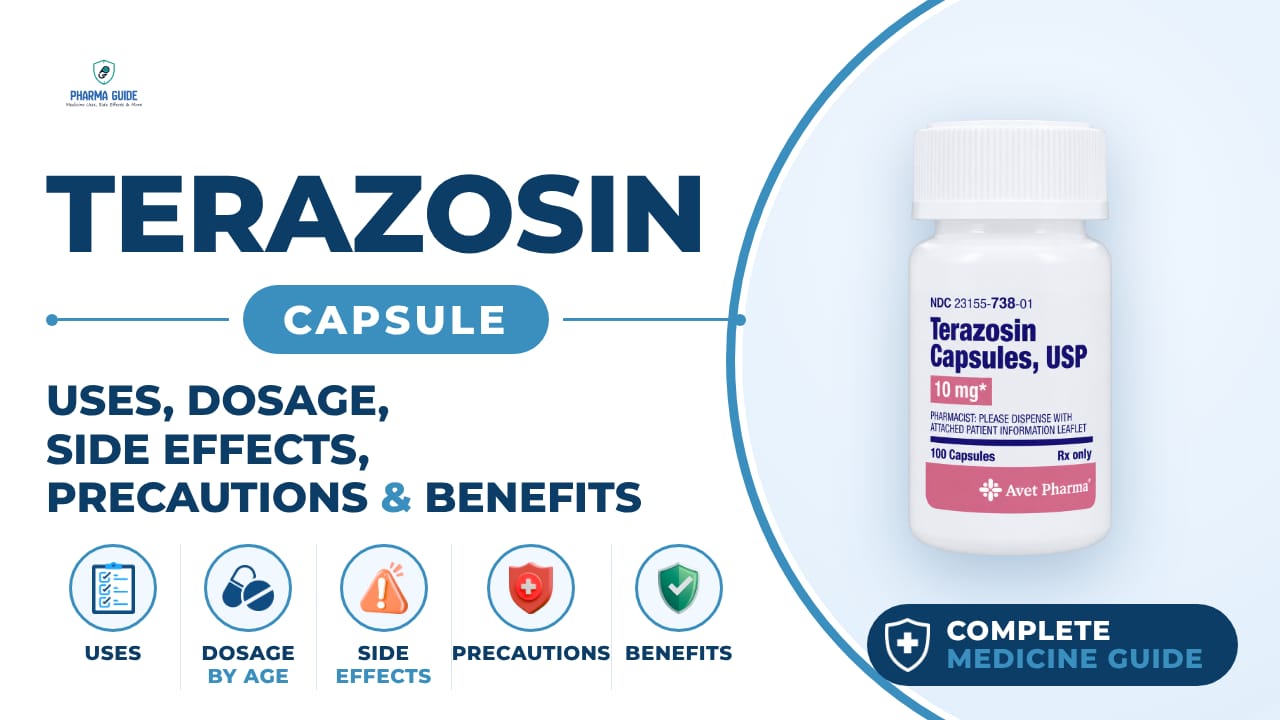
| Generic name | Terazosin |
|---|---|
| Drug class | Alpha-1 blocker (alpha-adrenergic blocker) |
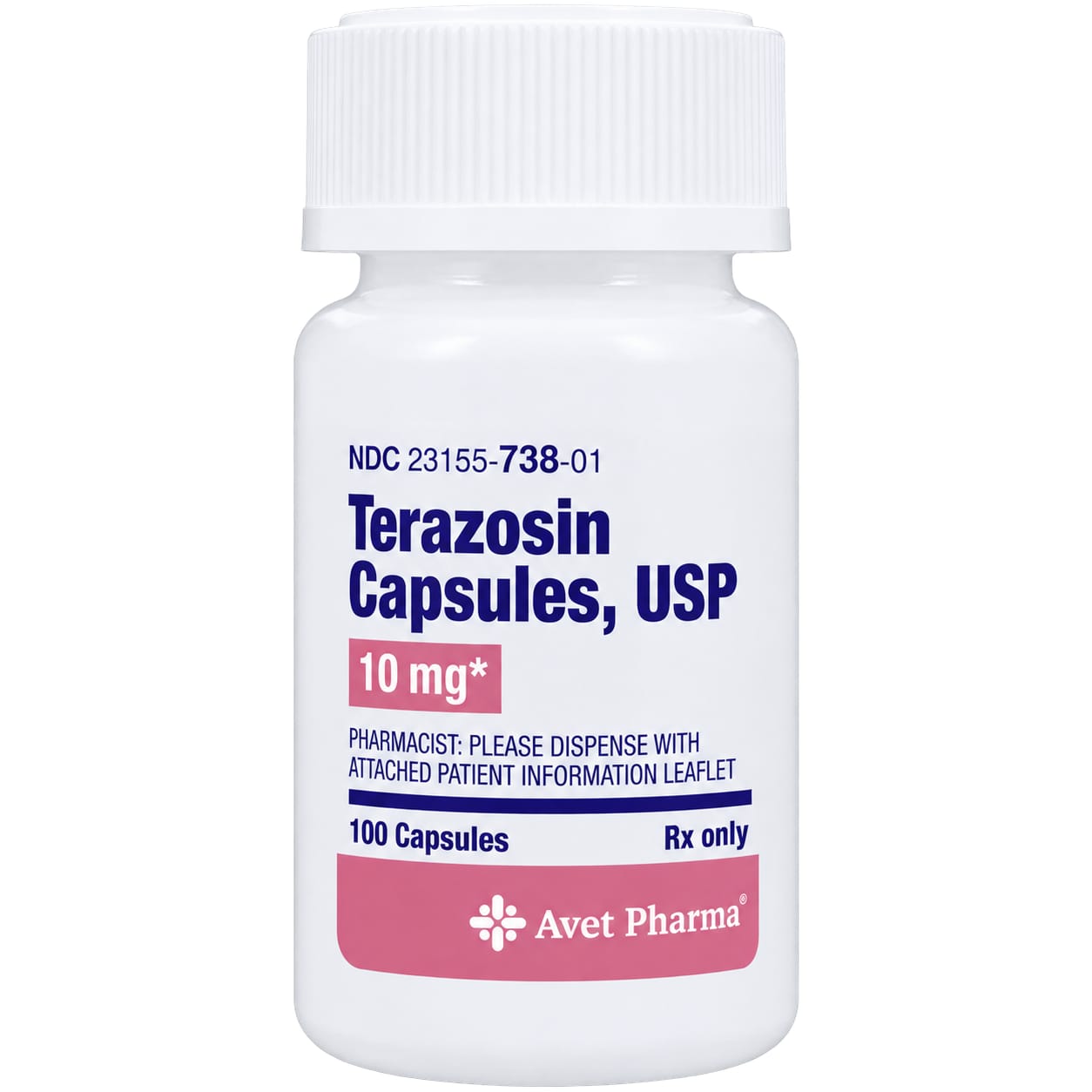
| Forms | Capsule (1 mg, 2 mg, 5 mg, 10 mg), Oral solution (Tezruly brand) |
Quick overview
Terazosin Capsule is a prescription alpha-1 blocker used to treat symptoms of an enlarged prostate (benign prostatic hyperplasia) in men and to treat high blood pressure, either alone or with other blood pressure medicines. It works by relaxing smooth muscle in the prostate, bladder neck, and blood vessels, making it easier for urine and blood to flow. It is usually taken once daily, typically at bedtime, with dosing adjusted gradually by a doctor.
What is Terazosin Capsule
Terazosin is a prescription medicine called an alpha-1 blocker. It relaxes certain muscles in blood vessels and in the prostate and bladder neck, making it easier for blood to flow and for urine to pass.
Terazosin Capsule uses
- Treating symptoms of an enlarged prostate (benign prostatic hyperplasia, BPH) in men
- Treating high blood pressure (hypertension), alone or combined with other blood pressure medicines
Benefits of Terazosin Capsule
- Helps improve urine flow in benign prostatic hyperplasia (BPH)
- Reduces difficulty starting urination
- Can reduce frequent or urgent urination
- Helps relax smooth muscle in the prostate and bladder neck
- Can also help lower high blood pressure in appropriate patients
How Terazosin Capsule works
Terazosin blocks alpha-1 receptors, which relaxes smooth muscle in the prostate, bladder neck, and blood vessels. This eases urine flow in men with an enlarged prostate and lowers blood pressure by widening blood vessels.
Terazosin Capsule dosage
Take once a day, usually at bedtime, to reduce the chance of feeling dizzy or faint. It can be taken with or without food. Take it every day as prescribed; do not share this medicine with anyone else. If you miss doses for several days in a row, contact your doctor before restarting, as you may need to begin again at the lowest starting dose. If treatment is stopped for several days or longer, it should be restarted using the initial low dose. Effects on BPH symptoms are usually noticeable within 2 to 4 weeks of starting treatment. In studies, after the first dose, later doses were generally given in the morning.
| Age group | Dose |
|---|---|
| 18–64 years | Usually starts at 1 mg once daily, typically at bedtime; adjusted gradually by a clinician |
| 65 years and older | Usually starts at 1 mg once daily with cautious titration because dizziness and low blood pressure may be more likely |
Available forms and strengths
- Capsule (1 mg, 2 mg, 5 mg, 10 mg)
- Oral solution (Tezruly brand)
Side effects of Terazosin Capsule
Common
- Dizziness
- Weakness/tiredness
- Headache
- Drowsiness/sleepiness
- Stuffy or runny nose
- Nausea
- Blurred vision
- Swelling (puffiness) of feet, hands, or legs
- Weight gain
- Fast or pounding heartbeat (palpitations)
- Back or joint/limb pain
- Feeling nervous
- Shortness of breath
Serious
- Sudden drop in blood pressure causing dizziness, fainting, or feeling like your heart is pounding, especially after the first dose or a dose increase
- Painful erection lasting more than 4 hours (priapism) that does not go away with sex or masturbation
- Eye problems during cataract surgery (Intraoperative Floppy Iris Syndrome)
- Allergic reactions, including swelling of the face, lips, tongue, or throat, or difficulty breathing
- Fast or irregular heartbeat, chest pain
- Fainting
Warnings and precautions
- Terazosin can cause a sudden, serious drop in blood pressure (especially after the first dose or an increase in dose), leading to dizziness, fainting, or a racing heartbeat. Always start with the lowest dose and avoid hazardous activities until you know how the medicine affects you.
- Rarely, terazosin can cause a painful erection lasting for hours that is not relieved by sex. This needs urgent medical treatment to avoid permanent damage.
- If you have cataract surgery planned, tell your eye surgeon you take terazosin, as it can cause a condition affecting the iris during surgery.
- Because BPH and prostate cancer can cause similar symptoms, your doctor should check for prostate cancer before starting this medicine.
- Terazosin is not recommended during pregnancy unless your doctor decides the benefit is greater than the risk, since there isn't enough research in pregnant women to know if it's safe.
- It isn't known whether terazosin passes into breast milk, so caution is advised if you are breastfeeding. Talk to your doctor about the safest way to feed your baby.
- Impaired kidney function does not significantly affect how the body clears terazosin, and dose adjustment is generally not needed, including during dialysis.
- Drinking alcohol can make certain side effects of terazosin, such as dizziness, worse.
- Avoid driving or doing anything hazardous for about 12 hours after your first dose, after a dose increase, or after restarting treatment, since terazosin can make you dizzy or drowsy.
Storage
- Store at 20°-25°C (68°-77°F) (see USP Controlled Room Temperature)
- Protect from light and moisture
- Keep Terazosin Capsules and all medicines out of the reach of children
- Dispense in a tight, light-resistant container as defined in the USP
When to see a doctor
- Get medical help right away if you have a painful erection lasting 4 hours or more.
- Call your doctor right away if you have fast or pounding heartbeats, fluttering in your chest, or feel like you might pass out.
- Seek emergency care if you have signs of a severe allergic reaction, such as trouble breathing or swelling of the face, lips, tongue, or throat.
- If you fall and hit your head or are in pain after a fall, seek medical care right away, since there could be internal injury, especially if you take blood thinners.
Alternatives
- Tamsulosin
- Doxazosin
- Alfuzosin
Watch the video
FAQs
What is Terazosin Capsule used for?
It is used to treat symptoms of an enlarged prostate (benign prostatic hyperplasia) in men and to treat high blood pressure, either alone or with other blood pressure medicines.
How should Terazosin Capsule be taken?
It is usually taken once a day, typically at bedtime, with or without food, to reduce the chance of feeling dizzy or faint. If doses are missed for several days, contact your doctor before restarting, as you may need to begin again at the lowest starting dose.
How long does it take for Terazosin Capsule to work for BPH symptoms?
Effects on BPH symptoms are usually noticeable within 2 to 4 weeks of starting treatment.
What are the serious side effects of Terazosin Capsule?
Serious side effects include a sudden drop in blood pressure causing dizziness or fainting (especially after the first dose or a dose increase), a painful erection lasting more than 4 hours, eye problems during cataract surgery, allergic reactions, and fast or irregular heartbeat.
Can I drink alcohol while taking Terazosin Capsule?
Drinking alcohol can make certain side effects of terazosin, such as dizziness, worse.
General information, not medical advice
Your prescriber and the leaflet in your pack know your situation. This page does not.
- Follow your prescriber and the leaflet
- Don't start, stop, or change a dose on your own
- Doses and warnings differ by country and product
Sources
- DailyMed - Jubilant Cadista Pharmaceuticals Inc. Terazosin Capsules, USP prescribing information and patient information leaflet, revised 07/2025
- GoodRx - Terazosin drug page, reviewed May 2, 2023
- Drugs.com - Terazosin drug information page, last updated August 26, 2024
Video
Related medicines

Injectafer Injection: Uses, Dosage, Side Effects, Precautions and Alternates
Iron products
Injectafer (ferric carboxymaltose) treats iron deficiency anemia and heart failure-related iron deficiency via IV. Learn uses, dosage, side effects, and

Gliclazide Tablet: Uses, Dosage, Side Effects, Precautions and Alternates
Sulfonylurea (hypoglycemic/antidiabetic agent)
Gliclazide Tablet is a sulfonylurea for type 2 diabetes that boosts insulin release. Learn about dosage, side effects, warnings, and precautions.