
Safety
General information, not medical advice
Your prescriber and the leaflet in your pack know your situation. This page does not.
- Follow your prescriber and the leaflet
- Don't start, stop, or change a dose on your own
- Doses and warnings differ by country and product
Tetracycline Capsule: Uses, Dosage, Side Effects, Precautions and Alternates
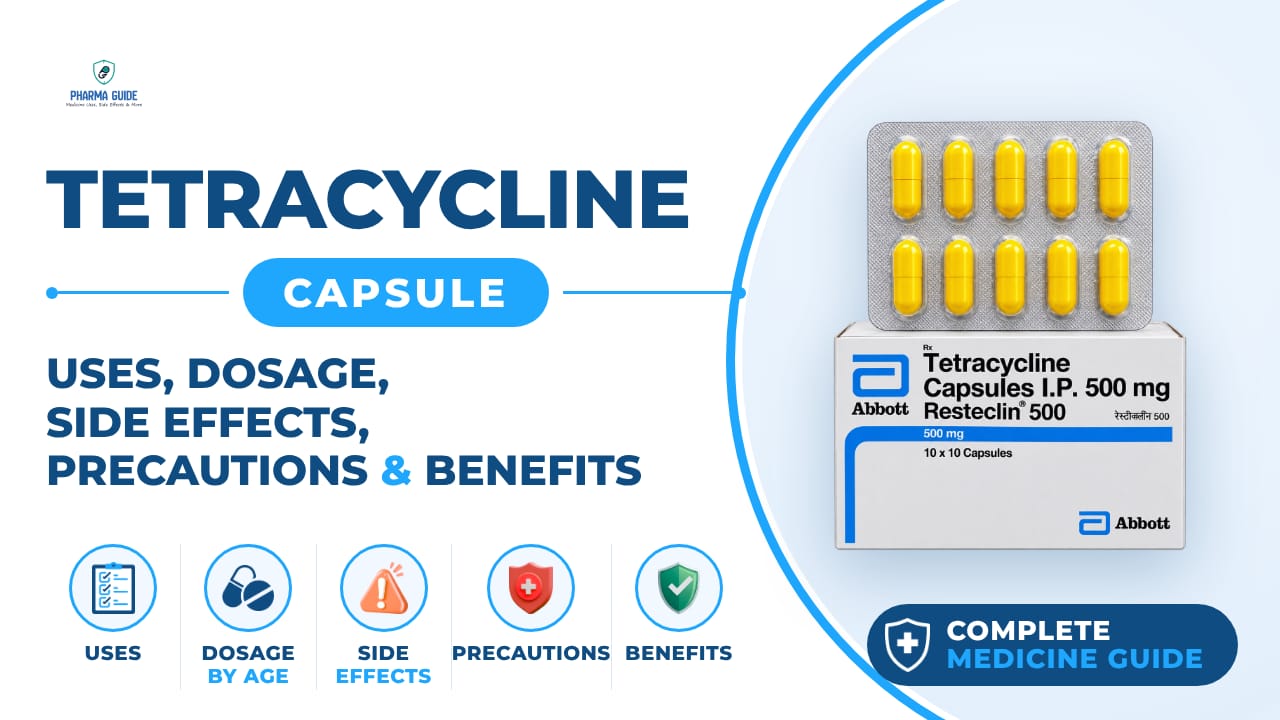
| Generic name | Tetracycline hydrochloride |
|---|---|
| Drug class | Tetracyclines |
| Forms | Capsule, Oral suspension (liquid) |
Quick overview
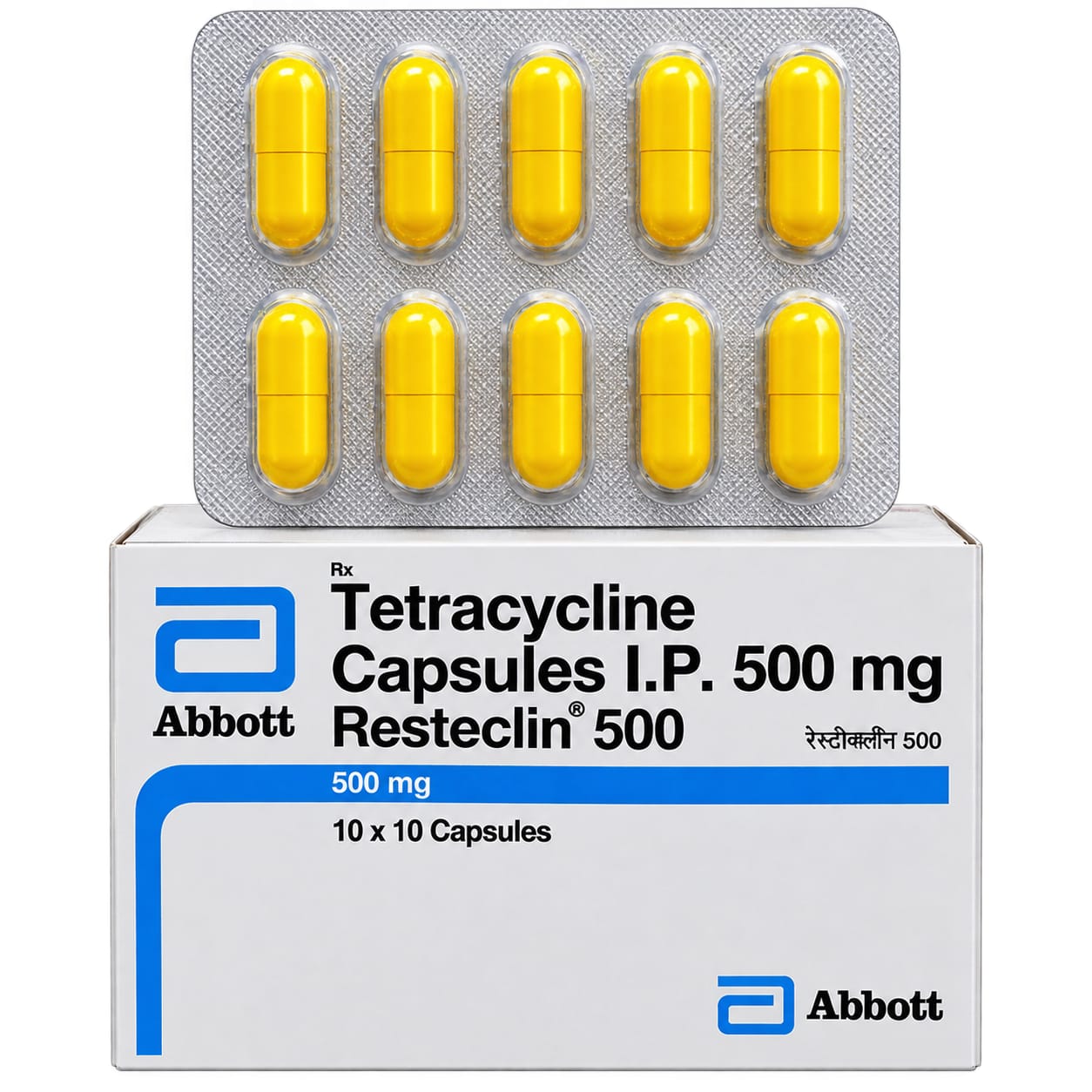
Tetracycline Capsule (tetracycline hydrochloride) is an antibiotic in the tetracyclines drug class, used to treat many different bacterial infections throughout the body. It does not work against viral infections such as the flu or a common cold. It stops bacteria from growing and helps kill them, and it may be used as an alternative when penicillin cannot be used.
What is Tetracycline Capsule
Tetracycline is an antibiotic that fights infection caused by bacteria. It is used to treat many different bacterial infections in the body. It does not work against viral infections such as the flu or a common cold.
Tetracycline Capsule uses
- Treats many different bacterial infections of the skin, intestines, respiratory tract, urinary tract, genitals, lymph nodes, and other body systems
- Treats severe acne as an added therapy
- Treats sexually transmitted infections such as syphilis, gonorrhea, or chlamydia
- Treats infections caught from direct contact with infected animals or contaminated food
- Used when penicillin or another antibiotic cannot be used for serious infections such as anthrax, Listeria, Clostridium, and Actinomyces
- Treats infections caused by rickettsia, such as Rocky Mountain spotted fever, typhus, and Q fever
- Treats respiratory tract infections, urinary tract infections, and skin and soft tissue infections caused by susceptible bacteria
Benefits of Tetracycline Capsule
- Helps clear bacterial infections by stopping the growth of and killing bacteria
- Can be used as an alternative when penicillin cannot be used
How Tetracycline Capsule works
Tetracycline stops bacteria from growing and helps kill them, which reduces the infection in your body. It does this by blocking the bacteria from making the proteins they need.
Tetracycline Capsule dosage
Take tetracycline exactly as it was prescribed. Do not take more or less, or for longer than recommended. Take tetracycline on an empty stomach, at least 1 hour before or 2 hours after a meal. Do not take this medicine with milk or other dairy products unless your doctor has told you to, because dairy can make it harder for your body to absorb the medicine. Take the capsule with enough fluid to wash it down and reduce the risk of throat irritation and ulcers.
Do not take iron supplements, multivitamins, calcium supplements, antacids, or laxatives for at least 2 hours before or 2 hours after taking tetracycline. Shake the oral suspension (liquid) well just before measuring a dose, and use a proper dose-measuring device. Use this medicine for the full prescribed length of time, even if you start to feel better, so the infection clears fully and to lower the risk of resistant bacteria. Do not share this medicine with another person. If you need surgery, tell the surgeon ahead of time that you are using tetracycline.
| Age group | Dose |
|---|---|
| Under 8 years | Not recommended |
| 18 years and older | 500 mg, 2 times daily |
| Adults — severe infection | 500 mg, 4 times daily |
Available forms and strengths
- Capsule
- Oral suspension (liquid)
Side effects of Tetracycline Capsule
Common
- Nausea
- Vomiting
- Diarrhea
- Upset stomach or indigestion and heartburn
- Loss of appetite
- White patches or sores inside your mouth or on your lips
- Swollen tongue, black or hairy tongue
- Trouble swallowing
- Sore throat
- Sores or swelling in the rectal or genital area
- Vaginal itching or discharge
- Increased sensitivity to sunlight
- Hives
- Discoloration of the nails
- Stomach pain
Serious
- Signs of an allergic reaction: hives, difficult breathing, swelling of your face, lips, tongue, or throat
- Severe blistering, peeling, and red skin rash (exfoliative dermatitis)
- Fever, chills, body aches, flu symptoms
- Pale or yellowed skin, easy bruising or bleeding
- Any signs of a new infection
- Watery or bloody diarrhea
- Permanent tooth discoloration in children under 8 years
- Increased pressure inside the skull (headache, blurred vision, double vision, vision loss)
- Liver damage (jaundice, dark urine, light-colored stools, abdominal pain)
- Blood disorders such as anemia, low platelets, or low white blood cells
- Pericarditis (sharp chest pain, cough, swelling, shortness of breath)
Warnings and precautions
- Children younger than 8 years old should not take this medicine because it can cause permanent tooth discoloration and can affect a child's growth.
- Do not take this medicine after the expiration date. Expired tetracycline can cause a dangerous syndrome resulting in kidney damage.
- Avoid exposure to sunlight or artificial UV rays. This medicine can make your skin more sensitive to sunlight and cause sunburn. Use sunscreen and wear protective clothing if you must be in the sun.
- This medicine can make birth control pills less effective. Ask your doctor about using a non-hormonal birth control such as a condom or diaphragm with spermicide.
- Antibiotic-associated diarrhea can happen, ranging from mild to severe. If you get watery or bloody diarrhea, call your doctor and do not use anti-diarrhea medicine unless told to.
- Increased pressure inside the skull can occur. If you have headache, blurred vision, double vision, or vision loss, get an eye check promptly. Avoid taking isotretinoin at the same time.
- Do not use this medicine if you are allergic to tetracycline or similar medicines such as demeclocycline, doxycycline, minocycline, or tigecycline.
- Do not use during pregnancy unless it is absolutely necessary.
- Taking it during pregnancy can harm the unborn baby and cause permanent tooth discoloration later in the baby's life. Tell your doctor if you are pregnant or become pregnant while using this medicine.
- Tetracycline passes into breast milk and may affect bone and tooth development in a nursing baby. Do not breast-feed while taking tetracycline without telling your doctor.
- Tell your doctor if you have kidney disease. It should not be used in people with severe kidney disease. If kidney function is impaired, even usual doses may build up in the body and cause possible liver toxicity, so lower doses may be needed.
- Tell your doctor if you have liver disease. It should not be used in people with severe liver disease. Liver damage and liver failure have been seen in people receiving tetracycline.
Storage
- Store this medication at room temperature away from moisture and heat.
- Store at room temperature; keep in tight, light-resistant containers.
- Throw away any unused tetracycline after the expiration date on the label has passed, because expired tetracycline can cause kidney damage.
- Keep this and all medicines out of the reach of children.
When to see a doctor
- Get emergency medical help if you have signs of an allergic reaction such as hives, difficult breathing, or swelling of your face, lips, tongue, or throat.
- Call your doctor at once if you have severe blistering, peeling, and red skin rash; fever, chills, body aches, or flu symptoms; pale or yellowed skin, easy bruising or bleeding; or any signs of a new infection.
- In case of an overdose, seek emergency medical attention or call your local poison control center.
- If you have diarrhea that is watery or bloody, call your doctor and do not use anti-diarrhea medicine unless your doctor tells you to.
Alternatives
- Augmentin
- Amoxicillin and clavulanate potassium
- Ala-Tet
- Brodspec
- Panmycin
- Sumycin
- Tetracap
Watch the video
FAQs
What is Tetracycline Capsule used for?
It treats many bacterial infections including skin, respiratory, urinary tract, and genital infections, severe acne, sexually transmitted infections like syphilis and chlamydia, and conditions such as Rocky Mountain spotted fever and typhus.
How should I take Tetracycline Capsule?
Take it exactly as prescribed on an empty stomach, at least 1 hour before or 2 hours after meals, with enough fluid to wash it down. Avoid dairy products and do not take iron, calcium, antacids, or laxatives within 2 hours of a dose.
Can children take Tetracycline Capsule?
No, children younger than 8 years old should not take this medicine because it can cause permanent tooth discoloration and affect a child's growth.
What are the serious side effects of Tetracycline Capsule?
Serious side effects include allergic reactions, severe skin rash, liver damage, blood disorders, increased pressure inside the skull, pericarditis, and watery or bloody diarrhea.
Can Tetracycline Capsule be taken during pregnancy?
No, it should not be used during pregnancy unless absolutely necessary, as it can harm the unborn baby and cause permanent tooth discoloration later in life.
General information, not medical advice
Your prescriber and the leaflet in your pack know your situation. This page does not.
- Follow your prescriber and the leaflet
- Don't start, stop, or change a dose on your own
- Doses and warnings differ by country and product
Sources
- Drugs.com - Tetracycline (https://www.drugs.com/tetracycline.html), medically reviewed by Melisa Puckey, BPharm, last updated Feb 29, 2024
- Tetracycline Hydrochloride Capsule - Actavis Pharma, Inc. / Teva Pharmaceuticals (FDA label), Rev. B 4/2025
- Tetracycline Hydrochloride Capsules Product Monograph - AA Pharma Inc., Date of Authorization 2026-03-17
Video
Related medicines
Adoxa Tablet: Uses, Dosage, Side Effects, Precautions and Alternates
Tetracyclines
Adoxa Tablet is a doxycycline antibiotic used for acne, infections, rosacea bumps, and malaria prevention. Learn uses, dosage, side effects, and precautions.
Acticlate Tablet: Uses, Dosage, Side Effects, Precautions and Alternates
Tetracyclines
Acticlate Tablet (doxycycline hyclate) treats bacterial infections, STIs, and acne, and prevents malaria. Learn uses, dosage, side effects, and precautions.