
Safety
General information, not medical advice
Your prescriber and the leaflet in your pack know your situation. This page does not.
- Follow your prescriber and the leaflet
- Don't start, stop, or change a dose on your own
- Doses and warnings differ by country and product
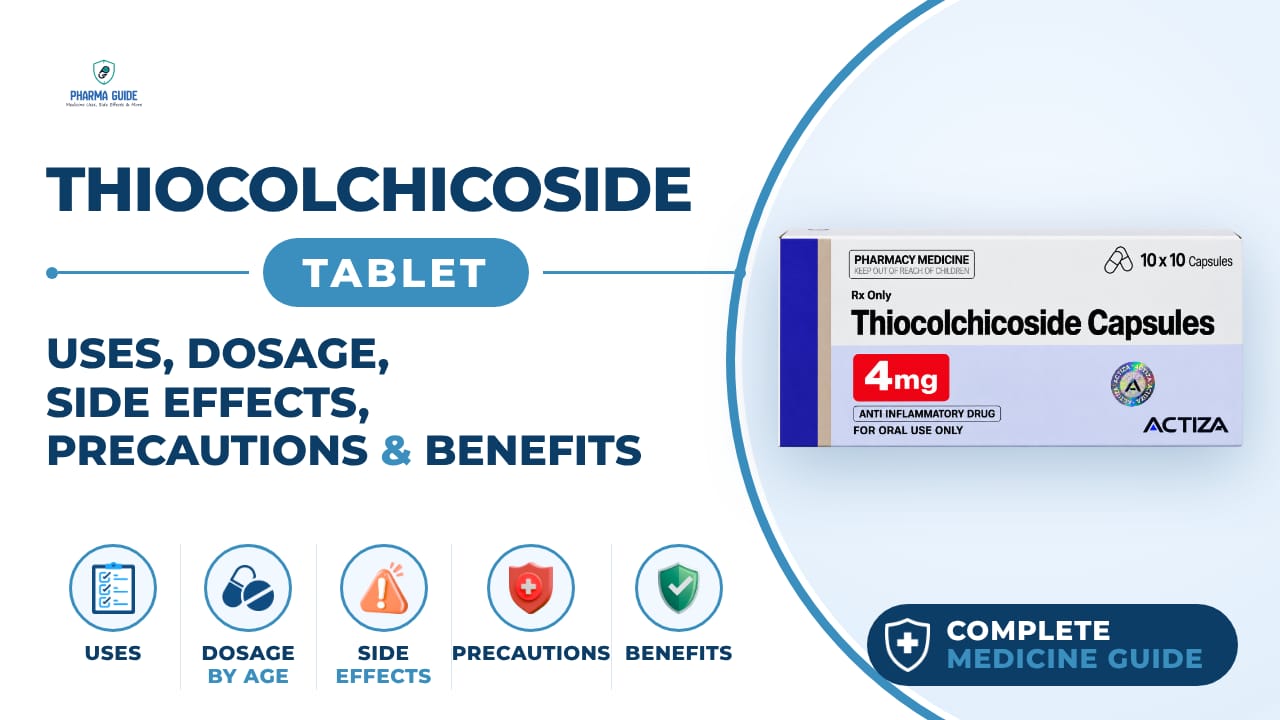
Thiocolchicoside Tablet: Uses, Dosage, Side Effects, Precautions and Alternates
| Generic name | Thiocolchicoside |
|---|---|
| Drug class | Muscle relaxant, anti-inflammatory, and analgesic drug |
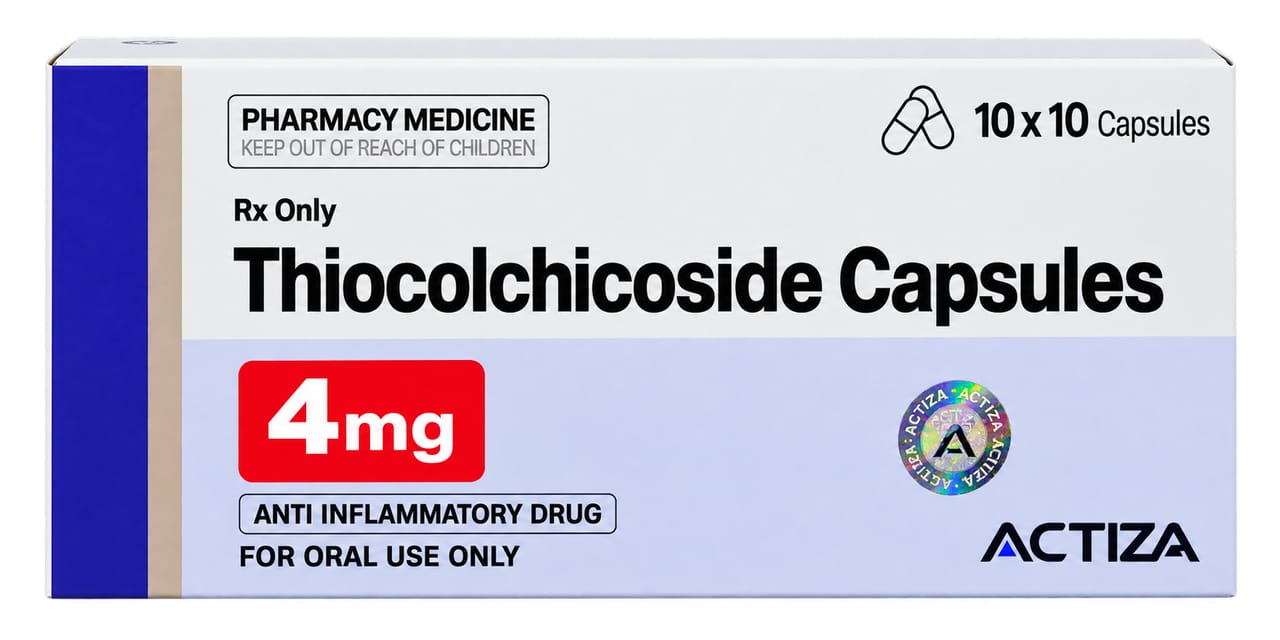
| Forms | Tablet, Capsule, Injection |
Quick overview
Thiocolchicoside is a muscle relaxant that also works as an anti-inflammatory and pain-relieving medicine. It is a semisynthetic compound made from a natural plant substance, commonly prescribed for chronic back pain and orthopedic or rheumatic conditions. It reduces swelling, relieves muscle stiffness, lowers pain, and improves movement. It is usually prescribed to adults aged 16 years or above.
What is Thiocolchicoside Tablet
Thiocolchicoside is a muscle relaxant medicine used to treat muscle spasms. It also works as an anti-inflammatory and pain-relieving drug, reducing swelling, relieving muscle stiffness, lowering pain, and improving movement. It is a semisynthetic compound made from a natural plant substance. It is usually prescribed to adults aged 16 years or above, most commonly for chronic back pain and for people with orthopedic and rheumatic conditions.
Thiocolchicoside Tablet uses
- Acute or chronic back pain
- Postoperative pain
- Muscle spasms
- Ankylosing spondylitis
- Rheumatoid arthritis
- Joint disease
- Vertebral damage
- Traumatic injuries
- Nerve conditions
- Persistent torticollis (twisted neck)
- Muscle rigidity, tension, and stiffness from nervous system conditions
- Used in combination with other medicines to treat joint pains
Benefits of Thiocolchicoside Tablet
- Relieves pain related to muscle spasms and muscle stiffness, including sciatica pain
- Promotes muscle relaxation
- Reduces inflammation and swelling
- Improves movement
How Thiocolchicoside Tablet works
Thiocolchicoside acts on specific receptors in the nervous system that control muscle tone and pain signals. It mimics a natural brain chemical called GABA, which helps block muscle spasms. By working on these receptors, it relaxes muscles, reduces spasms, and lowers inflammation and pain sensitivity. It also blocks certain receptors in the brain responsible for pain, stiffness, and swelling.
Thiocolchicoside Tablet dosage
Take this medicine with or immediately after food to avoid an upset stomach. The injection form should only be given in a hospital setting by trained healthcare professionals. Your doctor may start you on a lower dose and increase it later if needed. Do not stop taking this medicine on your own.
If you miss a dose, take it as soon as you remember, but skip it if it is almost time for your next dose — do not double up. This medicine is only meant for adolescents and adults above 16 years of age.
| Age group | Dose |
|---|---|
| Under 16 Years | Not recommended |
| 16–17 Years | Use only under specialist medical supervision |
| Adults (18–64 Years) | Dose must be prescribed according to the condition and tablet strength |
| Older Adults (65+ Years) | Dose should be individualized by a healthcare professional |
Available forms and strengths
- Tablet
- Capsule
- Injection
Side effects of Thiocolchicoside Tablet
Common
- Drowsiness or sleepiness
- Abdominal/stomach pain or discomfort
- Gas or flatulence
- Nausea and vomiting
- Diarrhea
- Dizziness
- Headache
- Dry mouth
Serious
- Itching and skin rash
- Swelling of face, lips, eyelids, tongue, hands, and feet
- Loss of appetite
- Yellowing of skin and eyes
- Sudden drop in blood pressure
- Racing or rapid heart rate
- Fainting
- Photosensitivity (increased sensitivity to sunlight)
Warnings and precautions
- This medicine is not recommended during pregnancy as it may affect the developing baby.
- This medicine is not recommended while breastfeeding. Your doctor may advise stopping breastfeeding or stopping the medicine depending on your situation.
- This medicine should not be used if you have severe kidney disease.
- Not recommended for people with seizure disorders without specialist supervision.
- It is not known for certain how this medicine interacts with alcohol, so check with your doctor before drinking.
- This medicine can cause dizziness, so avoid driving or doing tasks that need focus until you know how it affects you.
- Do not use this medicine if you have severe kidney disease, a history of seizures, asthma, acute rhinitis (nasal inflammation), or if you are pregnant.
- Avoid this medicine if you are allergic to it.
- Use with caution or avoid if you have severe kidney disease, a history of seizures, common allergic conditions like asthma or bronchitis, or if you are pregnant or breastfeeding.
Storage
- Keep Thiocolchicoside at room temperature so it is not exposed to moisture and sunlight.
- Keep in mind that children and pets might accidentally get hold of the medicine. To prevent this, put the medication as close as possible where they cannot reach.
- Avoid using Thiocolchicoside treatment when the expiration date is over or after the prescribed period.
When to see a doctor
Get immediate medical help if you notice itching, rashes, dry mouth, yellowing of the eyes, a sudden drop in blood pressure, or a racing heart.
Seek medical help right away if you notice itching, rashes, loss of appetite, yellowing of the eyes, a sudden drop in blood pressure, or a rapid heart rate.
If you suspect an overdose, contact your doctor or a poison control center right away. Signs of overdose may include unusual sleepiness, temporary confusion about direction, or shortness of breath.
Alternatives
- Cyclobenzaprine
- Methocarbamol
- Baclofen
- Tizanidine
Watch the video
FAQs
What is Thiocolchicoside Tablet used for?
It is used for acute or chronic back pain, postoperative pain, muscle spasms, ankylosing spondylitis, rheumatoid arthritis, joint disease, vertebral damage, traumatic injuries, nerve conditions, persistent torticollis, and muscle rigidity or stiffness from nervous system conditions.
How does Thiocolchicoside Tablet work?
It acts on receptors in the nervous system that control muscle tone and pain, mimicking GABA to block muscle spasms. This relaxes muscles, reduces spasms, and lowers inflammation and pain sensitivity.
What are the common side effects of Thiocolchicoside Tablet?
Common side effects include drowsiness, abdominal pain, gas, nausea, vomiting, diarrhea, dizziness, headache, and dry mouth.
Can Thiocolchicoside Tablet be taken during pregnancy?
No, it is not recommended during pregnancy as it may affect the developing baby, and it is also not recommended while breastfeeding.
What should I do if I miss a dose of Thiocolchicoside Tablet?
If you miss a dose, take it as soon as you remember, but skip it if it is almost time for your next dose. Do not double up on doses.
General information, not medical advice
Your prescriber and the leaflet in your pack know your situation. This page does not.
- Follow your prescriber and the leaflet
- Don't start, stop, or change a dose on your own
- Doses and warnings differ by country and product
Sources
Video
Related medicines

Injectafer Injection: Uses, Dosage, Side Effects, Precautions and Alternates
Iron products
Injectafer (ferric carboxymaltose) treats iron deficiency anemia and heart failure-related iron deficiency via IV. Learn uses, dosage, side effects, and

Gliclazide Tablet: Uses, Dosage, Side Effects, Precautions and Alternates
Sulfonylurea (hypoglycemic/antidiabetic agent)
Gliclazide Tablet is a sulfonylurea for type 2 diabetes that boosts insulin release. Learn about dosage, side effects, warnings, and precautions.