
Safety
General information, not medical advice
Your prescriber and the leaflet in your pack know your situation. This page does not.
- Follow your prescriber and the leaflet
- Don't start, stop, or change a dose on your own
- Doses and warnings differ by country and product
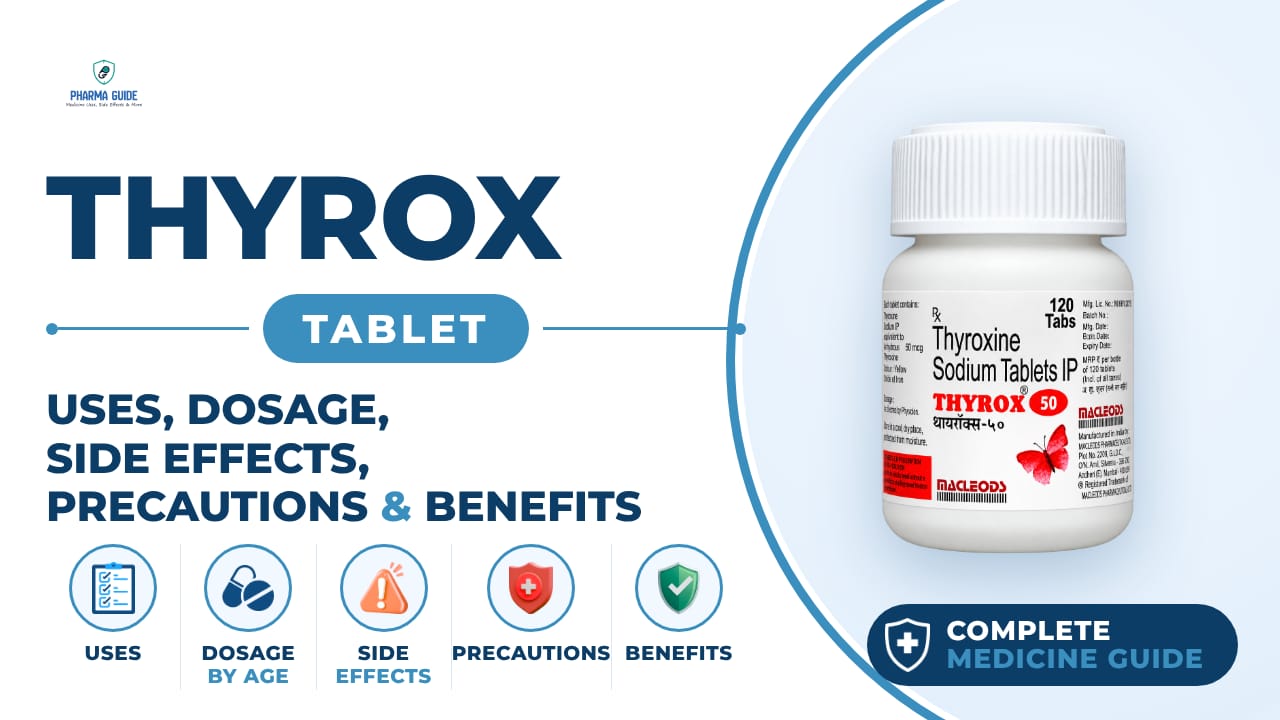
Thyrox Tablet: Uses, Dosage, Side Effects, Precautions and Alternates
| Generic name | Levothyroxine Sodium |
|---|---|
| Drug class | Hormones |
| Forms | Tablet |
Quick overview
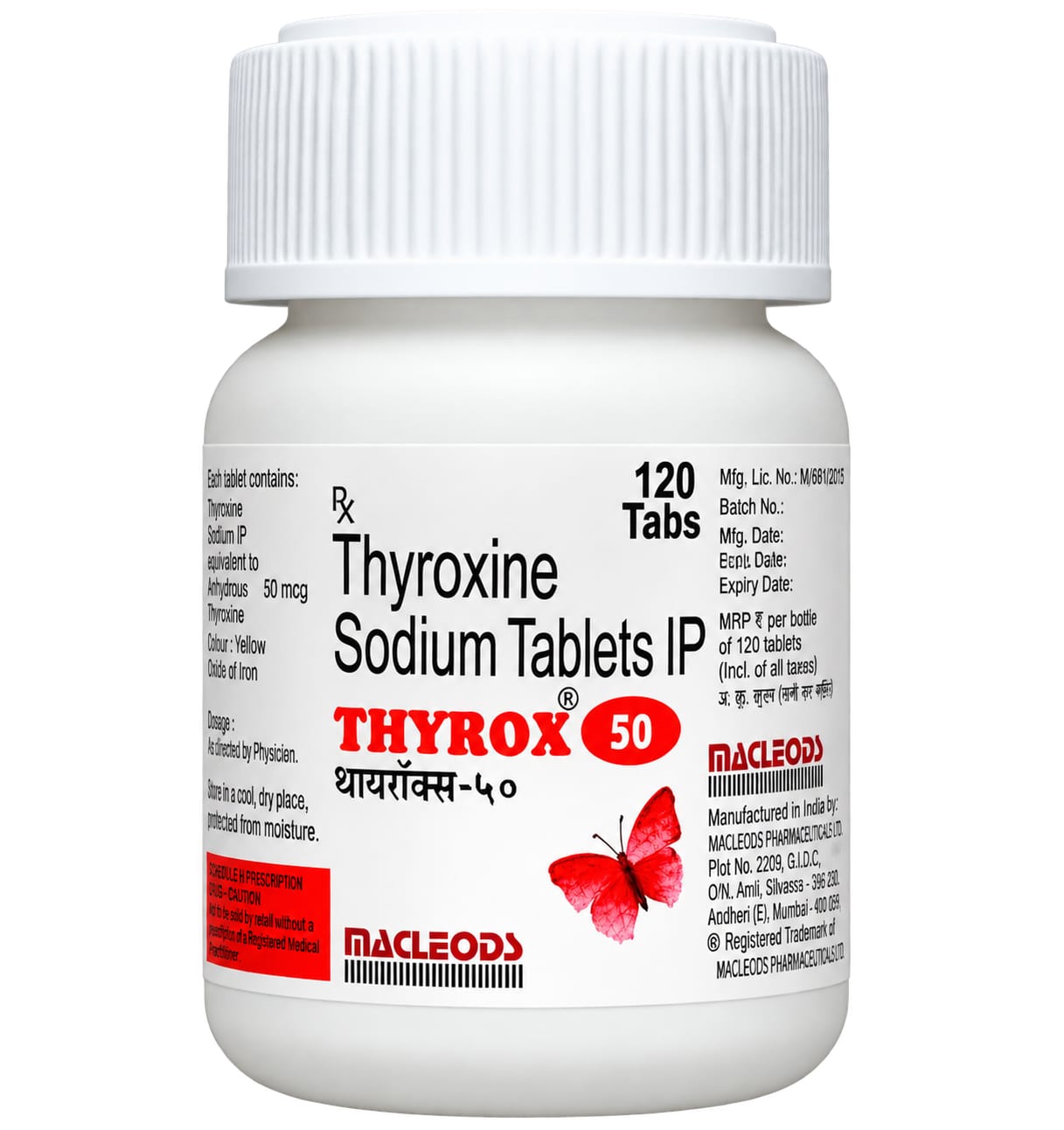
Thyrox Tablet contains levothyroxine sodium, a man-made version of the thyroid hormone, used to replace thyroid hormone when the body does not make enough of it on its own. It belongs to the hormones drug class and is used for conditions such as hypothyroidism, goiter management, and thyroid cancer therapy. It works by replacing the thyroid hormone your body lacks, helping control metabolism. It is available as a tablet, and dosing is based on age, body weight, and thyroid function tests.
What is Thyrox Tablet
Thyrox Tablet contains levothyroxine sodium, a man-made version of the thyroid hormone. It is used to replace thyroid hormone when the body does not make enough of it on its own.
Thyrox Tablet uses
- Hypothyroidism (low thyroid hormone levels) treatment
- Thyroid hormone deficiency
- Goiter management
- Thyroid cancer therapy
- Metabolic balance
- Hormone replacement
- Euthyroid sick syndrome
- Thyroid suppression
- TSH-responsive thyroid tumours
Benefits of Thyrox Tablet
- Helps restore normal thyroid hormone levels
- Helps regulate metabolism, energy levels, heart function, and body growth
- Improves symptoms of an underactive thyroid such as tiredness, weakness, feeling cold, dry skin, and weight gain
How Thyrox Tablet works
This medicine replaces the thyroid hormone that your body is not making enough of, helping control your metabolism.
Thyrox Tablet dosage
Swallow the tablet whole with a glass of water; do not crush or chew it. Take it first thing in the morning on an empty stomach, waiting at least 30 minutes, and preferably 60 minutes, before eating or taking other medicines. Take it at the same time every day to help you remember and get the best results. It may take a few weeks before you notice any change in your symptoms.
If you forget a dose and it is almost time for the next one, skip the missed dose and continue as normal; do not take a double dose. Lower doses are generally used in children and elderly patients, and dosing must be decided by a doctor.
| Age group | Dose |
|---|---|
| Infants & Children | Dose based on body weight and thyroid hormone levels (as prescribed) |
| Adults (18–64 Years) | Usually 1.6 mcg/kg/day, adjusted according to thyroid function tests |
| Older Adults (65+ Years) | 12.5–25 mcg/day initially, increased gradually as needed |
Available forms and strengths
- Tablet
Side effects of Thyrox Tablet
Common
- Nervousness or anxiousness
- Restlessness
- Muscle weakness and cramps
- Headache
- Trouble concentrating
- Sleep problems
- Hair loss
- Menstrual irregularities
- Increased appetite
- Weight changes
- Excess sweating
- Hand tremors
- Nausea, diarrhea, stomach cramps, vomiting
- Heat intolerance
- Decreased libido
- Fever
Serious
- Allergic reactions such as skin rash, swelling of the face or throat, or difficulty breathing
- Chest pain
- Irregular heartbeat
- Shortness of breath or rapid breathing
- Increased blood pressure
- Unusual movements including tremor
- Severe headache
- Bone thinning
Warnings and precautions
- Tell your doctor if you are pregnant or planning to become pregnant. Your dose may need to be increased during pregnancy, and your thyroid hormone levels will need to be watched closely.
- Small amounts of this medicine pass into breast milk, but women who are breastfeeding can continue treatment. Talk to your doctor if you are breastfeeding.
- Inform your doctor if you have heart disease, diabetes, or bone problems.
- Avoid this medicine if you have active liver disease.
- Tell your doctor if you drink alcohol, as its interaction with this medicine is not well known.
- Be careful before driving or using machines until you know how this medicine affects you.
- Do not use this medicine if you are allergic to levothyroxine or any other thyroid hormone, or any ingredient in the tablet.
- Do not use if you have untreated overactive thyroid (hyperthyroidism).
- Do not use if you have uncontrolled irregular heart rhythms.
- Do not use if you have recently had a heart attack.
- Do not use if you have active liver disease.
- This medicine cannot simply be switched dose-for-dose with the brand Eltroxin; switching brands should only be done under a doctor's supervision with monitoring of blood tests.
- Use cautiously if you have heart disease, adrenal gland problems, weak bones or a higher risk of fractures, or if you are elderly.
- Regular blood tests may be needed to monitor thyroid hormone levels during treatment.
- Do not switch between different brands of this medicine unless your doctor tells you to.
- Do not change your dose unless your doctor tells you to.
Storage
- Store below 25°C.
- Store in the original bottle.
- Keep the bottle tightly closed.
- Protect from light.
- Do not take the tablets if the colour has changed.
- Store in a cool, dry place away from moisture, heat, or sunlight; do not store in the bathroom, near a sink, or in a car.
- Keep out of reach of children.
- If you no longer need the medicine or it is out of date, take it to a pharmacy for safe disposal.
- Do not use after the expiry date.
When to see a doctor
- Stop taking this medicine right away and get medical help if you develop a skin rash or other signs of an allergic reaction.
- Call your doctor straight away, or go to the nearest hospital emergency department, if you notice serious side effects like allergic reactions, chest pain, irregular heartbeat, unusual tremors, shortness of breath, rapid breathing, or increased blood pressure.
- Call your doctor right away if you feel the medicine is not helping your condition or you do not feel well while taking it.
- If you think you have taken too much of this medicine, seek urgent medical attention even if you feel fine, as symptoms can include restlessness, vomiting, flushing, breathing difficulties, chest pain, convulsions, or paralysis.
Alternatives
- Levoxyl Tablet
- Synthroid Tablet
- Eltroxin Tablet
- Thyronorm Tablet
Watch the video
FAQs
What is Thyrox Tablet used for?
Thyrox Tablet is used to treat hypothyroidism, manage goiter, support thyroid cancer therapy, and replace thyroid hormone when the body does not produce enough on its own.
How should I take Thyrox Tablet?
Swallow the tablet whole with water on an empty stomach first thing in the morning, waiting at least 30 to 60 minutes before eating or taking other medicines. Take it at the same time every day.
What should I do if I miss a dose of Thyrox Tablet?
If you miss a dose and it is almost time for the next one, skip the missed dose and continue as normal. Do not take a double dose.
What are the common side effects of Thyrox Tablet?
Common side effects include nervousness, restlessness, muscle weakness, headache, trouble concentrating, sleep problems, hair loss, increased appetite, weight changes, sweating, hand tremors, nausea, and heat intolerance.
Can I switch between different brands of Thyrox Tablet?
No, you should not switch between different brands of this medicine unless your doctor tells you to, as dose adjustments and blood test monitoring may be needed.
General information, not medical advice
Your prescriber and the leaflet in your pack know your situation. This page does not.
- Follow your prescriber and the leaflet
- Don't start, stop, or change a dose on your own
- Doses and warnings differ by country and product
Sources
Video
Related medicines

Injectafer Injection: Uses, Dosage, Side Effects, Precautions and Alternates
Iron products
Injectafer (ferric carboxymaltose) treats iron deficiency anemia and heart failure-related iron deficiency via IV. Learn uses, dosage, side effects, and

Gliclazide Tablet: Uses, Dosage, Side Effects, Precautions and Alternates
Sulfonylurea (hypoglycemic/antidiabetic agent)
Gliclazide Tablet is a sulfonylurea for type 2 diabetes that boosts insulin release. Learn about dosage, side effects, warnings, and precautions.