
Safety
General information, not medical advice
Your prescriber and the leaflet in your pack know your situation. This page does not.
- Follow your prescriber and the leaflet
- Don't start, stop, or change a dose on your own
- Doses and warnings differ by country and product
Tiagabine Tablet: Uses, Dosage, Side Effects, Precautions and Alternates
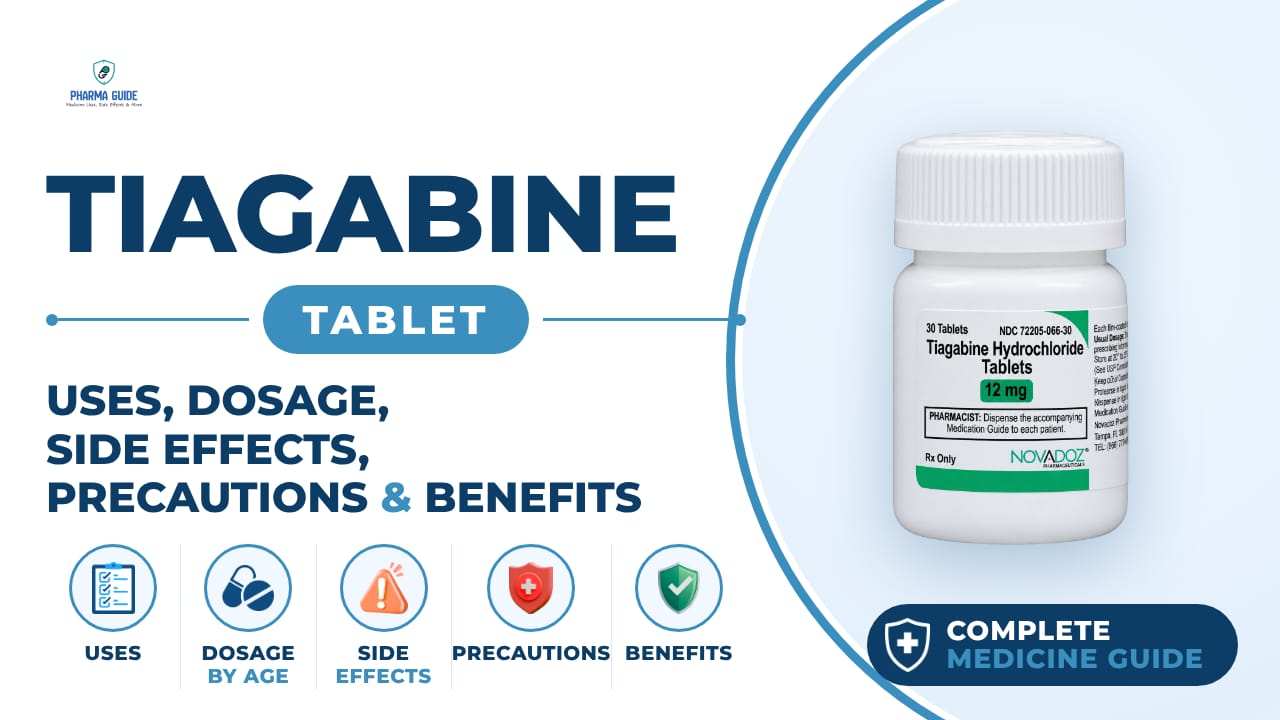
| Generic name | tiagabine hydrochloride |
|---|---|
| Drug class | anticonvulsant (GABA reuptake inhibitor / gamma-aminobutyric acid reuptake inhibitor) |
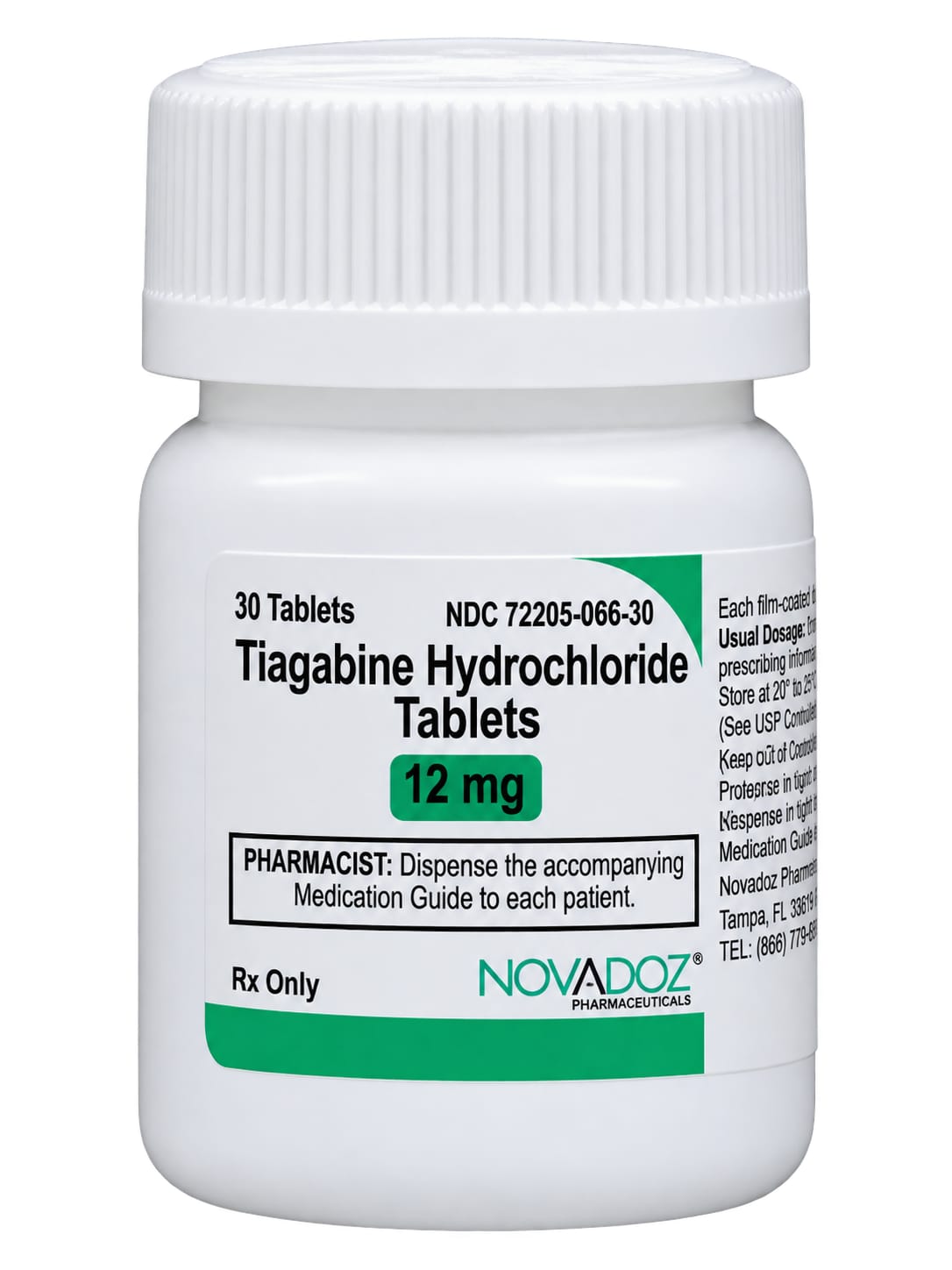
| Forms | 2 mg tablet, 4 mg tablet, 12 mg tablet, 16 mg tablet, 20 mg tablet (per Drugs.com dosage form list) |
Quick overview
Tiagabine Tablet (tiagabine hydrochloride) is a prescription anticonvulsant that works as a GABA reuptake inhibitor. It is used along with other medicines to treat partial seizures in adults and children age 12 and older. It is taken with food, exactly as prescribed, and should not be stopped suddenly.
What is Tiagabine Tablet
Tiagabine is a prescription anti-seizure medicine (anticonvulsant) used along with other medicines to treat partial seizures in adults and children age 12 and older.
Tiagabine Tablet uses
- Treats partial-onset seizures in epilepsy.
- Used as an add-on treatment with other anti-seizure medicines.
- Helps manage seizures that begin in one area of the brain.
- Used when one anti-seizure medicine alone does not adequately control seizures.
- Supports ongoing treatment of difficult-to-control partial seizures.
Benefits of Tiagabine Tablet
- May reduce how often seizures occur.
- May improve seizure control when added to another medicine.
- May reduce interruptions to daily routines.
- May help maintain independence when seizures are controlled.
- May support safer participation in everyday activities.
How Tiagabine Tablet works
Tiagabine is thought to work by blocking the reabsorption (reuptake) of GABA, a brain chemical that calms nerve activity. This leaves more GABA available to calm overactive electrical signals in the brain, which helps prevent seizures.
Tiagabine Tablet dosage
Take tiagabine exactly as your healthcare provider tells you, and take it with food. Do not use a loading dose. Do not stop taking tiagabine suddenly without talking to your healthcare provider, since stopping suddenly can cause seizures that will not stop. If you miss a dose, do not take two doses at the same time; contact your healthcare provider if you miss more than one dose. Your dose may need to change if you start or stop other seizure medicines. Tiagabine is not recommended for children younger than 12 years old.
| Age group | Dose |
|---|---|
| Under 18 years | Not recommended |
| 18–64 years | 4 mg, once/day |
| 65+ years | 4 mg, once/day |
Available forms and strengths
- 2 mg tablet
- 4 mg tablet
- 12 mg tablet
- 16 mg tablet
- 20 mg tablet
Side effects of Tiagabine Tablet
Common
- Dizziness
- Lack of energy/weakness (asthenia)
- Drowsiness/somnolence
- Nausea
- Nervousness/irritability
- Tremor
- Stomach/abdominal pain
- Abnormal thinking
- Difficulty with concentration or attention
- Diarrhea
- Vomiting
- Increased appetite
Serious
- Seizures that happen more often or get worse, including seizures in people who do not have epilepsy
- Suicidal thoughts or actions
- Trouble concentrating, problems with speech and language, confusion, extreme sleepiness, and problems thinking
- Weakness all over the body
- Eye and vision problems (including blurred or worsening vision)
- Serious skin rash
- Signs of a severe allergic reaction such as swelling of the face, lips, tongue or throat, trouble breathing, or hives
- Nonconvulsive or convulsive status epilepticus (seizures that do not stop)
Warnings and precautions
- This medicine may cause seizures, including seizures that do not stop, in people who do not have a seizure disorder.
- Like other antiepileptic drugs, this medicine can increase the risk of suicidal thoughts or actions in a small number of people.
- Do not stop taking this medicine suddenly, as this can cause serious problems including more frequent seizures or seizures that will not stop.
- This medicine can cause serious rash that, if extensive, can cause lasting harm or even death.
- This medicine has been linked to new onset seizures and status epilepticus even in people without epilepsy, sometimes at low doses, especially when combined with medicines that lower the seizure threshold.
- It is not known if tiagabine can harm an unborn baby. Tell your healthcare provider right away if you become pregnant, and you and your provider will decide whether you should continue taking it. Pregnant patients can consider joining a pregnancy registry that tracks antiepileptic drug safety.
- It is not known if tiagabine passes into breast milk or if it can harm a nursing baby. Talk to your healthcare provider about the best way to feed your baby if you are taking this medicine.
- Because tiagabine is cleared from the body more slowly in people with liver disease, a lower dose may be needed. Tell your healthcare provider if you have liver problems before starting this medicine.
- Do not drink alcohol while taking tiagabine without first talking to your healthcare provider, since it may make sleepiness or dizziness worse.
- Do not drive, operate heavy machinery, or do other dangerous activities until you know how this medicine affects you, since it can slow your thinking and motor skills.
Storage
- Store between 68°F to 77°F (20°C to 25°C)
- Keep out of light
- Keep dry
- Keep out of the reach of children
When to see a doctor
- Call your healthcare provider right away if you have a seizure and are not taking this medicine for epilepsy.
- Call a healthcare provider right away if you have new or worsening thoughts of suicide or dying, suicide attempts, depression, anxiety, agitation, panic attacks, trouble sleeping, irritability, aggression, acting on dangerous impulses, mania, or other unusual changes in mood or behavior.
- Call your healthcare provider right away if you have seizures that happen more often or get worse, trouble concentrating, speech or language problems, confusion, sleepiness, weakness all over your body, eye or vision problems, or a serious rash.
- If you take too much of this medicine, call your healthcare provider or local poison control center right away.
Alternatives
- Topiramate
- Lacosamide
- Levetiracetam
Watch the video
FAQs
What is Tiagabine Tablet used for?
Tiagabine is a prescription anti-seizure medicine used along with other medicines to treat partial seizures in adults and children age 12 and older.
How should Tiagabine Tablet be taken?
Take tiagabine exactly as your healthcare provider tells you, with food, without a loading dose. Do not stop taking it suddenly, as this can cause seizures that will not stop.
What are the common side effects of Tiagabine Tablet?
Common side effects include dizziness, lack of energy, drowsiness, nausea, nervousness, tremor, stomach pain, abnormal thinking, difficulty concentrating, diarrhea, vomiting, and increased appetite.
Can Tiagabine Tablet cause serious side effects?
Yes, serious side effects include seizures that happen more often or get worse (even in people without epilepsy), suicidal thoughts or actions, confusion, extreme sleepiness, vision problems, serious skin rash, severe allergic reactions, and seizures that do not stop.
Is Tiagabine Tablet safe for children?
Tiagabine is not recommended for children younger than 12 years old.
General information, not medical advice
Your prescriber and the leaflet in your pack know your situation. This page does not.
- Follow your prescriber and the leaflet
- Don't start, stop, or change a dose on your own
- Doses and warnings differ by country and product
Sources
Video
Related medicines

Injectafer Injection: Uses, Dosage, Side Effects, Precautions and Alternates
Iron products
Injectafer (ferric carboxymaltose) treats iron deficiency anemia and heart failure-related iron deficiency via IV. Learn uses, dosage, side effects, and

Gliclazide Tablet: Uses, Dosage, Side Effects, Precautions and Alternates
Sulfonylurea (hypoglycemic/antidiabetic agent)
Gliclazide Tablet is a sulfonylurea for type 2 diabetes that boosts insulin release. Learn about dosage, side effects, warnings, and precautions.