
Safety
General information, not medical advice
Your prescriber and the leaflet in your pack know your situation. This page does not.
- Follow your prescriber and the leaflet
- Don't start, stop, or change a dose on your own
- Doses and warnings differ by country and product
Tibsovo Tablet: Uses, Dosage, Side Effects, Precautions and Alternates
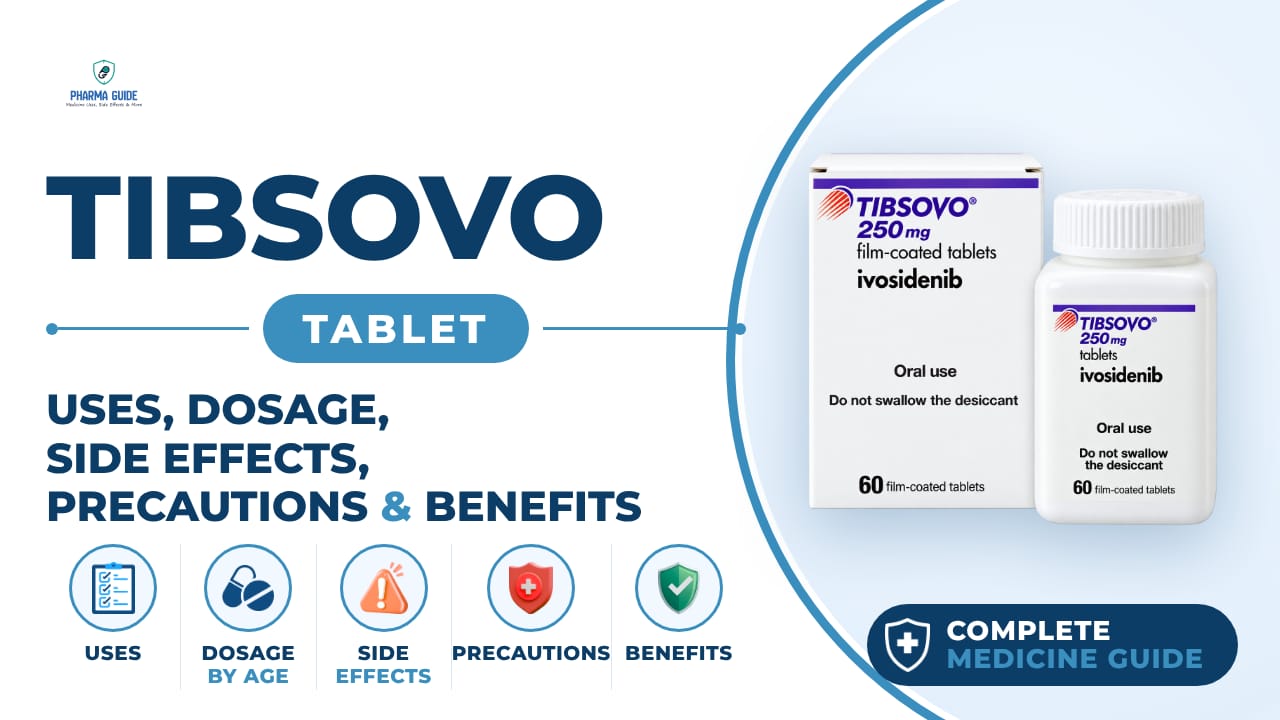
| Generic name | ivosidenib |
|---|---|
| Drug class | isocitrate dehydrogenase-1 (IDH1) inhibitor |
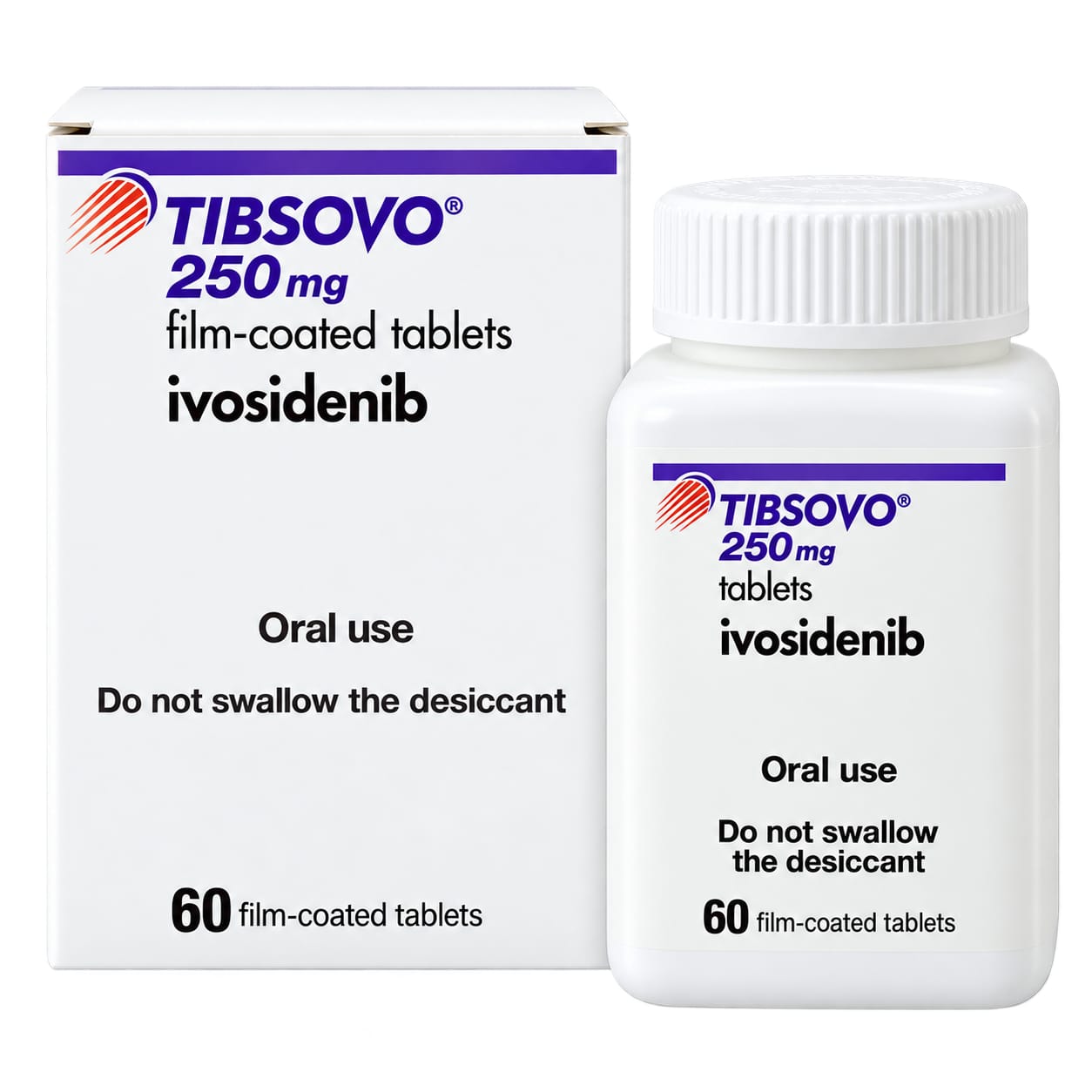
| Forms | Film-coated oral tablet (250 mg) |
Quick overview
Tibsovo Tablet contains ivosidenib, an isocitrate dehydrogenase-1 (IDH1) inhibitor. It is a prescription tablet used to treat certain IDH1-mutated blood cancers and bile duct cancer. Tibsovo works by blocking an abnormal IDH1 protein, helping blood cells mature normally and slowing cancer growth. It is taken once daily by mouth and requires monitoring for certain serious side effects.
What is Tibsovo Tablet
Tibsovo is a prescription medicine that comes as a tablet you take by mouth. It targets cancer cells that have a specific gene change called an IDH1 mutation. It is used for certain blood cancers and bile duct cancer.
Tibsovo Tablet uses
- Acute myeloid leukemia (AML) with a susceptible IDH1 mutation in adults who are newly diagnosed and are 75 years or older or have health problems that prevent use of standard chemotherapy
- Acute myeloid leukemia (AML) with a susceptible IDH1 mutation that has come back or has not improved after previous treatment
- Locally advanced or metastatic bile duct cancer (cholangiocarcinoma) with an IDH1 mutation that has already been treated with at least one prior therapy
Benefits of Tibsovo Tablet
- Can help the bone marrow make more normal blood cells in AML by blocking the abnormal IDH1 protein
- Has been shown to slow disease progression in previously treated bile duct cancer compared with placebo
- Some patients with newly diagnosed or relapsed/refractory AML achieved complete remission
How Tibsovo Tablet works
Tibsovo blocks an abnormal (mutated) form of the IDH1 protein. This mutated protein normally causes a buildup of a substance that blocks blood cells from maturing properly and helps cancer grow. By lowering levels of this substance, Tibsovo allows blood cells to mature normally and can help slow or stop cancer growth.
Tibsovo Tablet dosage
Take this medicine once a day at about the same time each day. Swallow the tablet whole; do not split, crush, or chew it. It can be taken with or without food, but avoid taking it with a high-fat meal since this can increase the amount of drug in your body. If you vomit after taking a dose, do not take an extra dose; just wait for your next scheduled dose. If you miss a dose, take it as soon as possible as long as it is at least 12 hours before your next scheduled dose, then return to your normal schedule the next day; do not take two doses within 12 hours of each other. For patients with AML, treatment is usually continued for a minimum of 6 months to allow time to see if it is working.
| Age group | Dose |
|---|---|
| Under 18 years | Safety and effectiveness have not been established |
| 18–64 years | 500 mg once daily |
| 65–74 years | 500 mg once daily, with individualized oncology monitoring |
Available forms and strengths
- Film-coated oral tablet (250 mg)
Side effects of Tibsovo Tablet
Common
- Fatigue/tiredness
- Joint pain
- High white blood cell count (leukocytosis)
- Diarrhea
- Swelling of arms or legs (edema)
- Nausea
- Shortness of breath
- Mouth or throat sores (mucositis)
- Irregular heartbeat (QTc prolongation)
- Rash
- Cough
- Decreased appetite
- Muscle pain
- Constipation
- Fever
- Low red blood cell count (anemia)
- Abnormal liver or kidney function test results
- Abdominal pain
- Vomiting
- Fluid and swelling in the stomach area (ascites)
Serious
- Differentiation syndrome (can be life-threatening if untreated)
- QTc interval prolongation (irregular heart rhythm that can be life-threatening)
- Guillain-Barré syndrome (a nerve disorder)
- Allergic reaction
- Tumor lysis syndrome
Warnings and precautions
- This medicine can cause a serious, sometimes fatal, condition called differentiation syndrome, which affects blood cells. Symptoms can start as early as 1 day after starting treatment and up to 3 months later.
- This medicine can cause changes in the heart's electrical activity (QTc prolongation), which can lead to dangerous irregular heartbeats. Your doctor will check your heart rhythm with tests before and during treatment.
- This medicine can cause a rare nerve disorder called Guillain-Barré syndrome, which may cause new weakness or changes in sensation. Treatment must be stopped permanently if this develops.
- Avoid eating grapefruit or drinking grapefruit juice while taking this medicine, as it can affect how the drug works in your body.
- This medicine can make hormonal birth control (pills, patches, implants) less effective. Use a barrier method of birth control, such as condoms, during treatment and for at least 1 month after the last dose.
- This medicine may harm an unborn baby. Women who could become pregnant should have a pregnancy test before starting treatment and should avoid becoming pregnant during therapy. Tell your doctor right away if you become pregnant.
- Do not breastfeed during treatment with this medicine and for at least 1 month after the last dose, since it is not known if the drug passes into breast milk and could harm a nursing baby.
- No dose change is needed for mild or moderate kidney problems. This medicine has not been well studied in people with severe kidney impairment or those on dialysis, so your doctor will weigh the risks and benefits before starting treatment.
- No dose change is needed for mild liver problems. This medicine has not been well studied in people with moderate or severe liver impairment, so your doctor will weigh the risks and benefits before starting treatment and monitor you closely.
- Alcohol does not directly interact with this medicine, but drinking alcohol could make some side effects, such as nausea, diarrhea, headache, and low energy, worse.
- This medicine has only a minor effect on your ability to drive or use machines, but some people may feel tired or dizzy. Do not drive or use tools or machines until you know how this medicine affects you.
Storage
- Store at room temperature between 68°F to 77°F (20°C to 25°C)
- Keep the bottle tightly closed to protect from moisture
- Do not swallow the silica gel desiccant packet found in the bottle
- Keep out of the sight and reach of children
When to see a doctor
- Get emergency help right away if you develop fever, cough, trouble breathing, rash, decreased urination, dizziness, rapid weight gain, or swelling of your arms or legs — these can be signs of differentiation syndrome.
- Tell your healthcare provider right away if you feel dizzy, lightheaded, or faint, as these may be signs of a serious heart rhythm problem.
- Tell your healthcare provider right away if you notice weakness or tingling in your legs, arms, or upper body, numbness or pain on one or both sides of your body, changes in your senses, a burning or prickling feeling, or difficulty breathing, as these may be signs of a serious nerve disorder.
- Get emergency medical help if you have signs of an allergic reaction, such as hives, trouble breathing, or swelling of your face, lips, tongue, or throat.
Alternatives
- Azacitidine
- Decitabine
- Venetoclax-based regimens
Watch the video
FAQs
What is Tibsovo Tablet used for?
Tibsovo treats certain IDH1-mutated acute myeloid leukemia (newly diagnosed in adults 75+ or unfit for chemotherapy, or relapsed/refractory) and locally advanced or metastatic bile duct cancer with an IDH1 mutation previously treated with at least one therapy.
How is Tibsovo Tablet taken?
It is taken once daily at about the same time each day, swallowed whole without splitting, crushing, or chewing. It can be taken with or without food, but a high-fat meal should be avoided since it can increase drug levels in the body.
What should I do if I miss a dose of Tibsovo?
If you miss a dose, take it as soon as possible as long as it is at least 12 hours before your next scheduled dose, then resume your normal schedule the next day. Do not take two doses within 12 hours of each other, and do not take an extra dose if you vomit after taking one.
What are the serious side effects of Tibsovo Tablet?
Serious side effects include differentiation syndrome, QTc interval prolongation, Guillain-Barré syndrome, allergic reaction, and tumor lysis syndrome.
Can I drink grapefruit juice while taking Tibsovo?
No, grapefruit and grapefruit juice should be avoided while taking Tibsovo because they can affect how the drug works in your body.
General information, not medical advice
Your prescriber and the leaflet in your pack know your situation. This page does not.
- Follow your prescriber and the leaflet
- Don't start, stop, or change a dose on your own
- Doses and warnings differ by country and product
Sources
Video
Related medicines

Injectafer Injection: Uses, Dosage, Side Effects, Precautions and Alternates
Iron products
Injectafer (ferric carboxymaltose) treats iron deficiency anemia and heart failure-related iron deficiency via IV. Learn uses, dosage, side effects, and

Gliclazide Tablet: Uses, Dosage, Side Effects, Precautions and Alternates
Sulfonylurea (hypoglycemic/antidiabetic agent)
Gliclazide Tablet is a sulfonylurea for type 2 diabetes that boosts insulin release. Learn about dosage, side effects, warnings, and precautions.