
Safety
General information, not medical advice
Your prescriber and the leaflet in your pack know your situation. This page does not.
- Follow your prescriber and the leaflet
- Don't start, stop, or change a dose on your own
- Doses and warnings differ by country and product
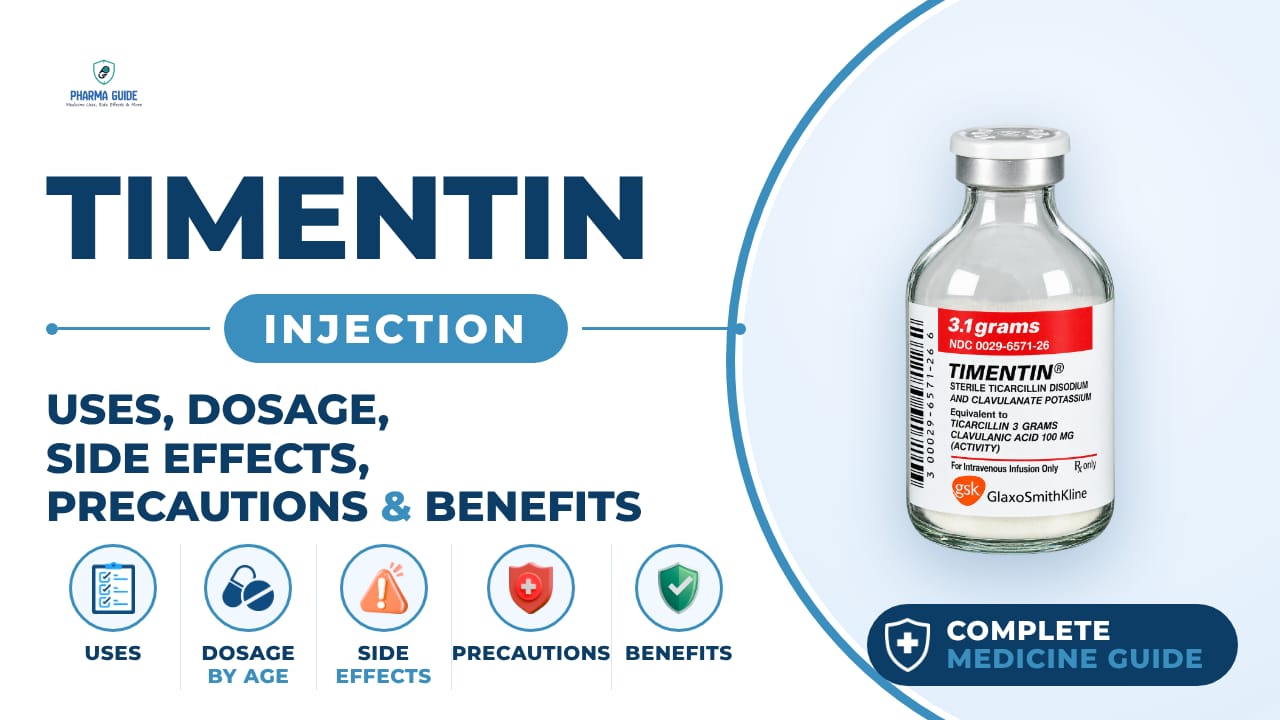
Timentin Injection: Uses, Dosage, Side Effects, Precautions and Alternates
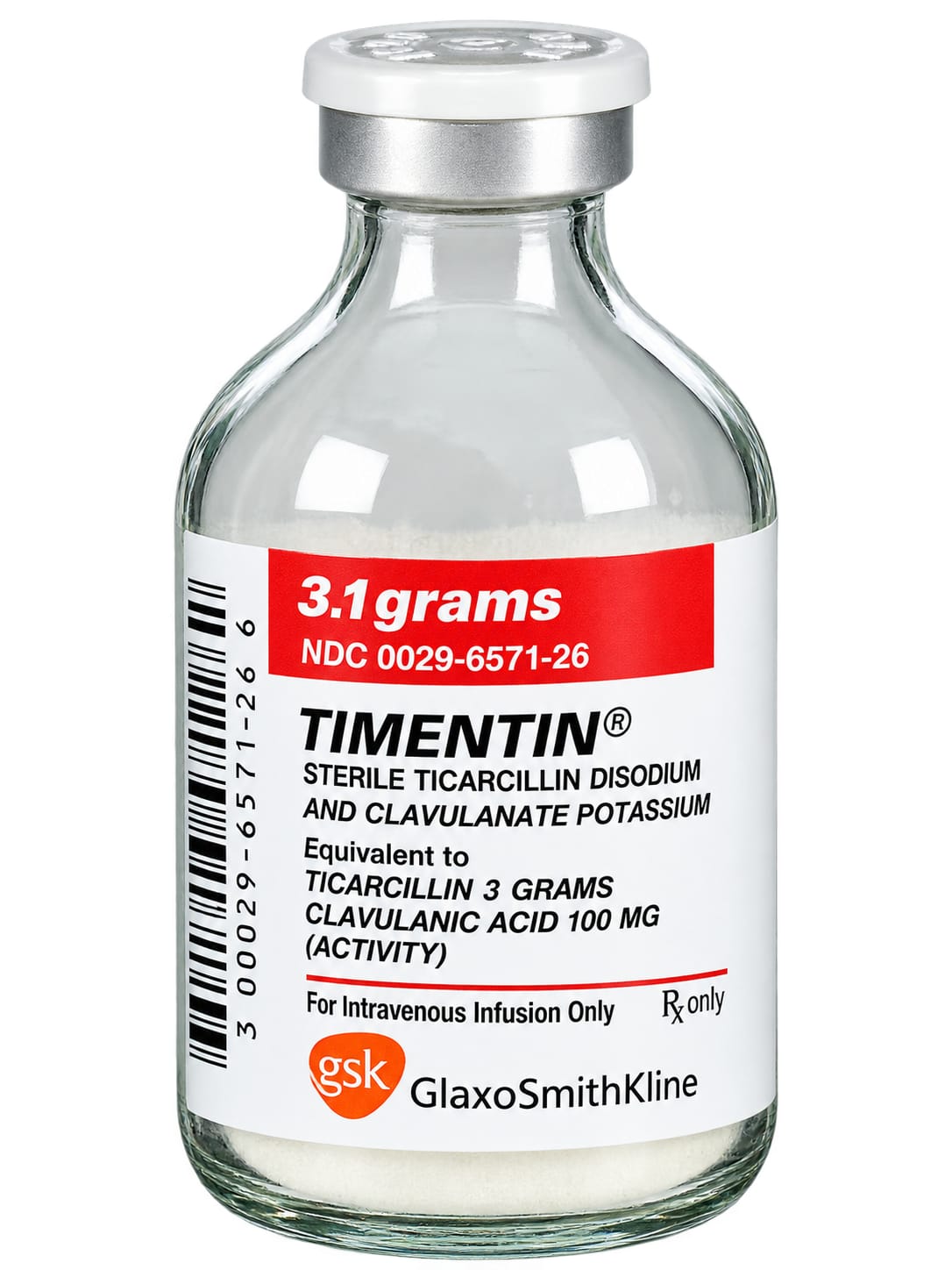
| Generic name | ticarcillin and clavulanate |
|---|---|
| Drug class | Penicillins, Extended-Spectrum |
| Forms | Powder for reconstitution for intravenous infusion (3.1-gram vial), Pharmacy bulk package powder for reconstitution (31-gram vial), Frozen premixed solution in plastic infusion containers (100 mL single-dose) |
Quick overview
Timentin Injection combines ticarcillin, a penicillin antibiotic, with clavulanate, which helps the antibiotic keep working against bacteria. It is given by a doctor or nurse as a slow intravenous infusion to treat various bacterial infections, including urinary tract, bone and joint, skin, and stomach infections. It belongs to the extended-spectrum penicillin drug class.
What is Timentin Injection
Timentin is an injectable combination medicine made of a penicillin antibiotic (ticarcillin) and clavulanate, a substance that helps the antibiotic keep working against bacteria. It is given by a doctor or nurse to treat many different bacterial infections, such as urinary tract infections, bone and joint infections, severe vaginal infections, stomach infections, and skin infections.
Timentin Injection uses
- Blood infections (septicemia/bacteremia)
- Lower respiratory (chest) infections
- Bone and joint infections
- Skin and skin structure infections
- Urinary tract infections (complicated and uncomplicated)
- Gynecologic infections (such as endometritis)
- Intra-abdominal infections (such as peritonitis)
- Prevention of infection during certain surgeries (such as colorectal surgery, abdominal hysterectomy, or cesarean section)
Benefits of Timentin Injection
- Kills a broad range of bacteria that cause serious infections
- Clavulanate protects the antibiotic so it keeps working against bacteria that would otherwise resist it
- Can be used alone for some serious infections instead of needing combination antibiotic therapy
How Timentin Injection works
Ticarcillin kills growing bacteria by stopping them from building their cell walls. Clavulanic acid blocks certain bacterial enzymes (beta-lactamases) that would normally destroy ticarcillin, so the antibiotic can keep working against bacteria that would otherwise be resistant.
Timentin Injection dosage
Timentin is given only as a slow intravenous infusion into a vein over 30 minutes; it must not be given as a quick injection into a vein or into a muscle. It is given by a doctor or nurse in a hospital or clinic setting, not something you administer yourself. If another solution is being infused at the same time, it is usually stopped temporarily during the Timentin infusion. When combined with another antibiotic such as an aminoglycoside, the two medicines are given separately, not mixed together.
Treatment is usually continued for at least 2 days after symptoms of infection have gone away, and the typical course lasts 10 to 14 days, though some infections may need longer treatment. People with reduced kidney function are given adjusted doses because the drug stays in the body longer. It is important to take the full course exactly as directed, even if you feel better early on, to help the medicine work fully and reduce the chance of bacteria becoming resistant.
| Age group | Dose |
|---|---|
| Under 3 months | Safety and effectiveness are not established |
| 3 months–17 years, <60 kg | 200–300 mg/kg/day IV, based on the ticarcillin component, divided every 4–6 hours depending on infection severity |
| 3 months–17 years, ≥60 kg | 3.1 g IV every 4–6 hours, depending on infection severity |
Available forms and strengths
- Powder for reconstitution for intravenous infusion (3.1-gram vial)
- Pharmacy bulk package powder for reconstitution (31-gram vial)
- Frozen premixed solution in plastic infusion containers (100 mL single-dose)
Side effects of Timentin Injection
Common
- Mild diarrhea
- Gas
- Stomach pain
- Nausea
- Vomiting
- Joint or muscle pain
- Headache
- Skin rash or itching
- Injection site reactions (pain, swelling, or burning)
- Vaginal yeast infection (itching or discharge)
- Dizziness
Serious
- Watery or bloody diarrhea
- Blood in urine
- Urgent need to urinate, or painful/difficult urination
- Easy bruising or unusual bleeding
- Unusual weakness
- Dry mouth, increased thirst, confusion, increased urination (signs of low potassium)
- Muscle pain or weakness
- Fast heart rate
- Lightheadedness or fainting
- Fever, chills, body aches, flu symptoms
- Severe blistering, peeling, or red skin rash
- Chest pain
- Seizures (convulsions)
- Signs of allergic reaction: hives, difficulty breathing, swelling of face, lips, tongue, or throat
- Signs of a new infection: fever, chills, sore throat, mouth sores
Warnings and precautions
- Serious and sometimes fatal severe allergic reactions have happened in people taking penicillin-type medicines. These are more likely in people who have had a penicillin allergy before or who are sensitive to many allergens. Tell your doctor about any past reactions to penicillins or cephalosporins before starting treatment, and seek emergency care right away if an allergic reaction occurs.
- This medicine can cause diarrhea linked to an overgrowth of a bacteria called C. difficile, which can range from mild to a severe, life-threatening bowel inflammation. This can happen even up to two months after finishing the medicine.
- Very high doses of this medicine, especially in people with reduced kidney function, can cause seizures (convulsions).
- This medicine can affect blood clotting and cause bleeding problems, especially in people with kidney problems.
- This medicine must not be given to people with a history of allergic reaction to any penicillin medicine.
- The safety of this medicine during pregnancy has not been fully established. It should only be used in pregnancy if your doctor decides the benefit to you clearly outweighs any possible risk to the baby.
- Small amounts of this medicine do pass into breast milk, but it can still be used while breastfeeding; the main concern is a small chance the baby could become sensitized to the medicine.
- People with kidney problems need a lower or less frequent dose because the drug builds up more in the body, which raises the risk of side effects such as seizures.
- Doctors will periodically check liver function during longer courses of this medicine.
- No major direct interaction with alcohol is established, but avoiding alcohol during a serious infection is generally appropriate.
- Be careful driving or using machinery until you know how this medicine affects you.
Storage
- Vials of TIMENTIN should be stored at or below 24°C (75°F).
- Keep this medicine where children cannot reach it, such as in a locked cupboard.
- TIMENTIN vials should be stored at or below 25°C.
When to see a doctor
- Get emergency medical help right away if you have signs of an allergic reaction, such as hives, difficulty breathing, or swelling of your face, lips, tongue, or throat.
- Call your doctor right away if you have watery or bloody diarrhea, blood in your urine, an urgent need to urinate, painful urination, a seizure, or signs of low potassium like confusion, uneven heartbeat, extreme thirst, or muscle weakness.
- Tell your doctor immediately if you notice wheezing, swelling of the lips or mouth, difficulty breathing, hives, or fainting, as these could be signs of an allergic reaction, or if you have a severe skin rash, seizures, unusual bruising or bleeding, or prolonged diarrhea.
- If you think too much medicine has been given, get urgent medical help right away, even if there are no symptoms yet.
Alternatives
- Piperacillin/tazobactam
- Ampicillin/sulbactam
- Cefepime
Watch the video
FAQs
What is Timentin Injection used for?
Timentin Injection is used to treat bacterial infections including blood infections, lower respiratory infections, bone and joint infections, skin infections, urinary tract infections, gynecologic infections, intra-abdominal infections, and to prevent infection during certain surgeries.
How is Timentin Injection given?
Timentin is given only as a slow intravenous infusion into a vein over 30 minutes by a doctor or nurse in a hospital or clinic setting; it must not be given as a quick injection into a vein or into a muscle.
How does Timentin Injection work?
Ticarcillin kills growing bacteria by stopping them from building their cell walls, while clavulanic acid blocks bacterial enzymes that would normally destroy ticarcillin, allowing the antibiotic to keep working against resistant bacteria.
What are the common side effects of Timentin Injection?
Common side effects include mild diarrhea, gas, stomach pain, nausea, vomiting, joint or muscle pain, headache, skin rash or itching, injection site reactions, vaginal yeast infection, and dizziness.
Who should not receive Timentin Injection?
This medicine must not be given to people with a history of allergic reaction to any penicillin medicine, as serious and sometimes fatal severe allergic reactions have occurred with penicillin-type medicines.
General information, not medical advice
Your prescriber and the leaflet in your pack know your situation. This page does not.
- Follow your prescriber and the leaflet
- Don't start, stop, or change a dose on your own
- Doses and warnings differ by country and product
Sources
Video
Related medicines

Injectafer Injection: Uses, Dosage, Side Effects, Precautions and Alternates
Iron products
Injectafer (ferric carboxymaltose) treats iron deficiency anemia and heart failure-related iron deficiency via IV. Learn uses, dosage, side effects, and

Gliclazide Tablet: Uses, Dosage, Side Effects, Precautions and Alternates
Sulfonylurea (hypoglycemic/antidiabetic agent)
Gliclazide Tablet is a sulfonylurea for type 2 diabetes that boosts insulin release. Learn about dosage, side effects, warnings, and precautions.