
Safety
General information, not medical advice
Your prescriber and the leaflet in your pack know your situation. This page does not.
- Follow your prescriber and the leaflet
- Don't start, stop, or change a dose on your own
- Doses and warnings differ by country and product
Timodine Cream: Uses, Dosage, Side Effects, Precautions and Alternates
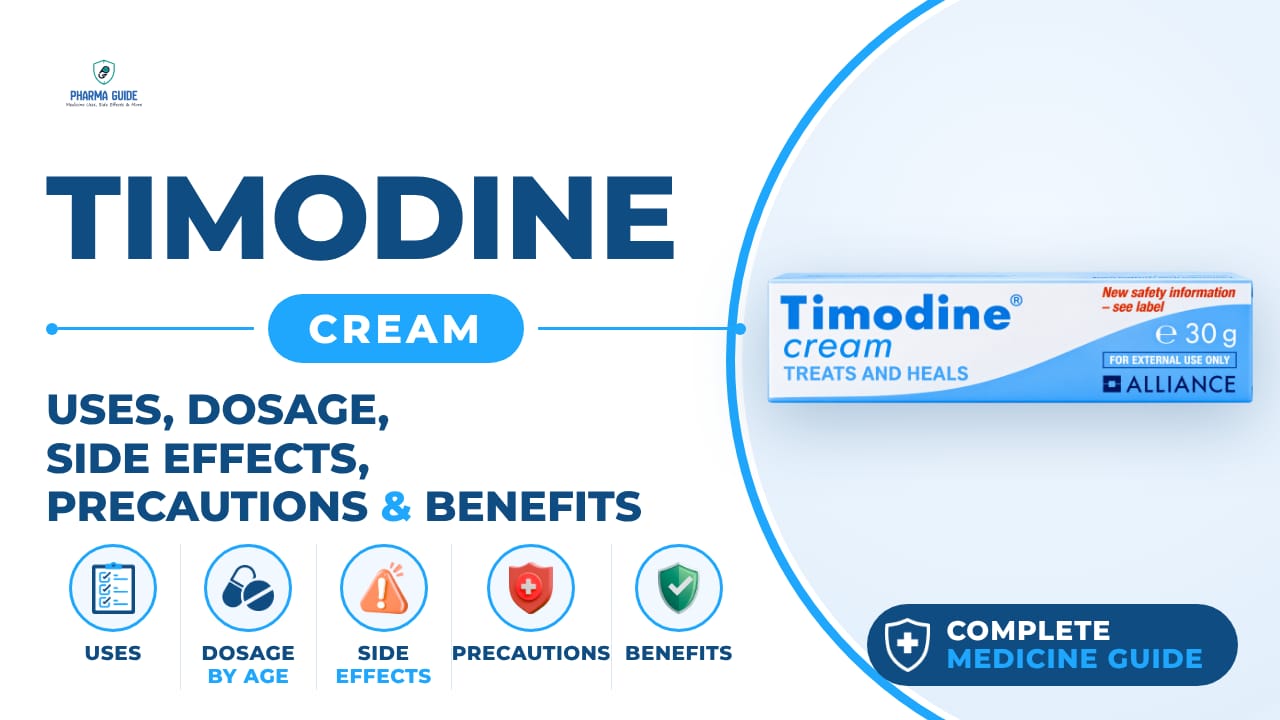
| Generic name | Hydrocortisone / Nystatin / Benzalkonium chloride / Dimeticone |
|---|---|
| Drug class | Combination corticosteroid, antifungal, and antiseptic skin cream |
| Forms | Cream |
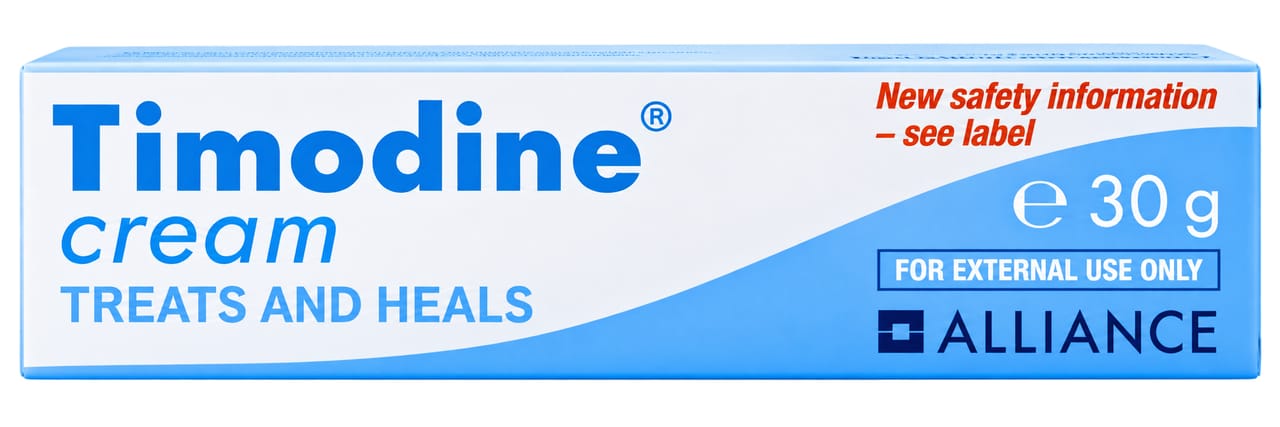
Quick overview
Timodine Cream is a prescription-only combination cream containing hydrocortisone, nystatin, benzalkonium chloride, and dimeticone. It is used to treat skin conditions where inflammation and infection, whether fungal or bacterial, occur together, such as intertrigo and infected eczema. The cream reduces redness and itching, treats fungal infections, and helps protect the skin while it heals.
What is Timodine Cream
Timodine Cream is a topical medicine used to treat skin conditions where inflammation and infection (fungal or bacterial) happen together. It is a prescription-only medicine in the UK.
Timodine Cream uses
- Intertrigo (rash in skin folds such as under the breasts, groin, or between the thighs)
- Infected eczema with redness, soreness, or weeping
- Fungal skin infections such as candidiasis (thrush) in warm, moist areas
- Inflamed skin at risk of bacterial infection
- Severe nappy rash (occasionally, under professional supervision)
Benefits of Timodine Cream
- Reduces redness, swelling, and itching
- Treats fungal infections such as Candida
- Helps prevent bacterial contamination of damaged skin
- Forms a protective barrier that locks in moisture and helps healing
How Timodine Cream works
Timodine Cream combines four ingredients that each play a different role: hydrocortisone calms inflammation, redness, and itching; nystatin stops fungi like Candida from growing and spreading; benzalkonium chloride helps prevent bacteria from infecting damaged skin; and dimeticone forms a protective barrier that locks in moisture and shields the skin from irritants.
Timodine Cream dosage
Wash your hands before and after each application. Clean and dry the skin before applying the cream. Apply a thin layer to the affected area and gently rub it in until absorbed.
For nappy rash, clean the baby's skin before applying a thin layer to the sore areas, and repeat after every nappy change. Use for short periods only, generally up to about one to two weeks, unless a doctor advises otherwise.
Avoid covering the treated area with airtight dressings or bandages unless a healthcare professional tells you to. Do not apply to skin folds unless specifically advised by a healthcare professional. Do not apply to broken, wounded, or bruised skin, or near the eyes.
If you forget to apply a dose, apply it as soon as you remember unless it is almost time for your next dose. Children should use the lowest effective amount and only for the recommended short period, under supervision of a healthcare professional.
| Age group | Dose |
|---|---|
| Under 1 year | Apply a thin layer 2–4 times daily, as directed by a doctor |
| 1–11 years | Apply a thin layer 2–4 times daily |
| 12–17 years | Apply a thin layer 2–4 times daily |
| Adults | Apply a thin layer 2–4 times daily |
| Older adults | Apply a thin layer 2–4 times daily |
Available forms and strengths
- Cream
Side effects of Timodine Cream
Common
- Mild stinging or burning when first applied
- Temporary redness or irritation
- Itching and burning
- Dry skin
- Acne
- Erythema (skin redness)
Serious
- Thinning of the skin with prolonged use
- Changes in skin appearance
- Sensitivity or allergic skin reactions
- Hair loss
- Maceration (softening/breakdown of skin)
- Folliculitis
- Severe rash, swelling, or difficulty breathing
Warnings and precautions
- Talk to your doctor before using Timodine Cream if you are pregnant or breastfeeding.
- Do not use for viral or bacterial skin infections unless specifically directed by a healthcare professional.
- Stop treatment and seek advice if the rash becomes more irritated, painful, swollen, or starts producing pus.
- Do not use Timodine Cream if you or your child has a kidney problem or a liver problem.
- For external use only. Avoid contact with the eyes and mouth. Do not use if you are allergic to any of its ingredients. Because it contains hydrocortisone (a steroid), avoid prolonged or unnecessary use.
- Do not apply to the face unless specifically advised by a doctor. Avoid applying to large areas, broken skin, or under airtight dressings unless prescribed. Use extra caution in babies and young children, as steroids can be absorbed more readily through their skin.
- Timodine is for use on the skin only and must not be swallowed.
- Do not apply the cream to open, wounded, or bruised skin, or near the eyes.
- Do not cover the treated area with dressings or plasters.
- Stop using the cream if you notice any skin reactions where it was applied.
- Use the smallest effective amount for the shortest time needed, especially in children.
- Do not use Timodine Cream for long periods or over large areas of the body.
- Do not apply the cream to skin folds unless a healthcare professional specifically advises it.
- Do not use Timodine Cream for rosacea, perioral dermatitis, ulcerated skin, or untreated viral or bacterial infections.
- Using too much cream, using it longer than recommended, or covering the area with dressings increases the risk of side effects.
When to see a doctor
- Speak to your doctor if signs of a bacterial or fungal infection appear or do not improve during treatment.
- Contact your doctor as soon as possible if you notice blurred vision or any changes in your eyesight while using this cream.
- Stop using the cream and get medical help right away if you have a severe rash, irritation, swelling, or difficulty breathing.
- If symptoms do not improve after a few days, or the affected area spreads or gets worse, seek advice from a pharmacist or doctor.
- If your symptoms come back after finishing treatment, do not start using the cream again without medical advice.
Alternatives
- Clotrimazole
- Miconazole
- Ketoconazole
- Hydrocortisone cream
- Barrier creams or moisturisers
- Timodene (another spelling of Timodine Cream)
Watch the video
FAQs
What is Timodine Cream used for?
It treats skin conditions where inflammation and infection (fungal or bacterial) occur together, such as intertrigo, infected eczema, candidiasis in warm moist areas, and occasionally severe nappy rash under supervision.
How do you apply Timodine Cream?
Wash your hands, clean and dry the affected skin, then apply a thin layer and gently rub it in. It is generally applied 2–4 times daily and used for short periods, usually one to two weeks, unless a doctor advises otherwise.
What are the side effects of Timodine Cream?
Common side effects include mild stinging or burning, temporary redness, itching, dry skin, and acne. Serious effects can include skin thinning with prolonged use, allergic reactions, hair loss, maceration, and folliculitis.
Can Timodine Cream be used on skin folds or broken skin?
No, it should not be applied to skin folds unless specifically advised by a healthcare professional, and it must not be used on broken, wounded, or bruised skin, or near the eyes.
Who should avoid using Timodine Cream?
It should not be used by those with kidney or liver problems, for viral or bacterial infections unless directed, or for conditions like rosacea, perioral dermatitis, or ulcerated skin.
General information, not medical advice
Your prescriber and the leaflet in your pack know your situation. This page does not.
- Follow your prescriber and the leaflet
- Don't start, stop, or change a dose on your own
- Doses and warnings differ by country and product
Sources
Video
Related medicines

Injectafer Injection: Uses, Dosage, Side Effects, Precautions and Alternates
Iron products
Injectafer (ferric carboxymaltose) treats iron deficiency anemia and heart failure-related iron deficiency via IV. Learn uses, dosage, side effects, and

Gliclazide Tablet: Uses, Dosage, Side Effects, Precautions and Alternates
Sulfonylurea (hypoglycemic/antidiabetic agent)
Gliclazide Tablet is a sulfonylurea for type 2 diabetes that boosts insulin release. Learn about dosage, side effects, warnings, and precautions.