
Safety
General information, not medical advice
Your prescriber and the leaflet in your pack know your situation. This page does not.
- Follow your prescriber and the leaflet
- Don't start, stop, or change a dose on your own
- Doses and warnings differ by country and product
Timolol Eye Drops: Uses, Dosage, Side Effects, Precautions and Alternates
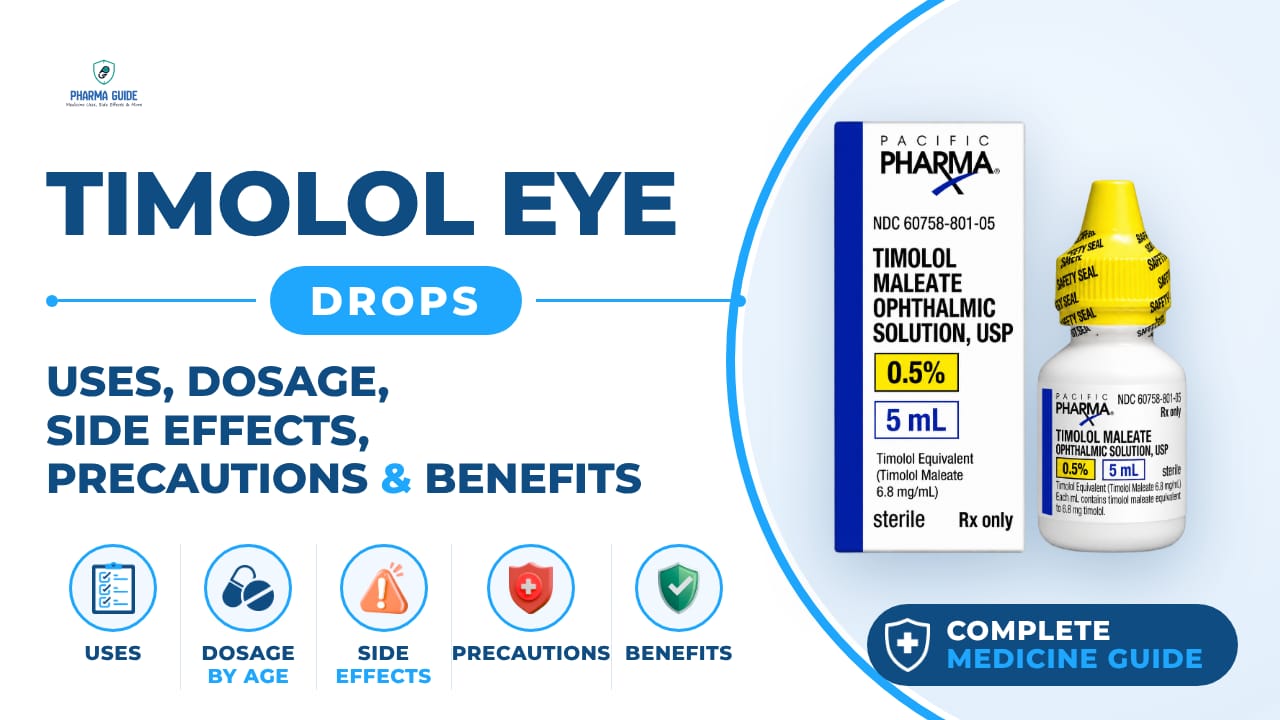
| Generic name | Timolol (as timolol maleate) |
|---|---|
| Drug class | Beta-blocker (beta-adrenergic receptor blocking agent) |
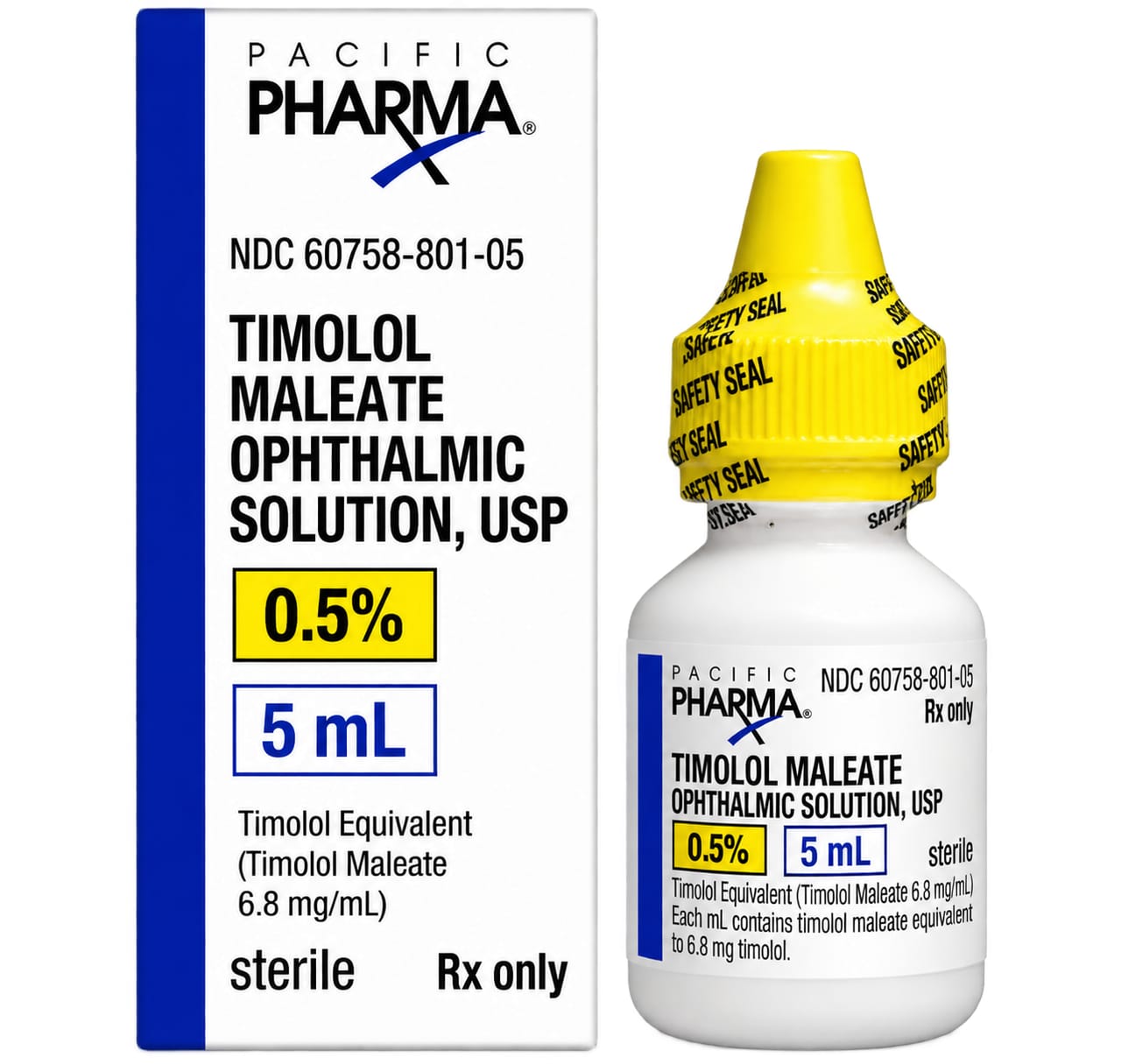
| Forms | Eye drops solution (0.25% w/v), Eye drops solution (0.5% w/v), Eye drops gel |
Quick overview
Timolol Eye Drops contain timolol, a beta-blocker medicine, used to treat high pressure in the eyes often caused by glaucoma. They work by reducing the amount of fluid produced inside the eye, which lowers eye pressure and helps protect against optic nerve damage. The drops are available in different strengths and forms and are used exactly as prescribed by a doctor.
What is Timolol Eye Drops
Timolol Eye Drops contain a substance called timolol which belongs to a group of medicines called beta-blockers. They are used to treat high pressure in the eyes, which is often caused by glaucoma.
Timolol Eye Drops uses
- High pressure in the eyes (ocular hypertension)
- Chronic open-angle glaucoma
- Aphakic glaucoma (in adults)
- Congenital glaucoma, if other treatments are not enough
Benefits of Timolol Eye Drops
- Glaucoma Control: Helps lower increased eye pressure.
- Reduced Intraocular Pressure: Decreases fluid pressure inside the eye.
- Vision Protection: Helps reduce the risk of optic nerve damage caused by high eye pressure.
- Long-Term Eye Care: Supports management of open-angle glaucoma and ocular hypertension.
- Convenient Treatment: Provides a simple eye-drop method for regular pressure control.
How Timolol Eye Drops works
Timolol blocks certain nerve receptors in the eye that are involved in producing the fluid inside the eye. By blocking these receptors, it reduces the amount of fluid made, which lowers the pressure in the eye.
Timolol Eye Drops dosage
Wash your hands before putting the drops in your eye. Tilt your head back, look at the ceiling, and gently pull down your lower eyelid to make a small pocket. Do not let the dropper tip touch your eye, eyelid, fingers, or any other surface, to avoid contamination and infection.
After putting the drop in, close your eye and gently press a finger into the corner of your eye near your nose for 2 minutes; this helps keep the medicine in the eye and reduces the amount that reaches the rest of the body. If a drop misses your eye, try again. Reclose the bottle tightly after each use. Do not enlarge the hole of the dropper tip.
If you use other eye drops or ointments at the same time, wait about 15 minutes between different products, and apply any eye ointment last. If you wear soft contact lenses, remove them before using the drops and wait at least 15 minutes before putting them back in.
Use the drops exactly as your doctor tells you and do not change how much you use without talking to your doctor first. Do not stop using the drops without speaking to your doctor first, even if you feel well.
If you miss a dose, use it as soon as you remember, unless it is nearly time for your next dose — in that case, skip the missed dose and continue as normal. Do not use a double dose to make up for a missed one.
| Age group | Dose |
|---|---|
| Under 18 Years | Use only if prescribed by an eye specialist |
| Adults (18–64 Years) | 1 drop in affected eye(s) once or twice daily (as prescribed) |
| Older Adults (65+ years) | 1 drop in affected eye(s) once or twice daily; monitor response |
Available forms and strengths
- Eye drops solution (0.25% w/v)
- Eye drops solution (0.5% w/v)
- Eye drops gel
Side effects of Timolol Eye Drops
Common
- Blurred vision
- Eye irritation such as burning, stinging, itching and redness
- Headache
- Feeling sick (nausea) and being sick (vomiting)
- Tummy ache
- Pins and needles
- Problems sleeping
- Dizziness
- Tiredness
- Dry eyes
- Taste changes
- Dry mouth
- Diarrhoea
Serious
- Allergic reaction (anaphylaxis) - swollen throat or tongue, itchy raised rash, difficulty breathing
- Eye pain, dry eyes, inflammation of the eye or eyelid, blurred or double vision that does not get better - possible signs of a serious eye problem such as infection
- Chest pain or a slow, fast or irregular heartbeat - possible signs of a serious heart problem such as heart attack or heart rhythm problem
- Being unable to move some or all of your body (paralysis), difficulty speaking or loss of consciousness - possible signs of a stroke
- Heart block or heart failure
- Bronchospasm or serious breathing difficulty, especially in people with asthma or lung disease
- Severe low blood pressure or slow heart rate
- Signs of low blood sugar being masked in people with diabetes
Warnings and precautions
- Timolol eye drops should not be used during pregnancy unless your doctor decides it is really necessary. Your doctor will discuss the risks and benefits with you.
- Timolol eye drops should not be used while breastfeeding, because timolol can pass into breast milk. Speak to your doctor for advice before using any medicine while breastfeeding.
- Inform your doctor if you have asthma, breathing problems, slow heartbeat, heart disease, or low blood pressure.
- Use with caution if you have diabetes, as timolol may affect signs of low blood sugar.
- You can eat and drink as normal while using timolol eye drops, but be aware that alcohol may add to effects like blurred vision or reduced alertness.
- Do not drive or use machinery until you feel well and your vision is clear, because the drops can cause dizziness, tiredness, and changes in eyesight such as blurred or double vision.
- Do not use timolol eye drops if you are allergic to timolol, beta-blockers, or any of the ingredients, or if you have (or have had) serious breathing problems like asthma or severe COPD, or certain heart problems like slow or irregular heartbeat or heart failure.
- Do not let the tip of the bottle touch your eye or the skin around it, as this can contaminate the drops with bacteria and cause a serious eye infection that may lead to loss of vision.
- Tell your doctor before having any operation, because timolol can change the effects of some anaesthetic medicines.
- If you wear soft contact lenses, remove them before using the drops and don't put them back in for at least 15 minutes, because the preservative in the drops can be absorbed by soft lenses and may discolour them.
- Timolol eye drops are not recommended for use in children, except in specific situations decided by a specialist doctor.
- Tell your doctor if you have diabetes, because timolol may hide the signs of low blood sugar.
- Tell your doctor if you have an overactive thyroid, because timolol may hide the signs of this condition.
- Do not stop using timolol suddenly without talking to your doctor first, as stopping a beta-blocker abruptly can be risky for the heart.
Storage
- Keep your eye drops out of the sight and reach of children
- This product does not need any special storage condition before it is first opened
- Do not store above 25°C after first opening
- Store the bottle in the outer carton
- You can use the eye drops for 28 days after first opening the bottle (for the preservative-containing multidose bottle); discard any remaining solution after that time
- Do not use after the expiry date stated on the carton after 'EXP'; the expiry date refers to the last day of that month
- Do not throw away medicines via wastewater or household waste — ask your pharmacist how to dispose of medicines you no longer need
When to see a doctor
- Get emergency help straight away if you think you might be having a severe allergic reaction, a serious heart problem, or a stroke while using timolol eye drops.
- Get urgent medical advice if you have used more timolol eye drops than prescribed, or if you have swallowed any of the drops.
- If you notice signs of an allergic reaction such as skin rash or red, itchy eyes, stop using the drops and contact your doctor right away.
- Contact your doctor immediately if you think your eye drops may be contaminated or if you develop an eye infection.
- If you put in too many drops or swallow some and get a headache, feel dizzy or light-headed, have trouble breathing, or feel your heart slowing down, contact your doctor immediately.
- Tell your doctor if your eye becomes irritated, if you get a new eye problem, an eye infection, an eye injury, or if your eye problems get worse.
Alternatives
- Latanoprost Eye Drops
- Bimatoprost Eye Drops
- Brinzolamide Eye Drops
Watch the video
FAQs
What is Timolol Eye Drops used for?
Timolol Eye Drops are used to treat high pressure in the eyes (ocular hypertension), chronic open-angle glaucoma, aphakic glaucoma in adults, and congenital glaucoma when other treatments are not enough.
How does Timolol Eye Drops work?
Timolol blocks certain nerve receptors in the eye involved in producing fluid inside the eye. By blocking these receptors, it reduces the amount of fluid made, which lowers eye pressure.
What is the dosage of Timolol Eye Drops for adults?
Adults aged 18–64 years typically use 1 drop in the affected eye(s) once or twice daily as prescribed by their doctor.
What are the common side effects of Timolol Eye Drops?
Common side effects include blurred vision, eye irritation such as burning, stinging, itching and redness, headache, nausea, vomiting, tummy ache, dizziness, tiredness, dry eyes, taste changes, dry mouth, and diarrhoea.
How long can I use Timolol Eye Drops after opening the bottle?
You can use the eye drops for 28 days after first opening the bottle; any remaining solution should be discarded after that time.
General information, not medical advice
Your prescriber and the leaflet in your pack know your situation. This page does not.
- Follow your prescriber and the leaflet
- Don't start, stop, or change a dose on your own
- Doses and warnings differ by country and product
Sources
- NHS: https://www.nhs.uk/medicines/timolol-eye-drops/
- Electronic Medicines Compendium (emc): https://www.medicines.org.uk/emc/product/459/smpc
- NCBI StatPearls: https://www.ncbi.nlm.nih.gov/books/NBK545176/
Video
Related medicines
Atenolol Tablet: Uses, Dosage, Side Effects, Precautions and Alternates
Beta-blocker (beta-adrenergic receptor blocking agent)
Atenolol Tablet (Tenormin) is a beta-blocker for high blood pressure, angina, and heart attack recovery. Learn uses, dosage, side effects, and precautions.

Injectafer Injection: Uses, Dosage, Side Effects, Precautions and Alternates
Iron products
Injectafer (ferric carboxymaltose) treats iron deficiency anemia and heart failure-related iron deficiency via IV. Learn uses, dosage, side effects, and