
Safety
General information, not medical advice
Your prescriber and the leaflet in your pack know your situation. This page does not.
- Follow your prescriber and the leaflet
- Don't start, stop, or change a dose on your own
- Doses and warnings differ by country and product
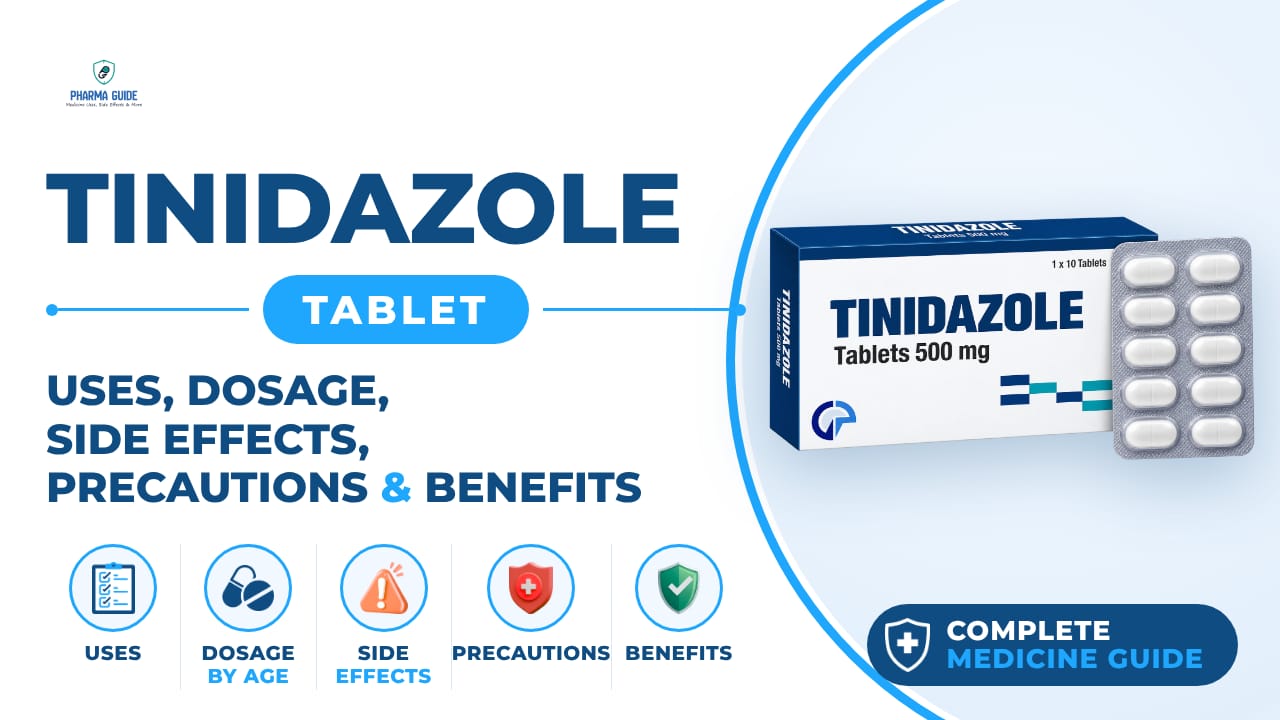
Tinidazole Tablet: Uses, Dosage, Side Effects, Precautions and Alternates
| Generic name | tinidazole |
|---|---|
| Drug class | Nitroimidazole antimicrobial |
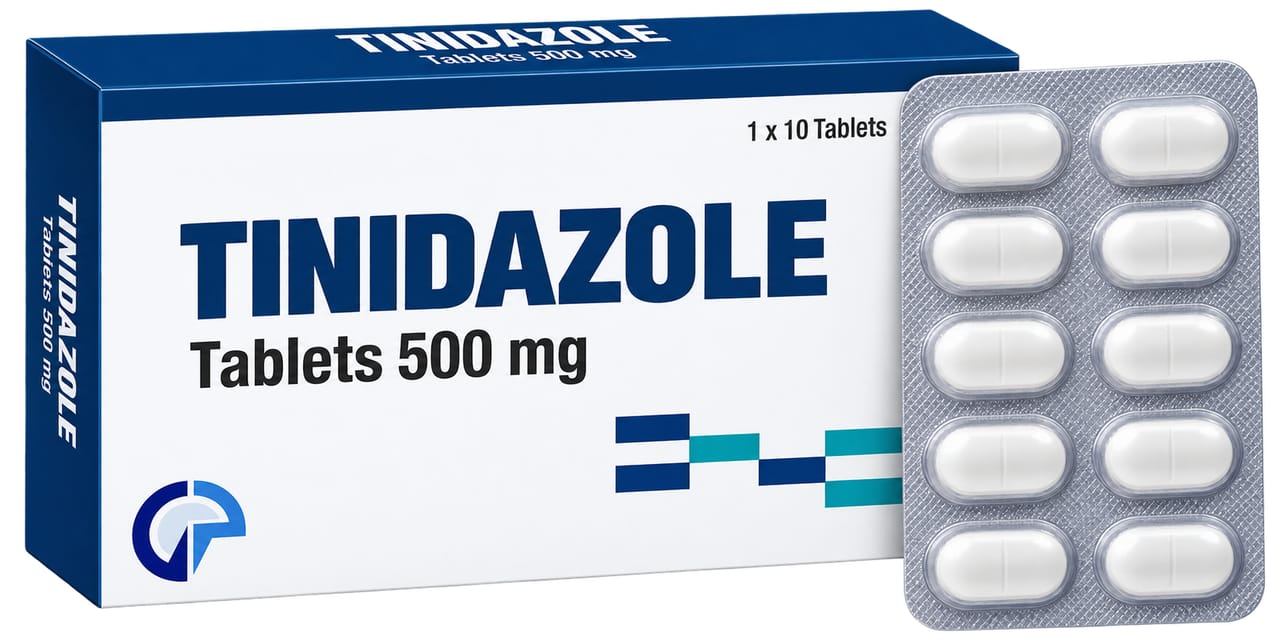
| Forms | Tablet (film coated, 250 mg and 500 mg), Oral suspension (liquid) |
Quick overview
Tinidazole Tablet is a nitroimidazole antimicrobial medicine used to treat certain infections caused by bacteria and parasites, such as trichomoniasis, bacterial vaginosis, giardiasis, and amebiasis. It works by killing the organisms that cause the infection and does not work against viral infections like the common cold or flu. It can often be taken as a single dose for some infections, and it is available as tablets and as an oral suspension.
What is Tinidazole Tablet
Tinidazole is an antibiotic and antiprotozoal medicine used to treat certain infections caused by bacteria and parasites. It works by killing the organisms that cause the infection. It does not work against viral infections like the common cold or flu.
Tinidazole Tablet uses
- Trichomoniasis (a sexually transmitted disease)
- Bacterial vaginosis (an infection caused by an overgrowth of harmful bacteria in the vagina)
- Giardiasis (an infection of the intestine that can cause diarrhea, gas, and stomach cramps)
- Amebiasis (an infection of the intestine that can spread to other organs such as the liver)
Benefits of Tinidazole Tablet
- Treats and clears certain bacterial and parasitic infections
- Can be taken as a single dose for some infections
How Tinidazole Tablet works
Tinidazole kills the organisms that cause infection. The nitro part of the medicine is changed inside the germ and produces a substance that damages the germ's DNA, which stops it from surviving.
Tinidazole Tablet dosage
Take tinidazole by mouth with food to lower the chance of stomach upset. Take it as a single dose or once a day, as directed by your doctor. Take it at around the same time every day to help you remember. Shake the liquid well before each use to mix the medication evenly. Finish the full course of treatment even if you feel better; stopping too soon may let the infection return or become resistant. For those unable to swallow tablets, the tablets may be crushed in artificial cherry syrup and taken with food. Do not drink alcohol during treatment and for 3 days afterward.
| Age group | Dose |
|---|---|
| Under 3 years | Not routinely recommended; specialist guidance required |
| 3–11 years | Weight-based dosing, depending on the infection |
| 12–17 years | Weight-based or adult dosing, depending on the infection |
| 18–64 years | Commonly 2 g once daily for certain infections; regimen varies by indication |
| 65+ years | Adult dosing; use cautiously and consider kidney/liver function |
Available forms and strengths
- Tablet (film coated, 250 mg and 500 mg)
- Oral suspension (liquid)
Side effects of Tinidazole Tablet
Common
- Sharp, unpleasant metallic or bitter taste
- Nausea, vomiting, loss of appetite
- Constipation, stomach pain or cramps
- Headache
- Tiredness or weakness
- Dizziness
- Thick, white, odorless vaginal discharge
- Indigestion
- Diarrhea
- Urine or stool discoloration
Serious
- Seizures
- Numbness or tingling of hands or feet
- Rash, hives, hoarseness, difficulty swallowing or breathing, or swelling of the face, throat, tongue, lips, eyes, hands, feet, ankles, or lower legs
- Severe skin reactions such as Stevens-Johnson syndrome and erythema multiforme
- Angioedema
- Abnormal liver function
- Low white blood cell or platelet counts
Warnings and precautions
- Tell your doctor if you are pregnant or plan to become pregnant. If you become pregnant while taking tinidazole, call your doctor. The manufacturer does not recommend use during the first trimester. Available data are not enough to identify the risk of birth defects.
- Do not breastfeed while you are taking tinidazole and for 3 days (72 hours) after you finish your treatment. A nursing mother may choose to pump and discard her milk during this time.
- No dose changes are needed for people with severe kidney impairment. If you are on dialysis, tell your doctor, as an extra dose may be needed after dialysis.
- Tell your doctor if you have or have ever had liver disease. Usual doses should be given carefully to patients with liver problems.
- Do not drink alcoholic beverages or take products with alcohol or propylene glycol while taking this medicine and for 3 days afterward. These may cause upset stomach, vomiting, stomach cramps, headaches, sweating, and flushing.
- This medicine may cause dizziness and may affect your ability to drive or operate machinery. Use care until you know how it affects you.
- A medicine similar to tinidazole has caused cancer in laboratory animals. Talk to your doctor about the risks and benefits, and avoid long-term use.
- Tinidazole should be stopped right away if abnormal nerve signs such as numbness or tingling appear.
- Do not take tinidazole if you have Cockayne syndrome, as it can cause severe liver problems.
- Do not take tinidazole if you are also taking disulfiram or have taken it within the last 2 weeks.
- This medicine may lower fertility in men.
Storage
- Keep this medication in the container it came in, tightly closed, and out of reach of children.
- Store it at room temperature and away from excess heat and moisture (not in the bathroom).
- Protect the medication from light.
- Discard any remaining liquid after 7 days.
- Do not flush this medication down the toilet. Use a medicine take-back program.
- Dispose of unneeded medications so that pets, children, and other people cannot take them.
When to see a doctor
- Call your doctor right away if you have seizures, numbness or tingling in your hands or feet, rash, hives, hoarseness, trouble swallowing or breathing, or swelling of the face, throat, tongue, lips, eyes, hands, feet, ankles, or lower legs.
- In case of overdose, call your local poison control center. If the person has collapsed, had a seizure, has trouble breathing, or cannot be awakened, call emergency services right away.
- If you still have symptoms of infection after finishing the medicine, call your doctor.
Alternatives
- Metronidazole
- Secnidazole
- Ornidazole
- Clindamycin
- Nitazoxanide
- Furazolidone
- Paromomycin
Watch the video
FAQs
What is Tinidazole Tablet used for?
It is used to treat trichomoniasis, bacterial vaginosis, giardiasis, and amebiasis, which are infections caused by bacteria and parasites.
How should I take Tinidazole Tablet?
Take it by mouth with food to lower the chance of stomach upset, either as a single dose or once a day as directed by your doctor. Finish the full course even if you feel better.
Can I drink alcohol while taking Tinidazole Tablet?
No, you should not drink alcohol or use products containing alcohol or propylene glycol while taking this medicine and for 3 days afterward, as it may cause upset stomach, vomiting, cramps, headaches, sweating, and flushing.
What are the common side effects of Tinidazole Tablet?
Common side effects include a sharp metallic or bitter taste, nausea, vomiting, loss of appetite, constipation, stomach pain, headache, tiredness, dizziness, and diarrhea.
Is it safe to take Tinidazole Tablet during pregnancy or breastfeeding?
The manufacturer does not recommend use during the first trimester, and you should tell your doctor if you are pregnant or planning to become pregnant. You should not breastfeed while taking it and for 3 days after finishing treatment.
General information, not medical advice
Your prescriber and the leaflet in your pack know your situation. This page does not.
- Follow your prescriber and the leaflet
- Don't start, stop, or change a dose on your own
- Doses and warnings differ by country and product
Sources
- https://medlineplus.gov/druginfo/meds/a604036.html
- https://my.clevelandclinic.org/health/drugs/18069-tinidazole-tablets
- DailyMed / Rising Pharma Holdings, Inc. Tinidazole Tablet Prescribing Information (Revised 03/2025)
Video
Related medicines

Injectafer Injection: Uses, Dosage, Side Effects, Precautions and Alternates
Iron products
Injectafer (ferric carboxymaltose) treats iron deficiency anemia and heart failure-related iron deficiency via IV. Learn uses, dosage, side effects, and

Gliclazide Tablet: Uses, Dosage, Side Effects, Precautions and Alternates
Sulfonylurea (hypoglycemic/antidiabetic agent)
Gliclazide Tablet is a sulfonylurea for type 2 diabetes that boosts insulin release. Learn about dosage, side effects, warnings, and precautions.