
Safety
General information, not medical advice
Your prescriber and the leaflet in your pack know your situation. This page does not.
- Follow your prescriber and the leaflet
- Don't start, stop, or change a dose on your own
- Doses and warnings differ by country and product
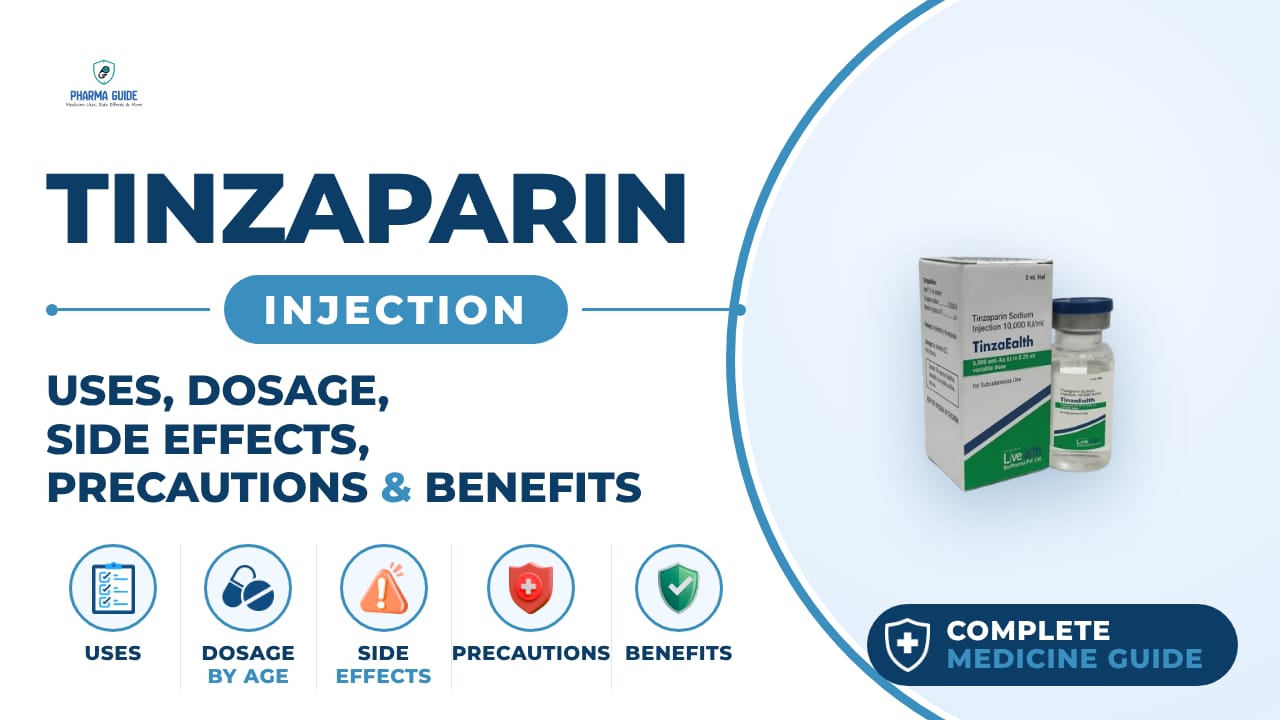
Tinzaparin Injection: Uses, Dosage, Side Effects, Precautions and Alternates
| Generic name | tinzaparin sodium |
|---|---|
| Drug class | Anticoagulant/Antithrombotic (low molecular weight heparin) |
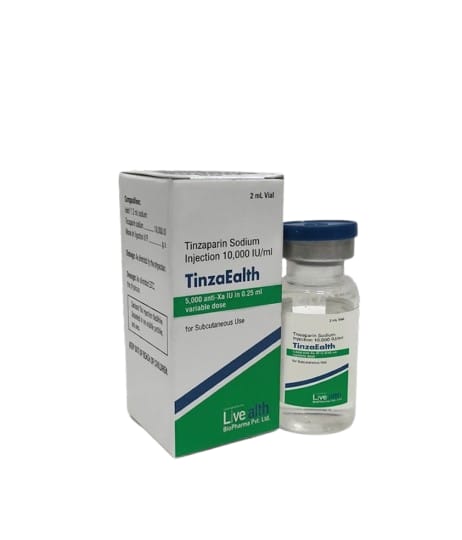
| Forms | Injection |
Quick overview
Tinzaparin Injection (tinzaparin sodium) is a low molecular weight heparin (LMWH) anticoagulant given by injection. It is used to prevent and treat blood clots, including after surgery and in conditions such as deep vein thrombosis and pulmonary embolism. It works by binding to antithrombin III to block a clotting factor called factor Xa. Dosing and use depend on the condition being treated, and it should be used exactly as directed by a doctor or pharmacist.
What is Tinzaparin Injection
Tinzaparin is a low molecular weight heparin (LMWH) given as an injection. It is an anticoagulant, meaning it helps stop blood clots from forming or growing.
Tinzaparin Injection uses
- Preventing blood clots (venous thromboembolism) after orthopaedic surgery or general surgery in people at high risk
- Treating deep vein thrombosis (DVT) and/or pulmonary embolism (PE)
- Preventing clots from forming in intravenous lines used for haemodialysis and extracorporeal circulation
Benefits of Tinzaparin Injection
- Prevents blood clots from forming in blood vessels of patients at risk
- Treats existing blood clots such as DVT and pulmonary embolism
- Can be given once daily, which is more convenient than some other anticoagulants
- Treats deep vein thrombosis (DVT)
- Helps treat pulmonary embolism (PE)
- Prevents existing blood clots from becoming larger
- Reduces formation of additional harmful blood clots
- Provides predictable low-molecular-weight heparin anticoagulation
How Tinzaparin Injection works
Tinzaparin works by binding to a protein in the blood called antithrombin III, which speeds up the blockage of a clotting factor called factor Xa. This action helps prevent blood clots from forming.
Tinzaparin Injection dosage
Tinzaparin is given by injection just under the skin (subcutaneously), except when used during dialysis.
For hip and knee surgery, an injection is given after surgery once a day for 7 to 10 days; an injection may also be given 2 hours before surgery. For general surgery, an injection is given 2 hours before surgery, then once daily after surgery for 7 to 10 days.
For treating blood clots, an injection is usually given once daily, often for 5 to 7 days, though treatment may last 3 to 6 months depending on the condition; a blood-thinning pill may also be given at the same time and both medicines should be taken as instructed.
For haemodialysis, a single dose is given into the dialysis tubing at the start of a session, with later doses adjusted as needed.
Inject into the lower stomach, sides of the thigh, lower back, or upper arm, avoiding the belly button area, and choose a different injection site each time. Wash your hands before injecting, and clean the skin gently with an alcohol swab before use. Do not inject into a muscle or vein.
If you miss a dose, do not double up; continue with your next injection as scheduled and contact your doctor or pharmacist for advice.
| Age group | Dose |
|---|---|
| Under 18 years | Not recommended |
| 18–64 years | 175 IU/kg, once/day |
| 65+ years | 175 IU/kg, once/day |
Available forms and strengths
- Injection
Side effects of Tinzaparin Injection
Common
- Mild headache
- Fever
- Pain
- Nausea, vomiting, stomach pain, indigestion
- Diarrhea, constipation
- Injection site reactions such as irritation, pain, bruising or extravasation
- Chest pain
- Nosebleed (epistaxis)
- Back pain
Serious
- Persistent bleeding at the injection site and/or from surgical wounds
- Bruising without apparent cause
- Allergic reactions, including severe asthmatic episodes
- Heavy nosebleed, blood in the urine, coughing or vomiting blood, or excessive bleeding from the gums while brushing teeth
- Purplish or reddish discolouration or pain and bruising around the injection site
- Dizziness, rapid heartbeat, shortness of breath, which could indicate internal bleeding
- Severe allergic reaction: hives, difficulty breathing, swelling of face, lips, tongue, or throat
- Spinal blood clot symptoms: back pain, numbness or muscle weakness in the lower body, or loss of bladder or bowel control
- Sudden weakness, severe headache, confusion, or problems with speech, vision, or balance
- Pale skin, feeling light-headed or short of breath, rapid heart rate, trouble concentrating
- Black or bloody stools, coughing up blood or vomit that looks like coffee grounds
- Pain or burning when urinating
Warnings and precautions
- Do not use tinzaparin by injection into a muscle, as this can cause bleeding within the muscle (haematoma).
- Tinzaparin cannot be swapped unit-for-unit with regular heparin or other low molecular weight heparins because they are made differently and act differently in the body.
- Using tinzaparin together with spinal or epidural anaesthesia or a spinal tap can cause a serious blood clot around the spinal cord, which may cause long-term or permanent paralysis. Tell your doctor right away if you have back pain, numbness, weakness in the legs, or loss of bladder or bowel control.
- Do not use the multi-dose vials in children under 3 years old, premature infants, or newborns, because they contain a preservative (benzyl alcohol) that can cause a serious, sometimes fatal, condition called gasping syndrome in these groups.
- Tinzaparin can cause bleeding, which may be serious or life-threatening, including strokes and internal bleeding.
- One formulation contains sodium metabisulphite, which can cause severe allergic reactions, including serious asthma attacks, in people who are sensitive to sulphites or have asthma.
- Tinzaparin does not cross the placenta and can be used during all trimesters of pregnancy if clinically needed, but the multi-dose vials (which contain benzyl alcohol) should not be used in pregnant women; pregnant women taking tinzaparin have an increased risk of bleeding and should be carefully monitored.
- It is not known whether tinzaparin passes into breast milk, so caution should be used if you are breastfeeding while taking this medicine.
- Tinzaparin should be used with caution in people with poor kidney function, and elderly patients should have their kidney function checked by a doctor, since reduced kidney function can increase the risk of bleeding.
- Tinzaparin should be used with caution in people with liver problems.
- Heavy alcohol use can increase bleeding risk and should be avoided.
- Tinzaparin usually does not directly impair driving, but avoid driving if significant bleeding, dizziness, or weakness occurs.
Storage
- Do not store above 30°C.
- Keep out of reach and sight of children.
- Any unused medicinal product or waste material should be disposed of in accordance with local requirements.
When to see a doctor
- Get emergency medical help right away if you notice signs of an allergic reaction, such as hives, trouble breathing, or swelling of the face, lips, tongue, or throat.
- Seek urgent medical attention if you have signs of a spinal blood clot, such as back pain, numbness or weakness in the lower body, or loss of bladder or bowel control.
- Contact your doctor promptly if you notice persistent bleeding at the injection site or surgical wounds, unexplained bruising, other bleeding such as heavy nosebleeds or blood in urine, or symptoms like dizziness, rapid heartbeat, or shortness of breath that could mean internal bleeding.
- If you think you may have used too much tinzaparin, contact a healthcare professional, hospital emergency department, or your regional poison control center immediately, even if you have no symptoms.
Alternatives
- Enoxaparin
- Dalteparin
- Fondaparinux
Watch the video
FAQs
What is Tinzaparin Injection used for?
Tinzaparin is used to prevent blood clots after orthopaedic or general surgery in high-risk people, to treat deep vein thrombosis (DVT) and pulmonary embolism (PE), and to prevent clots forming in intravenous lines used during haemodialysis and extracorporeal circulation.
How does Tinzaparin Injection work?
Tinzaparin binds to antithrombin III, a protein in the blood, which speeds up the blockage of a clotting factor called factor Xa, helping to prevent blood clots from forming.
How is Tinzaparin Injection given?
It is given by injection just under the skin (subcutaneously), except during dialysis. It should be injected into the lower stomach, sides of the thigh, lower back, or upper arm, avoiding the belly button area, with a different site chosen each time. It should not be injected into a muscle or vein.
What should I do if I miss a dose of Tinzaparin Injection?
If you miss a dose, do not double up. Continue with your next injection as scheduled and contact your doctor or pharmacist for advice.
What are the serious side effects of Tinzaparin Injection?
Serious side effects include persistent bleeding at the injection site or surgical wounds, unexplained bruising, severe allergic reactions, heavy nosebleeds, blood in urine, coughing or vomiting blood, signs of internal bleeding like dizziness or rapid heartbeat, and symptoms of a spinal blood clot such as back pain, numbness, weakness, or loss of bladder or bowel control.
General information, not medical advice
Your prescriber and the leaflet in your pack know your situation. This page does not.
- Follow your prescriber and the leaflet
- Don't start, stop, or change a dose on your own
- Doses and warnings differ by country and product
Sources
Video
Related medicines

Injectafer Injection: Uses, Dosage, Side Effects, Precautions and Alternates
Iron products
Injectafer (ferric carboxymaltose) treats iron deficiency anemia and heart failure-related iron deficiency via IV. Learn uses, dosage, side effects, and

Gliclazide Tablet: Uses, Dosage, Side Effects, Precautions and Alternates
Sulfonylurea (hypoglycemic/antidiabetic agent)
Gliclazide Tablet is a sulfonylurea for type 2 diabetes that boosts insulin release. Learn about dosage, side effects, warnings, and precautions.