
Safety
General information, not medical advice
Your prescriber and the leaflet in your pack know your situation. This page does not.
- Follow your prescriber and the leaflet
- Don't start, stop, or change a dose on your own
- Doses and warnings differ by country and product
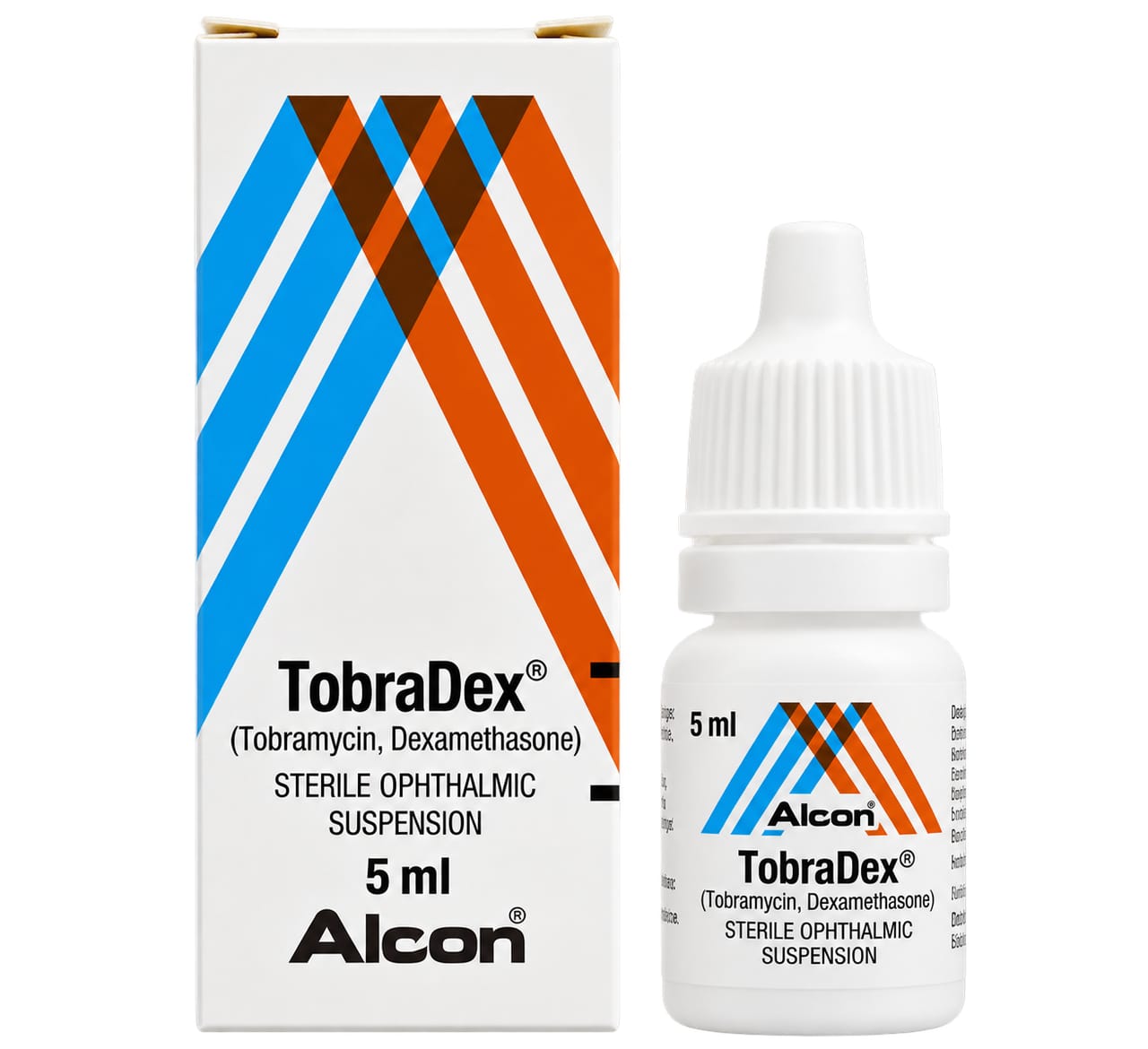
TobraDex Eye Drops: Uses, Dosage, Side Effects, Precautions and Alternates
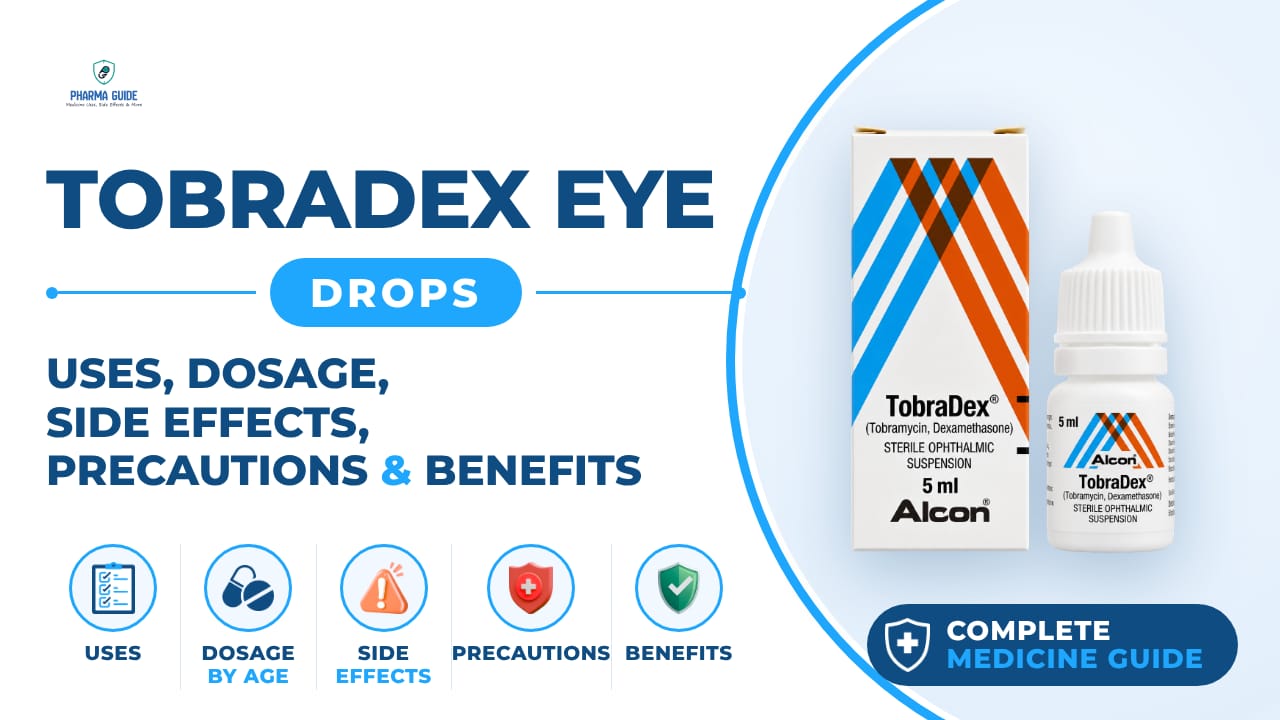
| Generic name | Tobramycin and Dexamethasone |
|---|---|
| Drug class | Ophthalmic steroid with anti-infective |
| Forms | Eye drops (suspension), Ointment |
Quick overview
TobraDex Eye Drops combine tobramycin, an antibiotic, and dexamethasone, a corticosteroid, to treat bacterial infections and inflammation of the eye. The antibiotic works to kill the bacteria causing infection while the steroid reduces swelling, redness, and discomfort. It is available as eye drops or an ointment and is not recommended for use in children, during pregnancy, or while breastfeeding.
What is TobraDex Eye Drops
TobraDex Eye Drops contain tobramycin, an antibiotic, and dexamethasone, a steroid (corticosteroid). Together they treat inflammation and bacterial infections in the eye.
TobraDex Eye Drops uses
- Treats inflammation, corneal injury and bacterial infections in the external part of the eye
- Treats bacterial infections of the eyes
- Treats swelling associated with bacterial infections of the eye
Benefits of TobraDex Eye Drops
- Helps treat bacterial eye infections with associated inflammation.
- Reduces redness, swelling, itching, and irritation in the eye.
- Tobramycin helps kill susceptible bacteria causing the infection.
- Dexamethasone helps reduce inflammation and discomfort.
- Provides combined antibiotic and corticosteroid treatment in one eye-drop formulation.
How TobraDex Eye Drops works
The steroid part reduces swelling and inflammation in the eye by calming the immune response, while the antibiotic part kills the bacteria causing the infection.
TobraDex Eye Drops dosage
Wash your hands thoroughly with soap and water before using. Shake the bottle well before using. Tilt your head back and gently pull down the lower eyelid to form a pouch. Place the tip of the bottle close to your eye without letting it touch your eye. Release one drop into the pouch by gently tapping the base of the bottle; do not squeeze the bottle. Close your eye without blinking or rubbing it. Press your finger against the inside corner of your eye near your nose for about two minutes to stop the medicine draining into your tear duct. Wipe away any spillage on your cheek with a tissue. Replace the cap tightly right after use. Wash your hands again after using the drops.
Wait at least 5 minutes before using any other eye drops. Wait 15 minutes before putting soft contact lenses back in. Do not use for longer than your doctor tells you. Not for use in children, as safety and effectiveness have not been established in children. If using more than one drop in the same eye, leave about 5 minutes between drops (for the ointment form, allow at least 10 minutes before applying another eye medicine).
| Age group | Dose |
|---|---|
| Under 2 years | Safety and effectiveness not established |
| 2–11 years | 1–2 drops into affected eye(s) every 4–6 hours when prescribed |
| 12–17 years | 1–2 drops into affected eye(s) every 4–6 hours |
| 18–64 years | 1–2 drops into affected eye(s) every 4–6 hours |
| 65+ years | 1–2 drops into affected eye(s) every 4–6 hours |
Available forms and strengths
- Eye drops (suspension)
- Ointment
Side effects of TobraDex Eye Drops
Common
- Eye irritation, itchiness or feeling of having something in the eye
- Eye pain
- Inflammation of the cornea (punctate keratitis)
- Swollen or itchy eyelids
- Eye redness
- Increased tearing or dry eyes
- Blurred vision
- Drooping eyelid
- Dilated pupil
- Another (secondary) eye infection
- Changes to sensations of taste
- Headache
- Nausea
- Stomach discomfort
- Burning, stinging, irritation, itching, redness, eyelid itching, eyelid swelling, or sensitivity to light
Serious
- Formation of cataracts
- Raised pressure in the eye which may lead to headaches and disturbances of vision
- Slowed healing of the cornea
- Glaucoma with optic nerve damage (rare)
- Skin rash
- Swelling of the face, hands or feet
- Wheezing or difficulty breathing
- Severe and sudden onset of pinkish, itchy swellings on the skin (hives or nettlerash)
- Shortness of breath
- Nerve damage in the eye from long-term use
Warnings and precautions
- This medicine is not for use in children; its safety and effectiveness in children have not been established.
- Do not use this medicine if you have an eye infection caused by a virus, fungus, or parasite.
- Do not use if you have had a foreign object removed from your eye.
- Do not put the eye drops in while wearing soft contact lenses, since the preservative can be deposited in the lenses; wait 15 minutes after using the drops before putting lenses back in.
- Do not use this medicine for longer than your doctor tells you, as this can increase the risk of side effects such as glaucoma, nerve damage in the eye, or cataracts.
- Long-term or intensive use may cause Cushing's syndrome (swelling and weight gain around the trunk and face) or cause your adrenal glands to stop working properly if stopped suddenly; talk to your doctor before stopping treatment.
- Do not touch the dropper or tube opening to any surface, including your eyes or hands, as this can contaminate the medicine and cause an eye infection.
- Tobradex Eye Drops are not recommended for pregnant women. Your doctor will discuss the risks and benefits with you.
- Tobradex is not recommended while breastfeeding. Your doctor will discuss the risks and benefits with you.
- Be careful driving or operating machinery until you know how Tobradex Eye Drops affect your vision, since temporary blurred vision can occur.
Storage
- Store at 8–27°C (46–80°F), or according to the specific product label.
- Keep the bottle tightly closed and upright when not in use.
- Protect from excessive heat and direct sunlight.
- Do not freeze, and avoid touching the dropper tip to prevent contamination.
- Keep out of reach and sight of children and pets.
When to see a doctor
- Stop using the eye drops and get medical help right away if you notice skin rash, swelling of the face, hands or feet, wheezing or difficulty breathing, sudden itchy skin swellings (hives), or shortness of breath, as these can be serious allergic reactions.
- Contact your doctor if your symptoms do not improve within a few days or get worse.
- If you accidentally get too many drops in your eye, rinse the eye immediately with lukewarm water. If someone swallows the medicine, contact your doctor or poison control right away or go to the emergency department, even if there are no symptoms.
Alternatives
- Loteprednol Eye Drops
- Tobramycin Eye Drops
- Tobramycin/Loteprednol Eye Drops
- Maxitrol Eye Drops
- Zylet Eye Drops
Watch the video
FAQs
What is TobraDex Eye Drops used for?
TobraDex Eye Drops are used to treat inflammation, corneal injury and bacterial infections in the external part of the eye, as well as swelling associated with bacterial eye infections.
How does TobraDex Eye Drops work?
The steroid component reduces swelling and inflammation by calming the immune response, while the antibiotic component, tobramycin, kills the bacteria causing the infection.
Can children use TobraDex Eye Drops?
TobraDex Eye Drops are not recommended for use in children, as safety and effectiveness have not been established in this age group.
Is TobraDex Eye Drops safe during pregnancy or breastfeeding?
TobraDex Eye Drops are not recommended during pregnancy or while breastfeeding; your doctor will discuss the risks and benefits with you.
What are the serious side effects of TobraDex Eye Drops?
Serious side effects include cataract formation, raised eye pressure, slowed corneal healing, glaucoma with optic nerve damage, and allergic reactions such as rash, facial or limb swelling, wheezing, or difficulty breathing.
General information, not medical advice
Your prescriber and the leaflet in your pack know your situation. This page does not.
- Follow your prescriber and the leaflet
- Don't start, stop, or change a dose on your own
- Doses and warnings differ by country and product
Sources
Video
Related medicines

Injectafer Injection: Uses, Dosage, Side Effects, Precautions and Alternates
Iron products
Injectafer (ferric carboxymaltose) treats iron deficiency anemia and heart failure-related iron deficiency via IV. Learn uses, dosage, side effects, and

Gliclazide Tablet: Uses, Dosage, Side Effects, Precautions and Alternates
Sulfonylurea (hypoglycemic/antidiabetic agent)
Gliclazide Tablet is a sulfonylurea for type 2 diabetes that boosts insulin release. Learn about dosage, side effects, warnings, and precautions.