
Safety
General information, not medical advice
Your prescriber and the leaflet in your pack know your situation. This page does not.
- Follow your prescriber and the leaflet
- Don't start, stop, or change a dose on your own
- Doses and warnings differ by country and product
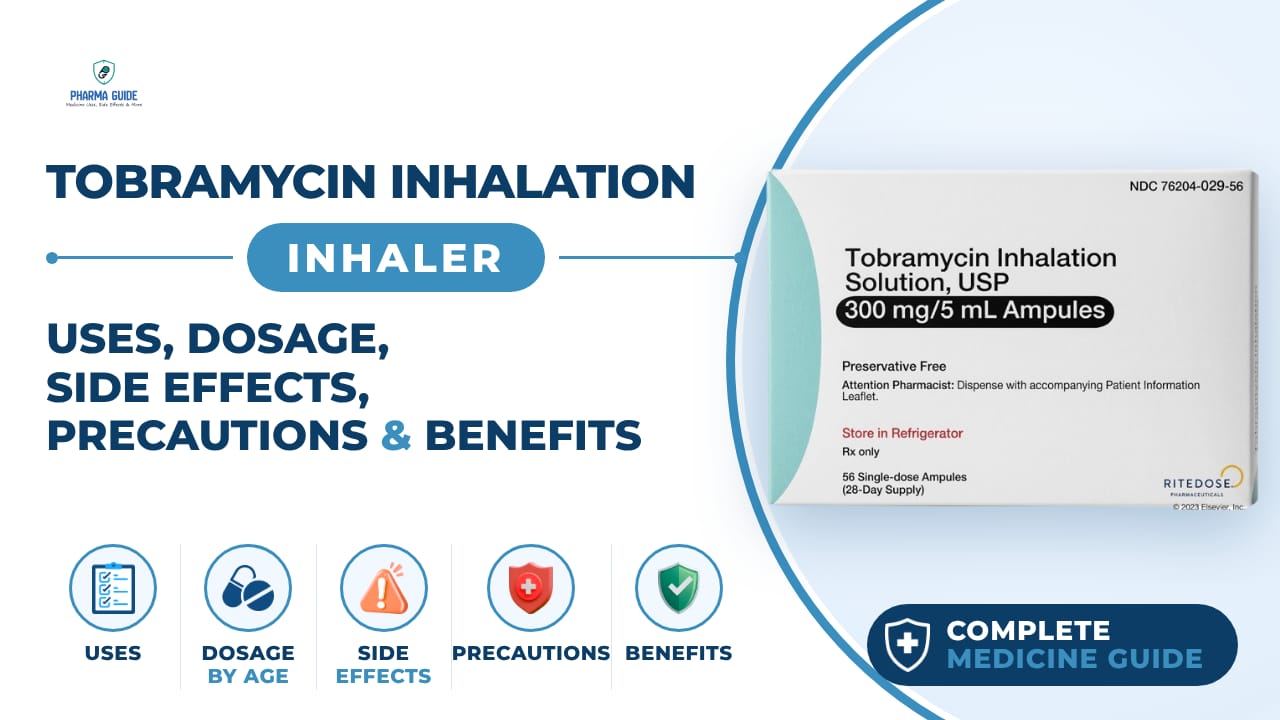
Tobramycin Inhalation Inhaler: Uses, Dosage, Side Effects, Precautions and Alternates
| Generic name | tobramycin |
|---|---|
| Drug class | Aminoglycoside antibacterial |
| Forms | Inhaler |
Quick overview
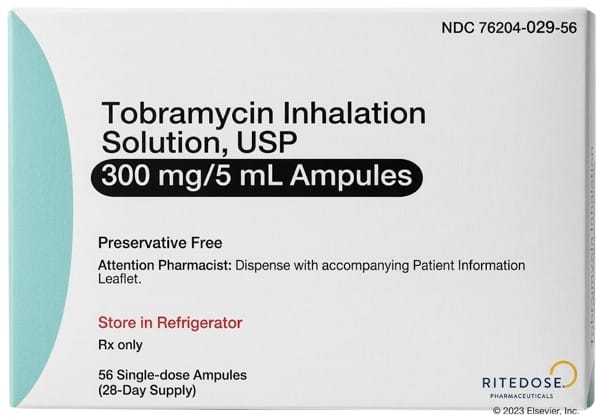
Tobramycin Inhalation Inhaler (tobramycin) is a prescription antibiotic from the aminoglycoside antibacterial class, breathed into the lungs using a nebulizer. It is used to treat people with cystic fibrosis who have a lung infection caused by Pseudomonas aeruginosa. It works by disrupting how bacteria make proteins, damaging the bacteria's outer membrane and eventually killing them. It is taken in 28-day on-and-off cycles under a doctor's direction.
What is Tobramycin Inhalation Inhaler
Tobramycin inhalation solution is a prescription antibiotic medicine that you breathe into your lungs using a nebulizer. It is used to treat people with cystic fibrosis who have a lung infection caused by a bacterium called Pseudomonas aeruginosa.
Tobramycin Inhalation Inhaler uses
- Cystic fibrosis with Pseudomonas aeruginosa lung infection.
- Management of chronic bacterial lung infection in eligible cystic fibrosis patients.
- Reduction of bacterial burden in the lungs.
- Long-term management of cystic-fibrosis-related lung infection.
- Control of recurrent Pseudomonas lung infection in eligible patients.
Benefits of Tobramycin Inhalation Inhaler
- Helps reduce bacterial infection in the lungs.
- May improve breathing.
- Helps reduce respiratory symptoms.
- May improve lung function.
- Helps control Pseudomonas aeruginosa infection.
How Tobramycin Inhalation Inhaler works
Tobramycin is an antibiotic that works by disrupting how bacteria make proteins, which damages the bacteria's outer membrane and eventually kills the bacteria.
Tobramycin Inhalation Inhaler dosage
This medicine is taken by oral inhalation only, using a hand-held nebulizer with an air compressor — do not swallow it or inject it. It is used in cycles: 28 days on the medicine, then 28 days off, then repeat the cycle. Take doses as close to 12 hours apart as possible, but never less than 6 hours apart. Do not mix or dilute this medicine with dornase alfa or other medicines in the nebulizer. Each treatment session takes about 15 minutes to breathe in the full dose.
Sit or stand upright and breathe normally through the mouthpiece during treatment; nose clips may help you breathe through your mouth. If you take other inhaled medicines or do chest physiotherapy, do those first before using this medicine, or as your doctor directs.
If you miss a dose, take it as soon as you can, unless it is within 6 hours of your next dose — in that case, skip the missed dose and wait for the next one; do not double up. Complete the full 28-day on-treatment course even if you feel better. Do not use the solution if it looks cloudy or has particles in it. Not approved for children under 6 years old.
| Age group | Dose |
|---|---|
| Under 18 years | Not recommended |
| 18–64 years | 300 mg, twice/day |
| 65+ years | 300 mg, twice/day |
Available forms and strengths
- Inhaler
Side effects of Tobramycin Inhalation Inhaler
Common
- Increased cough
- Sore throat
- Increased sputum (mucus)
- Coughing up blood
- Decreased lung function
- Trouble breathing/shortness of breath
- Voice changes or hoarseness
- Loss or change in taste
- Rash
- Headache
- Fever
Serious
- Severe breathing problems such as wheezing, chest tightness, and coughing (bronchospasm)
- Hearing loss or ringing in the ears (ototoxicity)
- Dizziness, vertigo, or balance problems
- Worsening kidney problems — little or no urination, swelling in feet or ankles, feeling tired or short of breath
- Worsening muscle weakness, especially in people with myasthenia gravis or Parkinson's disease
- Signs of severe allergic reaction: hives, difficulty breathing, swelling of face, lips, tongue, or throat
Warnings and precautions
- Tell your doctor if you are pregnant or planning to become pregnant.
- This type of medicine can potentially harm an unborn baby, although the amount absorbed into the body from inhaling it is expected to be small.
- If you breastfeed while using this medicine, watch your baby for loose or bloody stools or signs of a yeast infection such as diaper rash or thrush.
- Tell your doctor if you have or have had kidney problems. This type of medicine can cause kidney damage, and your doctor may check your kidney function with blood tests while you use it.
- This medicine can cause narrowing of the airways (bronchospasm). Tell your doctor right away if you have shortness of breath, wheezing, coughing, or chest tightness after using it.
- This medicine can cause hearing problems or hearing loss, sometimes permanent. Tell your doctor right away if you notice ringing in your ears, dizziness, or changes in hearing or balance.
- People with certain inherited gene changes (passed down from the mother) may be at higher risk of permanent hearing loss from this type of medicine, even at normal doses. Tell your doctor if you or your mother have had hearing problems linked to this type of antibiotic.
- This class of medicine can cause kidney damage, especially in people with existing kidney problems.
- This medicine may worsen muscle weakness in people who already have conditions like myasthenia gravis or Parkinson's disease, due to an effect on nerve-to-muscle signaling.
- Do not take this medicine with certain other drugs that can harm your kidneys, hearing, or nerves, such as some diuretics (water pills) like furosemide or ethacrynic acid, urea, or other aminoglycoside antibiotics, without talking to your doctor.
- Do not use this medicine if you are allergic to tobramycin or any other aminoglycoside antibiotic.
Storage
- Store the ampules in a refrigerator between 36°F to 46°F (2°C to 8°C) until needed
- You may store the ampules in their foil pouches (opened or unopened) at room temperature up to 77°F (25°C) for up to 28 days
- Do not use ampules that have been stored at room temperature for more than 28 days
- Protect the ampules from light
- Keep this medicine and all medicines out of the reach of children
- Dispose of unneeded medication through a medicine take-back program rather than flushing it down the toilet
When to see a doctor
- Get emergency help right away if you have signs of a severe allergic reaction, such as hives, trouble breathing, or swelling of your face, lips, tongue, or throat.
- Call your doctor right away if you have new or worsening breathing problems such as wheezing, coughing, chest tightness, or trouble breathing.
- Call your doctor right away if you have hearing problems, ringing in your ears, severe dizziness, a spinning sensation, or balance problems.
- Call your doctor right away if you have signs of kidney problems, such as little or no urination, swelling in your feet or ankles, or feeling tired or short of breath.
- Call your doctor right away if you have muscle weakness or weak or shallow breathing.
- If someone swallows this medicine, call your local poison control center right away; if the person has collapsed or is not breathing, call emergency services immediately.
Alternatives
- Bramitob
- Colistimethate
- Cayston
Watch the video
FAQs
What is Tobramycin Inhalation Inhaler used for?
It is used to treat people with cystic fibrosis who have a lung infection caused by the bacterium Pseudomonas aeruginosa.
How is Tobramycin Inhalation Inhaler taken?
It is taken by oral inhalation only using a hand-held nebulizer with an air compressor, in cycles of 28 days on the medicine followed by 28 days off, with doses taken as close to 12 hours apart as possible but never less than 6 hours apart.
What should I do if I miss a dose?
Take the missed dose as soon as you can, unless it is within 6 hours of your next dose, in which case you should skip the missed dose and wait for the next one without doubling up.
What are the serious side effects of Tobramycin Inhalation Inhaler?
Serious side effects include severe breathing problems like bronchospasm, hearing loss or ringing in the ears, dizziness or balance problems, worsening kidney problems, worsening muscle weakness, and signs of severe allergic reaction.
Is Tobramycin Inhalation Inhaler approved for children?
It is not approved for children under 6 years old.
General information, not medical advice
Your prescriber and the leaflet in your pack know your situation. This page does not.
- Follow your prescriber and the leaflet
- Don't start, stop, or change a dose on your own
- Doses and warnings differ by country and product
Sources
Video
Related medicines

Injectafer Injection: Uses, Dosage, Side Effects, Precautions and Alternates
Iron products
Injectafer (ferric carboxymaltose) treats iron deficiency anemia and heart failure-related iron deficiency via IV. Learn uses, dosage, side effects, and

Gliclazide Tablet: Uses, Dosage, Side Effects, Precautions and Alternates
Sulfonylurea (hypoglycemic/antidiabetic agent)
Gliclazide Tablet is a sulfonylurea for type 2 diabetes that boosts insulin release. Learn about dosage, side effects, warnings, and precautions.