
Safety
General information, not medical advice
Your prescriber and the leaflet in your pack know your situation. This page does not.
- Follow your prescriber and the leaflet
- Don't start, stop, or change a dose on your own
- Doses and warnings differ by country and product
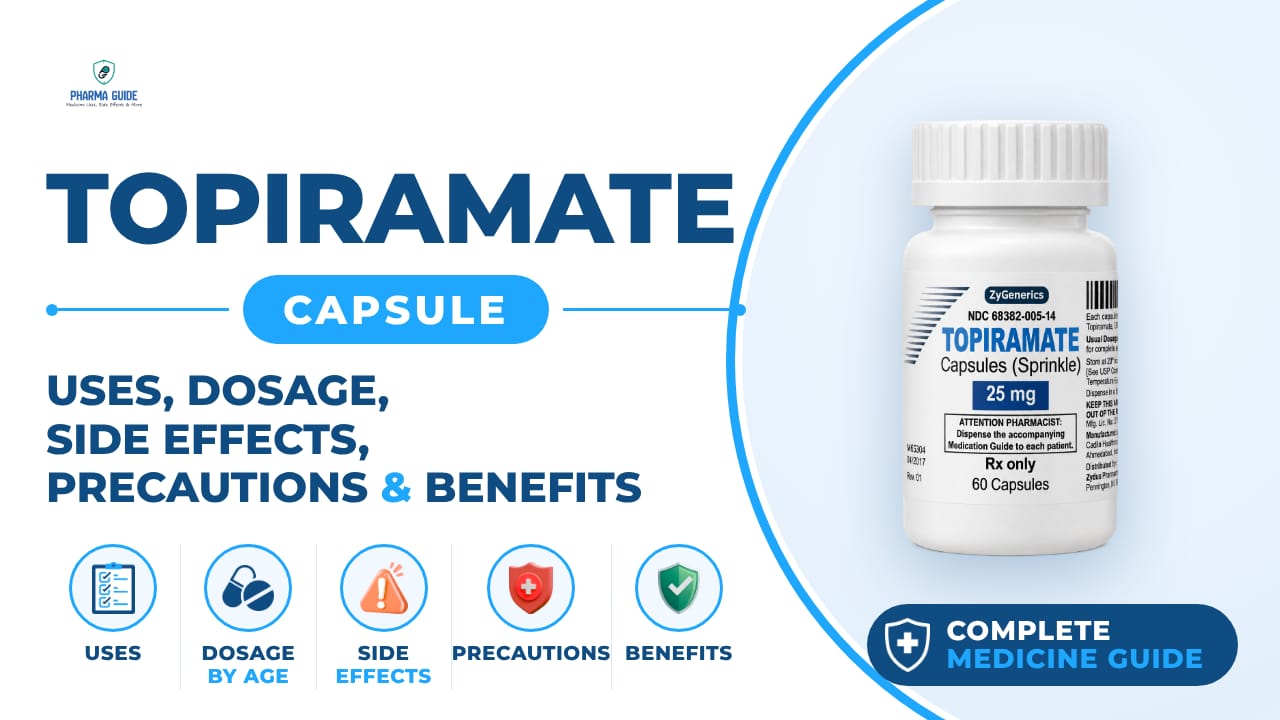
Topiramate Capsule: Uses, Dosage, Side Effects, Precautions and Alternates
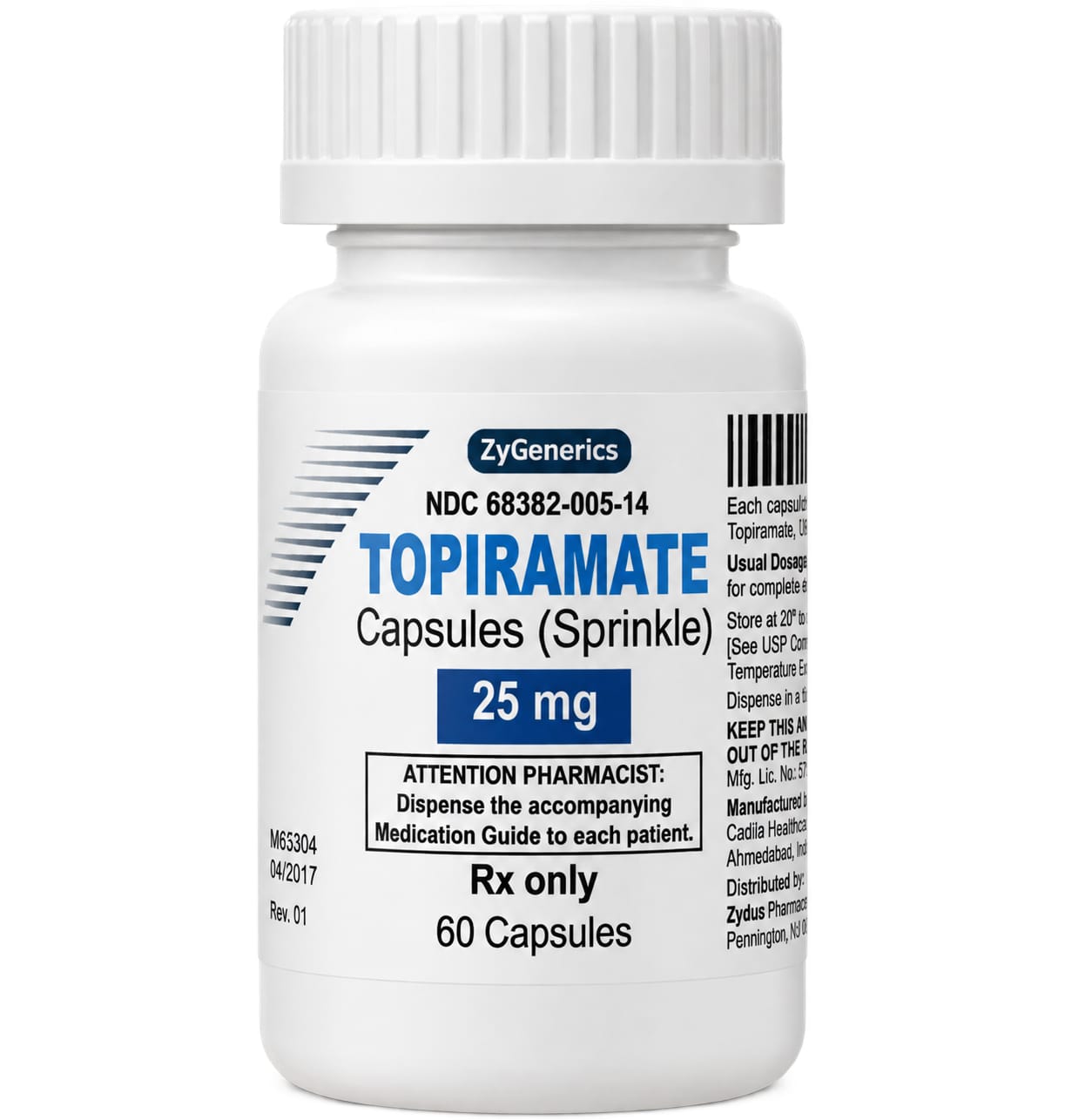
| Generic name | Topiramate |
|---|---|
| Drug class | Carbonic anhydrase inhibitor anticonvulsant |
| Forms | Tablets, Sprinkle capsules, Extended-release capsules, Extended-release sprinkle capsules, Oral solution |
Quick overview
Topiramate Capsule contains topiramate, a carbonic anhydrase inhibitor anticonvulsant. It is used to treat certain types of seizures and to help prevent migraine headaches by decreasing abnormal excitement in the brain. It comes in several forms, including tablets, sprinkle capsules, extended-release capsules, and oral solution. It should be used exactly as directed, and should not be stopped suddenly.
What is Topiramate Capsule
Topiramate is an anticonvulsant (anti-seizure) medicine. It is used to treat certain types of seizures and to help prevent migraine headaches. It works by decreasing abnormal excitement in the brain.
Topiramate Capsule uses
- Treatment of partial-onset seizures in adults and children 2 years and older, alone or with other medicines
- Treatment of primary generalized tonic-clonic seizures in adults and children 2 years and older, alone or with other medicines
- Treatment of seizures associated with Lennox-Gastaut syndrome in adults and children 2 years and older, used with other medicines
- Prevention of migraine headaches in adults and adolescents 12 years and older
- Off-label use for binge eating disorder, alcohol dependence, and essential tremor
Benefits of Topiramate Capsule
- Reduces the frequency and duration of seizures
- Helps prevent migraine headaches or reduce the number of attacks
How Topiramate Capsule works
Topiramate is thought to calm down overactive nerve signals in the brain. It may work by blocking sodium channels that cause rapid nerve firing, boosting the calming chemical GABA, reducing the excitatory chemical glutamate, and mildly blocking an enzyme called carbonic anhydrase.
Topiramate Capsule dosage
Topiramate can be taken with or without food. Swallow tablets whole; do not crush, chew, or break them. If you cannot swallow a sprinkle capsule whole, open it and sprinkle the medicine onto a spoonful of soft food like applesauce, then swallow right away without chewing and drink fluids afterward to make sure it is all swallowed. Do not save a mixed dose of capsule contents and food for later use. If using the oral solution, measure the dose with a marked measuring device or medicine syringe, not a household spoon.
Take at around the same time each day, and drink plenty of liquids while taking this medicine to help prevent kidney stones or electrolyte problems. Do not stop taking this medicine suddenly, even if you feel well, as this may cause increased seizures; your doctor will lower your dose gradually if you need to stop. Doses may be based on weight in children, and the dose may need to change if the child gains or loses weight.
| Age group | Dose |
|---|---|
| Under 2 years | Specialist-directed dosing only |
| 2–9 years | Individualized, weight-based dosing under specialist supervision |
| 10–17 years | Usually started low and increased gradually; specialist-directed |
| 18–64 years | Epilepsy: commonly 25–50 mg once/twice daily initially, gradually increased. Migraine prevention: usually 25 mg once daily initially, increased to 50 mg twice daily |
| 65 years & older | Start low and increase cautiously, particularly if kidney function is reduced |
Available forms and strengths
- Tablets
- Sprinkle capsules
- Extended-release capsules
- Extended-release sprinkle capsules
- Oral solution
Side effects of Topiramate Capsule
Common
- Dizziness, drowsiness, tiredness, slow reactions
- Problems with speech or memory, abnormal vision
- Numbness or tingling in arms and legs, decreased sensation especially in the skin
- Changes in sense of taste, feeling nervous
- Nausea, diarrhea, stomach pain, loss of appetite
- Fever, weight loss
- Cold symptoms such as stuffy nose, sneezing, sore throat
- Changes in menstrual bleeding patterns
Serious
- Signs of an allergic reaction such as hives, difficulty breathing, or swelling of the face or throat
- Severe skin or multiorgan reaction with fever, swollen glands, sore throat, mouth sores, burning eyes, skin pain, or a red or purple skin rash with blistering and peeling
- New or worsening mood or behavior changes, including depression, anxiety, panic attacks, trouble sleeping, feeling impulsive, irritable, agitated, hostile, aggressive, restless, more active or talkative, or thoughts of suicide or self-harm
- Skin rash, no matter how mild
- Dizziness or loss of coordination
- Vision problems, blurred vision, eye pain or redness, or sudden vision loss, which can be permanent if not treated quickly
- Confusion, problems with thinking or memory, trouble concentrating, or problems with speech
- Dehydration symptoms such as decreased sweating, high fever, hot and dry skin
- Signs of a kidney stone such as severe pain in the side or lower back, or painful or difficult urination
- Signs of too much acid in the blood such as irregular heartbeats, tiredness, loss of appetite, trouble thinking, or feeling short of breath
- Signs of too much ammonia in the blood such as vomiting, unexplained weakness, or feeling like you might pass out
- Low body temperature, shown as a drop in body temperature to less than 95°F, along with tiredness, confusion, or coma
Warnings and precautions
- Topiramate may cause vision problems that can become permanent if not treated quickly. Call your doctor right away if you have a sudden decrease in vision.
- Topiramate can raise body temperature and reduce sweating, which may lead to life-threatening dehydration. Tell your doctor if you notice decreased sweating, high fever, and hot, dry skin.
- Some people taking seizure medicines have thoughts about suicide. Stay alert to changes in mood or symptoms and report anything new or worsening to your doctor.
- Do not stop using topiramate suddenly, as this could cause increased seizures.
- Topiramate can increase the acid level in your blood (metabolic acidosis), which can weaken bones, cause kidney stones, or cause growth problems in children, or harm to an unborn baby.
- Topiramate can make hormonal birth control less effective. Ask your doctor about non-hormonal birth control options.
- Taking topiramate during pregnancy can increase the risk of birth defects such as cleft lip and/or cleft palate, and the baby may be smaller than expected at birth. Tell your doctor right away if you become pregnant, since having a seizure during pregnancy could also harm both mother and baby, so stopping the medicine is not automatically safer.
- Topiramate passes into breast milk and may cause a breastfed baby to be sleepy or have diarrhea. Talk to your healthcare provider about the best way to feed your baby if you take this medicine.
- Tell your doctor if you have kidney disease, kidney stones, or are on dialysis, since your dose may need to be adjusted. Tell your doctor if you have liver problems before taking this medicine.
- Do not drink alcohol while taking topiramate, as it can cause dangerous side effects or increased seizures.
- Topiramate may cause blurred vision and impair your thinking or reactions, so avoid driving or hazardous activities until you know how this medicine affects you.
Storage
- Store at cool room temperature away from moisture, light, and high heat
- Store in a tightly closed container
- Keep dry and away from moisture
- Keep out of reach of children
- If using the oral solution, throw away any unused medicine 90 days after first opening the bottle
- Dispose of unneeded medication through a medicine take-back program rather than flushing it down the toilet
When to see a doctor
- Get emergency medical help if you have signs of an allergic reaction such as hives, difficulty breathing, or swelling of the face or throat, or a severe skin or multiorgan reaction with fever, swollen glands, sore throat, mouth sores, burning eyes, skin pain, or a red or purple skin rash with blistering and peeling.
- Tell your doctor right away if you have new or sudden changes in mood or behavior, including new or worse depression or anxiety, panic attacks, trouble sleeping, or feeling impulsive, irritable, agitated, hostile, aggressive, restless, more active or talkative, or thoughts about suicide or hurting yourself.
- Call your doctor at once for a skin rash no matter how mild, dizziness or loss of coordination, vision problems, confusion or memory or speech problems, dehydration symptoms, signs of a kidney stone, signs of too much acid in the blood, signs of too much ammonia in the blood, or low body temperature.
- Seek emergency medical attention right away if you think you have taken too much topiramate, since an overdose can be fatal.
- Call your doctor if your seizures get worse or happen more often while taking topiramate.
Alternatives
- Topamax
- Eprontia
- Qudexy XR
- Trokendi XR
- Qsymia
- Levetiracetam
- Propranolol
Watch the video
FAQs
What is Topiramate Capsule used for?
It treats partial-onset seizures, primary generalized tonic-clonic seizures, and seizures from Lennox-Gastaut syndrome, and it helps prevent migraine headaches in adults and adolescents 12 years and older.
How should Topiramate Capsule be taken?
It can be taken with or without food at around the same time each day. Tablets should be swallowed whole without crushing or chewing. Sprinkle capsules can be opened and sprinkled onto soft food if needed, then swallowed right away without chewing, followed by fluids. Drink plenty of liquids to help prevent kidney stones or electrolyte problems.
Can I stop taking Topiramate Capsule suddenly?
No, you should not stop taking it suddenly, even if you feel well, because this may cause increased seizures. Your doctor will lower your dose gradually if you need to stop.
What are the serious side effects of Topiramate Capsule?
Serious side effects include allergic reactions, severe skin or multiorgan reactions, mood or behavior changes including suicidal thoughts, vision problems that can become permanent, confusion, dehydration symptoms, kidney stones, metabolic acidosis, high ammonia levels, and low body temperature.
Is Topiramate Capsule safe during pregnancy?
Taking topiramate during pregnancy can increase the risk of birth defects such as cleft lip and/or cleft palate, and the baby may be smaller than expected at birth. However, having a seizure during pregnancy could also harm both mother and baby, so you should tell your doctor right away if you become pregnant rather than stopping the medicine on your own.
General information, not medical advice
Your prescriber and the leaflet in your pack know your situation. This page does not.
- Follow your prescriber and the leaflet
- Don't start, stop, or change a dose on your own
- Doses and warnings differ by country and product
Sources
- Drugs.com - Topiramate
- DailyMed - Topiramate Capsule Label (Aurobindo Pharma Limited)
- MedlinePlus - Topiramate
Video
Related medicines

Injectafer Injection: Uses, Dosage, Side Effects, Precautions and Alternates
Iron products
Injectafer (ferric carboxymaltose) treats iron deficiency anemia and heart failure-related iron deficiency via IV. Learn uses, dosage, side effects, and

Gliclazide Tablet: Uses, Dosage, Side Effects, Precautions and Alternates
Sulfonylurea (hypoglycemic/antidiabetic agent)
Gliclazide Tablet is a sulfonylurea for type 2 diabetes that boosts insulin release. Learn about dosage, side effects, warnings, and precautions.