
Safety
General information, not medical advice
Your prescriber and the leaflet in your pack know your situation. This page does not.
- Follow your prescriber and the leaflet
- Don't start, stop, or change a dose on your own
- Doses and warnings differ by country and product
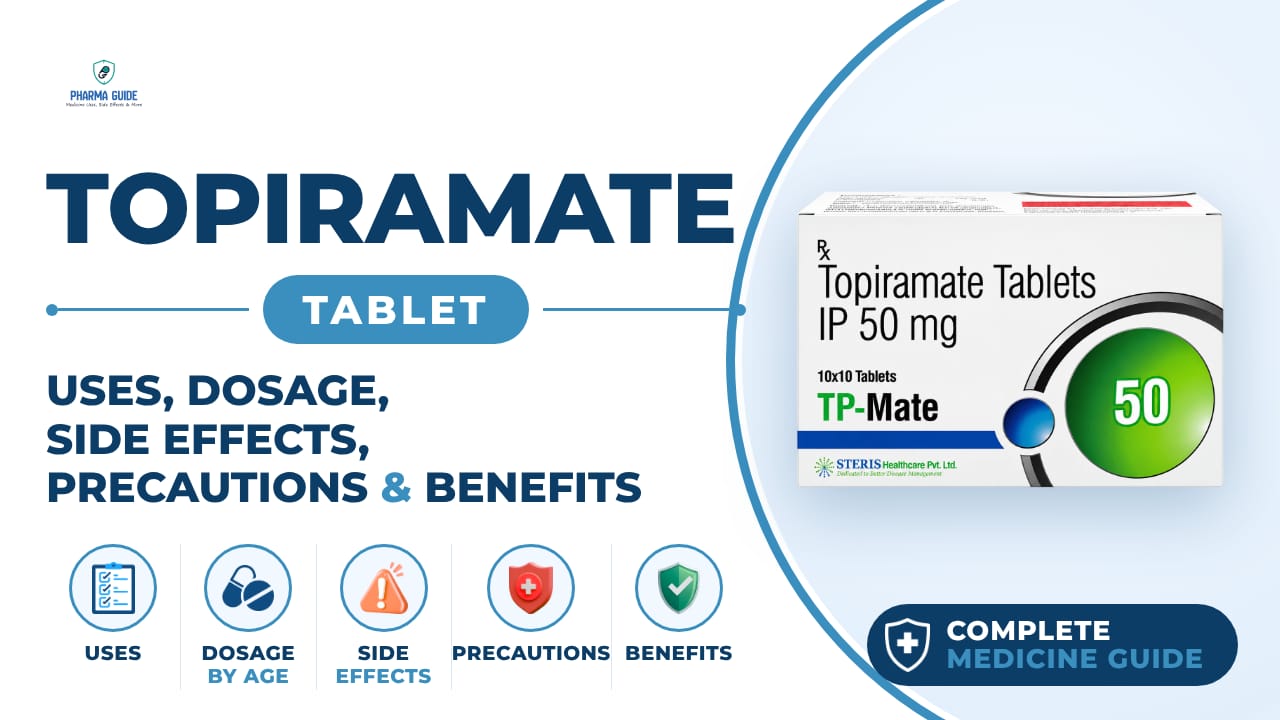
Topiramate Tablet: Uses, Dosage, Side Effects, Precautions and Alternates
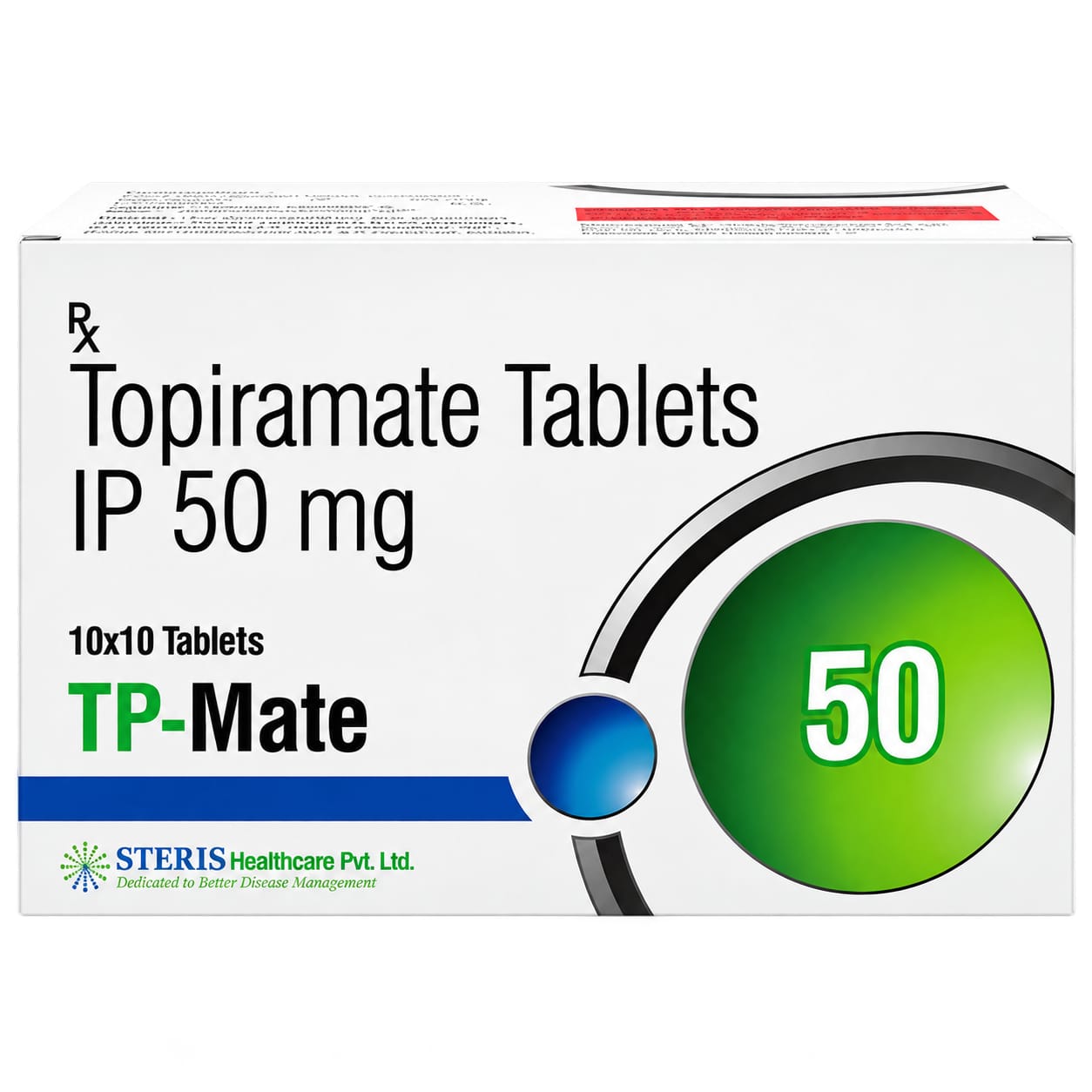
| Generic name | Topiramate |
|---|---|
| Drug class | Antiepileptic/Migraine Prophylaxis |
| Forms | Tablets (25 mg, 100 mg, and 200 mg) |
Quick overview
Topiramate Tablet is a prescription medicine used to control seizures in people with epilepsy and to prevent migraine headaches in adults. It does not treat a headache that has already started. It belongs to the antiepileptic/migraine prophylaxis drug class and works by affecting brain chemicals that send signals to nerves.
What is Topiramate Tablet
Topiramate is a prescription medicine used to control seizures in people with epilepsy and to prevent migraine headaches in adults. It does not treat a headache that has already started.
Topiramate Tablet uses
- To control epilepsy (seizures) in adults and children 6 years of age or older, used alone
- Used together with other antiepileptic drugs to manage epilepsy in adults and children 2 years of age or older
- To prevent migraine headaches in adults
Benefits of Topiramate Tablet
- Helps control certain seizures
- Helps prevent migraine attacks
- Can reduce migraine frequency
- Used alone or with other anti-seizure medicines
- Provides long-term seizure-control support in appropriate patients
How Topiramate Tablet works
Topiramate affects chemicals in the brain that send signals to nerves, which reduces the chances of having seizures and migraines.
Topiramate Tablet dosage
Topiramate Tablet can be taken with or without food. Tablets should be swallowed whole with plenty of water - do not break or crush them. It is usually taken twice a day, in the morning and evening, though your doctor may tell you to take it once a day. Your doctor will start with a low dose and slowly increase it over time.
If you miss a dose, take it as soon as you remember, but if it is almost time for your next dose, skip the missed dose and take the next scheduled dose as usual - do not take a double dose. Do not stop taking this medicine suddenly without talking to your doctor, as this can cause seizures or other serious problems. Drink plenty of fluids while taking this medicine to help reduce the risk of kidney stones.
Use exactly as prescribed by your doctor or pharmacist.
Available forms and strengths
- Tablets (25 mg, 100 mg, and 200 mg)
Side effects of Topiramate Tablet
Common
- Tingling in the arms and legs (paresthesia)
- Dizziness
- Drowsiness or tiredness
- Not feeling hungry (decreased appetite)
- Weight loss
- Nausea
- Change in taste
- Diarrhea
- Problems with memory, speech, or concentration
- Nervousness
- Upper respiratory tract infection (such as colds, bronchitis)
Serious
- Sudden decrease in vision, with or without eye pain and redness, or eye pain and halos around lights
- Decreased sweating and increased body temperature, especially in hot weather
- Thoughts about suicide or self-harm, new or worse depression or anxiety, agitation, panic attacks, or unusual changes in mood or behavior
- High levels of acid in the blood (metabolic acidosis): tiredness, loss of appetite, irregular heartbeat, confusion, rapid breathing
- High ammonia levels in the blood: unusual tiredness, confusion, vomiting, low body temperature
- Kidney stones: blood in urine, pain in lower back or side, painful urination
- Serious skin reactions: rash, sore throat, fever, mouth ulcers, blistering or peeling skin
- Severe allergic reaction: swelling of face, lips, tongue or throat, difficulty breathing, hives
Warnings and precautions
- Topiramate can cause sudden eye problems, including vision loss and increased eye pressure, that can become permanent if not treated right away.
- Topiramate can reduce sweating and raise body temperature, which is especially risky for children and during hot weather.
- This medicine can raise acid levels in the blood (metabolic acidosis), which can weaken bones, slow growth in children, and cause other health problems if untreated.
- Topiramate may increase ammonia levels in the blood, which can affect the brain, especially when taken with valproic acid.
- Antiepileptic medicines like Topiramate can increase the risk of suicidal thoughts or actions in a small number of people.
- Topiramate can cause serious skin reactions that can be life-threatening.
- Stopping this medicine suddenly can cause seizures to return or worsen, so your dose should be lowered gradually under medical supervision.
- Topiramate may reduce the effectiveness of hormonal birth control, so other methods or higher-estrogen options may be needed.
- People with risk factors for kidney stones should drink plenty of fluids while on this medicine to lower their risk.
- Topiramate can cause birth defects, including cleft lip and/or cleft palate, especially when used for migraine prevention. For epilepsy, the benefit of controlling seizures may outweigh the risk, but for migraine prevention, Topiramate should not be used during pregnancy or by women who could become pregnant unless they use effective birth control.
- Topiramate passes into breast milk and may cause diarrhea or sleepiness in a breastfed baby. Talk to your doctor about whether to continue breastfeeding or continue this medicine.
- People with kidney problems may need a lower dose and may take longer to reach a steady level of medicine in the body.
- People with liver problems should use this medicine with caution because the body may clear it more slowly.
- It's recommended not to drink alcohol while taking this medicine, since the combination has not been studied and may increase drowsiness or other effects.
- This medicine can cause drowsiness, dizziness, and vision problems, so you should not drive or use machinery until you know how it affects you.
Storage
- Store between 15-30°C (59-86°F) in a dry place
- Protect from moisture
- Keep this and all medicines in a safe place away from children
- Do not use this product after the expiry date written on the package
When to see a doctor
- Get immediate medical help if you have sudden vision changes, eye pain, or loss of vision.
- Contact your healthcare professional right away if you notice decreased sweating along with increased body temperature.
- Seek help immediately if you have symptoms of high blood acid levels, such as rapid breathing, ongoing tiredness, loss of appetite, heart problems, confusion, or reduced consciousness.
- Report any new or worsening thoughts about suicide, self-harm, or unusual mood or behavior changes to a healthcare provider immediately.
- Contact your doctor right away if you experience unexplained lethargy, vomiting, changes in mental status, or low body temperature, which may signal a serious ammonia-related reaction.
- Report any skin rash, sore throat, fever, or mouth ulcers to a physician immediately, as these could be early signs of a serious skin reaction.
Alternatives
- Valproate
- Lamotrigine
- Levetiracetam
Watch the video
FAQs
What is Topiramate Tablet used for?
It is used to control seizures in people with epilepsy and to prevent migraine headaches in adults. It does not treat a headache that has already started.
How should I take Topiramate Tablet?
Swallow the tablets whole with plenty of water without breaking or crushing them. It can be taken with or without food, usually twice a day, and your doctor will start with a low dose and increase it slowly over time.
What should I do if I miss a dose of Topiramate Tablet?
Take the missed dose as soon as you remember, but if it is almost time for your next dose, skip the missed one and continue your regular schedule. Do not take a double dose.
What are the common side effects of Topiramate Tablet?
Common side effects include tingling in the arms and legs, dizziness, drowsiness, decreased appetite, weight loss, nausea, change in taste, diarrhea, problems with memory or concentration, nervousness, and upper respiratory infections.
Can Topiramate Tablet be used during pregnancy?
Topiramate can cause birth defects such as cleft lip and/or cleft palate, especially when used for migraine prevention. For migraine prevention, it should not be used during pregnancy or by women who could become pregnant unless effective birth control is used, while for epilepsy the benefit of seizure control may outweigh the risk.
General information, not medical advice
Your prescriber and the leaflet in your pack know your situation. This page does not.
- Follow your prescriber and the leaflet
- Don't start, stop, or change a dose on your own
- Doses and warnings differ by country and product
Sources
Video
Related medicines

Injectafer Injection: Uses, Dosage, Side Effects, Precautions and Alternates
Iron products
Injectafer (ferric carboxymaltose) treats iron deficiency anemia and heart failure-related iron deficiency via IV. Learn uses, dosage, side effects, and

Gliclazide Tablet: Uses, Dosage, Side Effects, Precautions and Alternates
Sulfonylurea (hypoglycemic/antidiabetic agent)
Gliclazide Tablet is a sulfonylurea for type 2 diabetes that boosts insulin release. Learn about dosage, side effects, warnings, and precautions.