
Safety
General information, not medical advice
Your prescriber and the leaflet in your pack know your situation. This page does not.
- Follow your prescriber and the leaflet
- Don't start, stop, or change a dose on your own
- Doses and warnings differ by country and product
Topotecan Injection: Uses, Dosage, Side Effects, Precautions and Alternates
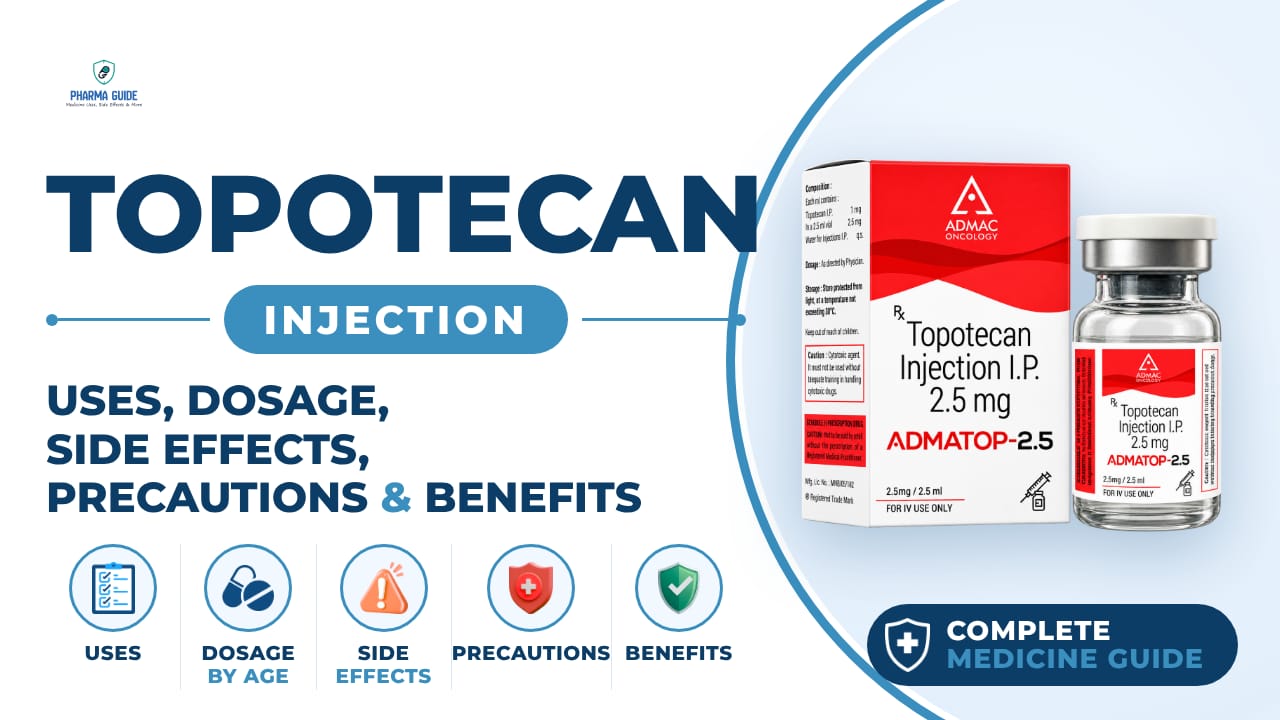
| Generic name | Topotecan |
|---|---|
| Drug class | Topoisomerase inhibitor (antineoplastic) |
| Forms | Single-use vial solution for intravenous infusion (1 mg/mL), Multiple dose vial solution for intravenous infusion, Powder for concentrate for solution for infusion |
Quick overview
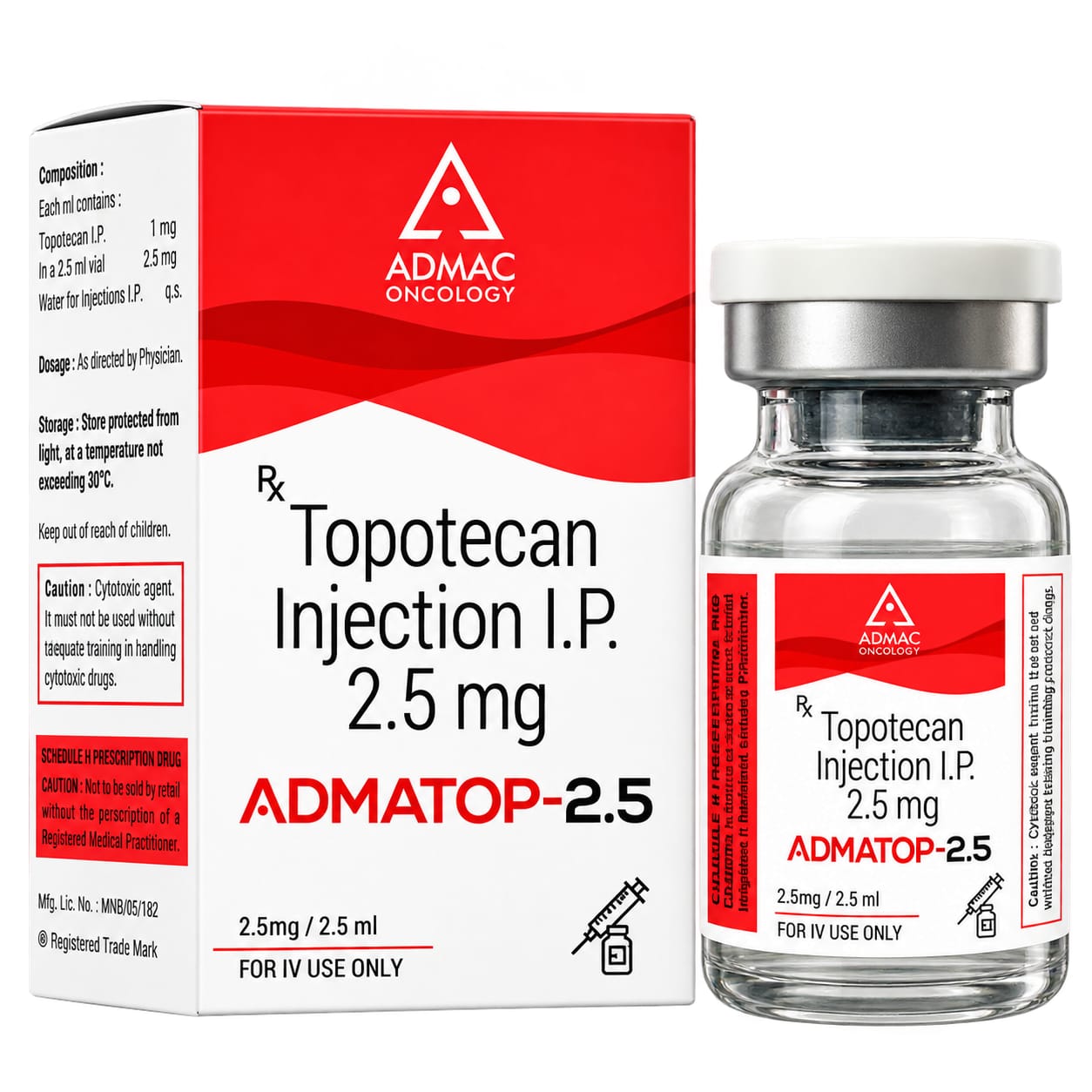
Topotecan Injection (generic name: topotecan) is a topoisomerase inhibitor used to treat certain cancers, including small cell lung cancer, cervical cancer, and ovarian cancer. It is given as an infusion into a vein in a hospital setting, usually under the supervision of a doctor experienced in chemotherapy. It works by damaging the DNA of cancer cells so they cannot survive, but it can also cause serious side effects such as low blood cell counts and bowel or lung inflammation, so close monitoring is needed during treatment.
What is Topotecan Injection
Topotecan is a cancer-fighting medicine called a topoisomerase inhibitor. It is given as an infusion into a vein in a hospital setting, usually under the supervision of a doctor experienced in chemotherapy.
Topotecan Injection uses
- Treatment of small cell lung cancer that has come back after it responded to initial chemotherapy
- Treatment of small cell lung cancer sensitive disease after failure of first-line chemotherapy
- In combination with cisplatin, treatment of stage IVB, recurrent, or persistent cancer of the cervix that cannot be cured with surgery or radiation
- Treatment of metastatic ovarian cancer after other treatments have failed
Benefits of Topotecan Injection
- In a clinical trial, patients with cervical cancer treated with topotecan plus cisplatin had longer overall survival than those treated with cisplatin alone
- In small cell lung cancer, topotecan produced response rates similar to combination chemotherapy (CAV) with a comparable time to disease progression
How Topotecan Injection works
Topotecan blocks an enzyme called topoisomerase I, which cancer cells need to copy their DNA. This leads to damage in the cell's DNA that cancer cells cannot repair, causing the cells to die.
Topotecan Injection dosage
This medicine is given as an infusion into a vein, usually over about 30 minutes, by a doctor or nurse in a hospital or clinic. For small cell lung cancer or ovarian cancer, treatment is usually given once a day for 5 days in a row, repeated every 3 weeks. For cervical cancer, treatment is usually given once a day for 3 days in a row, followed by cisplatin, repeated every 3 weeks.
Blood tests to check blood cell counts are done before each treatment and regularly during treatment to decide if your dose needs to be delayed or adjusted. Treatment should not be started if blood counts (neutrophils or platelets) are too low; your doctor will check this before every cycle. If you miss a scheduled treatment appointment, contact your doctor as soon as possible to reschedule.
| Age group | Dose |
|---|---|
| 18–64 years – ovarian or small-cell lung cancer | Common regimen: 1.5 mg/m² IV once daily for 5 consecutive days, repeated every 21 days |
| 18–64 years – cervical cancer combination regimen | Common regimen: 0.75 mg/m² IV once daily on Days 1–3, repeated every 21 days, with cisplatin |
Available forms and strengths
- Single-use vial solution for intravenous infusion (1 mg/mL)
- Multiple dose vial solution for intravenous infusion
- Powder for concentrate for solution for infusion
Side effects of Topotecan Injection
Common
- Neutropenia (low white blood cells)
- Anemia (low red blood cells)
- Thrombocytopenia (low platelets)
- Nausea
- Hair loss (alopecia)
- Vomiting
- Diarrhea
- Constipation
- Fatigue
- Fever
- Loss of appetite
- Headache
- Cough and shortness of breath
- Abdominal pain
- Mouth and gum sores
- Muscle or body pain
- Weakness
Serious
- Severe bone marrow suppression leading to infection or sepsis, which can be fatal
- Neutropenic colitis (bowel inflammation with fever and abdominal pain), which can be fatal
- Interstitial lung disease (lung inflammation), which can be fatal
- Severe bleeding associated with low platelet counts
- Severe allergic (anaphylactoid) reactions, including swelling of the face and throat (angioedema)
- Severe skin reactions, including severe dermatitis and severe itching
- Tissue injury from the medicine leaking out of the vein (extravasation)
- Signs of liver problems including yellowing of skin or eyes, dark urine, pale stools
Warnings and precautions
- This medicine can cause severe, life-threatening bone marrow suppression. Treatment should not be started if white blood cell (neutrophil) counts are too low, and blood counts must be checked often during treatment.
- This medicine should not be used in people who have had a severe allergic reaction to topotecan in the past.
- Low white blood cell counts caused by this medicine can lead to a serious bowel inflammation called neutropenic colitis, which has been fatal in some cases.
- This medicine can cause lung inflammation (interstitial lung disease), which has been fatal in some reported cases, particularly in people with existing lung problems.
- If the medicine leaks out of the vein during the infusion, it can cause serious injury to the surrounding tissue.
- This medicine can harm an unborn baby and should not be used during pregnancy. Women should use effective birth control during treatment and tell their doctor right away if they become pregnant.
- Breastfeeding should be stopped before starting treatment and should not be restarted until your doctor says it is safe.
- This medicine is cleared by the kidneys, so people with reduced kidney function may need a lower dose, and there isn't enough information to recommend a dose for severe kidney impairment.
- People with liver problems may process this medicine more slowly; tell your doctor if you have any liver conditions.
- There is no known problem combining this medicine with alcohol, but check with your doctor about whether drinking alcohol is advisable for you during treatment.
- This medicine can cause tiredness or weakness. If this happens to you, avoid driving or operating machinery.
Storage
- Store the vials protected from light in the original cartons, refrigerated between 2°C and 8°C (36°F and 46°F)
- Keep the vial in the outer carton in order to protect from light
- Keep out of the reach and sight of children
- Do not use after the expiry date stated on the carton
- Diluted solutions for infusion should be used within 4 hours at room temperature or within 12 to 24 hours if refrigerated, depending on the product
- Do not dispose of medications in wastewater or household garbage; ask your pharmacist how to dispose of medications no longer needed
When to see a doctor
- Get medical help right away if you have fever, chills, or other signs of infection, since this medicine can severely lower your resistance to infection.
- Seek immediate medical attention for signs of serious bleeding such as black or bloody stools, vomiting blood, or coughing up blood.
- Seek immediate medical help if you have fever with severe watery or bloody diarrhea, which could be a sign of serious bowel inflammation.
- Seek immediate medical help for breathing problems such as shortness of breath, wheezing, or fast or irregular breathing, which could signal a serious lung reaction.
- Get emergency help right away for signs of a severe allergic reaction, such as difficulty breathing, stomach cramps, nausea and vomiting, or swelling of the face and throat.
- Tell your nurse immediately if you feel burning or pain at the injection site during the infusion, as this could mean the medicine is leaking out of the vein.
Alternatives
- Irinotecan
- Etoposide
- Paclitaxel
Watch the video
FAQs
What is Topotecan Injection used for?
It is used to treat small cell lung cancer that has relapsed or progressed after chemotherapy, cervical cancer (combined with cisplatin) that cannot be cured with surgery or radiation, and metastatic ovarian cancer after other treatments have failed.
How is Topotecan Injection given?
It is given as an infusion into a vein over about 30 minutes by a doctor or nurse in a hospital or clinic. For small cell lung cancer or ovarian cancer, it is usually given once daily for 5 days, repeated every 3 weeks. For cervical cancer, it is given once daily for 3 days along with cisplatin, repeated every 3 weeks.
What are the common side effects of Topotecan Injection?
Common side effects include low white blood cells, anemia, low platelets, nausea, vomiting, diarrhea, hair loss, fatigue, fever, loss of appetite, headache, cough, shortness of breath, abdominal pain, and mouth sores.
What serious risks are associated with Topotecan Injection?
Serious risks include severe bone marrow suppression leading to infection or sepsis, neutropenic colitis, interstitial lung disease, severe bleeding, severe allergic reactions, severe skin reactions, tissue injury if the medicine leaks from the vein, and liver problems.
Can Topotecan Injection be used during pregnancy?
No, this medicine can harm an unborn baby and should not be used during pregnancy; effective birth control should be used during treatment, and any pregnancy should be reported to a doctor right away.
General information, not medical advice
Your prescriber and the leaflet in your pack know your situation. This page does not.
- Follow your prescriber and the leaflet
- Don't start, stop, or change a dose on your own
- Doses and warnings differ by country and product
Sources
Video
Related medicines

Injectafer Injection: Uses, Dosage, Side Effects, Precautions and Alternates
Iron products
Injectafer (ferric carboxymaltose) treats iron deficiency anemia and heart failure-related iron deficiency via IV. Learn uses, dosage, side effects, and

Gliclazide Tablet: Uses, Dosage, Side Effects, Precautions and Alternates
Sulfonylurea (hypoglycemic/antidiabetic agent)
Gliclazide Tablet is a sulfonylurea for type 2 diabetes that boosts insulin release. Learn about dosage, side effects, warnings, and precautions.